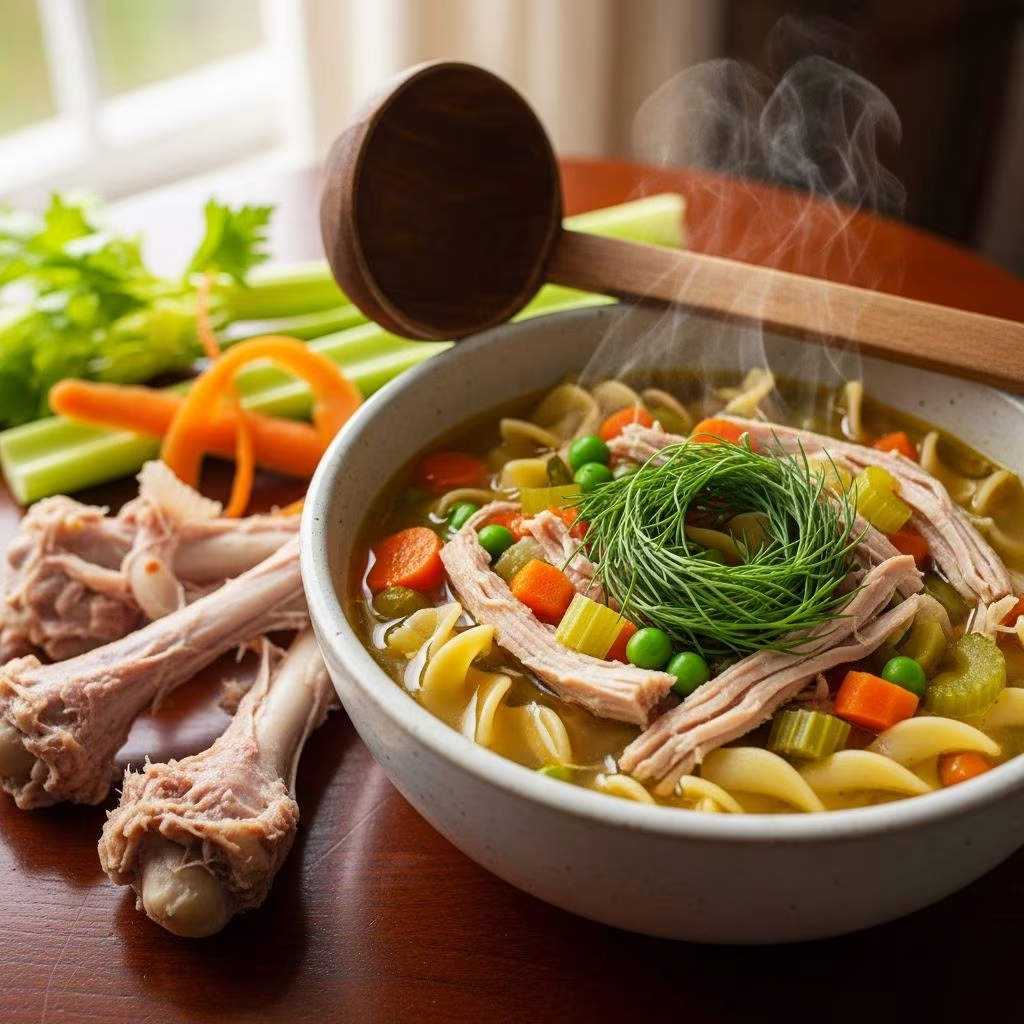
The day after Thanksgiving or Christmas, many households find themselves with a picked-over turkey carcass destined for the trash. However, this overlooked ingredient represents an opportunity to create something genuinely valuable: a deeply flavorful, nutrient-dense homemade broth that forms the foundation of an exceptional soup. Transforming your leftover poultry bones into a satisfying meal demonstrates both resourcefulness and culinary wisdom, allowing you to extend the celebration while honoring the entire bird.
Why Carcass-Based Broths Matter
Creating broth from animal bones has been a cornerstone of traditional cooking across numerous cultures for centuries. When bones are simmered for extended periods, they release collagen, gelatin, and minerals into the liquid, creating a nutritionally dense foundation that surpasses store-bought broths in both flavor and substance. The prolonged cooking process also extracts savory compounds that develop complex taste profiles impossible to achieve through quick cooking methods. Using your turkey carcass prevents food waste while providing superior culinary results compared to commercial alternatives.
Essential Components for Your Broth Foundation
Building an exceptional carcass broth requires attention to both the primary ingredient and supporting aromatic vegetables. The turkey carcass serves as your base, and its size will determine the quantity of liquid and seasonings needed. Beyond the bones themselves, several key components work together to develop the broth’s character and depth:
- Turkey carcass — The skeletal structure left after meat removal, including any remaining skin, cartilage, and connective tissue that will contribute gelatin and flavor compounds
- Filtered water — The medium that extracts and carries the nutrients and flavors from your bones
- Apple cider vinegar — An acidic agent that facilitates the breakdown of collagen and mineral extraction from bone tissue
- Yellow onion — Contributes natural sweetness and aromatic depth to the developing broth
- Carrots — Add subtle earthiness and natural sugars that caramelize during cooking
- Celery stalks — Provide herbaceous notes and minerals that enhance overall complexity
- Bay leaves — Introduce a subtle floral quality and preservation properties
- Black peppercorns — Deliver gentle spice and antimicrobial compounds
- Fresh herbs — Parsley, thyme, or rosemary add aromatic sophistication
Selecting and Preparing Your Carcass
Before beginning the broth-making process, proper carcass preparation ensures optimal results. Start by removing any remaining meat from the bones and setting it aside for later addition to your finished soup. This separation allows the broth-making phase to focus entirely on extracting maximum flavor and nutrition from the bone structure without the meat becoming stringy or overcooked. Additionally, carefully remove excess skin and fatty deposits from the carcass, as excessive fat can create a greasy broth that lacks refinement. Break the carcass apart at its natural joints where possible, reducing its size to fit more efficiently within your cooking vessel. This preparation step takes approximately ten minutes but significantly impacts the final result.
The Traditional Stovetop Method
The conventional approach to making turkey carcass broth involves using a large stockpot and achieving the proper temperature balance between thorough extraction and preservation of delicate flavors. Begin by placing your prepared carcass into the pot and adding water until the bones are covered by approximately two inches of liquid. The exact quantity depends on your pot’s size and carcass dimensions. Add your apple cider vinegar at this stage, as the acidity immediately begins working to break down bone structure and facilitate mineral release.
Bring the entire pot to a rolling boil over medium-high heat, then reduce the temperature significantly to maintain a gentle simmer. This distinction matters considerably—a vigorous boil can create a cloudy broth filled with particles rather than a clear, refined liquid. A proper simmer produces minimal surface movement and few bubbles. Allow the broth to cook undisturbed for one to two hours, depending on the carcass size. During this period, the bones progressively break down, releasing their valuable contents into the surrounding liquid.
Once the simmering period concludes, carefully remove the carcass from the pot using tongs or a slotted spoon, placing it in a large shallow dish to cool. Strain the broth through a fine-mesh sieve into another container, discarding the spent bones and aromatic vegetables. The resulting liquid should appear clear or slightly translucent, indicating successful extraction without over-boiling.
Alternative Preparation Using Pressure Cooking
For those seeking a more expedited approach, modern pressure cookers dramatically reduce the broth-making timeline. Place your cleaned carcass into the pressure cooker vessel and add water until the turkey is fully submerged. Set the appliance to its soup function and adjust the cooking time to approximately twenty-five minutes. The high-pressure environment accelerates the breakdown of collagen and bone structure while maintaining flavor integrity through the sealed cooking environment.
Once the cooking cycle completes, allow the pressure to release naturally for roughly twenty minutes, which permits the collagen to continue setting and incorporating into the liquid. Perform a quick release for any remaining pressure, then carefully remove and strain the carcass. The entire process, from preparation to strained broth, typically requires under an hour—a substantial time savings compared to stovetop methods.
Building Your Complete Soup
With your broth prepared and cooled, you now have the foundation for creating a complete, satisfying soup. Return your strained broth to a clean pot and bring it back to a gentle simmer. At this stage, add your aromatic vegetables—diced onion, chopped carrots, and chopped celery—along with any grains or legumes you prefer. Common selections include pearl barley, wild rice, farro, or a combination thereof. Canned beans, such as white beans or lima beans, work beautifully and require only rinsing and draining before addition.
Allow the vegetables, grains, and legumes to simmer until completely tender, typically thirty to forty-five minutes depending on which components you selected. The vegetable softness and grain tenderness serve as your indication of readiness. Once these elements have cooked through, add the reserved turkey meat you removed during the initial carcass preparation. Stir the meat throughout the broth and season the entire pot with your preferred spices, which might include poultry seasoning, dried sage, salt, and pepper. Adjust the seasoning gradually, tasting as you go, until the flavor reaches your desired intensity. Allow the finished soup to simmer gently for an additional ten minutes before serving, permitting all components to become acquainted and the flavors to meld cohesively.
Customization and Variation Possibilities
The beauty of creating soup from your carcass lies in its adaptability to personal preferences and pantry contents. Consider these variations to personalize your preparation:
| Component Category | Traditional Options | Alternative Variations |
|---|---|---|
| Grains | Pearl barley, wild rice, farro | Brown rice, quinoa, couscous, egg noodles |
| Legumes | White beans, lima beans | Chickpeas, lentils, black beans, kidney beans |
| Vegetables | Onion, carrot, celery | Parsnips, turnips, mushrooms, kale, spinach |
| Herbs & Spices | Bay leaves, thyme, parsley | Sage, rosemary, oregano, cumin, paprika |
| Heat Elements | Black pepper | Chili peppers, cayenne, red pepper flakes |
Some cooks incorporate diced chile peppers for warmth and complexity, while others prefer traditional herb combinations or entirely different spice profiles. The flexibility of this basic formula permits experimentation while maintaining the fundamental character of homemade carcass-based soup.
Storage and Make-Ahead Strategies
Turkey carcass soup stores exceptionally well, making it suitable for advance preparation and convenient reheating throughout the week. The broth itself, before adding grains and legumes, refrigerates for up to four days in covered containers or freezes for three months in freezer-safe vessels. When freezing broth, leave slight headspace in containers to accommodate expansion as the liquid freezes. Completely finished soup stores refrigerated for three to four days; freezing finished soup is possible but may affect the texture of cooked grains and vegetables, which tend to soften further upon reheating.
For optimal convenience, consider preparing the broth in advance and completing the soup preparation on the day you intend to serve it. This approach delivers superior texture and fresher-tasting vegetables compared to storing the complete soup for extended periods.
Nutritional Advantages of Homemade Turkey Carcass Soup
Beyond remarkable flavor, homemade carcass-based broth offers substantial nutritional benefits. The extended cooking process extracts amino acids, minerals including calcium and magnesium, and gelatin from the bone structure. These compounds support joint health, digestive function, and overall wellness in ways that quick-cooking methods cannot achieve. Additionally, by combining the broth with whole vegetables, legumes, and grains, you create a complete, balanced meal rich in fiber, protein, and essential micronutrients. This approach maximizes the nutritional value of your holiday bird while creating genuine nourishment with minimal processed ingredients.
Frequently Asked Questions
How long should I simmer the carcass to extract maximum flavor?
For stovetop methods, one to two hours of gentle simmering typically extracts sufficient flavor and nutrition without developing bitter or unpleasant tastes associated with excessive cooking. Pressure cookers achieve comparable results in twenty-five minutes due to the high-pressure environment accelerating the extraction process.
Can I use frozen turkey carcass?
Yes, frozen carcasses work perfectly. Thaw completely before beginning the broth-making process, or adjust cooking time slightly if simmering from frozen, as the thawing period occurs within the pot.
Why does my broth appear cloudy instead of clear?
Cloudy broth typically results from vigorous boiling rather than gentle simmering, or from particles not being adequately strained. For clear broth, maintain a bare simmer with minimal surface movement and strain carefully through fine-mesh sieves.
Should I include skin and fatty parts in the broth?
Removing excess skin and fat creates a more refined broth. However, a small amount of skin contributes gelatin and does not negatively impact the final product if left attached to the carcass.
How many servings does one carcass typically yield?
Depending on the original turkey size and how many vegetables and grains you add, one carcass typically produces eight to twelve servings of finished soup, with potential for greater yields through generous vegetable and grain additions.
References
- The Healthy Maven: Day-After Thanksgiving Soup [Turkey Carcass Soup] — The Healthy Maven. Accessed April 2026. https://www.thehealthymaven.com/turkey-carcass-soup/
- The Kitchen Magpie: How to Make Turkey Carcass Soup — The Kitchen Magpie. Accessed April 2026. https://www.thekitchenmagpie.com/how-to-make-turkey-carcass-soup/
- The Defined Dish: Leftover Thanksgiving Turkey Noodle Soup — The Defined Dish. Accessed April 2026. https://thedefineddish.com/leftover-thanksgiving-turkey-noodle-soup/
- The Endless Meal: Best Homemade Turkey Soup Recipe (made with leftover turkey!) — The Endless Meal. Accessed April 2026. https://www.theendlessmeal.com/homemade-turkey-soup/
- Vikalinka: Leftover Turkey Soup Recipe — Vikalinka. Accessed April 2026. https://vikalinka.com/leftover-turkey-soup-recipe/