Tuna salad stands as one of the most accessible and satisfying meals available to home cooks. Whether you’re looking for a quick lunch solution, a protein-packed dinner option, or a versatile foundation for creative culinary experiments, tuna salad delivers on all fronts. This guide will walk you through everything you need to know about selecting ingredients, preparing your salad, and exploring exciting flavor combinations that elevate this humble dish.
Understanding the Foundation: Quality Ingredients Matter
The beauty of tuna salad lies in its simplicity, but that simplicity also means that ingredient quality directly impacts the final product. Starting with the right tuna makes a noticeable difference in both flavor and texture.
Selecting Your Tuna
Canned tuna comes in several varieties, each with distinct characteristics. Wild albacore tuna stands out as a premium choice, offering a cleaner, more delicate taste compared to other canned options. This variety tends to have a firmer texture and less fishy undertone, making it ideal for those who prefer subtle flavors. Albacore tuna is often labeled as “white tuna” and typically comes packed in water or oil, each providing different culinary advantages.
When choosing between water-packed and oil-packed varieties, water-packed tuna offers a lighter final product while oil-packed versions add richness and can reduce the need for additional mayonnaise. Most home cooks find water-packed tuna more versatile for traditional preparations.
The Binding Agent: Mayonnaise and Alternatives
Mayonnaise serves as the primary binding agent in most tuna salad recipes, creating the creamy texture that makes this dish so satisfying. A quarter cup of mayonnaise typically works well for two cans of tuna, though personal preference varies. For those seeking lighter options, Greek yogurt provides a tangier alternative that reduces fat content while maintaining creaminess.
Homemade mayonnaise offers superior flavor and texture compared to store-bought versions, allowing you to control ingredient quality and achieve a fresher taste profile.
Essential Flavor Builders
Beyond the main components, several ingredients work together to build complexity:
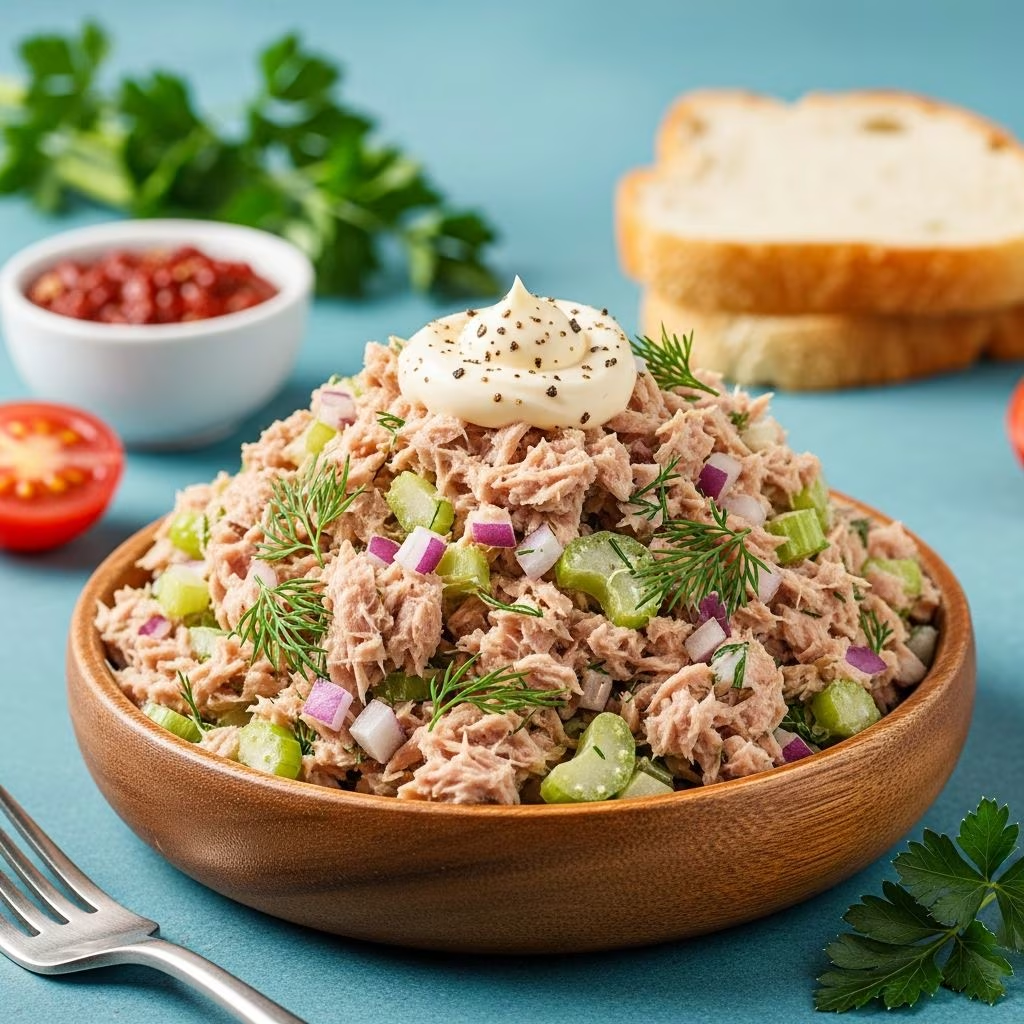
- Celery: Provides essential crunch and freshness; one stalk diced works well for most recipes
- Red onion: Adds sharp, slightly sweet notes; use two tablespoons diced for balanced flavor
- Dijon mustard: Creates tangy contrast and sophistication; even half a tablespoon transforms the flavor profile
- Fresh herbs: Parsley, chives, or dill contribute brightness; one to two tablespoons chopped elevates the entire dish
- Pickle relish: Introduces sweetness and tang; two tablespoons provides noticeable flavor without overwhelming other components
- Seasonings: Garlic powder, onion powder, salt, and pepper build foundational flavors
Core Preparation Methods
Classic Approach
The traditional method remains popular because it works consistently well. Begin by draining your canned tuna thoroughly, removing excess liquid that could dilute flavors and create an overly moist consistency. Add the drained tuna to a medium mixing bowl along with your mayonnaise, finely diced celery, red onion, fresh herbs, and your chosen seasonings.
Using a fork rather than a whisk or blender allows you to control texture precisely. Break up any large tuna pieces while mixing gently, achieving the consistency you prefer. Some prefer chunky texture with identifiable tuna pieces, while others enjoy a more uniform, creamy blend. Taste as you mix and adjust seasonings accordingly, adding salt and pepper to reach your ideal flavor balance.
Vinaigrette-Based Variation
For those seeking a lighter, more refreshing preparation, a homemade vinaigrette replaces traditional mayonnaise. Combine a quarter cup of olive oil, two tablespoons of red wine vinegar, one tablespoon of lemon juice, one teaspoon of dried oregano, and salt and pepper to taste.
Allow the vinaigrette to sit briefly so flavors meld. Prepare your vegetables by cutting cucumber into quarter rounds, halving grape tomatoes, roughly chopping fresh parsley, and dicing red onion. This method works particularly well when adding white beans for additional protein and fiber, creating a Mediterranean-inspired composition.
Creative Flavor Profiles and Variations
Mediterranean Interpretation
Transform traditional tuna salad by incorporating Mediterranean elements. Begin with fresh vegetables including cucumber, tomato, red onion, and parsley as your base. Add your drained tuna and white beans for substantial protein content, then dress with the vinaigrette mentioned above. The final touch involves crumbled feta cheese, which adds tanginess and authenticity to this interpretation.
This variation works beautifully served over fresh greens, with pita bread, or as part of a composed salad plate featuring various Mediterranean components.
Greek-Inspired Creation
Another Mediterranean approach incorporates elements associated with Greek cuisine. Combine albacore tuna with fresh tomatoes, red onion, green onions, and crisp lettuce. Add crumbled feta cheese, sliced cucumber, capers, and black olives. Prepare a simple vinaigrette and toss all components together, finishing with fresh herbs for garnish.
This preparation emphasizes fresh, brightly flavored components that celebrate each ingredient rather than binding everything in a heavy mayonnaise base.
Composed Salad Bowl Approach
Rather than mixing all components together, arrange them separately in a bowl for visual appeal and textural variety. Start with six handfuls of fresh lettuce or mixed greens as your foundation. Divide canned tuna between serving bowls, then arrange tomatoes, cucumber, beetroot, grated cheese, avocado, and nuts in distinct piles.
Add a simple dressing just before serving and toss if desired, or allow diners to mix components to preference. This approach works particularly well for meal prep since components maintain their distinct textures and flavors until serving time.
Preparation Timeline and Serving Suggestions
Quick Assembly Options
Most tuna salad preparations require only 10 to 15 minutes from start to finish, making this an ideal solution for weeknight dinners or rushed lunch periods. The only equipment typically needed includes a mixing bowl, fork, and cutting board.
Serving Possibilities
Beyond eating tuna salad directly from a bowl, numerous serving options expand its versatility:
- Classic sandwich presentations on bread of your choice
- Wrapped in crisp lettuce leaves for a lower-carbohydrate option
- Served over mixed greens as a substantial salad course
- Accompanied by pita bread for Mediterranean-style meals
- Presented on crackers as an appetizer or light bite
- Incorporated into grain bowls for balanced, complete meals
Storage and Make-Ahead Strategies
Prepared tuna salad stores well when covered and refrigerated, remaining fresh for two to three days. This makes it an excellent candidate for meal preparation, allowing you to combine components several days before serving.
For maximum flexibility, consider storing components separately when possible. Keep prepared tuna salad in one container and fresh vegetables in another, combining them just before serving. This approach maintains vegetable crispness and prevents the mixture from becoming overly moist as time passes.
Nutritional Advantages
Tuna salad provides significant nutritional benefits beyond its convenience factor. Canned tuna delivers high-quality protein, supporting muscle maintenance and overall health. The inclusion of vegetables adds fiber, vitamins, and minerals essential for body function. When prepared with Greek yogurt or light mayonnaise instead of full-fat versions, the dish becomes an excellent choice for those monitoring caloric intake.
White beans, when included, contribute additional protein and fiber, transforming tuna salad into an even more nutritionally complete meal option.
Frequently Asked Questions
How should I drain canned tuna to prevent mushiness?
Open your can and pour liquid into a strainer, allowing excess moisture to drain completely before adding tuna to your mixing bowl. Pat the tuna gently with a paper towel if it seems particularly wet.
Can I make tuna salad without mayonnaise?
Absolutely. Greek yogurt, vinaigrette-based dressings, or olive oil with lemon juice all work beautifully as mayonnaise alternatives, each creating distinct flavor profiles.
What’s the best way to add crunch without celery?
Diced cucumber, sliced radishes, chopped bell peppers, or toasted nuts all provide textural contrast and can replace or supplement celery based on your preferences.
How long does prepared tuna salad last in the refrigerator?
When properly stored in a covered container, tuna salad remains fresh for two to three days. Components begin to soften and flavors may blend more after this timeframe.
Can I freeze tuna salad for later use?
Freezing is not recommended as mayonnaise-based mixtures separate during thawing, resulting in an unpleasant texture. However, you can freeze canned tuna itself for future preparation.
Conclusion
Tuna salad represents an endlessly adaptable foundation for quick, nutritious meals. Whether you follow traditional recipes, explore Mediterranean variations, or create your own unique combinations, the basic principles remain consistent: quality ingredients, proper preparation technique, and thoughtful flavor development. With these fundamentals in mind, you can confidently prepare tuna salad that satisfies your palate and fits your lifestyle, whether you need a fast lunch solution or a meal to impress at the table.
References
- Quick & Easy Tuna Salad with Celery and Relish — A Sassy Spoon. https://asassyspoon.com/tuna-salad/
- Mediterranean Tuna Salad — Budget Bytes. https://www.budgetbytes.com/mediterranean-tuna-salad/
- BEST Tuna Salad Recipe – Easy & Healthy — Downshiftology. https://downshiftology.com/recipes/tuna-salad/
- Greek Tuna Salad — Olive & Mango. https://www.oliveandmango.com/greek-tuna-salad/
- Easy Tuna Salad Recipe (10-minute Dinner) — Scrummy Lane. https://scrummylane.com/easy-tuna-salad/