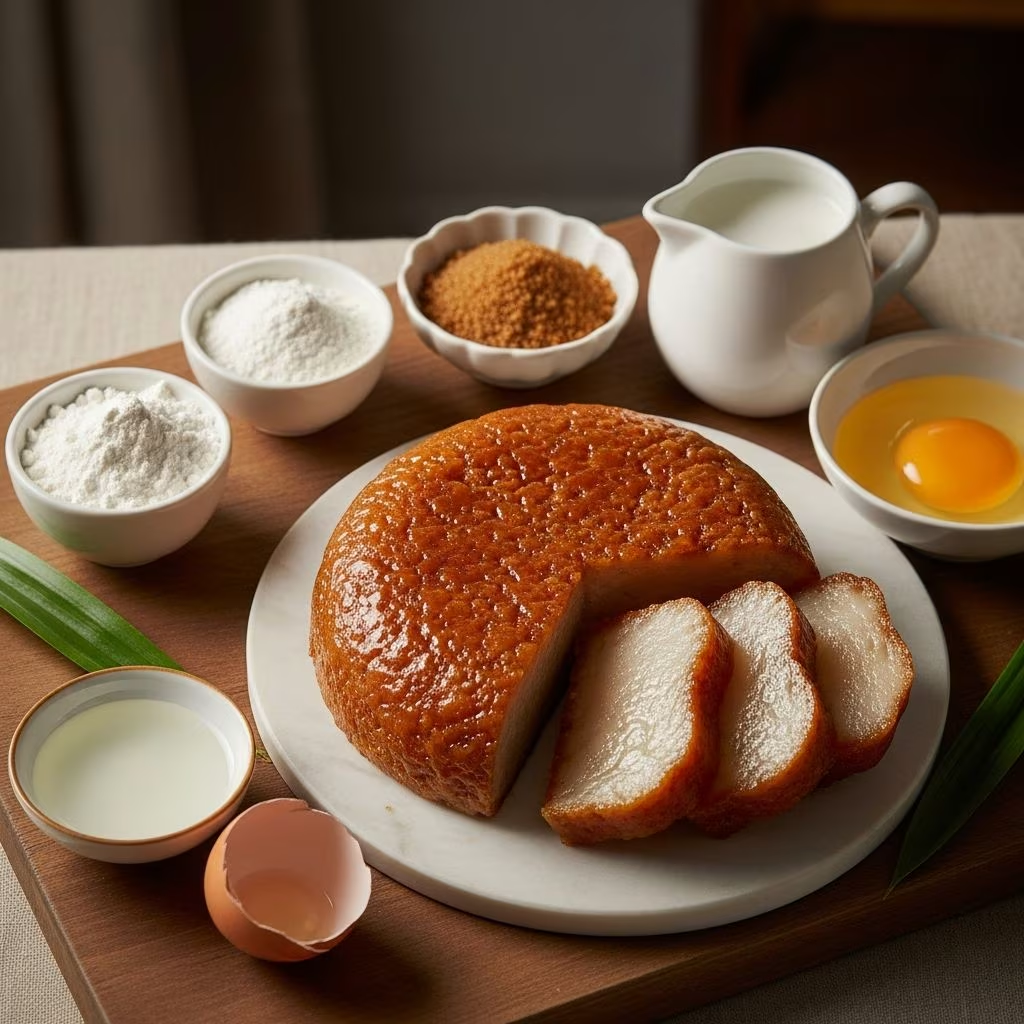
Traditional Nian Gao captures the essence of Lunar New Year with its sticky, sweet texture symbolizing growth and good fortune. This streamlined version relies on just five basic ingredients to deliver authentic results without complexity.
The Cultural Heart of Nian Gao
Nian Gao, known as a rice cake in various Asian cultures, holds deep significance during festive seasons. Pronounced “nee-en gow,” it represents rising prosperity, as the homophone for “year high” suggests upward progress. Families prepare it by steaming glutinous rice flour into a dense, chewy block that firms over days.
Variations span regions: Tikoy in the Philippines, Fa Gao in parts of China, and Kue Bakul in Indonesia, each adapting local sugars like palm or coconut varieties. The core remains glutinous rice flour for its unique stickiness, paired with sweeteners for richness.
Essential Ingredients Breakdown
With minimal components, this recipe emphasizes quality. Here’s what you need:
- Glutinous rice flour (600g): The star for chewiness; sourced from sticky rice, naturally gluten-free.
- Dark brown sugar (400g): Provides molasses depth; substitutes include coconut sugar or palm sugar for nuanced flavors.
- Water (600ml): Balances the batter to pourable consistency.
- Neutral oil (1 tbsp): Prevents sticking and adds subtle gloss.
- Banana leaves or oil for lining: Imparts aroma; parchment works as alternative.
Optional enhancements like ginger or coconut milk elevate taste without straying from simplicity.
Step-by-Step Preparation Guide
Creating Nian Gao demands patience, especially in cooling, but the process is straightforward.
Syrup base: Combine sugars and water in a saucepan. Heat gently until dissolved, stirring occasionally. Cool fully to avoid cooking the flour prematurely.
Mix batter: Sift glutinous flour into a bowl. Gradually whisk in cooled syrup and oil until lump-free. Strain if needed for smoothness.
Prepare mold: Line an 8-inch round pan with oiled banana leaves or parchment. Pour batter, tapping to release air bubbles.
Steam setup: Use a wok or steamer with boiling water. Place pan on rack, cover loosely with foil to trap steam without condensation drips. Steam high for 30 minutes, then low for 2-3 hours.
Cool and rest: Expect a soft center post-steaming—normal. Cool at room temperature, then refrigerate wrapped. It firms by day 2-3 for slicing.
| Method | Time | Equipment | Notes |
|---|---|---|---|
| Traditional Steam | 3 hours | Wok/Steamer | Refill water; use towel on lid |
| Instant Pot | 45-75 min high pressure | Pressure Cooker | 1 cup water + trivet; natural release |
| Slow Cooker | 10-12 hours low | Slow Cooker | Boiling water pour; smaller mold |
Modern Cooking Techniques
While steaming defines tradition, appliances speed things up. In an Instant Pot, 60 minutes high pressure for a 6-inch pan yields perfect results, with natural release preserving moisture. Slow cookers mimic low-and-slow steaming over 10 hours, ideal for overnight prep.
Pan sizes matter: taller molds need extra time due to thickness. Aluminum or steel conducts heat best; avoid thick glass. These methods cut traditional 4+ hour steams while maintaining texture.
Troubleshooting Common Issues
Sticky rice cakes can challenge novices. Address these:
- Too soft? Extend rest to 3 days; it sets via starch retrogradation.
- Lumps in batter? Strain post-mixing; ensure syrup is cool.
- Cracks on top? Loose foil cover prevents rapid drying.
- Mold growth? Refrigerate after firming; freeze slices for months.
Glutinous flour absorbs moisture slowly—patience ensures success.
Creative Serving Suggestions
Fresh Nian Gao suits steaming, but transformations shine. Slice thinly (1/4-inch) and pan-fry in oil until golden and crispy outside, chewy inside—5 minutes per side.
- Egg-dipped fry: Whisk egg with water; coat slices for savory contrast.
- Waffle iron hack: Grease and cook 4-6 minutes for textured crisps.
- Stir-fry addition: Cube and toss with veggies or meat for savory dishes.
- Dessert style: Grill with sesame or serve with tea.
These elevate the plain cake into versatile treats.
Storage and Longevity Tips
Post-cooling, wrap tightly in plastic. Room temp holds 2-3 days; fridge extends to weeks. Freeze portions up to 6 months—thaw and fry directly. Avoid preservatives for natural purity.
Nutritional Insights and Variations
Primarily carbs from rice flour and sugar, Nian Gao offers quick energy. A slice (50g) provides ~200 calories, naturally gluten-free. Adapt with:
- Low-sugar: Half brown sugar, add dates.
- Flavored: Ginger, orange zest, or coconut milk.
- Vegan: Already so; use plant oils.
Portion mindfully during feasts.
Frequently Asked Questions
What if I can’t find glutinous rice flour?
Use sweet/sticky rice flour only—no substitutes like regular rice flour yield chewiness.
Can I bake Nian Gao?
Steaming is traditional for moisture; baking dries it out unless water-bath baked.
How do I know it’s done steaming?
It jiggles softly; firmness develops post-rest. Toothpick test unreliable due to density.
Is Nian Gao freezer-friendly?
Yes—slice, wrap individually, freeze. Fry from frozen.
Why banana leaves?
They infuse subtle flavor and ease release; oiled parchment substitutes well.
Word count: 1678 (excluding HTML tags)
References
- Easy Nian Gao Recipe (Tikoy/Fa Gao/Kue Bakul) — What to Cook Today. 2023-01-15. https://whattocooktoday.com/nian-gao.html
- Nian Gao (年糕, Chinese New Year Rice Cake) — Healthy Nibbles and Bits. 2024-02-10. https://healthynibblesandbits.com/nian-gao-recipe-new-year-rice-cake/
- Easy, 4 Ingredient Low Sugar Nian Gao — Adrienne RD. 2023-11-20. https://www.adriennerd.com/easy-nian-gao-chinese-new-year-cake-recipe/