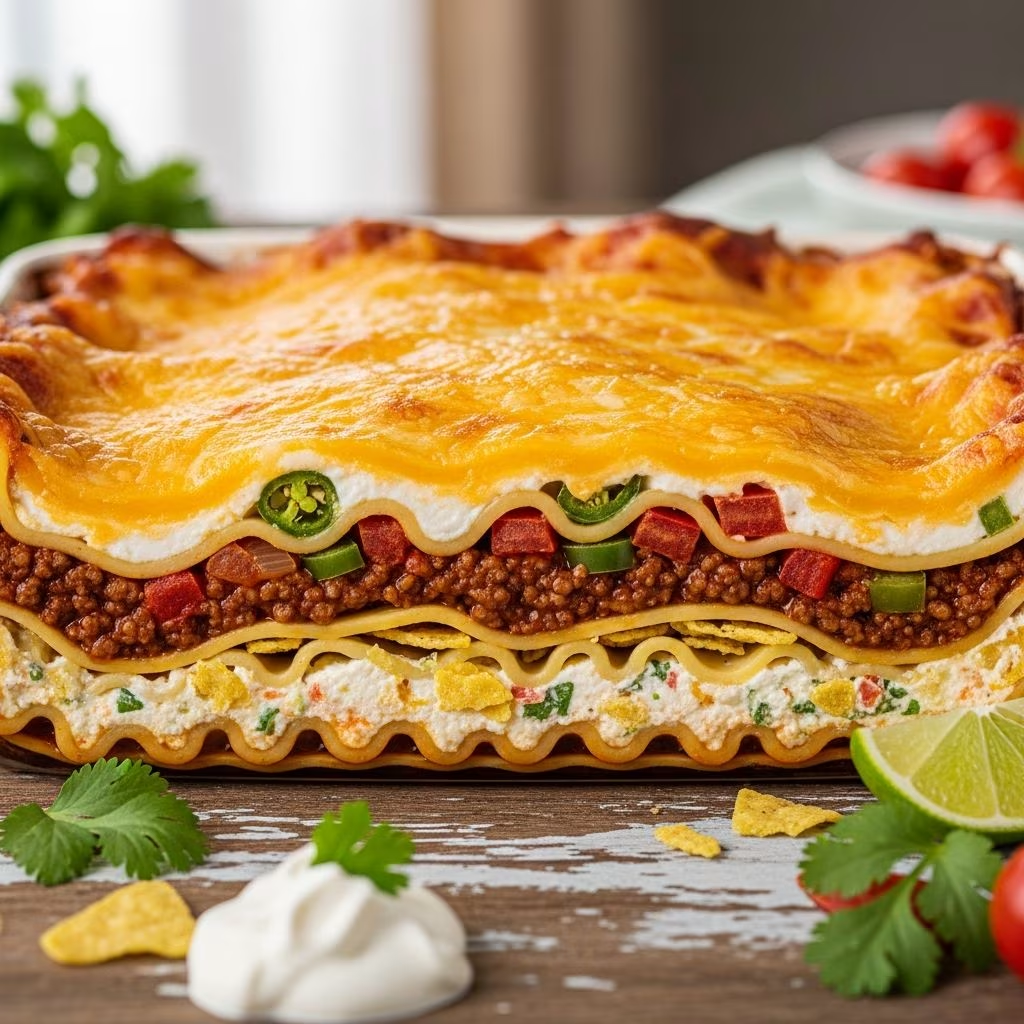
When two beloved cuisines collide, magic happens. Taco lasagna represents the perfect marriage between Italian comfort food and Mexican-inspired flavors, creating a casserole that appeals to families seeking something both familiar and exciting. This innovative dish swaps traditional pasta sheets for soft flour tortillas and replaces Italian meat sauce with zesty taco-seasoned ground meat, resulting in a meal that satisfies cravings for both tacos and lasagna simultaneously.
The beauty of taco lasagna lies in its versatility and accessibility. Whether you’re preparing dinner for a busy weeknight or hosting a gathering, this casserole adapts to your schedule and preferences. The layered construction ensures that every forkful contains the perfect combination of textures and flavors, from the tender tortillas to the melty cheese and seasoned meat filling.
Understanding the Core Components
Before assembling your taco lasagna, it’s important to understand how each ingredient contributes to the final dish. The foundation of this casserole depends on quality components that work together harmoniously.
The Protein Foundation
The meat layer forms the heart of taco lasagna. Most recipes call for ground beef, though ground chicken, turkey, or even chorizo can substitute based on dietary preferences or availability. One pound of meat typically serves six to eight people when combined with other filling ingredients. The meat should be thoroughly cooked and seasoned, then combined with aromatic vegetables like onions and garlic to build depth of flavor before layering.
Beans and Vegetables
Black beans or refried beans add substance to the filling while contributing protein and fiber. When using canned beans, you can choose whether to rinse them based on the sodium content you prefer. Corn, diced tomatoes, and peppers introduce sweetness, texture, and nutritional balance. These vegetables not only enhance the flavor profile but also make the casserole more visually appealing with layers of color.
The Tortilla Structure
Flour tortillas replace traditional lasagna noodles in this fusion dish. A standard recipe uses six to twelve tortillas, depending on the baking dish size and desired number of layers. Slightly older tortillas work particularly well because they absorb the surrounding sauces more effectively than fresh ones. For those avoiding gluten, corn tortillas provide an acceptable alternative, though they may crumble more easily during layering.
Cheese Selection
Mexican cheese blends, sharp cheddar, pepper jack, or Monterey Jack varieties all work well for taco lasagna. These cheeses melt smoothly and develop the characteristic golden-brown top that makes casseroles visually appealing. Most recipes recommend three cups of shredded cheese distributed throughout the layers and sprinkled on top for maximum melting and browning during baking.
Building Your Layering Strategy
The success of taco lasagna depends significantly on how you arrange the components in your baking dish. A systematic approach ensures even distribution of flavors and prevents soggy or dry spots.
| Layer Position | Component | Quantity Guide | Purpose |
|---|---|---|---|
| Bottom | Tortillas | Cut pieces to cover dish | Creates foundation and prevents sticking |
| Second | Meat mixture | Half of prepared filling | Distributes protein throughout |
| Third | Salsa or sauce | One-third of sauce | Adds moisture and flavor |
| Fourth | Cheese | One-third of cheese blend | Creates adhesive layers |
| Fifth | Tortillas | Second layer of pieces | Separates filling layers |
| Repeat | Meat, sauce, cheese | Remaining ingredients | Builds complete structure |
| Top | Tortillas and cheese | Final tortilla pieces plus cheese | Creates golden, melted finish |
Preparation and Cooking Instructions
Initial Setup
Begin by preheating your oven to 375 degrees Fahrenheit. Use a nine-by-thirteen-inch baking dish, which provides the ideal size for most taco lasagna recipes. Lightly grease the dish with cooking spray or oil to prevent sticking and facilitate cleanup afterward.
Preparing the Meat Base
Heat olive oil in a large skillet over medium-high heat. Add diced onions and minced garlic, sautéing until fragrant and the onions become translucent, typically three to five minutes. Add your chosen ground meat, breaking it into small pieces as it cooks. Continue cooking until the meat browns completely and releases no pink color. This process usually takes eight to ten minutes.
Once cooked, drain excess grease from the skillet if desired, though some fat adds flavor. Reduce heat to medium and add taco seasoning packets along with half a cup of water, stirring well to combine. Simmer for two to three minutes until the seasoning coats all the meat and the liquid reduces slightly. This concentrated mixture becomes the flavorful foundation for your lasagna.
Incorporating Additional Ingredients
After the meat is seasoned, add drained black beans, corn, diced tomatoes, and any optional ingredients like green chilies. Stir to combine, then add salsa to the mixture. The salsa introduces additional moisture and flavor that will distribute throughout the baking dish during cooking. Simmer this combined mixture for an additional three to five minutes, allowing flavors to meld before layering begins.
Layering Process
Pour a thin layer of salsa on the bottom of your prepared baking dish. Arrange tortilla pieces to cover this base layer. Spread half of the meat mixture over the tortillas, followed by half of any sour cream if using this ingredient. Sprinkle one-third of your cheese blend over this layer. Repeat with another tortilla layer, the remaining meat mixture, remaining sour cream, and another third of the cheese. Top with final tortilla pieces and the remaining cheese to create an appetizing golden-brown finish after baking.
Baking Time
Cover the assembled casserole with aluminum foil and bake for twenty-five minutes. This initial covered cooking allows the tortillas to soften and flavors to meld without the top drying out. Remove the foil and bake for an additional ten to fifteen minutes until the cheese melts completely and develops a light golden-brown color on top. The total baking time typically ranges from thirty-five to forty minutes.
Customization and Variation Options
Protein Alternatives
Ground chicken offers a leaner alternative to beef while maintaining authentic taco flavors. Turkey provides another healthy option with similar cooking times and seasoning compatibility. Chorizo introduces smokier, spicier notes for those preferring more assertive flavors. Vegetarian versions can substitute crumbled tofu, lentils, or additional beans for meat components while maintaining the casserole’s satisfying qualities.
Sauce and Spice Level
Choose mild salsa for family-friendly meals, medium for balanced heat, or hot for spice enthusiasts. Some cooks incorporate enchilada sauce instead of salsa for deeper, more complex flavors. Adding diced jalapeños, green chilies, or cayenne pepper allows fine-tuning of the heat level to match your audience’s preferences.
Cheese Combinations
While Mexican cheese blends work reliably, experimenting with sharp cheddar and pepper jack creates interesting flavor dynamics. Monterey Jack adds creaminess, while queso fresco crumbled on top after baking provides fresh, crumbly contrast. Mixing two or three cheese varieties prevents flavor monotony and adds sophistication to the final dish.
Topping Suggestions
Fresh toppings added after baking preserve their texture and brightness. Consider garnishing with sliced jalapeños, diced tomatoes, fresh cilantro, sliced red onion, crushed tortilla chips, or avocado slices. A generous dollop of sour cream on individual servings adds cooling contrast to the warm casserole. Lime wedges passed at the table allow diners to adjust brightness and acidity according to personal preference.
Common Questions About Taco Lasagna
Can I prepare taco lasagna in advance?
Yes, taco lasagna actually improves when assembled a few hours before baking, as flavors have time to meld. You can assemble it, cover it with plastic wrap, and refrigerate for up to twenty-four hours. If baking from cold, add ten to fifteen minutes to the total baking time to ensure the center heats through properly.
What baking dish should I use?
A standard nine-by-thirteen-inch ceramic or metal baking dish works best. Glass dishes conduct heat quickly, so monitor the top to prevent excessive browning. Metal dishes distribute heat evenly and typically produce the most consistent results.
How should I store and reheat leftovers?
Cool completely before covering with plastic wrap or transferring to an airtight container. Refrigerate for up to four days. Reheat individual portions in the microwave for two to three minutes or reheat the entire casserole, covered with foil, in a three-hundred-fifty-degree oven for fifteen to twenty minutes until heated through.
Can I freeze taco lasagna?
Yes, freeze cooked casserole for up to three months. Cool completely, wrap tightly with plastic wrap and aluminum foil, and label with the date. Thaw overnight in the refrigerator before reheating, or reheat directly from frozen, adding twenty to twenty-five minutes to the standard reheating time.
What if my tortillas tear during assembly?
Slightly older or stale tortillas handle layering better than fresh ones. You can also briefly warm fresh tortillas in a skillet or microwave to increase flexibility. Small tears don’t compromise the final dish; simply press torn pieces together or overlap them during layering.
Nutritional Considerations
Taco lasagna provides substantial protein from both the ground meat and beans, making it satisfying for hearty appetites. The vegetables contribute fiber, vitamins, and minerals that balance the richness from cheese and sour cream. Using leaner meat options like ground chicken or turkey reduces saturated fat while maintaining flavor and texture. Incorporating additional vegetables like zucchini or mushrooms increases nutritional density without significantly altering the dish’s character.
Portion control remains important since casseroles encourage generous servings. A typical serving measures approximately four by three inches, yielding reasonable calorie and fat content while satisfying appetites. Balancing the main dish with fresh sides like a crisp green salad or simple tomato-based salsa creates more nutritionally complete meals.
Final Thoughts on This Fusion Favorite
Taco lasagna represents modern home cooking at its finest—taking inspiration from established traditions and creating something entirely new that honors both sources. The dish’s flexibility accommodates dietary restrictions, ingredient preferences, and flavor adventures while remaining fundamentally accessible to cooks of any skill level. Whether you’re introducing your family to creative fusion cuisine or seeking a simple weeknight dinner solution, taco lasagna delivers satisfying results that encourage repeat preparation and adaptation.
References
- Recipes Simple: Taco Lasagna Recipe — Recipes Simple. 2024. https://www.recipessimple.com/taco-lasagna-recipe/
- Easy Taco Lasagna — Al Dente Diva. 2024. https://aldentediva.com/easy-taco-lasagna/
- Taco Lasagna With Tortillas and Beef — Plated Cravings. 2024. https://platedcravings.com/taco-lasagna/
- Best Taco Lasagna Recipe — Delish. 2024. https://www.delish.com/cooking/recipe-ideas/a62059092/taco-lasagna-recipe/
- Taco Lasagna — Running to the Kitchen. 2024. https://www.runningtothekitchen.com/taco-lasagna/