Stir-fries represent a cornerstone of fast, nutritious cooking, blending proteins, vegetables, and savory sauces in a single wok or skillet. These dishes originated from Asian culinary traditions but have evolved into global favorites for their speed and adaptability. With preparation times often under 30 minutes, they fit perfectly into busy schedules while delivering balanced nutrition through fresh produce and lean meats or plant-based options.
Why Stir-Fries Are Perfect for Everyday Meals
One key advantage of stir-fries lies in their versatility. You can swap ingredients based on what’s in your fridge, making them ideal for reducing food waste. High-heat cooking preserves the crunch of vegetables and seals in juices from proteins, resulting in vibrant colors and bold textures. Most recipes require minimal equipment—a wok or large skillet, a heat source, and basic utensils—keeping cleanup simple.
Nutritionally, stir-fries shine by combining fiber-rich veggies like broccoli and bell peppers with proteins such as chicken or tofu. Sauces often incorporate low-sodium soy, honey for natural sweetness, and sesame oil for depth, allowing control over calories and flavors. Studies from health organizations emphasize such meals for their role in heart-healthy diets, thanks to reduced oil use compared to frying methods.
Mastering the Essential Stir-Fry Sauce
A great stir-fry hinges on its sauce, which ties everything together with umami, sweetness, and a touch of heat. Start with a base of reduced-sodium soy sauce to avoid excess saltiness. Add honey or a similar sweetener for balance, and sesame oil for nutty aroma. Common thickeners like cornstarch create a glossy coating that clings to ingredients.
Basic recipe for 4 servings:
- 1/2 cup low-sodium soy sauce
- 2 tablespoons honey
- 2 teaspoons sesame oil
- 1 tablespoon cornstarch mixed with 2 tablespoons water
- Optional: grated ginger, minced garlic, or chili flakes
Whisk these in a bowl, then simmer in the pan for 3-5 minutes until thickened. This method ensures even distribution without sogginess.
Chicken Stir-Fry: Classic and Customizable
Chicken stir-fry remains a top choice for its tenderness and mild flavor, pairing well with almost any vegetable. Cube boneless, skinless breasts into bite-sized pieces for quick cooking. Season lightly with salt and pepper before stir-frying.
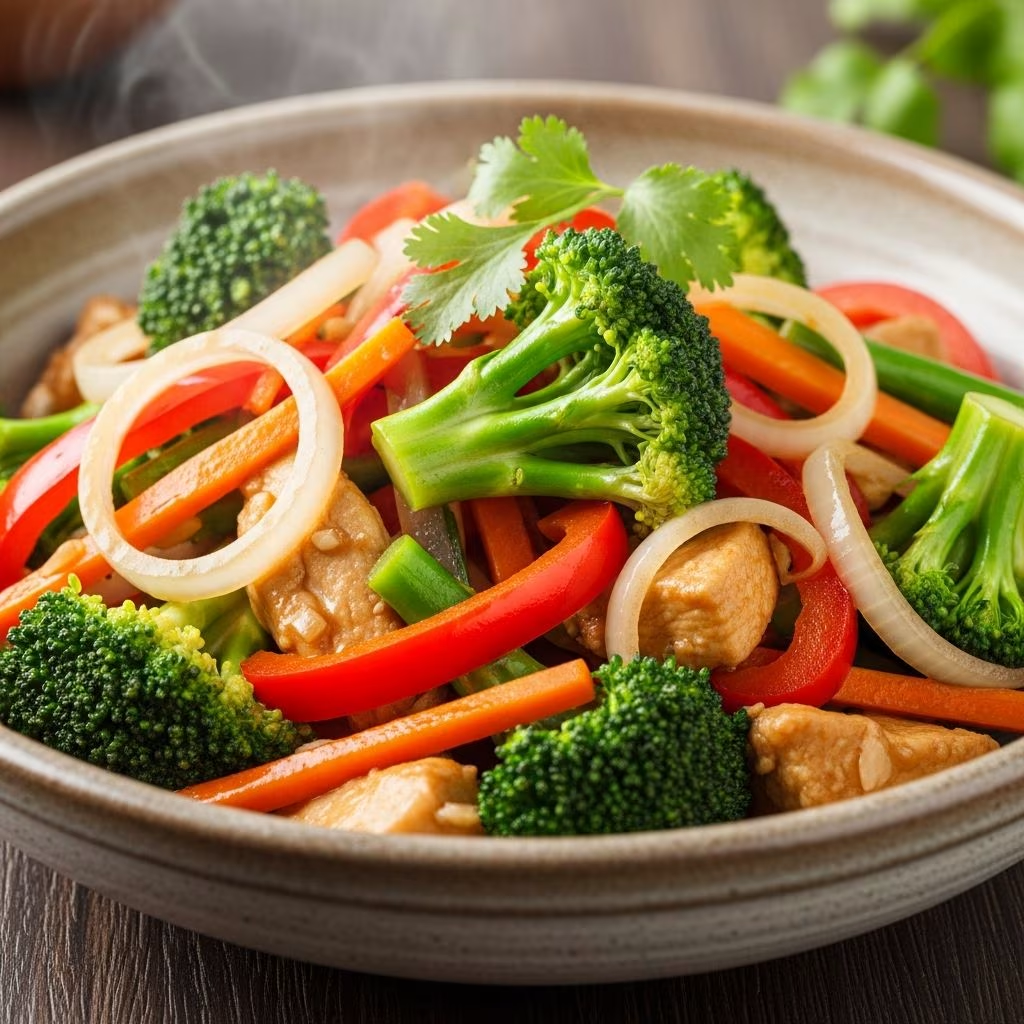
Try this straightforward version: Heat oil in a skillet over medium-high. Cook 1 pound chicken until golden, about 5-8 minutes. Remove, then sauté broccoli florets, sliced bell peppers, and carrots until crisp-tender. Return chicken, pour in sauce, and toss with cashews for crunch. Total time: 25 minutes, yielding 366 calories per serving.
Variations include adding snap peas for sweetness or mushrooms for earthiness. For extra flavor, marinate chicken in soy, cornstarch, and baking soda for velvety texture.
| Ingredient | Quantity | Prep Tip |
|---|---|---|
| Chicken breast | 1 lb, cubed | Pat dry for better browning |
| Broccoli | 2 cups florets | Blanch briefly if preferring softer texture |
| Bell peppers | 1 each red/yellow, sliced | Remove seeds for milder heat |
| Sauce | As above | Adjust honey for sweetness level |
Vegetarian Stir-Fry: Veggie-Packed Powerhouses
For meat-free options, vegetable stir-fries burst with color and nutrients. Focus on a mix of textures: crisp snap peas, tender mushrooms, and sturdy broccoli. A sauce with rice vinegar adds tang to complement the natural sugars in peppers and carrots.
Heat olive oil in a wok, add sliced cremini mushrooms, bell peppers, broccoli, snap peas, and carrots. Stir for 3-4 minutes until vibrant. Pour in sauce featuring soy, honey, ginger, and cornstarch; cook until glossy. Serve over rice or noodles for a complete meal ready in 20 minutes.
Pro tip: Mushrooms release water, so cook them first to intensify flavor. This dish supports plant-based eating with high fiber and antioxidants from the veggie medley.
Beef Stir-Fry: Bold and Juicy
Beef brings richness to stir-fries, especially sirloin or flank steak sliced thinly against the grain for tenderness. Marinate in light and dark soy, oyster sauce, cornstarch, and oils to tenderize and flavor.
Sear beef quickly over high heat to avoid toughness, then add onions or mixed veggies. A sauce with garlic and sesame ties it together. This method yields juicy results in under 15 minutes post-marination.
Tofu and Plant-Based Innovations
Tofu offers a neutral canvas for bold sauces. Press firm tofu to remove moisture, then cube and stir-fry until golden. Pair with edamame, carrots, peppers, and snap peas over brown rice noodles. A sriracha-laced sauce adds spice.
Other ideas: Spicy coconut veggie stir-fry or mushroom-broccoli noodle bowls for umami depth. These keep calories low while satisfying hunger.
Quick Tips for Stir-Fry Success
- High heat is key: Use the hottest burner to achieve wok hei, that smoky essence.
- Prep everything: Mise en place—chop all ingredients beforehand as cooking is fast.
- Cook in batches: Avoid overcrowding to prevent steaming instead of stir-frying.
- Order matters: Sturdy veggies first (broccoli, carrots), then softer ones (peppers, snap peas), proteins last before sauce.
- Oil choice: Neutral like canola or peanut withstands high temps; sesame for finishing.
Nutrition and Customization Guide
Stir-fries adapt to dietary needs: gluten-free with tamari, vegan sans honey (use maple), low-carb over cauliflower rice. A typical serving provides 300-400 calories, 20-30g protein, and multiple veggie servings.
| Diet | Swaps |
|---|---|
| Low-Sodium | Tamari + extra herbs |
| Keto | Cauliflower rice, more fats |
| Vegan | Tofu, agave nectar |
Common Mistakes to Avoid
Overcrowding the pan leads to mushy results—cook proteins and veggies separately if needed. Skipping sauce simmer time means watery coatings. Always taste and adjust seasoning before serving.
Pairing Suggestions
Serve with steamed jasmine rice, quinoa, or noodles. Garnishes like green onions, sesame seeds, or lime wedges elevate freshness. For drinks, pair with iced green tea or light beer.
FAQs
What is the best oil for stir-frying?
Canola, peanut, or avocado oil for high smoke points. Add sesame oil at the end for flavor.
Can I make stir-fry ahead?
Prep ingredients yes, but cook fresh for best texture. Reheats well in a skillet.
How to make stir-fry less salty?
Use low-sodium soy, balance with honey or vinegar, add unsalted nuts.
Best veggies for beginners?
Broccoli, bell peppers, carrots—forgiving and colorful.
Is tofu stir-fry healthy?
Yes, high protein, low cal, packed with veggies.
References
- Best Chicken Stir-Fry Recipe — Delish. 2023-10-01. https://www.delish.com/cooking/recipe-ideas/a45362568/best-chicken-stir-fry-recipe/
- Easy Veggie Stir Fry Recipe — Love and Lemons. 2023-05-15. https://www.loveandlemons.com/stir-fry-recipe/
- Healthy Stir Fry Recipes with Homemade Sauces — Fannetastic Food. 2022-11-20. https://www.fannetasticfood.com/mix-match-stir-fry-recipes/
- Easy Chicken Stir Fry Recipe — Mom On Timeout. 2023-08-10. https://www.momontimeout.com/easy-chicken-stir-fry-recipe/
- 17 Stir-Fry Recipes — Budget Bytes. 2023-02-28. https://www.budgetbytes.com/stir-fry-recipes/