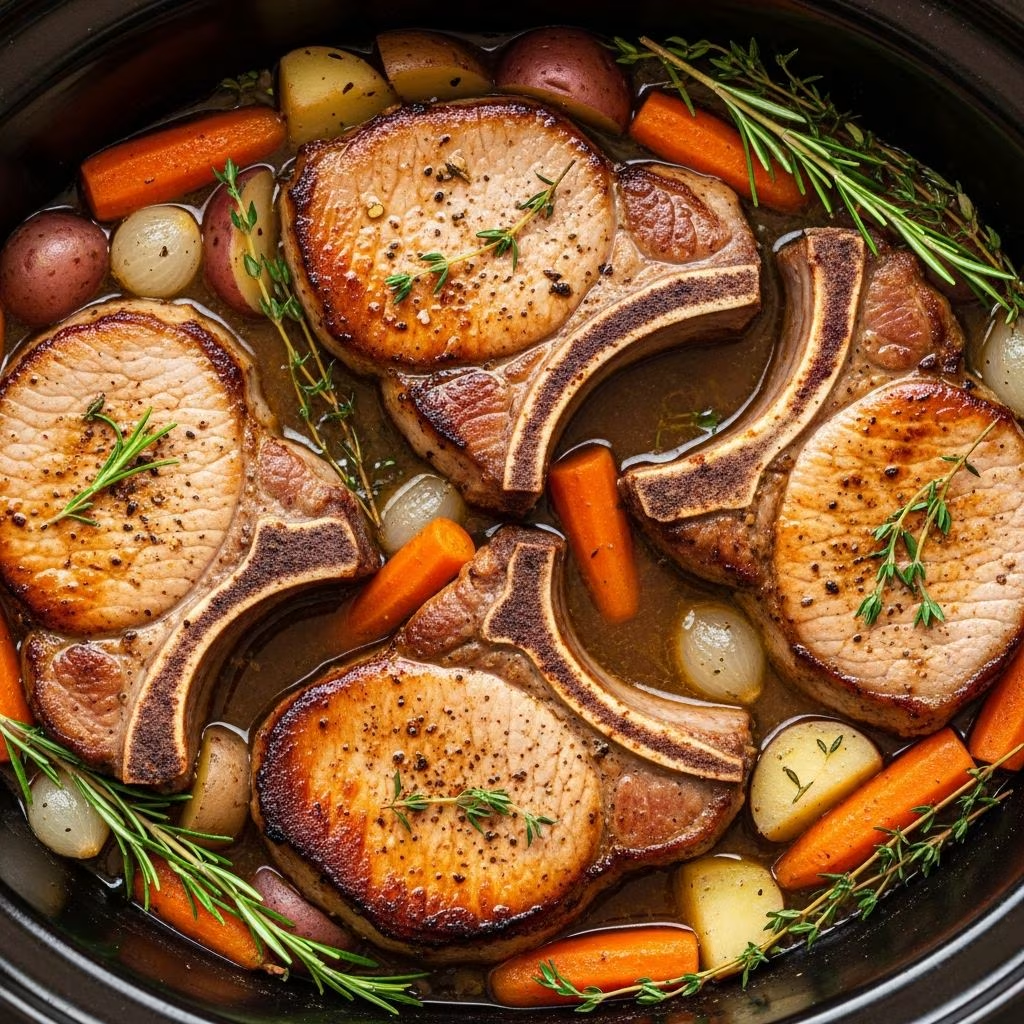
Preparing a satisfying dinner doesn’t require hours of active cooking or complicated techniques. Slow cooker pork chops offer a practical solution for busy home cooks seeking flavorful meals with minimal effort. The slow cooking process naturally tenderizes the meat while infusing it with savory flavors from accompanying ingredients. Whether you’re new to slow cooking or a seasoned kitchen veteran, these recipes demonstrate how accessible and rewarding this cooking method can be.
Why Slow Cookers Transform Pork Chops
The slow cooker’s low, moist heat environment creates ideal conditions for cooking pork chops. Unlike traditional stovetop methods that can quickly dry out this lean meat, the enclosed slow cooker environment maintains moisture throughout the extended cooking time. This gentle approach breaks down muscle fibers gradually, resulting in meat that remains juicy and tender rather than tough or stringy.
The extended cooking duration also allows flavors to meld and intensify. Seasonings penetrate deeper into the meat, and broths transform into rich, savory gravies naturally without requiring constant attention or precise timing. This makes slow-cooked pork chops particularly appealing for families seeking wholesome, home-cooked meals without the stress of traditional cooking methods.
Classic Preparation Method with Creamy Gravy
The foundation of many successful slow cooker pork chop recipes involves creating a flavorful liquid base that simultaneously cooks and seasons the meat. This approach combines complementary ingredients that work together to build depth of flavor while producing an accompanying sauce for serving.
Building Your Flavor Foundation
Begin by combining savory dry ingredients in your slow cooker before adding the meat. A combination of onion soup seasoning, dry gravy mix, and cream-based soups creates a versatile base that accommodates various flavor preferences. The soup components add richness and body, while dry seasonings provide concentrated flavor without requiring fresh ingredient preparation.
Broths serve as the liquid component that prevents drying while enabling even cooking. Low-sodium options allow you to control the final salt level, accommodating different dietary preferences within your household. The choice between chicken and beef broth influences the final flavor profile, with chicken broth offering a milder backdrop and beef broth providing more robust savory notes.
Seasoning the Meat Directly
Before placing pork chops into the cooking liquid, season each piece individually on both sides. Garlic powder stands as a reliable seasoning choice that complements pork’s natural flavors without overwhelming more delicate palates. Freshly ground pepper adds subtle complexity, while avoiding additional salt respects the sodium already present in soup mixes and broths.
Space pork chops evenly in the slow cooker rather than stacking them. This positioning ensures that cooking liquid contacts all surfaces, promoting uniform cooking and consistent texture throughout each piece. Arrange chops so the gravy mixture covers them adequately, which contributes to both moisture retention and flavor absorption.
Cook Time Guidelines
Low setting cooking typically requires four to six hours for bone-in pork chops to reach optimal tenderness. The longer duration at lower temperatures prevents overcooking while allowing thorough tenderization. Higher heat settings compress this timeline to approximately three to four hours, though the gentler low-heat approach often produces superior texture and moisture retention.
Internal temperature provides the most reliable doneness indicator. Pork safely reaches the proper consumption temperature at 145°F, and a meat thermometer inserted into the thickest portion confirms readiness. Some cooks prefer slightly higher temperatures for additional tenderness, particularly when cooking longer on the low setting.
Creating a Thickened Gravy
As the final cooking stage approaches, many recipes benefit from sauce thickening. A cornstarch slurry—cornstarch whisked with cold water until smooth—incorporates into the hot cooking liquid to create a velvety gravy. Adding this thickener typically requires switching the slow cooker to high heat and cooking for an additional twenty to thirty minutes until the desired consistency develops.
The cornstarch method works more effectively than flour for slow cooker applications because the extended high-heat exposure fully activates the thickening power without creating a raw flour taste. Whisking thoroughly before addition prevents lumps that might result in an uneven texture.
Minimalist Approaches for Streamlined Preparation
Not every successful slow cooker recipe requires extensive ingredient lists. Some of the most satisfying results come from simplified combinations that highlight pork’s natural qualities while adding essential flavor through carefully selected components.
Three-Ingredient Foundations
Ultra-simplified recipes prove that excellent results don’t demand complexity. Combining pork chops with cream of mushroom soup and a packet of French onion dip seasoning creates a cohesive dish with minimal preparation time. The soup provides necessary moisture and richness, while the dip packet delivers concentrated savory and onion flavors without requiring fresh onion chopping or sautéing.
This approach works particularly well when grocery store sales present opportunities to stock pork chops affordably. The minimal ingredient list means you likely have everything on hand, eliminating the need for additional shopping trips. Five minutes of actual preparation time makes this option ideal for unexpectedly hectic days when standard cooking routines feel unmanageable.
Flexible Cooking Duration
Simplified recipes accommodate various schedule constraints through flexible cooking times. Low-heat cooking for four to six hours provides traditional tender results, while high-heat cooking in two to three hours works when time is limited. Understanding that both approaches achieve the desired outcome empowers cooks to choose based on daily circumstances rather than recipe requirements.
Customization and Variation Strategies
The basic slow cooker pork chop framework accepts numerous modifications reflecting personal preferences and available ingredients. Building on established foundations rather than starting from scratch accelerates recipe development.
Seasoning Adjustments
Ranch dressing mix offers an alternative to onion soup seasoning, delivering herbaceous notes and subtle dairy flavor that appeals to different palates. Pepper quantity can increase for those preferring more assertive spice, while garlic powder remains adjustable based on individual garlic preference. Some cooks add fresh herbs near the end of cooking to brighten heavy cream-based sauces with herbal freshness.
Sauce Component Options
Cream of chicken soup represents the most common selection for pairing with pork, but cream of mushroom or cream of celery provide worthwhile alternatives. Beef broth substitutes for chicken broth when a more robust final flavor is desired. These ingredient swaps maintain recipe structure while producing noticeably different taste experiences from identical cooking methods.
Protein Flexibility
The same cooking methods that produce tender pork chops work equally well with bone-in or boneless cuts, accommodating different purchasing preferences and family preferences. Boneless chops cook slightly faster due to reduced thickness, while bone-in varieties add subtle flavor complexity. Chicken breasts represent another viable substitute for those avoiding pork, requiring identical cooking times and adapting naturally to all seasoning variations.
Side Dish Pairings and Service Suggestions
Slow-cooked pork chops with their accompanying gravy pair naturally with starchy side dishes that complement rich sauces. These pairings create complete, balanced meals within minimal additional cooking effort.
Starches That Showcase Gravies
Mashed potatoes remain the classic accompaniment, providing a neutral canvas for savory gravy presentation. Buttered egg noodles offer a more refined texture that absorbs sauce while maintaining structural integrity through service. White or brown rice provide lighter alternatives for those seeking less rich sides, while allowing gravy to coat individual grains attractively.
Vegetable Contributions
Simple steamed vegetables add color, nutrition, and textural contrast to pork-focused plates. Steamed green beans, roasted carrots, or sautéed spinach require only basic preparation and don’t demand oven space when pork cooks in the slow cooker. These additions transform single-component meals into complete, balanced dinners.
Garnish and Presentation
Fresh parsley sprinkled over finished plates adds visual appeal and subtle herbal notes that brighten heavy sauces. A crack of black pepper provides visual interest while emphasizing savory flavors. These simple garnishes require no additional cooking while noticeably improving plate presentation.
Practical Considerations for Slow Cooker Success
Equipment Selection
A 5 to 6-quart slow cooker accommodates most household-sized pork chop recipes comfortably, providing adequate space for proper ingredient arrangement and even cooking. Smaller cookers risk overcrowding, which impedes proper liquid circulation and heat distribution. Oval-shaped cookers offer advantages over round models for arranging chops efficiently.
Liquid Levels and Coverage
Ensuring adequate sauce mixture to cover pork chops prevents dry edges while promoting uniform cooking. However, excessive liquid creates a soupy final result requiring additional thickening. Most recipes achieve optimal consistency when liquid rises approximately halfway up the chops’ sides, allowing steam circulation while maintaining moisture.
Timing Flexibility
Slow cookers accommodate modest timing variations without compromising quality. Pork chops cooking on low for extended periods—up to eight hours in some cases—remain tender rather than becoming overcooked. This flexibility suits variable daily schedules, allowing dinner preparation to adapt to work delays or schedule changes without sacrificing quality.
Addressing Common Cooking Questions
Can I cook boneless and bone-in pork chops together?
Yes, but boneless chops typically reach optimal tenderness slightly before bone-in varieties. Placing boneless chops toward the cooker’s center, where temperatures are slightly lower, can help equalize cooking times. Alternately, adding boneless chops partway through cooking produces more consistent results.
What happens if I forget to thicken the gravy?
The cooking liquid remains thin but flavorful. While thickened gravy offers visual appeal and better coating properties, thin sauce still enhances pork chops and accompaniments. If thickening becomes necessary after serving begins, removing a small amount of liquid, heating it with cornstarch slurry, then returning it to the cooker creates thicker gravy without interrupting service significantly.
How do I prevent pork chops from becoming tough?
Avoiding excessive heat and ensuring adequate liquid throughout cooking preserves moisture and tenderness. Resisting the urge to remove the lid frequently maintains consistent internal temperatures. Choosing thick-cut chops rather than thin ones naturally resists overcooking, as additional thickness requires longer cooking times that allow gradual tenderization rather than sudden drying.
Can these recipes be prepared ahead?
Many slow cooker pork chop recipes benefit from overnight refrigeration after cooking. Flavors meld further during resting, and meat reheats gently in the slow cooker without additional drying. Some cooks prepare ingredients the previous day, storing them in the slow cooker insert in the refrigerator, then cooking the next day simply by placing the insert in the heated base.
What’s the best way to reheat slow-cooked pork chops?
Gentle reheating in the slow cooker on low setting preserves tenderness and allows gravy to redistribute evenly. Microwave reheating risks creating hot spots that dry surrounding meat. Stovetop reheating at low temperatures with covered cookware also works effectively, though it requires more active monitoring than slow cooker methods.
Nutritional Considerations
Pork chops provide substantial protein and important micronutrients including B vitamins, selenium, and zinc. The slow cooking method preserves these nutritional qualities while the accompanying gravy from cream soups and broths adds calories through fat content. Using low-sodium broth and soup varieties reduces overall sodium without sacrificing flavor satisfaction, making these recipes adaptable to various dietary approaches.
Portion control becomes relevant when serving pork chops with rich cream-based sauces. A single moderately-sized chop with accompanying starch and vegetables creates a satisfying meal without excessive caloric density. The slow cooking method doesn’t add unhealthy fats—instead, it naturally renders some pork fat into the cooking liquid, enhancing flavor while allowing easier removal through refrigeration if desired.
Conclusion: Accessible Excellence in Everyday Cooking
Slow cooker pork chops demonstrate how elementary cooking techniques combined with quality ingredients produce restaurant-caliber results in home kitchens. The minimal active preparation, flexible timing, and consistent superior outcomes make this approach ideal for cooks of all experience levels. Whether following established recipes precisely or adapting them based on preference and availability, slow-cooked pork chops deliver satisfying, complete meals that justify their place in regular dinner rotations.
References
- Safe Minimum Internal Temperature Chart — U.S. Department of Agriculture Food Safety and Inspection Service. https://www.fsis.usda.gov/food-safety/safe-food-handling-and-preparation/cook-safely/safe-minimum-internal-temperature-chart
- Pork Chops: Nutritional Value and Cooking Methods — National Pork Board. https://www.porkboard.org
- Slow Cooker Food Safety Guidelines — U.S. Food and Drug Administration. https://www.fda.gov/food/foodborneillnesscontaminants/peopleatespecialrisk/ucm312704.htm