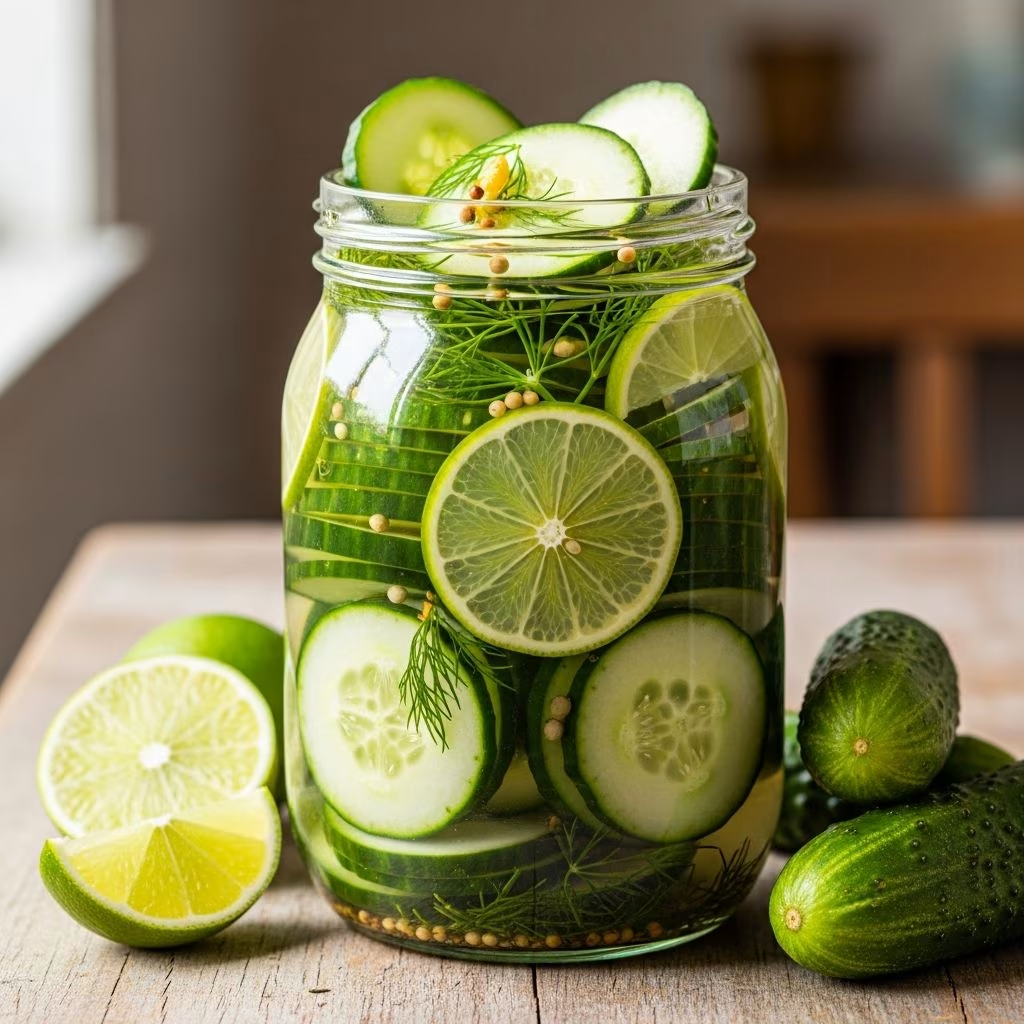
Refrigerator pickles offer a straightforward way to enjoy fresh, crunchy pickled vegetables without the need for boiling water baths or special canning tools. These no-cook or minimally cooked preserves rely on a vinegar-based brine that develops bold flavors over a day or two in the fridge. Ideal for summer cucumbers or year-round veggies, they provide tangy, sweet, or dill-infused bites perfect for sandwiches, burgers, or snacking straight from the jar.
Why Choose Refrigerator Pickles?
Unlike traditional canned pickles that require processing for long-term shelf stability, refrigerator versions prioritize ease and freshness. They stay crisp because there’s no high-heat processing that softens the produce. Preparation takes under 30 minutes, and results are ready in hours to days. This method suits small batches, experimenting with flavors, and reducing food waste with garden surplus.
- Minimal equipment: Just jars, a bowl, and fridge space.
- Fresh taste: Brine infuses quickly without overcooking veggies.
- Customizable: Adjust sweetness, spice, or herbs to preference.
- Short-term storage: Lasts 1-2 months refrigerated, encouraging frequent making.
Essential Ingredients for Success
Core components include fresh vegetables, vinegar, salt, sugar, and aromatics. Cucumbers lead due to their high water content and crunch, but carrots, green beans, or cauliflower work too. White vinegar provides clean acidity; apple cider or rice vinegar adds nuance.
| Ingredient | Role | Common Amounts (for 1 quart) |
|---|---|---|
| Cucumbers (pickling or Persian) | Main vegetable | 1-2 lbs sliced |
| Vinegar (white, rice, or cider) | Preserves and flavors | 1-1.5 cups |
| Salt (kosher or sea) | Draws out moisture, seasons | 1-2 tbsp |
| Sugar (white or brown) | Balances acidity | 0.5-1.5 cups |
| Onions or garlic | Aromatics | 1 cup sliced |
| Spices (dill, mustard seed, peppercorns) | Flavor enhancers | 1-2 tsp each |
Select firm, unblemished produce. Kirby or Persian cucumbers resist sogginess best. Scale ingredients for jar size; aim for veggies fully submerged in brine.
Basic Sweet Refrigerator Pickle Recipe
This versatile starter yields tangy-sweet slices reminiscent of classic styles, ready after 1-2 days.
Ingredients (makes 2 quarts):
- 6 cups thinly sliced cucumbers (peeled if thick-skinned)
- 2 cups thinly sliced onions
- 1 1/3 cups granulated sugar
- 2 tbsp kosher salt
- 1 cup white vinegar
Step-by-Step Directions:
- Combine sugar, salt, and vinegar in a large non-reactive bowl or jar. Stir until mostly dissolved—some granules are fine.
- Add cucumber and onion slices. Toss gently to coat evenly.
- Cover tightly and refrigerate. Stir daily for even flavor distribution.
- Taste after 24 hours; optimal at 2 days. Store up to 2 months.
Pro tip: Use wide-mouth mason jars for easy packing. Yields about 4 servings per quart.
Dill-Infused Refrigerator Pickles Variation
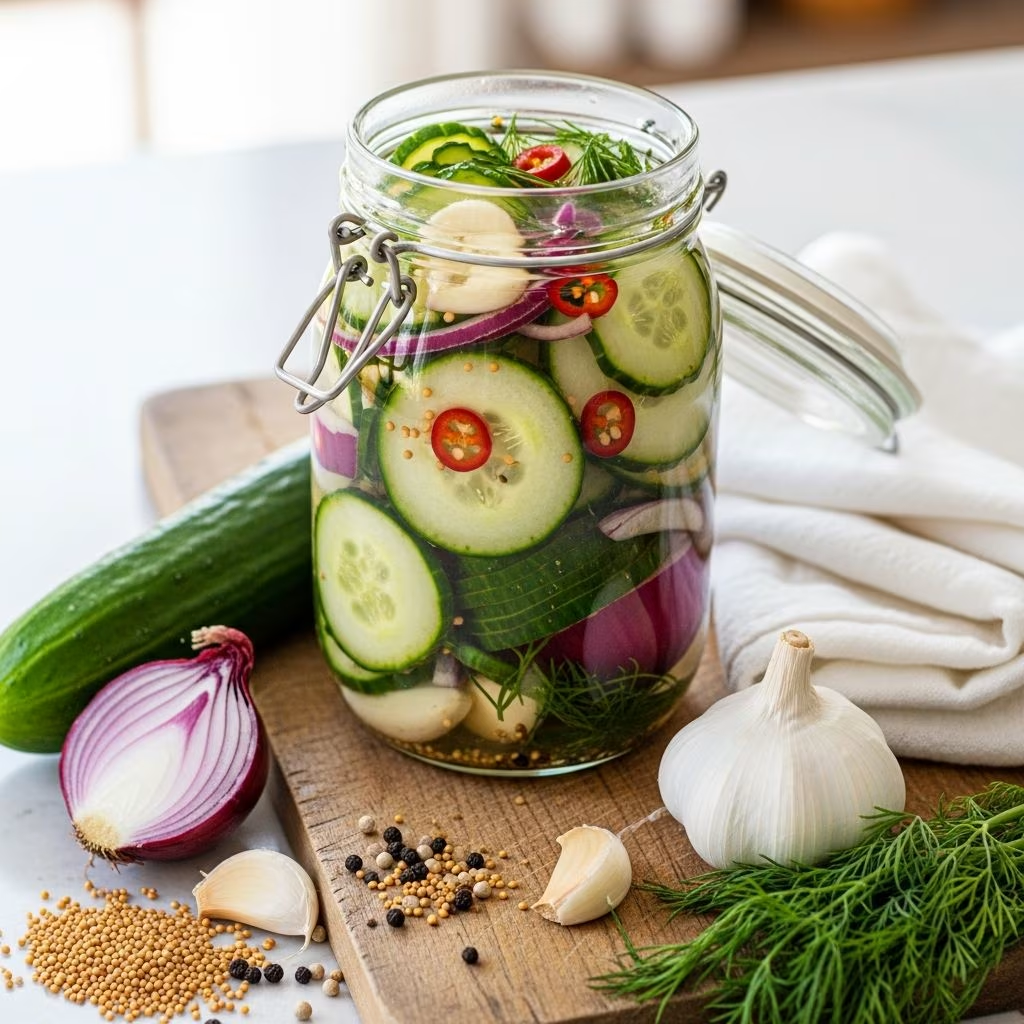
For herby freshness, incorporate dill and garlic. This quick dill style skips cooking for brighter notes.
Ingredients (1 quart jar):
- 12 oz cucumber spears or coins
- 5-6 fresh dill sprigs, chopped
- 4 garlic cloves, sliced
- 1 bay leaf
- 1 1/3 cups water
- 2/3 cup rice vinegar
- 1 tbsp fine sea salt
- 2 tsp black peppercorns
- 1 tsp mustard seeds (optional)
- Pinch red pepper flakes
Assembly:
- Layer cucumbers, dill, garlic, and bay in a clean jar.
- Whisk brine ingredients; pour over, ensuring submersion. Shake to mix.
- Refrigerate 1 day for mild flavor, 3+ days for bolder. Keeps 1 week.
This method highlights natural veggie crispness with minimal wait time.
Bread-and-Butter Style with a Twist
Sweet-spicy and colorful, this cooked brine version mimics deli favorites. Salting step removes excess water for superior texture.
Ingredients (2 pints):
- 1.5 lbs pickling cucumbers, 1/4-inch sliced
- 1.5 tbsp kosher salt
- 1 cup thinly sliced sweet onion
- 1 cup white vinegar
- 1/2 cup apple cider vinegar
- 3/4 cup sugar (mix white and brown)
- 1.5 tsp mustard seeds
- 1/2 tsp celery seeds
- 1/8 tsp turmeric
Directions:
- Toss cucumber slices with salt; refrigerate 1.5 hours. Rinse and drain.
- Mix with onions.
- Boil vinegars, sugars, and spices until dissolved. Cool slightly.
- Pack veggies into hot jars; pour brine over. Cool, lid, and fridge 1-1.5 months.
The turmeric adds golden hue and earthy warmth.
Customization Ideas and Flavor Boosts
Experiment beyond basics:
- Spicy kick: Add sliced jalapeños or crushed red flakes.
- Herbaceous: Fresh dill, thyme, or dill seed.
- Exotic: Rice vinegar with sesame seeds for Asian fusion.
- Veggie swaps: Carrots, radishes, or zucchini spears.
- Sweetener tweaks: Honey or agave for natural tones.
Balance ratios: 1:1 vinegar-to-water for mild, full vinegar for punchy. Always taste brine before adding veggies.
Storage, Safety, and Shelf Life
Keep submerged in brine in airtight jars. Ideal fridge temp: 35-40°F. Sweet styles last 1-2 months; dill up to 1 week. Signs of spoilage: off odors, mold, or sliminess—discard immediately.
- Tip: Weigh down veggies with a small plate or ziplock ice pack.
- Freezing: Possible for cooked brines, but texture softens upon thaw.
- Safety: Acidity (below pH 4.6) prevents botulism; use vinegar at 5% acidity minimum.
Nutritional Profile and Health Benefits
Low-calorie (20-50 per serving), these pickles provide hydration from cucumbers, probiotics if fermented longer (though vinegar styles are not true ferments), and gut-friendly fiber. Vinegar aids digestion; spices offer antioxidants.
| Per 1/2 Cup Serving (Sweet Style) | Amount |
|---|---|
| Calories | ~100 |
| Carbs | 25g (mostly sugar) |
| Sodium | 800mg |
| Fiber | 1g |
Moderate intake due to sodium; rinse for lower salt.
Troubleshooting Common Issues
Encounter problems? Here’s how to fix:
- Soggy pickles: Use thin slices, fresh cukes, or salt purge first.
- Not crunchy: Avoid over-slicing or aluminum vessels (reacts with vinegar).
- Dull flavor: Increase steep time or add more aromatics.
- Cloudy brine: Spice residue; strain if needed.
Recipe Comparison Table
| Style | Prep Time | Wait Time | Key Flavors | Shelf Life |
|---|---|---|---|---|
| Sweet Basic | 10 min | 1-2 days | Tangy-sweet | 2 months |
| Dill Quick | 5 min | 1 day | Herby-fresh | 1 week |
| Bread & Butter | 30 min | 1 day | Spicy-sweet | 1.5 months |
FAQs
Can I reuse the brine?
Yes, for same-batch additions if flavors match; boil first for safety.
Are these safe for canning?
No—process properly for shelf stability; fridge method skips heat treatment.
What if I don’t have pickling cucumbers?
English or Persian work; avoid waxed grocery ones or peel.
How to make them less sweet?
Halve sugar, boost vinegar or add lemon juice.
Vegetarian/vegan friendly?
Fully plant-based as is.
References
- National Center for Home Food Preservation: Guide to Pickled Products — USDA. 2022-05-15. https://nchfp.uga.edu/publications/uga/pickled_products.pdf
- USDA Complete Guide to Home Canning — USDA. 2023-08-10. https://www.usda.gov/media/blog/2014/09/16/complete-guide-home-canning
- Principles and Practices of Small- and Medium-Scale Fruit Juice Processing — FAO. 2021-11-01. http://www.fao.org/3/y4893e/y4893e09.htm
- Food Safety for Pickled Foods — FDA. 2024-02-20. https://www.fda.gov/food/buy-store-serve-safe-food/food-safety-pickled-products
- Refrigerator Pickles: Quick Process Overview — Extension Service, University of Georgia. 2023-06-12. https://extension.uga.edu/publications/detail.html?number=C1042&title=refrigerator-pickles