Creating impressive desserts doesn’t always require extensive ingredient lists or complicated cooking techniques. The beauty of modern baking lies in the ability to transform simple, accessible components into sophisticated treats that satisfy both your palate and your schedule. A berry cobbler exemplifies this philosophy perfectly—a humble dessert that gains elegance through the interplay of tart fruit and sweet topping. This particular approach to cobbler-making demonstrates that culinary success often emerges from restraint rather than complexity.
Understanding the Cobbler as a Dessert Category
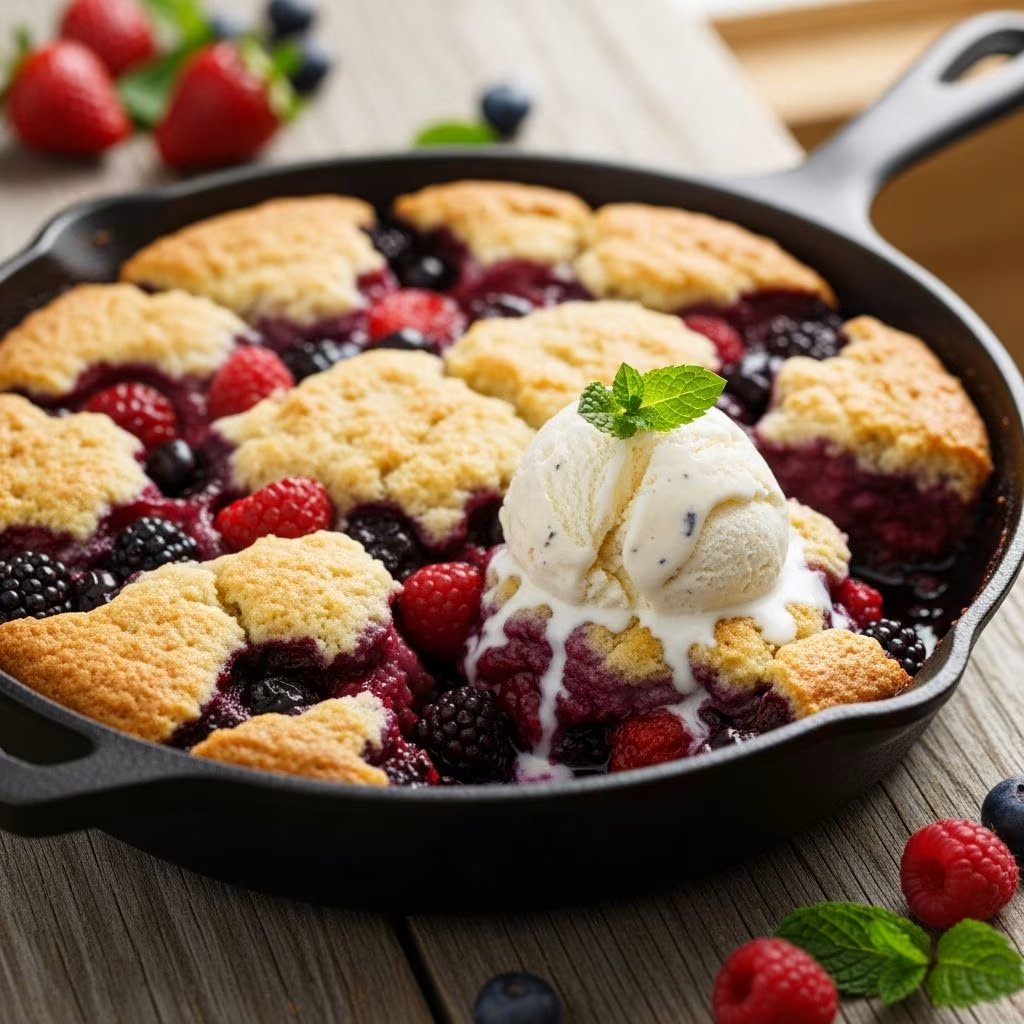
A cobbler represents a specific category within the broader family of fruit-based desserts. Unlike pies, which feature a pastry crust both above and below the filling, cobblers typically showcase fruit filling topped with a thick, cake-like or biscuit-style topping. The term itself likely derives from the uneven, cobblestone-like appearance of the topping. What distinguishes cobblers from other similar desserts is their rustic, informal presentation—they celebrate texture variation and imperfect aesthetics.
The traditional cobbler requires home bakers to create components from scratch, involving multiple steps and ingredients. However, modern variations leverage convenience products while maintaining the essential appeal of the original concept. This evolution doesn’t diminish the cobbler’s charm; rather, it democratizes the dessert, allowing more people to enjoy it regardless of their skill level or available time.
The Four Essential Components Explained
Selecting and Preparing Frozen Berries
The foundation of this cobbler rests on frozen mixed berries. The decision to use frozen rather than fresh fruit is not merely a matter of convenience—it’s a strategic choice that affects both the final product and the cooking process. Frozen berries contain more ice crystals than fresh berries, which means they release liquid gradually during baking, creating the characteristic bubbly fruit base that defines a successful cobbler.
Most grocery stores stock mixed berry packages in quantities ranging from 30 to 32 ounces, which is precisely the amount needed for a standard 9×13-inch baking dish. If your local market doesn’t carry pre-mixed packages, you can create your own combination by purchasing individual frozen varieties—blueberries, raspberries, blackberries, or strawberries all work beautifully. The specific berries matter less than ensuring you have adequate volume to create sufficient filling.
The frozen state of these berries means they require no washing or preparation. Simply pour them directly into your baking vessel. This characteristic transforms the recipe into a true minimal-effort dessert, as there are no preliminary steps for fruit preparation.
The Role of Cornstarch
A single tablespoon of cornstarch serves a crucial function in this recipe. As berries thaw during baking, they release moisture—sometimes more than expected, depending on the berry variety and freezing duration. Without intervention, this liquid would pool beneath the topping, creating a soggy base rather than the ideal combination of fruity filling and crispy topping.
Cornstarch absorbs and redistributes this moisture, thickening the fruit juices into a gel-like consistency that binds the berries together while remaining distinct from the topping layer. The starch granules swell as they encounter liquid and heat, creating structure and preventing the filling from becoming runny. This small amount proves sufficient for the standard berry volume, as cornstarch is remarkably efficient in liquid absorption.
Commercial Sugar Cookie Mix
The sugar cookie mix comprises the largest single ingredient by weight and serves as the primary topping component. These packaged mixes—typically weighing around 17.5 ounces—contain flour, sugar, and various leavening agents and flavorings already blended to precise ratios. Professional food scientists have formulated these products to produce consistent results across various cooking environments and skill levels.
When combined with butter and baked, the dry mix transforms into a tender, slightly crumbly topping that browns to golden perfection. The sugar content caramelizes slightly at 350 degrees Fahrenheit, creating subtle flavor complexity that complements both tart and sweet berries. Unlike traditional cobbler toppings, which require sifting dry ingredients and potentially rolling or dropping batter, this pre-mixed approach eliminates intermediate steps while maintaining quality outcomes.
Butter as the Binding Agent
One half cup (one stick) of melted butter serves as the liquid component that transforms the dry cookie mix into a cohesive topping. Butter contributes fat-soluble flavor compounds and creates the rich, slightly crispy texture characteristic of quality cobblers. The melting process is crucial—liquid butter distributes more evenly throughout the dry mix than cold butter would, ensuring uniform hydration and browning.
The quantity of butter is calibrated to the volume of dry mix. This ratio produces a topping that is neither too dense nor excessively crumbly—it should hold together as dollops while remaining tender when baked. Using salted butter is perfectly acceptable and adds a subtle flavor dimension that balances the sweetness of both the cookie mix and the fruit.
Step-by-Step Preparation Process
Preparing Your Baking Vessel
Begin by preheating your oven to 350 degrees Fahrenheit. This moderate temperature allows thorough cooking without excessive browning of the topping or scorching of fruit juices. While the oven reaches temperature, prepare a 9×13-inch baking dish by applying a light coating of non-stick cooking spray. This prevents sticking and makes cleanup considerably easier.
Layering the Fruit Base
Pour your frozen mixed berries directly into the prepared baking dish without thawing. Spread them into an approximately even layer, though perfect uniformity is unnecessary. Distribute the cornstarch evenly across the berry surface, then gently stir the mixture to incorporate. The berries should be thoroughly coated with starch particles. Spread the berry mixture back into a single layer before proceeding to the topping stage.
Combining Topping Components
In a separate medium-sized mixing bowl, combine the dry sugar cookie mix and melted butter. Stir these ingredients together until they achieve uniform distribution—the mixture should resemble coarse sand or wet breadcrumbs. Avoid overmixing, which can develop gluten strands and result in a tough topping. A spatula or wooden spoon works well for this combining process.
Topping Application
Spoon dollops of the cookie mixture across the berry layer, distributing them relatively evenly. You needn’t cover every berry or achieve perfect coverage—the topping will spread during baking and create natural gaps that allow steam to escape. The uneven, rustic appearance is actually desirable, as it contributes to the cobbler’s informal charm.
Baking and Cooling
Place the assembled cobbler in your preheated oven for 40 to 45 minutes. The cobbler is done when the fruit layer bubbles visibly around the edges and the cookie topping achieves a golden-brown color. The exact timing may vary depending on your oven’s characteristics and the initial temperature of your frozen berries.
Remove the hot cobbler carefully—use oven mitts to protect your hands from both the dish and rising steam. Allow it to rest for 5 to 10 minutes before serving. This resting period is important, as it allows the fruit filling to set slightly and the topping to firm up. Serving immediately after this brief rest maximizes the contrast between warm fruit and tender topping.
Serving Suggestions and Enhancement Options
Traditional Accompaniments
Vanilla ice cream represents the classic pairing for warm cobbler, as the cold creaminess contrasts beautifully with the heated fruit and topping. Whipped cream offers a lighter alternative, providing richness without the cooling effect. Both options enhance the overall eating experience by introducing textural variety.
Flavor Variations Worth Exploring
While the basic recipe stands on its own merits, several modifications can yield interesting results. Different frozen berry blends—raspberry-heavy, strawberry-based, or cherry-blended—each impart distinctive flavor profiles. Some bakers add a quarter teaspoon of almond extract to the topping for subtle complexity. Others incorporate a pinch of cinnamon or nutmeg into the cookie mix layer for warmth and spice notes.
Practical Tips for Consistent Success
| Consideration | Recommended Approach |
|---|---|
| Berry Selection | Use frozen rather than fresh for optimal texture and moisture control |
| Mix Consistency | Combine dry mix and butter until uniformly distributed but not overmixed |
| Oven Temperature | Maintain 350°F for balanced baking without excessive browning |
| Baking Time | Watch for golden-brown topping and bubbly fruit edges (40-45 minutes) |
| Resting Period | Allow 5-10 minutes before serving for proper texture development |
Frequently Asked Questions
Can I substitute fresh berries for frozen ones?
While fresh berries can be used, they don’t provide the same textural results as frozen berries. Fresh berries contain less ice and release liquid differently, potentially resulting in a soupy filling rather than the ideal gel-like consistency achieved with frozen fruit.
What if my topping turns too dark before the filling finishes baking?
Tent a piece of aluminum foil loosely over the cobbler to shield the topping from direct oven heat while allowing heat circulation. This prevents excessive browning while the fruit continues cooking.
Can I prepare this dish in advance?
Yes, you can assemble the cobbler several hours ahead, cover it with plastic wrap, and refrigerate until ready to bake. Add a few minutes to the baking time to account for the colder starting temperature.
Is this recipe suitable for dietary restrictions?
The base recipe contains gluten from the cookie mix and dairy from the butter. However, some commercial sugar cookie mixes are specifically formulated for gluten-free diets, and dairy-free butter alternatives function similarly to conventional butter in this application.
What’s the typical serving size?
A standard 9×13-inch cobbler typically yields 9 servings of approximately 361 calories each, though portion sizes can be adjusted based on appetite and accompanying side dishes.
Why This Recipe Resonates with Modern Cooks
The enduring appeal of this four-ingredient approach reflects broader trends in contemporary cooking. Home bakers increasingly value efficiency without sacrificing quality or flavor. This cobbler delivers impressive results in minimal time, requiring only five minutes of active preparation and yielding a dessert that appears far more elaborate than its ingredient count suggests.
The recipe also demonstrates how strategic use of convenience products—far from representing culinary compromise—can actually enhance accessibility and encourage more people to attempt baking. By reducing technical barriers and ingredient sourcing challenges, simplified recipes democratize dessert-making and build confidence in the kitchen.
References
- Mixed Berry Sugar Cookie Cobbler — Together as Family. 2024. https://togetherasfamily.com/mixed-berry-sugar-cookie-cobbler/
- Sugar Cookie Berry Cobbler (Dump & Bake Recipe) — The Quicker Kitchen. 2024. https://thequickerkitchen.com/sugar-cookie-berry-cobbler-dump-bake-recipe/