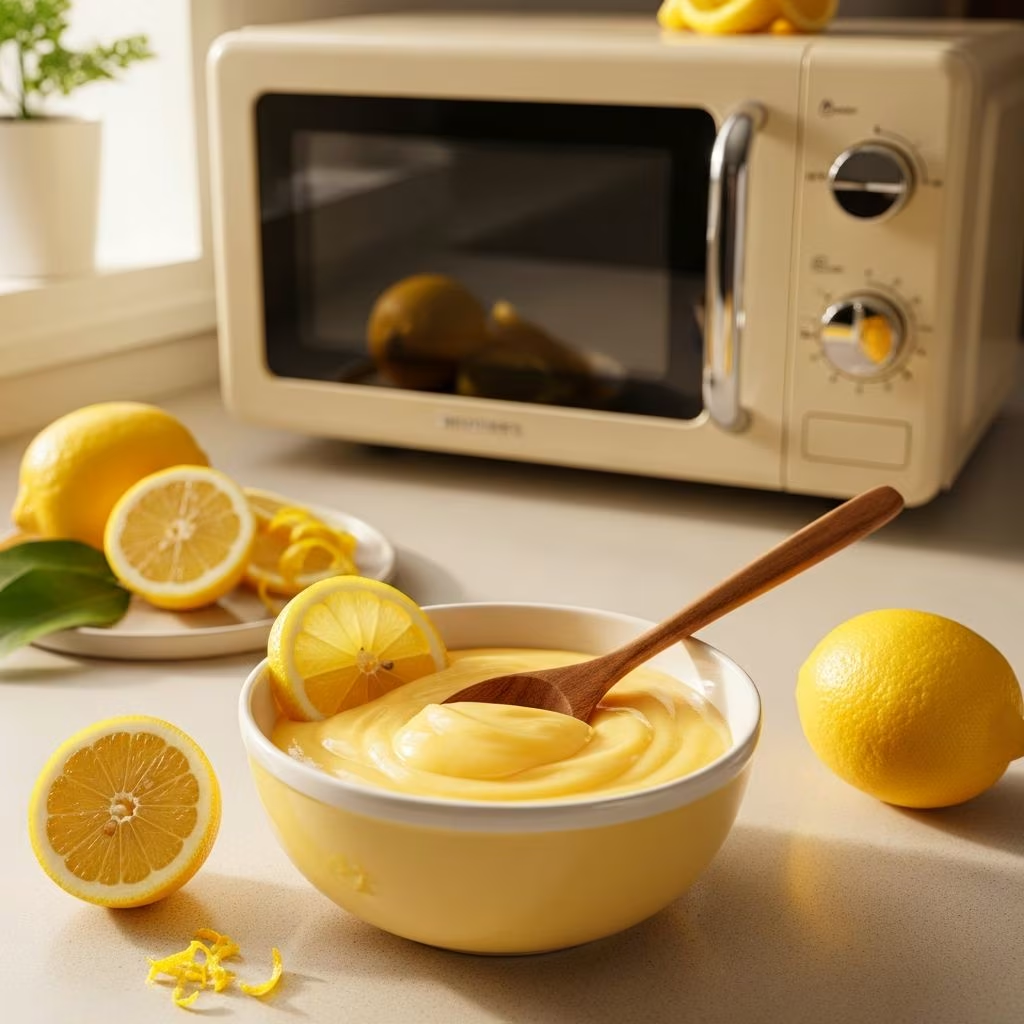
Transform basic kitchen staples into a luxurious, velvety spread with the power of your microwave. This method cuts traditional stovetop cooking time dramatically while delivering the same bright, citrusy flavor and smooth texture that makes lemon curd irresistible.
Why Choose Microwave Lemon Curd?
Traditional lemon curd requires constant stirring over a double boiler to prevent curdling, a process that demands patience and attention. The microwave version simplifies this by using short bursts of high heat, allowing you to whisk intermittently for even cooking. Home cooks appreciate its speed—often ready in 5 to 8 minutes—and minimal cleanup, as everything happens in one bowl.
This approach suits busy lifestyles without sacrificing quality. The result is a glossy, pudding-like consistency perfect for tarts, cakes, or toast. Variations abound, from classic tart to milder sweetened versions, making it versatile for any palate.
Essential Ingredients for Success
Gather fresh, high-quality components to ensure vibrant taste and stable texture. Core elements include:
- Fresh lemons: Provide zest for oils and juice for acidity. Aim for 3-4 medium lemons to yield about 3/4 to 1 cup juice.
- Eggs: Whole eggs or a mix of yolks bind and thicken the mixture via gentle coagulation.
- Sugar: Balances tartness; granulated works best for quick dissolving.
- Butter: Adds richness and sheen; unsalted allows salt control.
- Salt: A pinch enhances flavors without overpowering.
Proportions vary slightly by recipe, but a standard batch uses 1 cup sugar, 3 eggs, 1 cup lemon juice, zest from 2-3 lemons, 1/2 cup butter, and 1/8 tsp salt.
Step-by-Step Microwave Method
Follow these precise steps for foolproof results. Use a large, microwave-safe glass bowl to prevent overflow.
- Prepare the base: Zest lemons directly into the bowl, then juice to measure. Whisk in sugar, eggs, and salt until smooth and pale. Let sit 5-10 minutes for sugar to dissolve partially.
- Incorporate butter: Cut into cubes or melt and stir in for even distribution.
- First cook cycle: Microwave on high for 1 minute. Whisk vigorously to blend heat.
- Incremental heating: Continue in 45-60 second bursts, whisking after each. As it thickens (around 150°F/65°C), switch to 30-second intervals.
- Test doneness: Curd is ready at 170-185°F (76-85°C) when it coats a spoon or mounds slightly. If unsure, run a finger through a spoonful—it should hold the line.
- Strain and cool: Pass through a fine sieve to remove bits, then transfer to jars. Cool to room temperature before refrigerating.
Total time: 5-10 minutes active, depending on microwave wattage (800-1200W ideal). Yields 2-3 cups.
Ingredient Variations and Tweaks
Customize for different flavors or dietary needs:
| Variation | Swap | Effect |
|---|---|---|
| Lime Curd | Lime juice/zest | Tangier, greener hue |
| Sweetened | Increase sugar to 1.25 cups | Milder acidity |
| Vegan | Coconut cream + cornstarch slurry | Dairy-free creaminess |
| Small Batch | Halve all; use mason jar | 1 cup yield, ultra-quick |
| Thicker | Extra yolk + cook to 185°F | Custard-like set |
These adjustments maintain the microwave’s efficiency while expanding options.
Troubleshooting Common Issues
Even simple recipes can snag—here’s how to fix them:
- Curdled texture: Overheating; next time, shorter intervals and constant whisking.
- Too thin: Undercooked; return for 15-30 seconds more, checking temp.
- Lumpy: Strain thoroughly; whisk more aggressively between bursts.
- Bitter taste: Excess pith in zest; use microplane and superficial grating.
- Not setting in fridge: Needs higher temp (aim 180°F+); eggs must fully thicken.
A thermometer ensures precision, avoiding guesswork.
Storage and Shelf Life Tips
Fresh curd lasts 1-2 weeks in the fridge in airtight jars. For longer storage, freeze in portions up to 3 months—thaw overnight. Always cool fully before sealing to prevent condensation. Label with dates for freshness. Avoid metal utensils post-cooling to preserve smoothness.
Signs of spoilage: mold, off odors, or separation—discard immediately.
Creative Ways to Use Lemon Curd
Beyond scones, elevate your baking and snacking:
- Tart filling: Blind-bake crust, fill, chill for elegant dessert.
- Cake layers: Between vanilla sponges with whipped cream.
- Yogurt parfait: Swirl into Greek yogurt with granola.
- Thumbprint cookies: Dollop atop baked shortbread.
- Breakfast toast: With ricotta and berries.
- Ice cream ripple: Swirl into softened vanilla base.
- Pavlova topping: Generous layer over meringue.
Its versatility shines in both sweet and savory contexts, like glazing roasted veggies.
Scaling Up for Crowds
Double or triple the recipe for events, but cook in larger batches or multiple bowls to avoid overflow. Maintain ratios strictly—extra volume cooks faster. Test small batches first to dial in your microwave’s timing. Yields scale linearly: double ingredients for 4-6 cups.
Nutrition at a Glance
Per 2 tbsp serving (approximate): 120 calories, 7g fat, 15g carbs, 1g protein. Rich in vitamin C from lemons; use sparingly for treats. Variations like low-sugar reduce carbs significantly.
Frequently Asked Questions
Can I use bottled lemon juice?
Fresh is best for flavor and zest oils, but bottled works in pinches—expect milder taste.
Is a food thermometer necessary?
Highly recommended for precision, especially first attempts.
Why strain the curd?
Removes cooked egg bits for silkiness.
Can I make it ahead?
Yes, up to 2 weeks refrigerated or 3 months frozen.
What if my microwave is low wattage?
Add 15-30 seconds per interval; monitor closely.
Is it safe for pregnant women or kids?
Cooks to safe temps (170°F+ kills bacteria); use pasteurized eggs if concerned.
Pro Tips from Seasoned Bakers
– Use room-temp eggs for smoother blending.
– Microplane for zest avoids bitterness.
– Whisk like your life depends on it—prevents hot spots.
– Glass bowls heat evenly; avoid plastic.
– Experiment with Meyer lemons for sweeter profile.
References
- Ridiculously Easy Microwave Lemon Curd — The Café Sucre Farine. 2023-05-15. https://thecafesucrefarine.com/ridiculously-easy-microwave-lemon-curd/
- Microwave Lemon Curd — Kelly Neil. 2022-11-10. https://kellyneil.com/microwave-lemon-curd-recipe/
- Microwave Lemon Curd — Dessert for Two. 2021-03-22. https://www.dessertfortwo.com/microwave-lemon-curd/
- Easy Microwave Lemon Curd Recipe — King Arthur Baking. 2024-01-08. https://www.kingarthurbaking.com/recipes/easy-microwave-lemon-curd-recipe
- Easy 5 Minute Microwave Lemon Curd — Tales From The Kitchen Shed. 2022-08-12. https://www.talesfromthekitchenshed.com/2022/08/easy-5-minute-microwave-lemon-curd/
- Microwave Lemon Curd Recipe — My Baking Addiction. 2023-07-19. https://www.mybakingaddiction.com/fundamentals-simple-microwave-lemon-curd/
- Mason Jar Microwave Lemon Curd — Buttermilk by Sam. 2023-02-14. https://buttermilkbysam.com/mason-jar-microwave-lemon-curd/