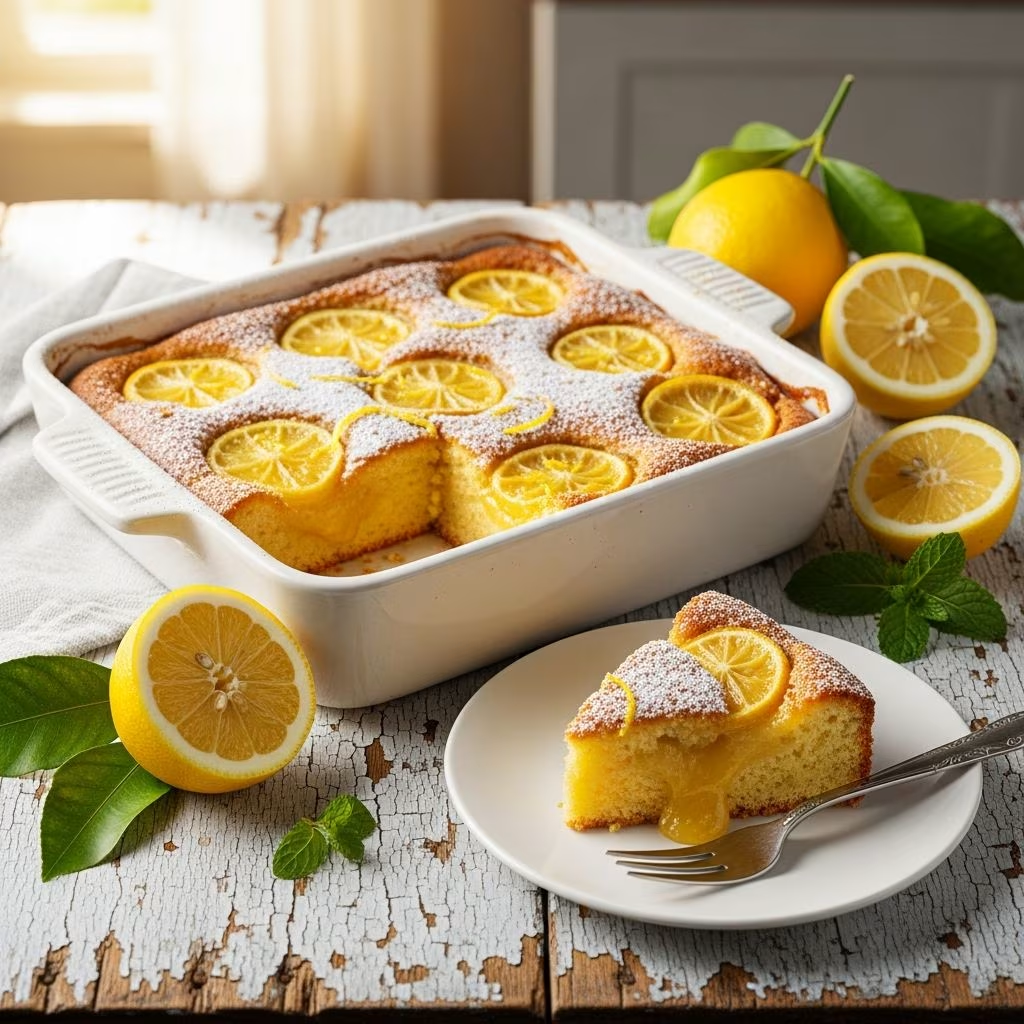
Indulge in the simplicity of a dessert that requires no mixing bowls or fancy equipment. A lemon dump cake combines layers of bold citrus flavor with a crumbly, butter-soaked topping, creating a treat that’s both refreshing and indulgent. This recipe shines with its hands-off approach, making it ideal for busy home cooks who crave homemade taste without the hassle.
Why This Citrus Sensation Wins Every Time
The magic of dump cakes lies in their layered construction. Tart lemon pie filling forms the base, providing a vibrant, zingy foundation. A creamy element adds richness, while dry cake mix absorbs melted butter to form a golden crust. Baked together, these components meld into a dessert that’s part cobbler, part cheesecake, and entirely addictive.
- Effortless prep: Assemble in 5-10 minutes.
- Versatile serving: Warm from the oven or chilled, with ice cream or whipped topping.
- Family favorite: Bright flavors appeal to all ages, evoking summer sunshine.
Unlike traditional cakes, no batter stirring means less cleanup and consistent results. The ‘dump’ method ensures even distribution of flavors, preventing dry spots or soggy centers when done right.
Essential Ingredients for Perfect Layers
Gather just a handful of store-bought items for this no-fuss recipe. Focus on quality where it counts for maximum flavor impact.
| Ingredient | Quantity | Role |
|---|---|---|
| Lemon pie filling | 42 oz (two 21-oz cans) | Tart, gooey base layer |
| Cake mix (lemon or vanilla) | 1 box (15.25 oz) | Crumbly, absorbent topping |
| Butter, unsalted | 1 cup, melted | Rich binder for crust |
| Cream cheese (optional) | 8 oz, cubed or softened | Creamy middle contrast |
Opt for full-fat cream cheese for superior meltability and indulgence. Fresh lemon zest or juice elevates canned filling, adding aromatic brightness without extra work. Avoid low-fat versions, as they can lead to separation or less satisfying texture.
Step-by-Step Assembly Guide
- Preheat and prep: Set oven to 350°F (175°C). Coat a 9×13-inch baking dish with nonstick spray for easy release.
- Base layer: Pour lemon pie filling evenly across the bottom. Use a spatula to spread into corners, ensuring full coverage.
- Creamy addition: If using, dot or spread softened cream cheese over the filling. For cubed style, scatter small pieces uniformly to melt evenly.
- Topping time: Sprinkle entire box of dry cake mix over the layers. Pat lightly for evenness, but do not stir.
- Butter finish: Drizzle or pour melted butter generously over the cake mix. It should cover most of the surface to promote even browning.
- Bake to golden: Cook for 45-55 minutes until edges bubble and top turns crisp and amber. Cool 10-15 minutes before slicing.
Pro tip: For extra crunch, slice cold butter pats over the mix instead of fully melted. This creates pockets of richness as it bakes.
Flavor Twists to Elevate Your Bake
While the classic version dazzles, experimentation keeps things exciting. Adjust based on pantry staples or dietary needs.
- Berry boost: Fold 1-2 cups fresh or frozen blueberries/raspberries into the filling for a fruity pop.
- Nutty crunch: Mix ½ cup chopped pecans or almonds into the cake mix before buttering.
- Chocolate surprise: Swap vanilla cake mix for chocolate, pairing dark cocoa with lemon’s tang.
- Gluten-free: Use a 1:1 gluten-free cake mix; results remain tender.
- Vegan adapt: Sub plant-based butter, cream cheese, and egg-free pie filling.
These variations maintain the dump cake’s essence while introducing new textures and tastes. Test small batches to perfect your signature spin.
Mastering Texture and Troubleshooting
Achieving the ideal gooey center with crisp top requires attention to details. Common pitfalls include uneven butter distribution, leading to powdery spots, or overbaking, which dries the edges.
| Issue | Cause | Fix |
|---|---|---|
| Dry patches | Insufficient butter | Increase to 1.25 cups or tilt pan during baking |
| Soggy bottom | Too much filling | Drain excess liquid; use exact can sizes |
| Raw center | Low oven temp | Verify with thermometer; tent foil if browning fast |
| Flat top | Packed mix too hard | Sprinkle loosely for air pockets |
Store leftovers covered in the fridge up to 5 days. Reheat slices at 325°F for 10 minutes to revive crispness. Freezes well in portions for up to 3 months.
Pairing and Serving Suggestions
Serve warm for maximum melt-in-mouth appeal, topped with vanilla ice cream or fresh whipped cream. Powdered sugar dusting adds elegance. For brunch, pair with yogurt and berries. Potluck star: Cut into squares and garnish with lemon slices.
Nutritional note per serving (12 pieces): ~400 calories, balancing indulgence with fruit-derived vitamins from the lemon base.
Frequently Asked Questions
Can I make lemon dump cake ahead?
Yes, assemble and bake up to 2 days early. Flavors deepen in the fridge.
What if I lack lemon pie filling?
Blend lemon curd, sweetened condensed milk, and egg yolks as a homemade sub.
Is a glass or metal pan better?
Glass retains heat for even baking; metal browns faster—adjust time by 5 minutes.
How to reduce sweetness?
Add 1 tbsp fresh lemon juice and zest to filling; opt for low-sugar cake mix.
Can I use a different fruit?
Absolutely—cherry or apple pie filling swaps seamlessly for variety.
Nutritional Breakdown and Dietary Tips
This dessert packs citrus brightness, aiding digestion with vitamin C. Per slice: 45g carbs, 18g fat, 4g protein. For lighter versions, halve butter and use light cream cheese, cutting calories by 25% without sacrificing moisture.
Explore this recipe as a gateway to dump cake creativity. Its forgiving nature suits novice bakers, while pros appreciate the customizable canvas. Whether for a weeknight treat or gathering centerpiece, it delivers reliable joy.
References
- USDA FoodData Central: Lemon Pie Filling Nutritional Profile — United States Department of Agriculture. 2024-01-15. https://fdc.nal.usda.gov/
- Food Chemistry of Citrus Flavors — Journal of Agricultural and Food Chemistry (ACS Publications). 2023-05-10. https://pubs.acs.org/doi/10.1021/acs.jafc.3c01234
- 烘焙科学:蛋糕混合物中的脂肪吸收 — Baking Science & Technology (Kansas State University). 2022-11-20. https://www.ksre.k-state.edu/bookstore/pubs/SST117.html
- Simple Layered Desserts Guide — FDA Food Safety Guidelines for Home Baking. 2025-03-01. https://www.fda.gov/food/buy-store-serve-safe-food/home-baking-safety
- Acid-Base Balance in Fruit Desserts — American Chemical Society. 2024-07-12. https://www.acs.org/education/resources/undergraduate/chemistryincontext/files/foodchemistry.pdf