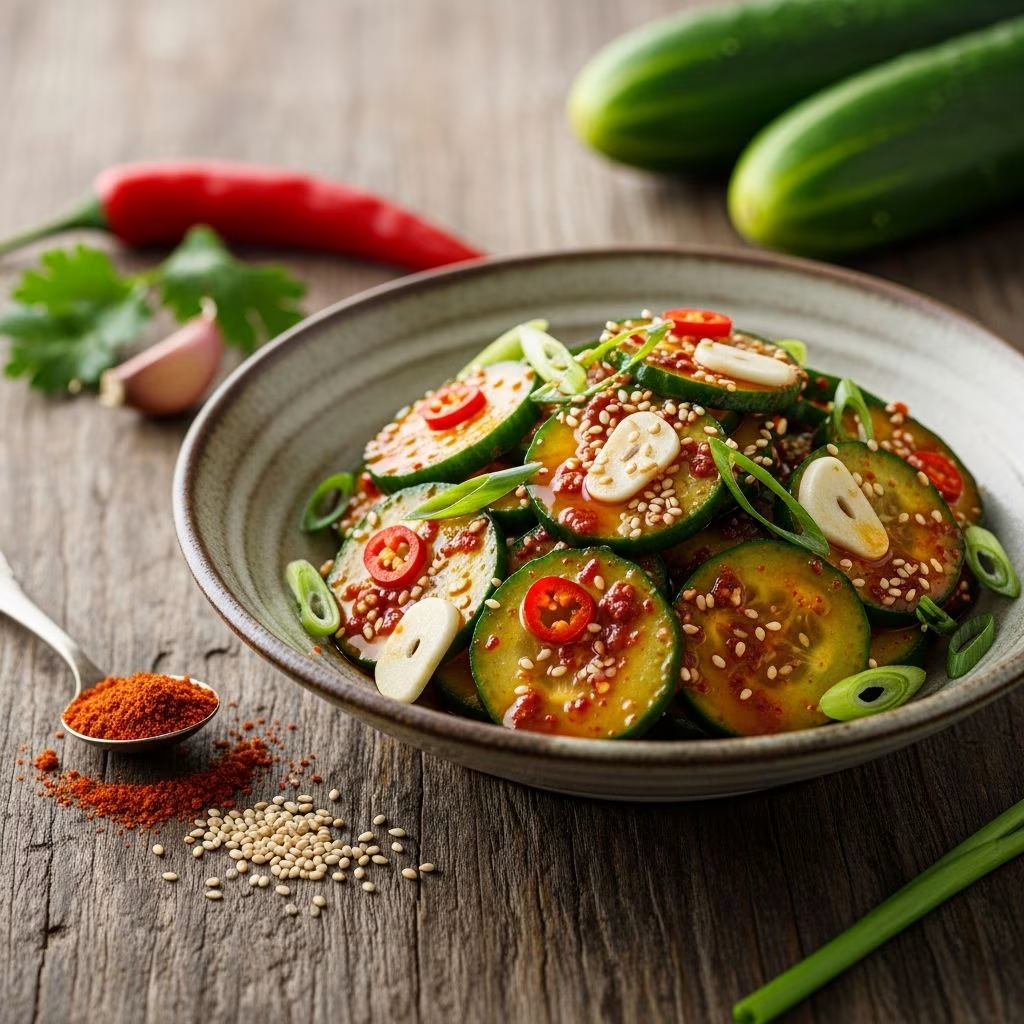
Experience the vibrant world of Korean banchan with this effortless Korean cucumber salad, known as Oi Muchim. This dish delivers a perfect harmony of crunch, heat, sweetness, and tang, making it an indispensable side for rice bowls, grilled meats, or tofu dishes. With just a handful of pantry staples, you can whip up this refreshing salad in minutes, ideal for busy weeknights or meal prep.
The Allure of Oi Muchim in Korean Cuisine
Oi Muchim holds a cherished spot in Korean dining traditions as a banchan, those small side dishes that accompany every meal to add variety and balance. Cucumbers, sliced paper-thin, release their water under salt, becoming tender yet crisp, then bathed in a dressing that wakes up the palate. The spice from gochugaru, Korea’s sun-dried chili flakes, provides a fruity heat, while sesame oil and vinegar lend nutty depth and brightness.
This salad isn’t just tasty—it’s nourishing. Cucumbers boast high water content for hydration, plus vitamins like C and K, potassium, and antioxidants that support skin health and reduce inflammation. Paired with the anti-inflammatory properties of gochugaru and sesame, it’s a light, vegan-friendly option that fits modern diets seamlessly.
Selecting the Best Cucumbers for Maximum Crunch
Choosing the right cucumber is key to nailing the texture. Opt for English, Persian, Japanese, or hothouse varieties—they’re seedless, thin-skinned, and widely available. Avoid thick-skinned garden cucumbers, as their watery centers can dilute the dressing.
- English or hothouse: Long, uniform, mild flavor—perfect for even slicing.
- Persian: Small, crisp, numerous for batch cooking.
- Kirby or pickling: Dense and firm, ideal if you prefer a denser bite.
Slice to 1/8-inch thickness for the classic thin profile that absorbs flavors without sogginess. A mandoline ensures uniformity, but a sharp knife works fine.
Essential Ingredients for Authentic Flavor
The beauty of this recipe lies in its simplicity. Core components create a symphony of tastes: salty, sweet, spicy, acidic, and umami.
| Ingredient | Quantity (for 4 servings) | Role |
|---|---|---|
| Cucumbers | 1-2 lbs (English or Persian) | Crisp base |
| Kosher salt | 1-2 tsp | Draws out moisture, seasons |
| Rice vinegar or white vinegar | 2 Tbsp | Bright acidity |
| Soy sauce (optional) | 1 Tbsp | Umami depth |
| Honey or sugar | 1 Tbsp | Balances spice |
| Gochugaru (Korean chili flakes) | 1-2 tsp | Signature heat |
| Toasted sesame oil | 1 Tbsp | Nutty aroma |
| Scallions or green onions | 1-2, sliced | Fresh onion note |
| Sesame seeds (toasted) | 1 tsp | Crunch and garnish |
Gochugaru is non-negotiable for authenticity—its coarse texture and mild smokiness set it apart from regular red pepper flakes. Find it in Asian markets or online. For milder versions, reduce to 1/2 tsp.
Step-by-Step Guide to Perfection
Preparation takes about 20 minutes, mostly hands-off. The salting step is crucial for texture.
Salt the slices: Thinly slice cucumbers and toss with 1-2 tsp kosher salt in a colander over a bowl or sink. Let sit 10-30 minutes. Water will pool—this is good; it prevents sogginess.
Prepare dressing: Whisk vinegar, soy sauce (if using), honey/sugar, sesame oil, gochugaru, minced garlic (optional), and sliced scallions. Taste and adjust—more honey for sweetness, more chili for heat.
Rinse and dry: Gently rinse salted cucumbers to remove excess salt, then pat dry with a clean towel or salad spinner. This ensures the dressing clings properly.
Toss and serve: Combine cucumbers with dressing. Sprinkle sesame seeds. Serve immediately for peak crunch, or chill up to 1 day for melded flavors.
Pro tip: For extra flair, add julienned carrots, thinly sliced onion, or serrano peppers.
Customizing Your Salad: Variations to Try
Adapt Oi Muchim to preferences or what’s on hand.
- Mild version: Skip gochugaru or use half; add black pepper.
- Vegan boost: Use maple syrup instead of honey; coconut aminos for soy.
- Garlicky twist: Mince 1-2 cloves into the dressing.
- Pickled style: Marinate overnight in fridge for softer, fermented-like taste.
- Protein pairing: Toss in tofu cubes or serve with bulgogi.
Scale up for parties—double ingredients easily.
Pairing Suggestions for a Complete Meal
This salad shines as banchan but elevates mains:
- Proteins: Bulgogi, grilled salmon, teriyaki chicken, or bibimbap.
- Grains: Steamy white rice or quinoa soaks up the dressing.
- Other banchan: Kimchi, spinach namul, or bean sprouts for a full spread.
- Soups: Pairs with hearty doenjang jjigae.
Nutritionally, it complements fatty meats by cutting richness with acidity and crunch.
Storage, Make-Ahead, and Troubleshooting
Storage: Refrigerate in an airtight container up to 2 days. It softens over time but retains flavor. Drain excess liquid before serving.
Make-ahead: Salt cucumbers and prep dressing separately; combine just before eating.
Common issues:
- Too watery? Extend salting to 30 min, rinse thoroughly.
- Not spicy enough? Gochugaru varies; taste dressing first.
- Too salty? Use less salt or add more cucumber.
Health Benefits and Nutritional Snapshot
Beyond taste, this salad packs wellness perks. A serving (1 cup) offers roughly: 50 calories, 10g carbs, 2g protein, rich in hydration (95% water), vitamin K for bones, and potassium for blood pressure. Gochugaru provides capsaicin for metabolism boost; sesame oil adds healthy fats.
It’s naturally gluten-free (use tamari for soy), low-calorie, and anti-inflammatory—great for weight management or post-workout refreshment.
Frequently Asked Questions
Can I skip the salting step?
Yes, for quicker prep, but salting enhances crunch and flavor. If skipping, blot dry sliced cucumbers well.
What’s the best gochugaru substitute?
Aleppo pepper or crushed red flakes, but they lack the fruity depth. Order authentic gochugaru online.
Is this recipe spicy?
Mild-medium; adjust flakes to taste. Kids often enjoy the milder version.
How many servings does this make?
4 as side dish; 2 as main salad.
Can I use regular cucumbers?
Yes, but peel and seed them first for better texture.
References
- Spicy Korean Cucumber Salad – Zestful Kitchen — Zestful Kitchen. 2023. https://zestfulkitchen.com/korean-cucumber-salad-recipe/
- Korean Cucumber Salad | Feasting At Home — Feasting at Home. 2023. https://www.feastingathome.com/korean-cucumber-salad/
- Simple Korean Cucumber Salad (Oi Muchim 오이무침) – Kimchimari — Kimchimari. 2022. https://kimchimari.com/korean-cucumber-salad/
- Korean Cucumber Salad – OMG! Yummy — OMG Yummy. 2023. https://omgyummy.com/korean-cucumber-salad/
- Easy Korean Cucumber Salad – The Movement Menu — The Movement Menu. 2023. https://themovementmenu.com/easy-korean-cucumber-salad/
- Korean Cucumber Salad (Oi Muchim) – Stellanspice — Stellanspice. 2023. https://stellanspice.com/korean-cucumber-salad/