Few dishes evoke the sense of warmth and comfort quite like a bowl of tomato soup. Whether paired with a crispy grilled cheese sandwich or enjoyed on its own, this beloved classic has earned its place at tables across generations. What makes this soup particularly special is its deceptive simplicity—while the ingredient list remains short and accessible, the cooking process brings out deep, complex flavors that belie the minimal effort required. This comprehensive guide walks you through everything needed to create a restaurant-quality tomato soup in your own kitchen.
Understanding Your Base Ingredients
The foundation of exceptional tomato soup begins with understanding each ingredient’s role and how to select the best quality options available. The primary component—tomatoes—deserves careful consideration, as their quality directly influences the final result. Canned crushed tomatoes provide reliable consistency and year-round availability, making them the practical choice for most home cooks. When shopping, prioritize premium varieties such as San Marzano tomatoes, which offer superior sweetness and lower acidity levels compared to standard options.
Beyond tomatoes, the supporting cast of aromatics builds the soup’s foundational flavor profile. Yellow onions contribute natural sweetness that develops through slow cooking, while fresh garlic adds pungent aromatic notes. Butter serves as both a cooking medium and flavor carrier, enriching the broth and facilitating proper caramelization of the aromatic vegetables. Together, these components create what culinary professionals call the flavor base—the aromatic foundation upon which all subsequent layers build.
Essential Equipment and Preparation
Success begins with proper preparation and appropriate cookware selection. A non-reactive pot or enameled Dutch oven proves essential for cooking acidic tomato-based dishes, as reactive cookware can impart metallic flavors to the finished soup. Stainless steel or enameled cast iron work excellently for this purpose. An immersion blender streamlines the texture adjustment process, though a traditional blender works equally well with appropriate caution regarding hot liquid handling.
Mise en place—preparing and measuring all ingredients before cooking begins—ensures smooth execution and prevents burnt aromatics. Measure butter, mince garlic, chop onions, and gather stock before placing the pot on the heat. This preparation rhythm transforms cooking from a chaotic scramble into an organized, enjoyable process.
The Step-by-Step Cooking Method
Establishing the Aromatic Foundation
Begin by heating your non-reactive pot over medium heat. Add butter and allow it to melt completely, coating the pot’s bottom evenly. Once the butter foams and the foaming subsides, introduce your chopped onions. This timing matters—adding vegetables to properly melted butter rather than partially melted pieces ensures even cooking and proper browning. Stir the onions occasionally, allowing them to soften and gradually develop golden coloration. This stage typically requires 10 to 12 minutes of patient cooking. Resist the urge to increase heat; medium temperature allows flavors to develop without burning the delicate vegetables.
The onions have reached optimal readiness when they appear translucent and uniformly golden, with edges that show subtle browning. At this point, add your minced garlic and cook for approximately one additional minute. This brief window allows the garlic’s volatile aromatic compounds to release without allowing them to burn, which would introduce bitter notes to your soup.
Building the Tomato Base
With aromatics properly prepared, introduce your crushed tomatoes along with their juice—this liquid contains valuable flavor compounds and helps establish proper soup consistency. Add your chicken or vegetable stock, which dilutes the tomato concentrate to appropriate serving consistency and provides umami depth. At this stage, incorporate dried basil, a pinch of sugar (which balances acidity), and freshly cracked black pepper. Sugar’s role proves subtle but significant; even modest amounts reduce the perception of acidity without making the soup taste sweet.
Stir these components together thoroughly, then increase heat to bring the mixture to a boil. Once boiling occurs, reduce heat to maintain a gentle simmer and partially cover with a lid. This semi-covered approach allows some steam to escape while preventing excessive evaporation. Simmer for approximately 10 minutes, which permits flavors to meld and develop. This relatively brief cooking time preserves the bright tomato character while allowing the ingredients to become acquainted.
Texture Refinement
At this point, you face a decision: leave the soup chunky and rustic, or smooth it to silken perfection. Each approach has merit and produces distinctly different eating experiences. For a refined, elegant presentation, use an immersion blender, submerging it fully in the liquid and working methodically from the pot’s center outward. This technique ensures uniform texture without splashing hot liquid. Alternatively, working in batches with a traditional blender achieves equivalent results—fill the blender only halfway with hot liquid, cover loosely with a towel to allow steam escape, and blend carefully.
Some cooks prefer partial blending, creating a soup with both smooth and chunky components for textural contrast. This hybrid approach offers visual appeal and varied eating experience in each spoonful.
Finishing Touches
Return any blended soup to the pot and restore it to a simmer. Now introduce your chosen dairy component—heavy cream, full-fat coconut milk, or Greek yogurt all work beautifully. Stir in shredded Parmesan cheese, which adds umami depth and slight saltiness. Heat through gently without allowing the soup to boil, which can cause cream to break or separate. Taste carefully and adjust seasoning as needed, adding salt and pepper to preference. Remember that cheese contributes saltiness, so proceed cautiously when adding additional salt.
Ingredient Substitutions and Variations
| Ingredient | Standard Choice | Alternative Option | Impact |
|---|---|---|---|
| Tomatoes | Canned crushed | Fresh roasted tomatoes | More intense flavor but requires roasting time |
| Stock | Chicken stock | Vegetable stock or water | Slightly lighter flavor; water allows tomato to dominate |
| Dairy | Heavy cream | Coconut milk or Greek yogurt | Equally creamy; dairy-free options available |
| Cheese | Parmesan | Pecorino Romano or Asiago | Different flavor profiles; all enhance umami |
| Herbs | Dried basil | Fresh basil or oregano | Fresh basil adds brightness; oregano adds earthiness |
Flavor Profile Enhancement Strategies
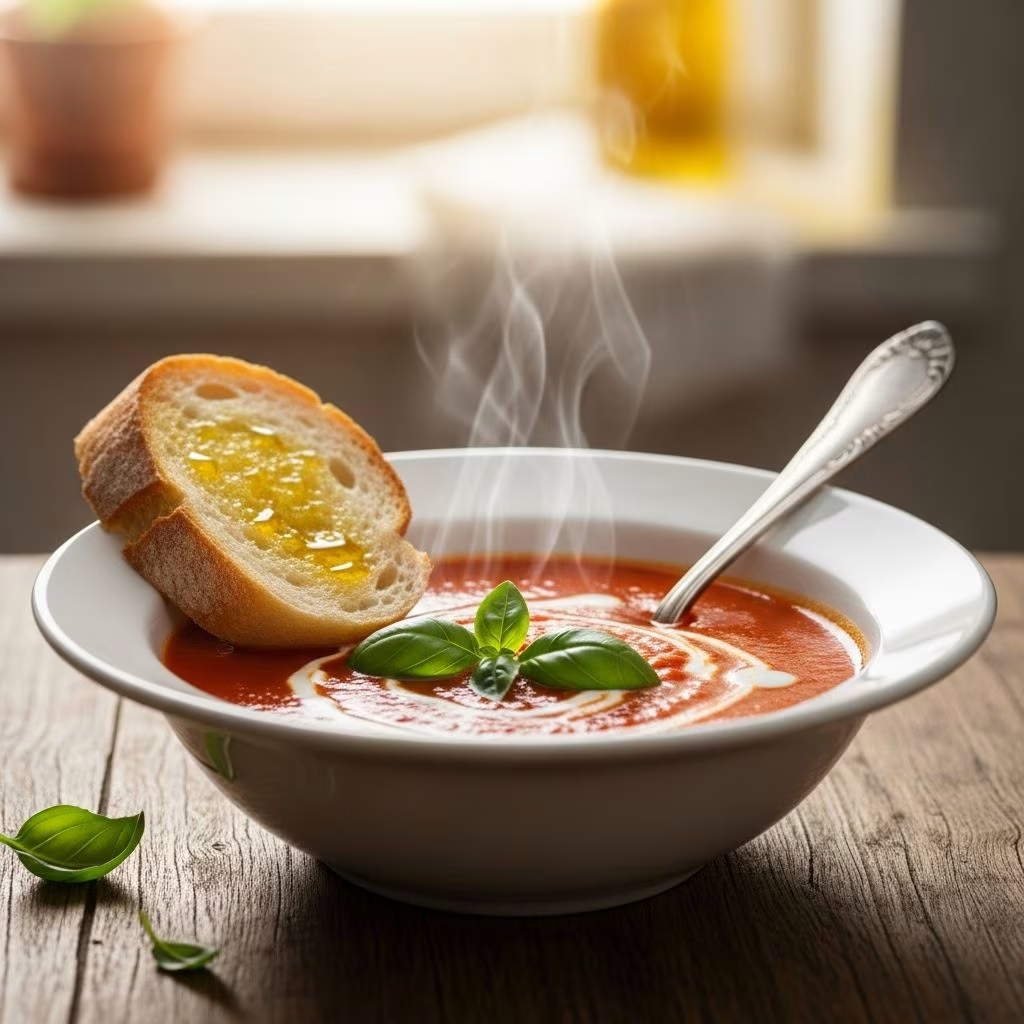
Beyond the basic recipe, several techniques elevate the soup’s complexity. A splash of balsamic vinegar adds subtle sweetness and tangy dimension. Red pepper flakes provide gentle heat that complements tomato’s acidity. Fresh basil leaves scattered atop each bowl introduce bright, herbaceous notes right before serving. A drizzle of high-quality olive oil adds richness and visual sophistication.
For those seeking deeper roasted character, try roasting tomatoes, garlic, and onions in the oven at 425°F for approximately 50 minutes before incorporating them into the pot. This technique concentrates flavors through moisture evaporation and develops caramelized notes unavailable through stovetop cooking alone.
Serving Suggestions and Pairings
The classic pairing of tomato soup with grilled cheese remains undefeated for good reason—the creamy, savory combination creates perfect balance. Beyond this traditional duo, consider crusty sourdough bread for dipping, crispy croutons for textural contrast, or flaky parmesan crisps for elegant presentation. A scattered handful of fresh basil, microgreens, or edible flowers elevates the bowl’s visual appeal. Sour cream or crème fraîche dolloped into each serving adds richness and slight tang.
Storage and Make-Ahead Considerations
Tomato soup stores beautifully in the refrigerator for up to five days in airtight containers, making it ideal for meal preparation. The flavors actually intensify during storage as ingredients continue melding. For longer storage, freeze the soup in freezer-safe containers or bags for up to three months. Add dairy components after reheating rather than before freezing, as they can separate or become grainy during the freeze-thaw cycle. Thaw frozen soup overnight in the refrigerator, then reheat gently over medium-low heat, stirring occasionally and adding fresh cream just before serving.
Troubleshooting Common Issues
If your soup tastes too acidic, this indicates insufficient sugar or cooking time. Add a pinch more sugar and simmer for an additional 5-10 minutes. Bitter flavors suggest scorched aromatics; future batches benefit from careful heat management during the sautéing stage. Watery texture indicates too much liquid—simmer uncovered to allow evaporation, or blend in additional tomatoes or tomato paste for concentration. Conversely, overly thick soup responds well to stock or broth additions.
Frequently Asked Questions
Can I make this soup entirely dairy-free?
Yes—substitute coconut milk for heavy cream and omit the Parmesan, or use nutritional yeast for a savory note without dairy. The soup remains delicious and creamy with these adjustments.
How far in advance can I prepare this soup?
Prepare the soup up to the blending stage several hours ahead, then finish with dairy components just before serving. Alternatively, store completely finished soup for up to five days refrigerated.
What’s the difference between canned whole and crushed tomatoes?
Crushed tomatoes are already processed for uniform texture, while whole tomatoes require manual breaking. Both work; crushed tomatoes save time and create more consistent results.
Can I use fresh tomatoes instead of canned?
Fresh tomatoes work beautifully when at peak ripeness, though they require more preparation. Roasting concentrated their flavors and removes excess moisture, yielding superior results compared to stovetop cooking alone.
Should I peel the tomatoes?
Canned tomatoes are pre-peeled. Fresh tomatoes can be peeled by blanching in boiling water for 30-60 seconds, then shocking in ice water before slipping off skins. Many cooks skip this step when blending, as the immersion blender incorporates skins seamlessly.
References
- Easy Tomato Soup Recipe — Natasha’s Kitchen. 2024. https://natashaskitchen.com/tomato-soup-recipe/
- Tomato Soup Recipe — Love and Lemons. 2024. https://www.loveandlemons.com/tomato-soup-recipe/
- The Best Homemade Tomato Soup — Broma Bakery. 2024. https://bromabakery.com/best-homemade-tomato-soup/