Homemade scones offer a delightful balance of tenderness and crumbly texture, making them a staple for afternoon tea or breakfast. This guide provides a straightforward recipe using basic ingredients, along with techniques to ensure success every time. Whether you’re a novice baker or seasoned pro, these scones come together quickly for fresh, warm results.
Understanding the Basics of Scone Making
Scones originated in Scotland as a quick bread, evolving into the light, flaky treats enjoyed today. The key to their appeal lies in cold ingredients and minimal handling, which preserve layers of butter for flakiness. Unlike biscuits, scones often include sugar and can incorporate mix-ins like fruits or chocolate. Mastering temperature control and dough consistency transforms simple pantry items into bakery-worthy pastries.
Common pitfalls include overworking the dough, which leads to toughness, or warm butter, resulting in dense scones. By chilling components and using a gentle touch, bakers achieve the ideal rise and texture.
Essential Ingredients for Perfect Scones
The beauty of scones lies in their simplicity. A classic recipe relies on flour, fat, leavening, liquid, and a touch of sweetness. Here’s a breakdown:
- Flour: All-purpose or self-rising works best. Self-rising contains built-in leavening for extra lift. Spoon and level to avoid density.
- Butter: Cold, unsalted, cubed or grated. Freezing it beforehand ensures even distribution and steam for flakiness.
- Leavening: Baking powder provides reliable rise. Use fresh for optimal height.
- Liquid: Buttermilk, heavy cream, or milk adds tenderness via acidity or fat content.
- Sugar: Granulated or cane for subtle sweetness; coarse sugar for a crunchy top.
- Egg: Optional for richness and golden color.
These components create a dough that’s shaggy yet cohesive, not sticky.
Step-by-Step Guide to Baking Scones
Follow these instructions for foolproof results. Prep time is about 15 minutes, bake time 15-20 minutes, yielding 8 scones.
Ingredients (Classic Plain Scones)
| Ingredient | Amount |
|---|---|
| All-purpose flour | 2 cups (250g), spooned and leveled |
| Granulated sugar | 1/3 cup (65g) |
| Baking powder | 1 tablespoon |
| Salt | 1/2 teaspoon |
| Cold unsalted butter | 6 tablespoons (85g), cubed |
| Heavy cream or buttermilk | 1/2 cup (120ml) + extra for brushing |
| Vanilla extract (optional) | 1 teaspoon |
| Coarse sugar (optional) | For sprinkling |
Detailed Instructions
Preheat and Prep: Heat oven to 400°F (200°C). Line a baking sheet with parchment paper.
Mix Dry Ingredients: In a large bowl, whisk flour, sugar, baking powder, and salt.
Incorporate Butter: Add cold butter cubes. Use a pastry cutter, fork, or fingers to cut in until pea-sized crumbs form. For best results, grate frozen butter.
Add Wet Ingredients: Stir in cream (and vanilla if using) with a spatula until a shaggy dough forms. Do not overmix.
Shape the Dough: Turn onto a floured surface. Pat into an 8-inch round, about 3/4-inch thick. Cut into 8 wedges or use a round cutter.
Bake: Place on sheet, brush tops with cream, sprinkle sugar. Bake 15-18 minutes until golden.
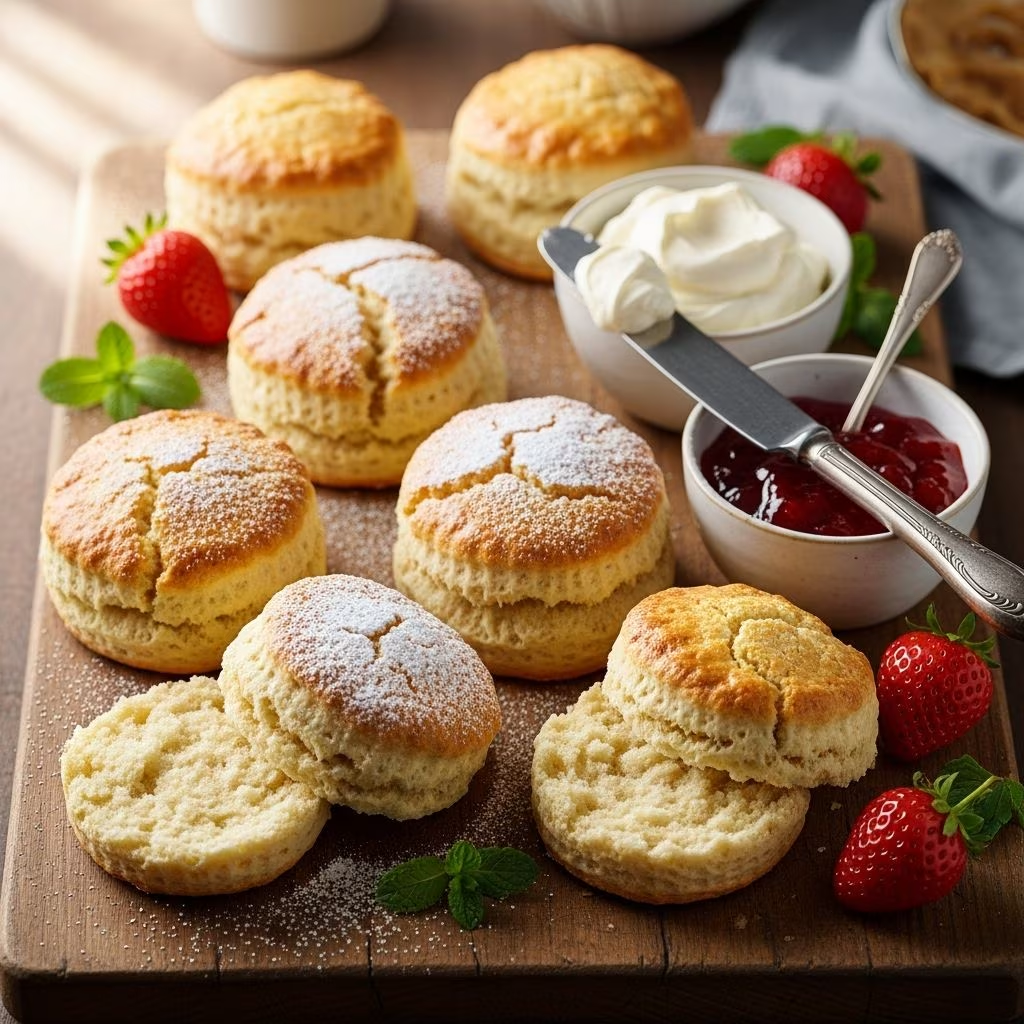
Cool: Cool on rack 10 minutes. Serve warm with clotted cream and jam.
This method ensures even baking and tender interiors.
Pro Tips for Scone Success
- Keep everything cold: Chill bowl, tools, and dough if needed.
- Avoid over-kneading: Gentle handling preserves tenderness.
- Measure accurately: Too much flour makes dry scones.
- Experiment with shapes: Wedges bake evenly; rounds mimic traditional style.
- Freeze extras: Dough or baked scones freeze well for up to 3 months.
These techniques elevate basic scones to professional quality.
Delicious Variations to Try
Customize with mix-ins added after butter incorporation, up to 1 cup. Adjust sugar for savory options.
| Variation | Mix-Ins | Tips |
|---|---|---|
| Berry Scones | 1 cup fresh or frozen berries (tossed in flour) | Reduce cream slightly; bake longer if frozen. |
| Chocolate Chip | 3/4 cup chips + 1/4 cup nuts | Omit coarse sugar or add sea salt flakes. |
| Lemon Poppy Seed | Zest of 2 lemons + 2 tbsp poppy seeds | Add lemon juice to glaze. |
| Savory Cheese | 1 cup cheddar + herbs (omit sugar) | Use buttermilk for tang. |
| Dried Fruit | 3/4 cup cranberries or raisins | Plump in hot water first. |
These adaptations make scones versatile for any occasion.
Pairing Scones with Perfect Accompaniments
Traditional British tea features scones with clotted cream and strawberry jam. Spread jam first, then cream. For American twists, pair with butter and honey or fruit curds. Serve with Earl Grey tea or coffee. Savory scones shine with soups or as sandwich bases.
Storage and Make-Ahead Strategies
Store baked scones in an airtight container at room temperature for 2 days or refrigerate up to 5. Reheat at 350°F for 5 minutes. Freeze unbaked wedges on a sheet, then bag for 3 months; bake from frozen, adding 2-3 minutes. This convenience suits busy schedules.
Common Mistakes and How to Fix Them
- Dense Scones: Use colder butter and fresher baking powder.
- Dry Texture: Measure flour by spooning, not scooping.
- Uneven Shape: Press straight down with cutter; avoid twisting.
- Flat Rise: Check oven temperature with thermometer.
Troubleshooting ensures consistent wins.
Nutritional Information
Per scone (plain): Approx. 250 calories, 12g fat, 32g carbs, 4g protein. Variations increase calories with add-ins. Use whole wheat flour for fiber boost or low-fat milk for lighter options.
Frequently Asked Questions (FAQs)
Can I make scones without buttermilk?
Yes, substitute heavy cream, whole milk, or milk + 1 tsp lemon juice/vinegar for similar tenderness.
Why grate the butter?
Grating distributes fat evenly for flaky layers without overmixing.
How do I know when scones are done?
Golden edges and tops; internal temp 200°F. Cool slightly for best texture.
Can scones be vegan?
Yes, use plant-based butter, non-dairy milk, and flax egg.
What’s the best flour for scones?
All-purpose for structure; self-rising for extra fluff.
Why Home Baking Beats Store-Bought
Fresh scones boast superior flavor and texture, customizable to taste. Baking builds skills and saves money— a batch costs under $5. Share with friends for instant popularity.
References
- Easy Scones Recipe — Love and Lemons. 2023-05-15. https://www.loveandlemons.com/scones-recipe/
- Quick And Easy Homemade Scones — Larder Love. 2022-11-10. https://larderlove.com/simple-scones/
- The BEST Scone Recipe — Live Well Bake Often. 2024-02-20. https://www.livewellbakeoften.com/scone-recipe/