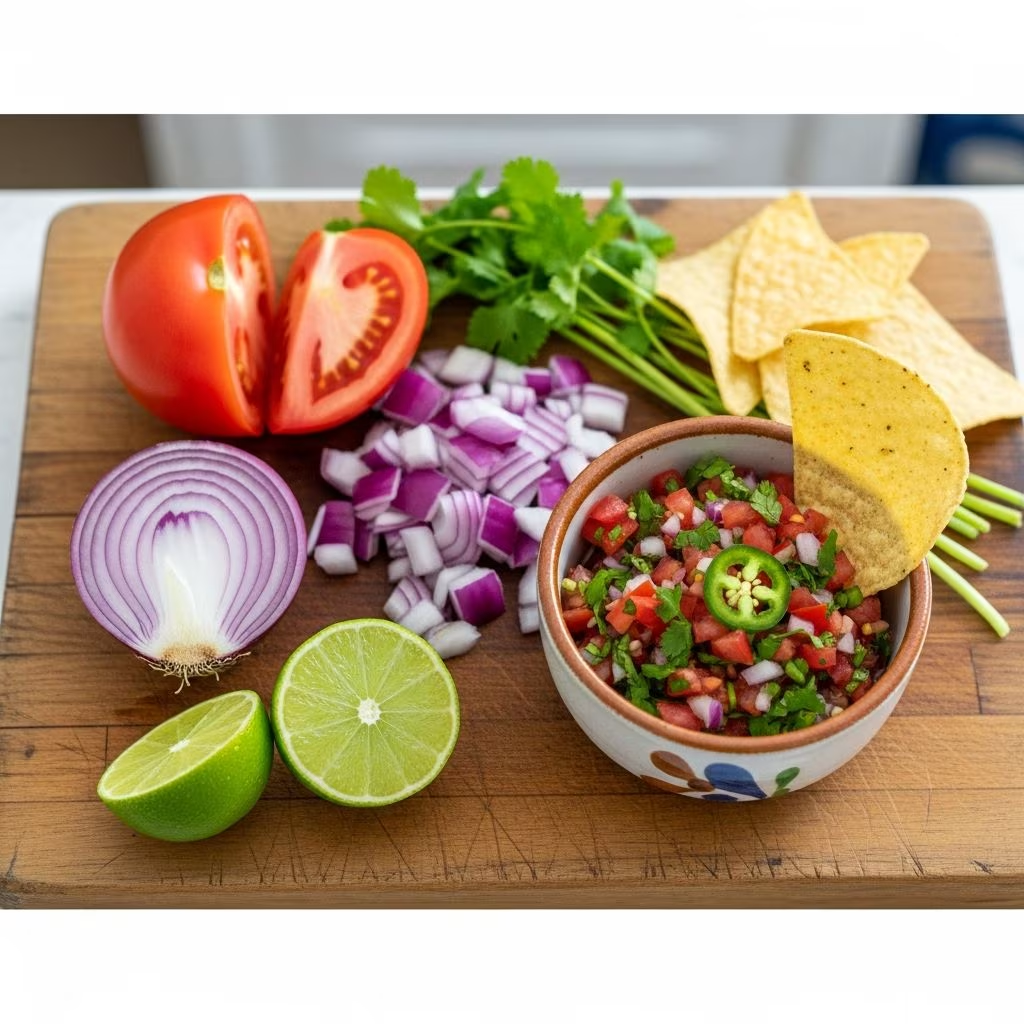
Homemade salsa transforms ordinary meals into vibrant feasts with its bright flavors and versatile uses. This guide explores simple methods to create restaurant-quality salsa using everyday ingredients, focusing on quick preparations that take mere minutes. Whether you prefer chunky textures or smoother blends, these techniques ensure fresh taste without complicated steps.
Why Choose Homemade Over Store-Bought
Store-bought versions often contain preservatives and high fructose corn syrup, diluting authentic flavors. Making your own allows control over freshness, spice, and consistency. Common recipes rely on canned diced tomatoes for convenience, yielding results that rival Mexican eateries in just five minutes.
Fresh preparations highlight seasonal produce, enhancing natural sweetness and acidity. Benefits include adjustable heat via jalapeños, balanced tang from lime, and herbal notes from cilantro. Nutritionally, it’s packed with lycopene from tomatoes and vitamin C from citrus, supporting immune health per USDA guidelines on vegetable benefits.
Core Ingredients Breakdown
Every great salsa starts with a solid foundation. Here’s a detailed look at essentials:
- Tomatoes: Canned fire-roasted or diced varieties provide consistent juiciness without chopping. Fresh Roma tomatoes offer brighter color when ripe.
- Onions: Red or white, finely chopped for sharpness. Rinse under water to mellow pungency.
- Cilantro: Adds earthy freshness; use 1/4 to 1/2 cup packed. Omit for haters by substituting parsley.
- Jalapeños: One pepper for mild, seeds included for heat. Alternatives: serrano for fiercer kick or bell peppers for mild.
- Garlic: 1-3 cloves minced; powder works in pinches for ease.
- Lime Juice: 1-2 tablespoons brightens all elements. Fresh zest amplifies citrus notes.
- Seasonings: Salt (1 tsp), optional sugar (1 tsp) for balance, cumin (1/2 tsp) for depth.
| Ingredient | Quantity (4-6 servings) | Substitution Options |
|---|---|---|
| Canned Tomatoes | 28-30 oz drained | Fresh 1-2 lbs chopped |
| Onion | 1/4 medium | Shallot or powder |
| Jalapeño | 1 pepper | Serrano or green chiles |
| Cilantro | 1/4 cup | Parsley |
| Lime | Juice of 1 | Lemon |
Step-by-Step Quick Blender Method
This no-chop approach uses a food processor or blender, ideal for weeknights.
- Combine onion, garlic, jalapeño, and cilantro in processor. Pulse 3-5 times until minced, avoiding puree.
- Add drained tomatoes, lime juice, salt, and optional sugar/cumin. Pulse 5-10 seconds for chunky or longer for smooth.
- Taste and adjust: more lime for tang, salt for savoriness. Drain excess liquid if watery.
- Chill 30 minutes for flavors to meld, or serve immediately.
Total time: 5 minutes. Yields 3 cups, perfect for chips or toppings.
Fresh Tomato Roasting Variation
For deeper flavor, roast ingredients. Core 4-5 lbs tomatoes, quarter 1 onion, add 3-5 chiles and garlic cloves to a sheet pan. Roast at 300°F for 45-60 minutes until charred. Blend with cilantro, lime, honey, and salt. This method caramelizes sugars, intensifying taste without canning preservatives.
Customizing Heat and Texture
Tailor to preferences:
- Mild: Seed jalapeños, use fewer or bell peppers.
- Medium: One seeded jalapeño or add cumin.
- Hot: Multiple seeded peppers or habaneros.
- Chunky: Pulse minimally, strain tomatoes.
- Smooth: Blend fully, like restaurant pico de gallo alternatives.
Pro tip: Soak onions in ice water 10 minutes post-chopping to reduce bite.
Storage and Make-Ahead Tips
Refrigerate in airtight container up to 7 days; flavors peak day 2. Freeze in ice cube trays for portions up to 3 months. Thaw and drain before use. For parties, prepare base ahead and pulse before serving to maintain freshness.
Creative Serving Ideas Beyond Chips
Salsa elevates dishes:
- Tacos/Burritos: Top proteins or beans.
- Nachos: Layer under cheese.
- Scrambled Eggs: Stir in for breakfast.
- Grilled Meats: Chimichurri-style with steak.
- Salads: Dressing base with avocado.
Pair with fish tacos using milder versions or spice up burgers.
Common Mistakes and Fixes
- Too Watery: Drain canned tomatoes thoroughly; strain post-blend.
- Bitter: Balance with sugar; use riper fresh tomatoes.
- No Flavor: Increase lime/salt incrementally.
- Over-Blended: Start with short pulses.
Nutritional Profile Per Serving
Approximate for 1/4 cup (based on standard recipe):
| Nutrient | Amount | % Daily Value |
|---|---|---|
| Calories | 25 | 1% |
| Carbs | 5g | 2% |
| Fiber | 1g | 4% |
| Vitamin C | 15mg | 17% |
| Vitamin A | 400IU | 8% |
Low-calorie, vegan, gluten-free. Data synthesized from ingredient analyses.
FAQ
Can I make salsa without a food processor?
Yes, finely dice by hand for rustic texture. Use a blender cautiously to avoid over-processing.
Is fire-roasted better than regular canned tomatoes?
Fire-roasted adds smoky depth; regular suffices for fresh taste.
How do I make it less spicy?
Remove seeds/membranes from peppers; substitute milder chiles.
Can I use dried cilantro?
Fresh is superior, but 1 tbsp dried equals 1/4 cup fresh. Rehydrate first.
Does salsa freeze well?
Absolutely; portion and thaw overnight in fridge.
Advanced Twists for Seasoned Cooks
Experiment with mango for sweetness, corn for heartiness, or tomatillos for verde style. Char fresh ingredients on a skillet for 5-10 minutes before blending, mimicking roasted profiles without oven time. Add black beans for hearty dip.
This comprehensive approach ensures success every time, blending convenience with bold flavors. Dive in and customize to your kitchen’s rhythm.
References
- Quick and Easy Homemade Salsa — Mel’s Kitchen Cafe. 2023. https://www.melskitchencafe.com/quick-and-easy-homemade-salsa/
- Homemade Salsa Recipe — Love and Lemons. 2024. https://www.loveandlemons.com/homemade-salsa-recipe/
- Salsa Recipe — To Simply Inspire. 2023. https://www.tosimplyinspire.com/salsa-recipe.html
- Easy Homemade Salsa Recipe — JoyFoodSunshine. 2024. https://joyfoodsunshine.com/easy-homemade-salsa-recipe/
- Easy Homemade Salsa — My Diary of Us. 2023. https://www.mydiaryofus.com/blog/easy-homemade-salsa