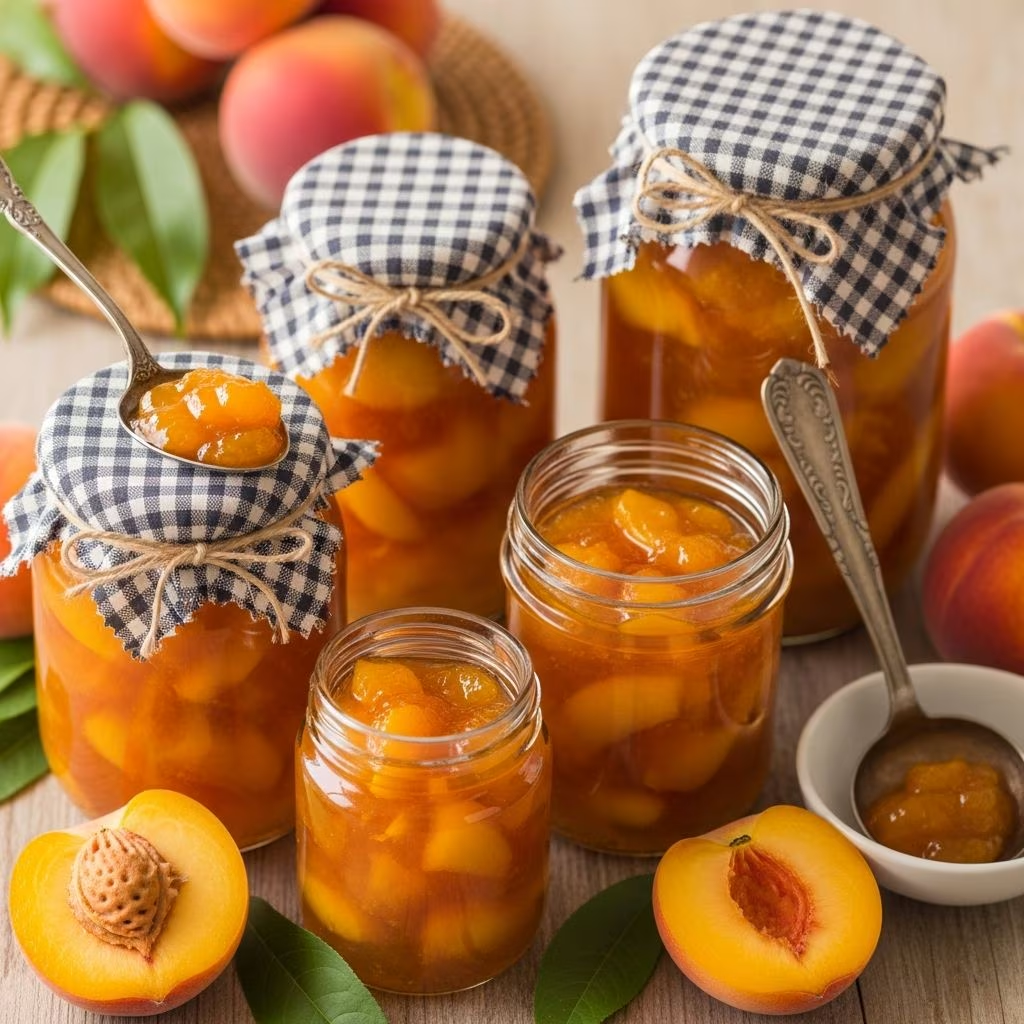
Peach preserves capture the essence of summer’s bounty, transforming ripe, juicy peaches into a versatile pantry staple that delights throughout the year. These golden jars of sweetness require minimal ingredients—primarily fresh peaches, sugar, and a splash of lemon juice—and can be made without pectin for a natural, syrupy texture. Whether you’re a canning novice or a seasoned preserver, this guide provides everything needed to create professional-quality preserves at home.
Why Make Your Own Peach Preserves?
Store-bought versions often pale in comparison to homemade ones, which boast intense fruit flavor and customizable sweetness. Fresh peaches at their peak ripeness yield preserves that taste like sunshine in a jar, perfect for spreading on toast, swirling into yogurt, or baking into desserts. Home canning also allows control over ingredients, avoiding artificial additives common in commercial products. Plus, it’s a rewarding way to extend the short peach season, providing a taste of summer during winter months. Economically, using in-season produce makes it cost-effective, especially when buying in bulk from farmers’ markets or orchards.
Selecting the Best Peaches
The foundation of exceptional preserves starts with high-quality peaches. Opt for ripe but firm fruit that yields slightly to gentle pressure, with a fragrant aroma and deep golden color. Varieties like Elberta, Redhaven, or Georgia Belle excel due to their robust flavor and meaty texture, which hold up well during cooking. Avoid overripe or bruised peaches, as they can lead to mushy results.
- Seasonal Tip: Harvest peaks from June to August in the U.S., offering the best flavor and price.
- Quantity Guide: About 4-5 pounds of peaches yield roughly 6-8 half-pint jars.
- Organic Choice: Organic peaches minimize pesticide residues, enhancing safety for long-term storage.
To peel effortlessly, blanch peaches in boiling water for 30-60 seconds, then plunge into ice water. The skins slip off easily, preserving the fruit’s vibrant flesh.
Essential Ingredients and Ratios
Traditional peach preserves rely on just two or three core components, allowing the fruit’s natural pectin to create a luxurious consistency.
| Ingredient | Amount (for 4-5 lbs peaches) | Purpose |
|---|---|---|
| Fresh Peaches | 4-5 lbs, peeled and chopped | Main flavor and natural thickener |
| Granulated Sugar | 4-5 cups (adjust to taste) | Preserves fruit, sweetens, and gels |
| Lemon Juice | 1/4-1/2 cup fresh | Balances sweetness, aids setting |
Sugar draws out juices, creating a syrup that encases the fruit pieces, while lemon juice’s acidity prevents discoloration and enhances gelling. For variations, add spices like cinnamon or nutmeg for a cobbler-like twist. Pectin-free recipes simmer longer for translucency, but pectin versions set faster with less cooking time.
Step-by-Step Preparation Process
Follow these detailed instructions for foolproof results. Always use clean equipment to ensure safety.
- Prep the Fruit: Wash peaches thoroughly. Peel, pit, and slice or chop into even pieces. Toss immediately with lemon juice to prevent browning.
- Maccerate: Layer peaches with sugar in a large pot. Let sit 30-60 minutes (or overnight in the fridge) until juices release, forming a syrup.
- Cook the Mixture: Heat gently to dissolve sugar, then bring to a rolling boil. Reduce to simmer for 15-120 minutes, stirring often and skimming foam for clarity. Test doneness by chilling a spoonful—it should wrinkle and hold shape.
- Jar Sterilization: Boil jars and lids in water for 10 minutes. Keep hot until filling.
- Fill and Seal: Ladle hot preserves into jars, leaving 1/4-1/2 inch headspace. Wipe rims, apply lids, and screw bands fingertip-tight.
For water bath canning, process pints for 10-20 minutes (adjust for altitude). Cool undisturbed for 24 hours; check seals by pressing lids. Yields 6-8 half-pints.
No-Pectin vs. Pectin Methods
Choose based on time and texture preference.
- No-Pectin (Traditional): Longer simmer (1-2 hours) yields soft, chunky preserves with intense flavor. Ideal for whole fruit slices.
- With Pectin: Quick boil (4-10 minutes) for firmer set, using less sugar. Great for beginners.
Both methods preserve safely when acidified properly (pH below 4.6). USDA guidelines recommend testing with pH strips if unsure.
Safe Canning and Storage Practices
Proper technique prevents spoilage. Use a boiling water canner covering jars by 1-2 inches. Process half-pints for 10 minutes at sea level, adding 5 minutes per 1,000 feet elevation. Store in a cool, dark place for up to 18 months. Refrigerate after opening; use within 3 weeks.
Signs of spoilage include bulging lids, leaks, or off odors—discard immediately.
Creative Ways to Use Peach Preserves
Beyond toast, elevate everyday meals:
- Glaze for grilled chicken or pork.
- Filling for thumbprint cookies or tarts.
- Topping for ice cream, pancakes, or cheese boards.
- Mix into oatmeal or cocktail syrups.
In baking, substitute for pie filling or swirl into quick breads for bursts of flavor.
Troubleshooting Common Issues
| Problem | Cause | Solution |
|---|---|---|
| Runny Preserves | Undercooked or low pectin | Reboil with lemon juice; use pectin next time |
| Cloudy Jam | Foam not skimmed | Skim diligently; strain if needed |
| Darkening Fruit | Oxidation | More lemon juice; process quickly |
| Failed Seals | Improper headspace | Reprocess or refrigerate |
Nutritional Profile and Health Notes
A half-pint serving offers vitamins A and C from peaches, though high sugar content means moderation. Each tablespoon provides about 50 calories, mostly from sugar. For lower-sugar options, use recipes with 50% less sugar and pectin.
Seasonal Sourcing and Scaling Recipes
Scale up for abundance: double ingredients but use wide pots to prevent scorching. Source from local farms for freshness—Georgia peaches ship well. Freeze excess peeled peaches for off-season batches.
Frequently Asked Questions (FAQs)
Can I use frozen peaches?
Yes, thaw and drain first; reduce initial sugar as they release more liquid.
How long do sealed jars last?
Up to 18 months in pantry; indefinite if seals hold, but quality peaks in a year.
Is canning equipment necessary?
For long-term storage, yes; otherwise, refrigerate for 1-2 months.
What if my preserves don’t set?
Reboil with 1 tsp pectin per cup; or enjoy as syrup.
Can I add spices or other fruits?
Absolutely—try ginger, vanilla, or mix with raspberries for complexity.
This comprehensive approach ensures success every time, turning simple ingredients into treasured preserves. Experiment confidently to perfect your signature batch.
References
- Old-Fashioned Peach Preserves Recipe for Canning — Ninnescah Made. 2023. https://ninnescahmade.com/old-fashioned-peach-preserves-recipe-for-canning/
- Easy Peach Preserves Recipe (no pectin) — Chef Lindsey Farr. 2022-08-15. https://cheflindseyfarr.com/peach-preserves/
- Homemade Peach Preserves — Kenneth Temple. 2023. https://kennethtemple.com/homemade-peach-preserves/
- Easy Peach Preserves Recipe with Pectin — Happy Simple Living. 2022. https://www.happysimpleliving.com/make-your-own-peach-preserves/
- Peach Preserves Tutorial — Chef Lindsey Farr (YouTube). 2023. https://www.youtube.com/watch?v=cQ1EP9_YTd0
- Country Peach Preserves Recipe — Natasha’s Kitchen. 2021-07-20. https://natashaskitchen.com/country-peach-preserves/