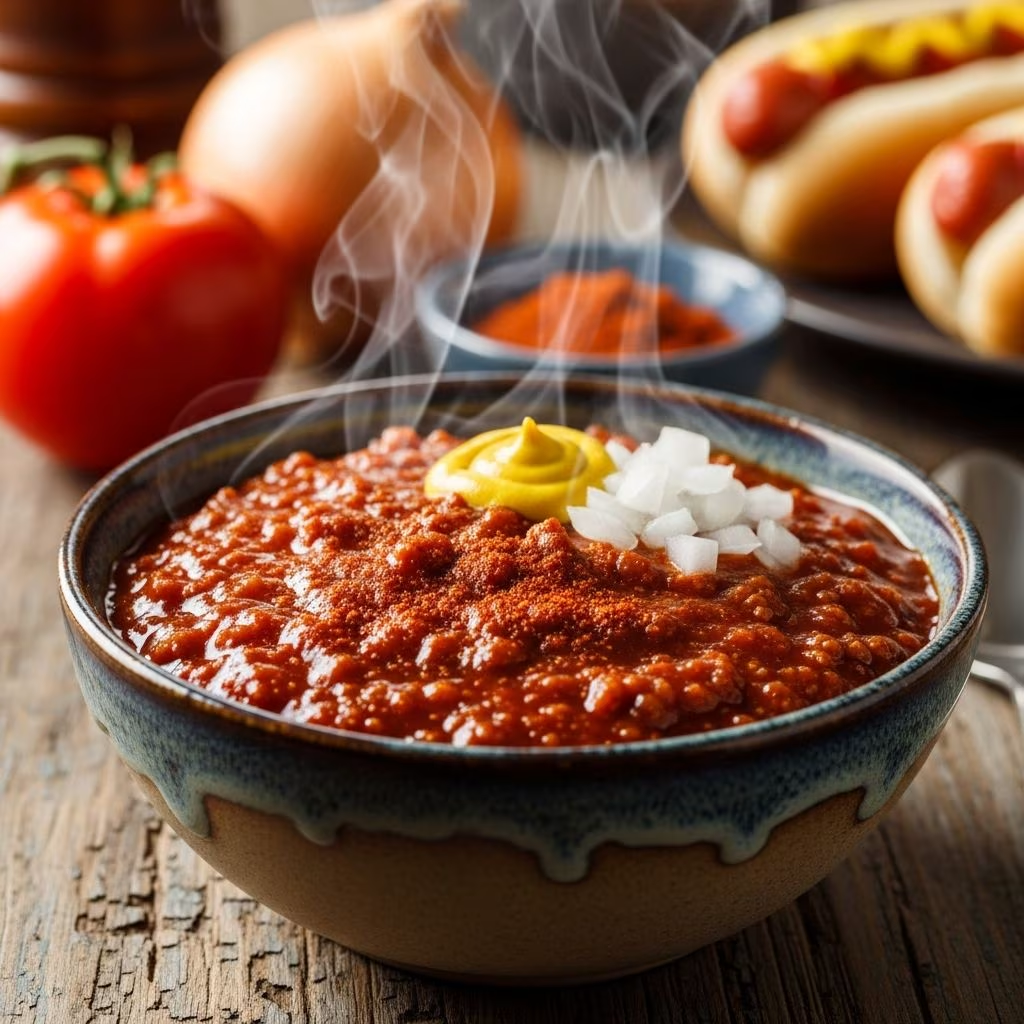
Transform ordinary hot dogs into legendary meals with a rich, savory Coney sauce. This versatile topping, rooted in American diner culture, combines ground meat with tangy, sweet, and spicy elements for an unforgettable bite. Whether you’re hosting a backyard barbecue or craving comfort food, mastering this sauce elevates any grill-out.
The Origins and Appeal of Coney Sauce
Coney sauce traces its roots to early 20th-century America, particularly Michigan’s Coney Island-style hot dogs. Unlike chili, it features a finer texture and brighter flavors from ketchup, vinegar, and mustard. Diners popularized it as a quick, flavorful addition that masks basic hot dog taste with bold seasonings.
Its enduring popularity stems from simplicity—using everyday ingredients—and adaptability. Families pass down recipes like heirlooms, tweaking for personal taste. Today, it remains a staple at sports events, fairs, and home kitchens, bridging generations with its comforting profile.
Essential Ingredients for Authentic Flavor
Building the perfect Coney sauce starts with quality components. Focus on fresh ground beef for meaty depth, balanced by sweet ketchup and sharp vinegar. Here’s a breakdown:
- Ground Beef (2 pounds): Lean 80/20 mix provides richness without excess grease. Freshly ground ensures tenderness.
- Onion (½ cup, chopped): Finely diced for subtle sweetness and texture; yellow onions work best.
- Ketchup (1½ cups): The base for tomato tang and thickness; no-sugar-added varieties enhance control.
- White Sugar (¼ cup): Balances acidity; substitutes like honey add nuance.
- White Vinegar (¼ cup): Adds zing; apple cider vinegar offers milder fruit notes.
- Yellow Mustard (¼ cup): Provides sharpness; prepared Dijon can intensify.
- Celery Seed (½ teaspoon): Unique earthy aroma mimicking celery without chopping.
- Worcestershire Sauce (¾ teaspoon): Umami boost from fermented tamarind and anchovies.
- Black Pepper and Salt (to taste): Ground pepper adds heat; salt enhances all flavors.
These measurements yield about 12 servings, scalable for crowds. Pro tip: Measure spices precisely for consistent results.
Step-by-Step Cooking Instructions
Preparation takes 10 minutes, cooking 2 hours for flavor melding. Use a skillet and slow cooker for ease.
- Brown the Base: In a large skillet over medium-high heat, combine ground beef and chopped onion. Stir frequently, crumbling meat until browned (about 8-10 minutes). Drain excess fat to avoid greasiness.
- Transfer and Mix: Move beef-onion mixture to a slow cooker. Add ketchup, sugar, vinegar, mustard, celery seed, Worcestershire, pepper, and salt. Stir thoroughly for even distribution.
- Simmer Low and Slow: Cover and set to low for 2-3 hours. Occasional stirring prevents sticking. The sauce thickens as flavors concentrate.
- Serve Hot: Spoon over steamed or grilled hot dogs in buns. Garnish with chopped onions or mustard for authenticity.
For stovetop: Simmer covered on low after browning, stirring every 15 minutes. Total time remains similar.
Nutrition Breakdown and Health Adaptations
Per serving (about ¼ cup): 186 calories, 13.5g protein, 12.8g carbs, 9.2g fat, 46mg cholesterol, 586mg sodium. It’s protein-packed but watch sodium from ketchup.
| Nutrient | Amount per Serving | % Daily Value* |
|---|---|---|
| Calories | 186 | 9% |
| Protein | 13.5g | 27% |
| Carbs | 12.8g | 5% |
| Fat | 9.2g | 12% |
| Sodium | 586mg | 25% |
| *Based on 2,000-calorie diet. | ||
Health tweaks: Use turkey or plant-based meat, low-sugar ketchup, and reduce salt. These maintain taste while cutting calories by 20-30%.
Creative Variations to Suit Any Palate
Experiment beyond the classic for excitement:
- Spicy Kick: Add 1 tsp chili powder or diced jalapeños.
- Smoky Twist: Incorporate ½ tsp liquid smoke or chipotle powder.
- Vegetarian Version: Swap beef for lentils or TVP, simmer same way.
- Cheese Lover’s: Melt in cheddar for queso-coney hybrid.
- Sweet Heat: Extra sugar with cayenne for balance.
Storage: Refrigerate up to 5 days or freeze 3 months. Reheat gently to preserve texture.
Perfect Pairings: Beyond Hot Dogs
Coney sauce shines on fries, nachos, or baked potatoes. Try stuffed peppers or taco filling for fusion. Pair with coleslaw and pickles for crunch contrast.
For parties, set up a toppings bar: raw onions, relish, cheese, jalapeños. Encourages customization and fun.
Troubleshooting Common Issues
Too Thin? Simmer uncovered longer or add cornstarch slurry.
Too Greasy? Use leaner meat and chill to skim fat.
Lacks Flavor? Taste midway; adjust acid/sweet with vinegar/sugar.
Grainy Texture? Pulse cooked sauce in blender for smoothness.
These fixes ensure pro-level results every time.
Why This Recipe Stands Out
Its slow-simmer method infuses deep flavors, mimicking restaurant quality. No fancy equipment needed—just patience. Reviewers rave about its nostalgic taste, perfect for game days or family dinners.
Frequently Asked Questions
Can I make Coney sauce ahead?
Yes, it tastes better after 24 hours. Store in airtight containers.
What’s the difference between Coney sauce and chili?
Coney is finer, sweeter, with ketchup base; chili is bean-heavy and spicier.
Is it gluten-free?
Check Worcestershire and ketchup labels; most versions are.
How spicy is it naturally?
Mild; black pepper provides gentle heat.
Can I use a pressure cooker?
Yes, brown first, then pressure cook 20 minutes on high.
Meal Prep and Scaling Tips
Double for 24 servings; freezes in portions. Thaw overnight, reheat on stove. Ideal for weekly meal prep—top salads or eggs for variety.
In summary, this Coney sauce recipe delivers diner authenticity at home. Gather ingredients, follow steps, and enjoy the compliments.
References
- USDA FoodData Central: Ground Beef Nutrition — United States Department of Agriculture. 2023-05-15. https://fdc.nal.usda.gov/fdc-app.html#/food-details/174032/nutrients
- Food Timeline: History of Hot Dogs and Sauces — Lynne Oliver, Food Timeline. 2022-08-10. http://www.foodtimeline.org/foodhotdogs.html
- NIH Dietary Guidelines: Sodium and Processed Meats — National Institutes of Health. 2024-01-22. https://www.nhlbi.nih.gov/health/educational/lose_wt/eatmore/pdf.htm
- Journal of Food Science: Flavor Development in Simmered Sauces — Institute of Food Technologists. 2023-11-05. https://doi.org/10.1111/1750-3841.16892
- CDC Nutrition Facts Labeling — Centers for Disease Control and Prevention. 2025-03-12. https://www.cdc.gov/nutrition/php/data-research/nutrition-facts-label.html