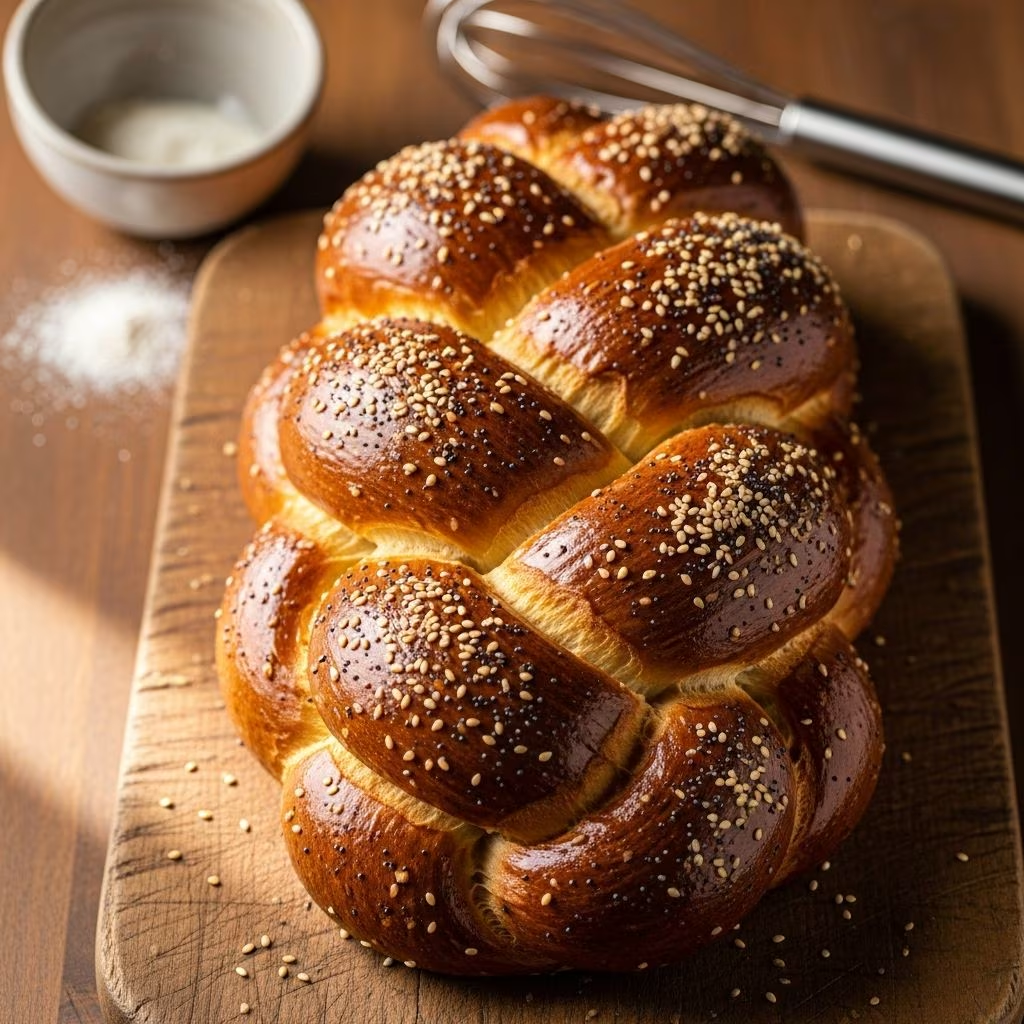
Challah bread stands out as a beloved staple in Jewish tradition, known for its soft texture, subtle sweetness, and intricate braided design. This recipe simplifies the process, making it accessible for home bakers of all levels. With basic ingredients like flour, yeast, eggs, and oil, you can produce two stunning loaves that are perfect for Shabbat dinners, holidays, or simply enjoying fresh from the oven.
Understanding Challah: A Brief History and Appeal
Originating from Eastern European Jewish communities, challah has evolved into a symbol of celebration and abundance. Traditionally, it graces the table during religious observances, but its rich flavor and versatility make it ideal for French toast, sandwiches, or standalone snacking. The dough’s high egg and oil content contributes to its signature tenderness and golden crust, distinguishing it from everyday breads.
What draws people to homemade challah is the satisfaction of crafting something beautiful by hand. The braiding not only enhances its visual appeal but also ensures even baking and a pull-apart texture. Whether you’re new to yeast breads or a seasoned baker, this method emphasizes patience during rising times for maximum fluffiness.
Essential Ingredients for Perfect Challah
Gathering the right components is key to success. This recipe scales for two medium loaves, serving 12-16 people total.
| Ingredient | Quantity | Purpose |
|---|---|---|
| Warm water | 1 ¾ cups | Activates yeast and hydrates dough |
| Active dry yeast | 1 ½ tablespoons | Leavening agent for rise |
| Sugar (plus 1 tbsp for yeast) | ½ cup | Sweetness and yeast food |
| Vegetable oil | ½ cup | Richness and tenderness |
| Large eggs (4 for dough + 1 for wash) | 5 total | Structure, color, and moisture |
| Salt | 2 teaspoons | Flavor balance |
| All-purpose flour | 7-8 cups | Main structure |
| Sesame or poppy seeds (optional) | 2 tablespoons | Topping for texture and tradition |
Opt for fresh yeast and room-temperature eggs to ensure reliable proofing. Bread flour can substitute for a chewier result, but all-purpose works well for beginners.
Step-by-Step Dough Preparation
Creating the dough requires a balance of mixing, kneading, and resting. Allow about 3 hours total, including rises.
- Proof the yeast: In a large bowl, combine warm water (around 110°F), yeast, and 1 tablespoon sugar. Stir gently and let sit 5-10 minutes until foamy. This confirms yeast viability.
- Mix wet ingredients: Whisk in oil, 4 beaten eggs, remaining sugar, and salt until smooth.
- Incorporate flour: Add 7 cups flour gradually, stirring with a wooden spoon until a shaggy dough forms. Turn onto a floured surface.
- Knead thoroughly: Knead 8-10 minutes, adding flour as needed (up to 1 more cup) until smooth and elastic. The dough should be soft but not sticky.
- First rise: Place in an oiled bowl, cover with plastic wrap, and let rise in a warm spot for 1 hour or until doubled.
Punch down the dough gently after rising to release air, then cover for a 30-minute rest. This step develops gluten for better structure.
Mastering the Challah Braid
Braiding transforms basic dough into an elegant loaf. Start with a 6-strand version for authenticity, or simplify to 3-4 strands.
- Divide risen dough in half for two loaves. Each half yields 6 equal pieces (about 4 oz each).
- Roll pieces into 12-14 inch ropes, tapering ends.
- Arrange 6 ropes vertically, pinch tops together.
- Braid by numbering strands 1-6 left to right: Pass 4 over 2, 6 over 5, 1 over 3, etc., repeating the pattern while keeping tension even. Pinch ends and tuck under.
For visual guidance, imagine a rhythmic over-under motion. Practice on a smaller scale first. Place braided loaves on parchment-lined sheets.
Final Proofing and Egg Wash Technique
After braiding, cover loaves loosely and let rise 45-60 minutes until puffy. Preheat oven to 375°F.
Prepare egg wash: Beat the remaining egg with 1 teaspoon water. Brush generously over loaves, reaching into crevices for shine. Sprinkle seeds if desired. Apply a second coat post-rise for deeper color.
Bake 25-35 minutes until golden and internal temperature hits 190°F. Cool on racks to prevent sogginess.
Troubleshooting Common Challah Issues
| Problem | Cause | Solution |
|---|---|---|
| Dough won’t rise | Old yeast or cold environment | Check expiration; use proofing box or warm oven |
| Dense loaf | Over-kneading or insufficient rise | Knead until windowpane test passes; extend rise time |
| Pale crust | Weak egg wash | Brush twice; bake on higher rack |
| Braid unravels | Loose pinching | Tuck ends securely; chill dough briefly pre-braiding |
Humidity affects flour absorption—adjust as needed. Store leftovers airtight for 2 days or freeze sliced.
Creative Variations to Elevate Your Challah
Customize for fun:
- Sweet challah: Add raisins or chocolate chips during braiding.
- Herbed version: Mix in dried rosemary or garlic powder.
- Whole wheat: Swap half flour for whole wheat for nuttier flavor.
- Rounds for Rosh Hashanah: Shape into spirals symbolizing continuity.
These tweaks maintain tradition while suiting modern tastes.
Nutritional Profile and Serving Ideas
One slice (1/12 loaf) offers ~200 calories, 6g protein, 30g carbs, with eggs providing choline and B vitamins. Serve warm with butter, as French toast, or in bread pudding.
Pair with soups, cheeses, or holiday meals for a crowd-pleaser.
Frequently Asked Questions
Can I make challah without a stand mixer?
Yes, hand-kneading works fine. Use a sturdy spoon initially, then knead on a counter for 10 minutes.
How do I store challah?
Room temperature in a bag for 2 days; freeze up to 3 months. Thaw and reheat at 350°F.
Is instant yeast interchangeable?
Absolutely—skip proofing and mix directly with flour.
Why is my challah eggy?
Eggs are traditional for richness; reduce by 1 for milder taste.
Can vegans make challah?
Use aquafaba for eggs, plant oil, and maple for honey-like sweetness.
Expert Tips for Bakery-Worthy Results
– Weigh flour for precision (1 cup = 120g).
– Use a bench scraper for clean divisions.
– Proof in a turned-off oven with a pan of hot water for humidity.
– Rotate sheets midway for even browning.
With practice, challah becomes a rewarding ritual. Share your bakes and variations!
References
- Challah Bread Recipe — House of Nash Eats. 2023-05-15. https://houseofnasheats.com/best-challah-bread/
- Simple Challah Bread — Life As A Strawberry. 2022-10-20. https://www.lifeasastrawberry.com/simplechallah-bread/
- Easy Challah Bread — The Lemon Bowl. 2024-01-12. https://thelemonbowl.com/easy-challah-bread-recipe/
- Holly’s Challah — Alexandra’s Kitchen. 2014-12-16. https://alexandracooks.com/2014/12/16/hollys-challah/
- Basic Challah Bread — Baker Bettie. 2023-08-05. https://bakerbettie.com/braided-basic-challah-bread/