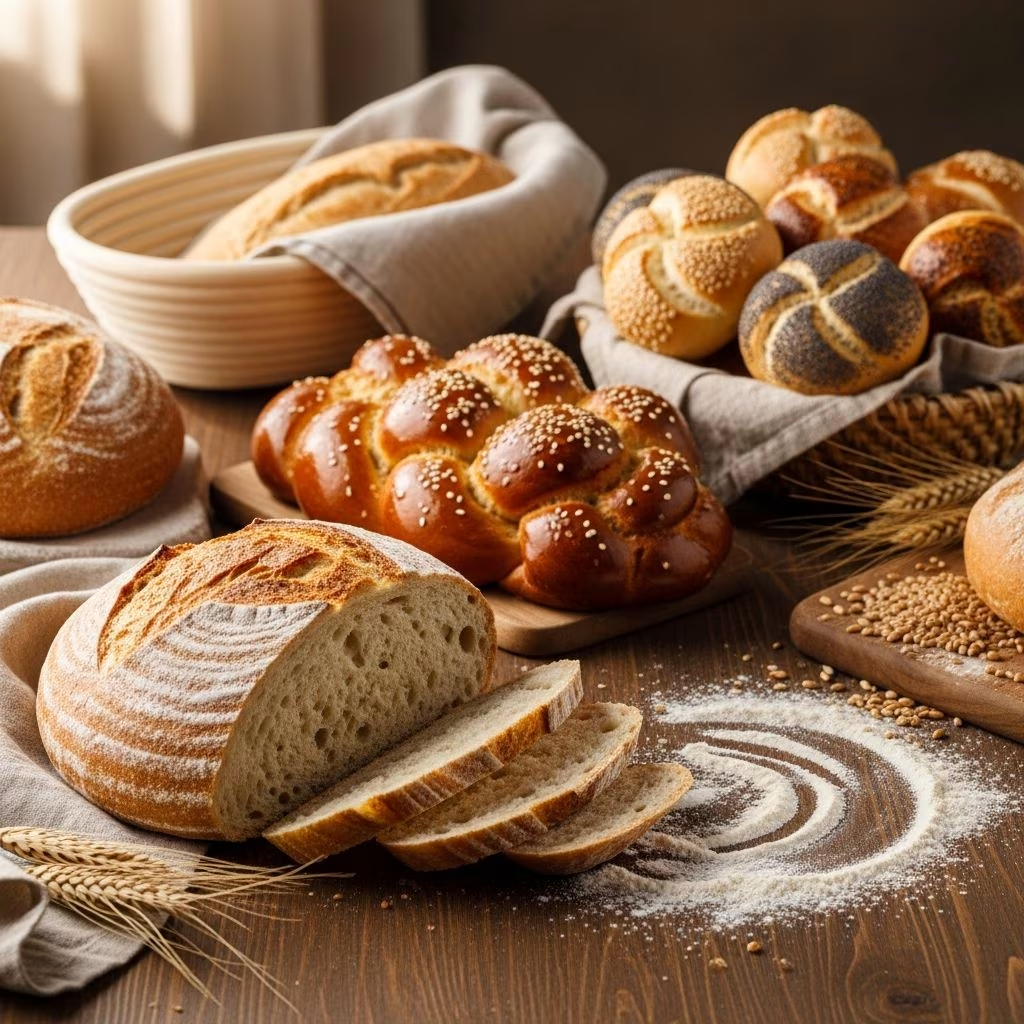
Baking bread at home transforms simple pantry staples into golden, aromatic loaves that rival any bakery. Whether you’re a novice seeking quick wins or an enthusiast refining skills, these recipes emphasize accessibility and reliability. Start with basic white bread, progress to crusty artisan varieties, and experiment with no-knead methods for effortless results.
Why Bake Bread Yourself?
Homemade bread offers control over ingredients, ensuring freshness without preservatives. The process builds confidence through hands-on techniques like kneading and proofing. Common benefits include cost savings, customizable flavors, and the satisfaction of slicing into warm crust. Active dry yeast, flour, water, and minimal sweeteners form the foundation across most recipes.
Essential Ingredients for Success
Core components include:
- Flour: All-purpose works for soft loaves; bread flour adds chewiness due to higher protein.
- Yeast: Instant or active dry activates with warm water (105-115°F); proofing confirms viability.
- Liquids: Warm water hydrates dough; oil or honey tenderizes and extends shelf life.
- Salt and Sweeteners: Salt strengthens gluten; sugar feeds yeast for rise.
Measure by weight for precision, as volume varies. Store yeast in the freezer for longevity.
Classic Soft White Loaf Mastery
This staple yields sandwich-perfect slices with a tender crumb. Prep takes 20 minutes, rising 1.5-2 hours, baking 30-40 minutes.
Ingredients (Two 9×5 Loaves)
| Ingredient | Amount |
|---|---|
| Warm water (110°F) | 2 cups |
| Active dry yeast | 1.5 Tbsp |
| Sugar or honey | 1/4-1/2 cup |
| Salt | 1.5-2 tsp |
| Vegetable oil | 1/4 cup |
| All-purpose or bread flour | 5-6 cups |
Step-by-Step Guide
- Dissolve sugar in warm water, stir in yeast. Let foam for 5-10 minutes.
- Add salt, oil, and 3-4 cups flour. Mix until smooth.
- Incorporate remaining flour gradually until dough pulls from bowl sides, soft but not sticky. Knead 5-8 minutes by hand or mixer.
- Oil a bowl, place dough inside, cover, and rise in warm spot until doubled (1 hour).
- Punch down, divide, shape into logs for greased pans. Second rise 30-45 minutes until 1 inch above rims.
- Bake at 350°F for 30-40 minutes until golden. Cool on rack, brush with butter.
Troubleshoot dense loaves by checking yeast freshness or oven temperature with a thermometer.
Crusty Artisan Bread for Beginners
No-knead artisan bread delivers bakery-style crust and open crumb using just four ingredients. Ideal for those avoiding intensive labor; mix, rise overnight, bake in 45 minutes.
Simple 4-Ingredient Recipe (1 Large Loaf)
- 3 1/4 cups bread flour
- 2 tsp instant yeast
- 2 tsp coarse salt
- 1.5 cups warm water
Method
- Combine dry ingredients in a bowl. Add water, stir into shaggy dough. Cover and rise 12-18 hours at room temperature.
- Preheat oven to 475°F with Dutch oven inside. Turn dough onto floured surface, shape lightly into boule or oval.
- Rest 30 minutes. Score top, place in hot pot, lid on for 30 minutes, then uncovered 15 minutes for crisp crust.
This high-hydration dough (75%) creates steam for oven spring. Use parchment for easy transfer.
No-Knead Variations to Expand Your Repertoire
Extend basics with minimal effort:
- Cinnamon Swirl: Roll dough rectangle, sprinkle cinnamon-sugar, roll tightly, bake as loaves.
- Focaccia: Spread dough in oiled pan, dimple, top with herbs/olives, bake 425°F 20-25 minutes.
- Pita-Style Flats: Divide risen dough, roll thin, bake hot for pockets.
These adapt the core white loaf method, swapping shapes and add-ins.
Advanced Techniques: Sourdough and Enriched Doughs
Once comfortable, try sourdough using a starter for tangy flavor, or enriched doughs with milk/eggs for brioche-like softness. Maintain starter weekly: equal flour-water feedings. Basic sourdough loaf rises slower (8-12 hours), bakes similarly.
Common Pitfalls and Fixes
| Issue | Cause | Solution |
|---|---|---|
| Dense crumb | Under-kneaded or old yeast | Knead fully; proof yeast first |
| Flat rise | Cold draft; over-proofed | Warm spot (75-85°F); punch timely |
| Tough crust | Low hydration | Add steam or cover initially |
| Gummy interior | Underbaked | Internal temp 190-200°F |
Invest in a dough scraper and bench flour for handling.
Storage and Freezing Tips
Cool loaves fully before slicing. Store in paper bags for 2-3 days; freeze slices in bags up to 3 months. Thaw at room temp or toast directly.
Scaling Up for Families
Double recipes fit larger mixers. Bake in batches; underproofed dough handles better in volume.
Frequently Asked Questions
Can I use instant yeast instead of active dry?
Yes, skip proofing; mix directly. Reduce by 25%.
What if my dough is too sticky?
Add flour 1 Tbsp at a time during kneading until it cleans the bowl slightly.
How do I know when bread is done baking?
Tap bottom for hollow sound; internal temp 190°F for soft loaves, 205°F for artisan.
Gluten-free alternatives?
Adapt with GF flour blends, xanthan gum; separate recipes recommended.
Best flour for chewy bread?
Bread flour (12-14% protein) develops strong gluten networks.
Equipment Essentials
- Stand mixer or large bowl
- 9×5 loaf pans
- Dutch oven for artisan
- Digital scale and thermometer
- Bench scraper
Start minimal; upgrade as passion grows.
Embrace bread baking’s rhythm—mix, wait, bake, savor. Consistent practice yields pro results.
References
- Easy Homemade Bread Recipe — Butter with a Side of Bread. 2023. https://butterwithasideofbread.com/homemade-bread/
- Homemade Bread Recipe — Tastes Better from Scratch. 2023. https://tastesbetterfromscratch.com/bread-recipe/
- Artisan Bread Recipe (4 Ingredients) — Sally’s Baking Addiction. 2023. https://sallysbakingaddiction.com/homemade-artisan-bread/
- Easy Artisan Bread Recipe — Preppy Kitchen (YouTube). 2023. https://www.youtube.com/watch?v=OZiTD7iQ_0E
- Best, Easiest Homemade Bread Recipes — Alexandra’s Kitchen. 2023. https://alexandracooks.com/category/recipe/bread/