Ham salad represents one of the most practical and versatile dishes in the culinary world, offering an elegant solution for utilizing leftover cooked ham while creating something genuinely impressive. This delightful preparation combines simple, accessible ingredients into a sophisticated spread that works equally well at casual family gatherings or formal entertaining events. Whether you’re planning a brunch, preparing lunch sandwiches for the week, or seeking an impressive appetizer option, understanding the fundamentals of ham salad preparation will expand your culinary repertoire considerably.
Understanding the Foundation: Essential Components
The beauty of ham salad lies in its simplicity and flexibility. At its core, this dish requires just a handful of fundamental ingredients that work in harmony to create something greater than their individual parts. The proportions and specific selections you make will significantly influence the final texture, flavor profile, and overall success of your preparation.
The Role of Quality Ham
The ham serves as your primary ingredient and foundation for success. Using approximately 1.5 pounds of boneless cooked ham provides the base for a recipe that typically yields eight to ten servings. The most economical approach involves utilizing leftover ham from holiday celebrations or weekend dinners, though purchasing a fresh smoked ham specifically for this purpose works equally well. When selecting ham, choose pieces that have been trimmed of excess fat, as this ensures a smoother final texture and more refined flavor. If you’re starting with a large ham steak or slab, cutting away the outer fatty layer before processing will significantly improve your results.
Binding Agents and Creaminess
Mayonnaise functions as the primary binding agent, creating the creamy consistency that makes ham salad so appealing. Approximately three-quarters of a cup provides adequate moisture and richness without overwhelming the other flavors. The type of mayonnaise you select can influence the final product—traditional varieties create a classic texture, while variations might offer different flavor notes. Beyond mayonnaise, the inclusion of hard-boiled eggs contributes both binding properties and subtle flavor complexity that enhances the overall taste profile without announcing itself as a distinct ingredient.
Flavor Development Through Aromatics
Fresh celery and onion provide essential flavor layers that prevent the salad from becoming monotonous. Rather than adding overwhelming amounts, using approximately one stalk of finely minced celery and two teaspoons of chopped onion creates a balanced approach. These aromatics add textural interest while introducing fresh, subtle notes that complement rather than dominate the ham’s smoky character. The choice between fresh onion and dried minced onion offers flexibility based on your preferences and what you have available in your kitchen.
Preparation Techniques and Methods
The method you employ for combining these ingredients significantly affects the final texture and appearance of your ham salad. Understanding different approaches allows you to select the technique that best aligns with your equipment, preferences, and desired outcome.
The Food Processor Method
Using a food processor represents the most efficient approach for most home cooks. Begin by placing your diced ham, hard-boiled egg, celery, and onion into the processor bowl. Season lightly with salt and freshly ground black pepper before beginning the pulsing process. Rather than running the machine continuously, employ short, rapid pulses—approximately twenty to twenty-five pulses typically achieves the ideal texture. This pulsing technique prevents over-processing, which can result in an undesirably pasty consistency. Between pulses, pause to scrape down the sides of the processor bowl, ensuring that all ingredients receive even distribution and processing.
Alternative Processing Options
For those without food processing equipment, several alternatives exist. A blender can accomplish similar results, though you may need to work in smaller batches to achieve consistent mincing. Alternatively, a hand-operated food grinder provides excellent control and produces satisfying results through manual effort. Even without specialized equipment, careful hand-chopping with a sharp knife—though more time-consuming—can produce acceptable texture if performed with patience and attention to consistency.
Combining Wet Ingredients
Once your ham mixture achieves the desired texture, prepare a separate bowl containing your binding ingredients. Combine the mayonnaise with brown mustard (or your mustard variety of choice) and dill pickle relish. These components create the flavorful base that will coat and bind your minced ham. Some recipes incorporate sweet pickle relish rather than dill, offering a subtly sweeter profile. A small amount of sugar—roughly one teaspoon—can enhance this sweetness if desired. This separate mixing allows you to adjust proportions precisely before fully combining everything.
Final Integration and Chilling
Gently fold your minced ham mixture into the bowl containing your wet ingredients, stirring until everything achieves even distribution. Rather than aggressive mixing, use a gentle hand to prevent breaking down the texture further. At this point, taste your creation and make any necessary adjustments to seasonings, mayonnaise consistency, or flavor balance. Cover the bowl and refrigerate for at least several hours, preferably overnight. This chilling period allows flavors to meld, creates a firmer texture that’s easier to serve, and actually improves the overall taste as the ingredients continue developing in harmony.
Customization and Variation Strategies
While the basic formula creates an excellent ham salad, personal preferences and ingredient availability frequently inspire variations that personalize the dish to your specific tastes.
Pickle and Relish Adjustments
The pickle component dramatically influences the final flavor profile. Traditional dill pickle relish creates a tangier result with herbaceous undertones, while sweet pickle relish produces a more sugared, milder version. Some recipes incorporate both varieties, while others use chopped fresh dill pickle rather than relish, offering greater texture variation. Experimenting with ratios—using anywhere from one-third cup to one-half cup—allows you to find your personal preference point.
Protein Additions
Incorporating additional proteins can enhance nutrition and create interesting flavor combinations. Finely minced crispy bacon adds smokiness and textural contrast. Diced turkey or chicken can extend the recipe and reduce overall ham intensity if desired. Some preparations include cooked shrimp for a more sophisticated variation appropriate for special entertaining occasions.
Vegetable Inclusions
Beyond the traditional celery and onion, various vegetables contribute interesting dimensions. Diced red onion provides visual appeal and sharper bite compared to yellow varieties. Red bell pepper contributes sweetness and color. Minced pimientos add visual interest and subtle sweetness. Diced green onions provide fresh, mild onion flavor as a finishing touch rather than fully incorporated ingredient.
Seasoning Explorations
Beyond basic salt and pepper, numerous seasonings enhance the basic formula. Celery seed adds subtle herbal notes. Smoked paprika introduces additional smokiness. Worcestershire sauce contributes umami depth. Horseradish powder offers unexpected pungency. A small amount of apple cider vinegar brightens the overall flavor profile. These additions should be approached gradually, tasting as you go to prevent overwhelming the base flavors.
Serving Suggestions and Applications
The versatility of ham salad extends well beyond basic sandwich applications, offering numerous serving possibilities suitable for various occasions.
Traditional Sandwich and Canapé Presentations
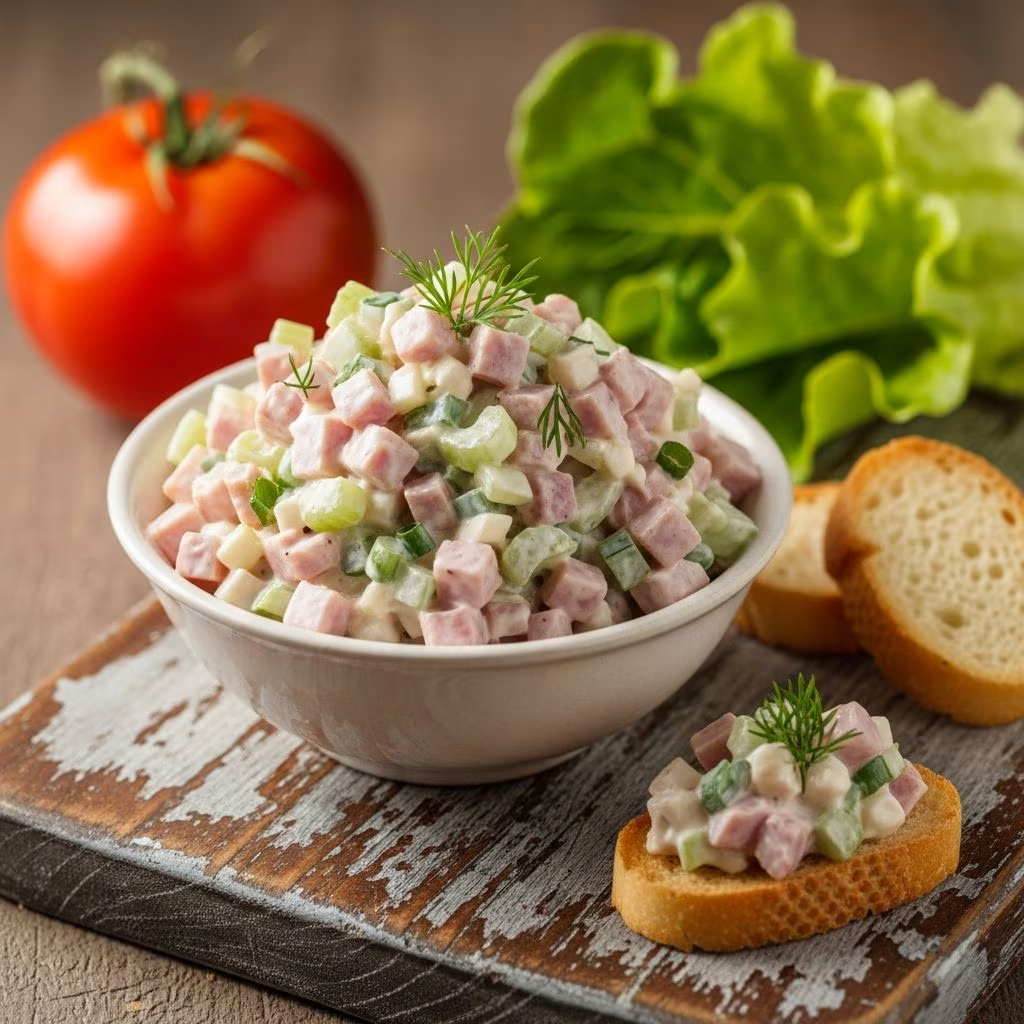
Spreading ham salad on soft white bread, wheat bread, or hearty rolls creates satisfying sandwiches perfect for lunch boxes or quick meals. Serving it on crispy crackers—particularly Ritz crackers or water crackers—transforms it into an elegant appetizer suitable for entertaining. Toasted baguette slices provide another sophisticated presentation for gatherings.
Composed Salad Arrangements
Serving ham salad on a bed of fresh greens creates a more substantial salad presentation appropriate for lighter lunches. Garnishing with hard-boiled eggs, cherry tomatoes, and fresh herbs elevates this simple preparation into something more refined. Using lettuce cups instead of bread offers a lower-carbohydrate serving option.
Entertaining and Special Occasions
For buffets and entertaining, ham salad fills hollowed-out tomato halves, bell pepper boats, or fresh avocado halves for elegant plated presentations. Serving it from a decorative bowl alongside an assortment of crackers and bread options allows guests to build their own canapés. Deviled eggs topped with a small spoonful of ham salad creates an impressive appetizer combination.
Storage and Make-Ahead Considerations
Proper storage ensures that your ham salad remains fresh and delicious throughout its shelf life. Covered and refrigerated, ham salad maintains quality for three to four days, making it an excellent preparation for meal planning. The flavors actually deepen slightly over the first one to two days of storage as ingredients continue melding. For longer storage, ham salad freezes reasonably well for up to two months, though the texture may become slightly grainier upon thawing due to mayonnaise composition changes. Freeze in airtight containers, leaving slightly less than full capacity to allow for expansion.
Nutritional Profile and Dietary Considerations
A typical serving of ham salad contains approximately 290 calories, with 15 grams of protein and 24 grams of fat, along with roughly 948 milligrams of sodium. The protein content makes it a satisfying option, while the fat primarily derives from the mayonnaise component. Those monitoring sodium intake should note that ham and mayonnaise both contribute significantly to this value. For reduced-fat versions, substituting a portion of mayonnaise with Greek yogurt decreases overall fat while maintaining creaminess, though this alters the flavor profile somewhat. The inclusion of hard-boiled eggs provides additional nutrients including choline and selenium.
Troubleshooting Common Challenges
Texture Issues
If your ham salad seems too wet or loose, you’ve likely over-processed the ham or added too much mayonnaise. Remedy this by refrigerating longer—many salads continue firming as they chill. If needed, add another tablespoon or two of mayonnaise substitute ingredients like finely minced vegetables to absorb moisture. Conversely, overly dry salad requires additional mayonnaise stirred in gradually until proper consistency appears.
Flavor Imbalances
Salad lacking sufficient tang benefits from additional dill pickle relish or a splash of vinegar. Overly aggressive pickle flavor can be tempered by adding more plain mayonnaise. Bland-tasting results often benefit from additional salt and fresh-cracked black pepper rather than pre-ground varieties. Insufficient ham flavor suggests your ratio included too many add-ins relative to the ham itself.
Frequently Asked Questions
Can I make ham salad without a food processor?
Absolutely. While a food processor speeds the process, careful hand-chopping with a sharp knife produces acceptable results. Work slowly and intentionally, creating uniformly small pieces for consistent texture. This method simply requires more time and patience than mechanical processing.
How long can ham salad be stored?
Refrigerated in an airtight container, ham salad keeps safely for three to four days. It can be frozen for up to two months, though texture may change slightly. Always verify freshness before serving, particularly if approaching the four-day mark.
Can I prepare ham salad ahead for entertaining?
Yes, preparing ham salad one to two days before entertaining actually improves the final product as flavors meld and develop. Simply cover and refrigerate until serving time. If preparing significantly earlier, freeze it and thaw overnight in the refrigerator.
What’s the best type of ham for this recipe?
Either leftover holiday ham or a specifically purchased smoked ham works well. Boneless varieties simplify preparation compared to bone-in options. Avoid overly processed “ham product” in favor of authentic ham cuts.
Can I adjust the mayonnaise ratio for dietary preferences?
Partially substituting Greek yogurt for mayonnaise reduces fat while maintaining creaminess, though this slightly alters the traditional flavor. Some recipes use Miracle Whip or salad dressing instead of mayonnaise, creating different taste profiles. Adjust ratios gradually while tasting.
References
- The Best Ham Salad — The Country Cook. Accessed April 2026. https://www.thecountrycook.net/the-best-ham-salad/
- Southern Style Ham Salad — Palatable Pastime. November 19, 2023. https://palatablepastime.com/2023/11/19/southern-style-ham-salad/
- Food Safety and Storage Guidelines — U.S. Food and Drug Administration. Accessed April 2026. https://www.fda.gov/food/foodborneillnesscontaminants/peopleatrisk/ucm312185.htm