Enchilada casserole represents one of the most accessible ways to enjoy the flavors of traditional enchiladas without the time-intensive rolling process. By stacking ingredients in organized layers within a single baking dish, home cooks can create impressive, restaurant-quality meals that feed families or gathering guests with minimal fuss. This comprehensive guide explores the fundamentals of casserole construction, sauce preparation, protein options, and baking techniques that ensure consistently delicious results.
Understanding the Foundation: Why Casserole Format Works
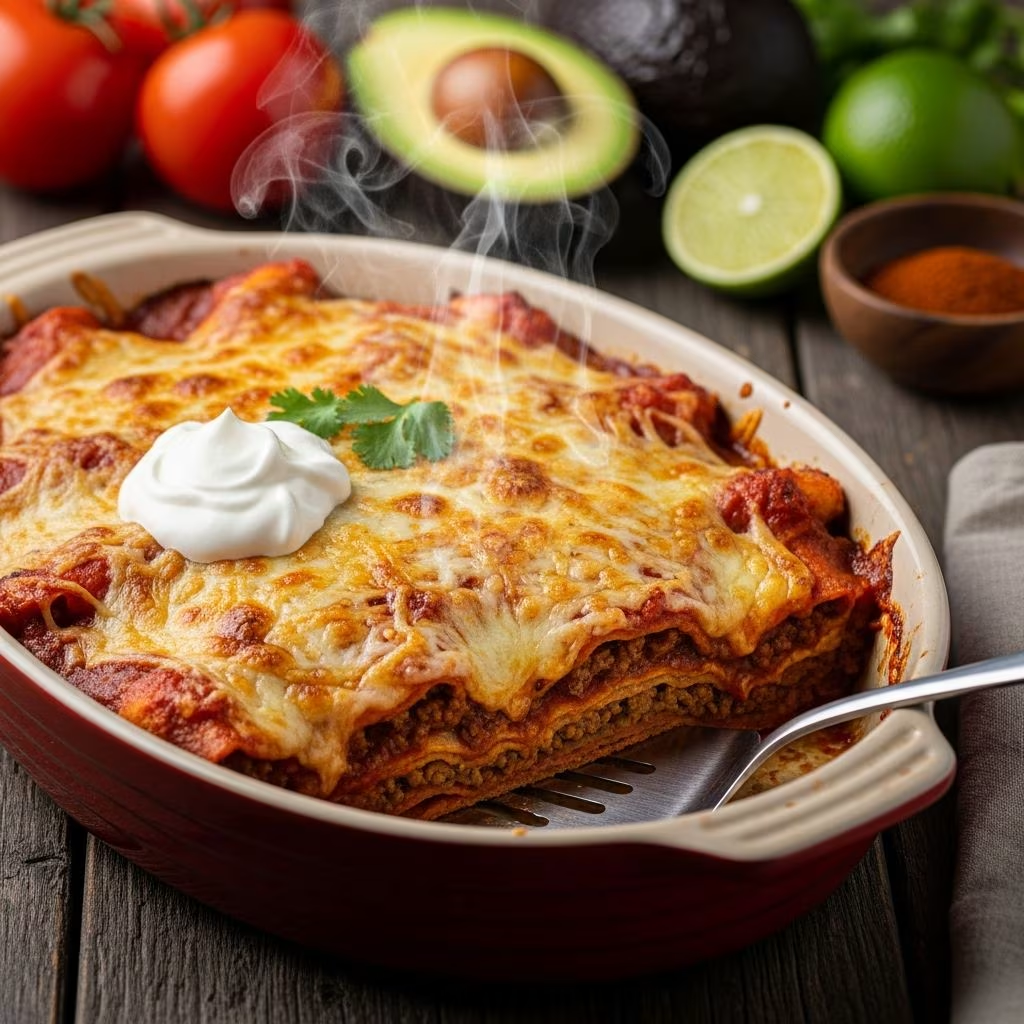
The casserole approach transforms enchilada preparation from a delicate, time-consuming task into a straightforward assembly process. Rather than carefully rolling individual tortillas and arranging them in neat rows, the layering method allows cooks to build depth of flavor through strategic placement of components. This method also provides superior cheese integration throughout the dish, as melting cheese permeates all layers rather than remaining concentrated on top. The result is a more cohesive, flavorful final product that maintains consistent texture and taste from top to bottom.
Understanding the basic structure is essential for success. The foundation always begins with a thin layer of enchilada sauce spread directly onto the baking dish bottom. This prevents sticking and creates immediate flavor contact between the dish and bottom tortillas. The middle sections contain alternating layers of tortillas, protein-vegetable filling, additional sauce, and cheese. The top layer typically features cheese that will brown and develop attractive color during baking. This organizational structure ensures that each forkful captures multiple flavor elements simultaneously.
Building Your Sauce: Homemade Versus Store-Bought Options
Enchilada sauce forms the flavor backbone of any casserole variation. While store-bought options provide reliable convenience, homemade sauce elevates the entire dish with fresh, complex flavors that cannot be replicated by commercial products.
Homemade Enchilada Sauce Base Recipe:
- 1 tablespoon olive oil
- 1 small yellow onion, diced finely
- 2 cloves garlic, minced
- 1 tablespoon all-purpose flour
- 2 teaspoons chili powder
- 1.5 teaspoons ground cumin
- 1 tablespoon paprika
- 2 teaspoons tomato paste
- 15 ounces tomato sauce
- 1 cup chicken or beef broth
- 0.5 teaspoon kosher salt
- 0.5 teaspoon sugar
- 0.5 teaspoon black pepper
To prepare homemade sauce, heat oil in a saucepan over medium heat. Sauté diced onion until translucent, approximately three to four minutes. Add minced garlic and cook for an additional minute until fragrant. Sprinkle flour over the mixture and stir continuously for two minutes to create a roux-like base that will thicken the final sauce. Add chili powder, cumin, paprika, and tomato paste, stirring constantly for another minute to bloom the spices and deepen their flavors. Pour in tomato sauce and broth gradually while whisking to prevent lumps from forming. Bring the mixture to a simmer and allow it to reduce for ten to fifteen minutes until reaching the desired consistency. The sauce should coat the back of a spoon without being overly thick, as it will continue to thicken slightly during baking.
Store-bought enchilada sauce offers legitimate advantages for busy home cooks. Quality commercial sauces provide consistent flavor profiles and eliminate preparation time. When selecting commercial options, examine ingredient labels and choose products featuring recognizable components rather than extensive preservative lists. Both red and green enchilada sauce varieties work well in casseroles, with red offering traditional robust flavors and green providing a brighter, more herbaceous profile.
Protein Selection and Preparation Methods
Enchilada casseroles accommodate various protein preferences, with beef and chicken representing the most common choices. Each option requires specific preparation techniques to maximize flavor and ensure proper texture within the final casserole.
Ground Beef Preparation
Ground beef delivers hearty, robust flavors that pair beautifully with spiced enchilada sauce and melted cheese. Use 90/10 or 85/15 ground beef to minimize excess grease while maintaining adequate moisture and flavor. In a large skillet over medium-high heat, crumble ground beef into small pieces as it cooks, breaking apart clumps with a wooden spoon or spatula. This typically requires five to seven minutes for one and one-half pounds of meat. Drain excess fat using a colander or by tilting the skillet and blotting with paper towels.
After draining, return the beef to the skillet over medium heat. Add diced onion, minced garlic, and finely chopped bell peppers. Cook this mixture for five minutes, stirring occasionally, until vegetables soften. Incorporate green chiles, black beans, corn, and fresh cilantro if desired. Pour in the reserved enchilada sauce and stir thoroughly to combine all elements. Allow the mixture to simmer for two to three minutes until warmed through. Season with additional salt and pepper as needed, tasting as you adjust.
Chicken Variations
Shredded chicken offers a lighter alternative while maintaining the casserole’s appeal. Rotisserie chicken provides immediate convenience, eliminating the need to poach or simmer chicken breasts. Simply remove meat from bones, discard skin if preferred, and shred using two forks or your hands. This method yields approximately three cups of shredded meat per rotisserie chicken.
For fresh-cooked chicken, place boneless, skinless breasts in a saucepan, cover with broth or water, and simmer for twelve to fifteen minutes until cooked through. Remove chicken, cool slightly, then shred. This method yields tender, flavorful meat suitable for casserole fillings.
Combine shredded chicken with softened onions, garlic, fresh green chiles, lime juice, hot sauce, honey, and cilantro. This mixture should be cooked together in a skillet over medium heat for several minutes, allowing flavors to meld before assembly. Some recipes incorporate sour cream into the chicken mixture for added richness and creaminess that permeates the entire casserole.
The Art of Layering: Strategic Assembly
Proper layering technique determines whether your casserole achieves balanced flavor distribution or develops dry spots and uneven texture. Begin by selecting an appropriate baking vessel—a 9-by-13-inch casserole dish accommodates standard recipes and provides adequate depth for three complete layers.
Spread a thin layer of enchilada sauce directly onto the dish bottom, using approximately half a cup. This base prevents sticking and provides immediate moisture. Dip tortillas briefly into additional sauce, allowing them to absorb liquid without becoming soggy. Arrange tortillas to cover the bottom layer, overlapping slightly as needed. If tortillas are too rigid, warming them first in a skillet for ten to fifteen seconds per side increases flexibility and prevents cracking.
Distribute half of your protein-vegetable mixture evenly over the tortilla layer. Spread the mixture using a spatula or spoon, ensuring consistent thickness across the entire surface. Pour approximately one and one-half cups of enchilada sauce over this filling layer, distributing it evenly. Sprinkle half of your selected cheese blend over the sauce. Popular cheese combinations include equal parts sharp cheddar and Monterey Jack, or a pre-mixed Mexican cheese blend containing multiple varieties.
Repeat this process—tortillas, filling, sauce, cheese—for a second complete layer. The final layer receives tortillas followed by remaining sauce but cheese should be reserved until the top. Distribute all remaining cheese generously over the top layer, ensuring even coverage that will brown attractively during baking. Some cooks scatter fresh diced green onions or jalapeño slices over the cheese for additional visual appeal and flavor enhancement.
Essential Baking Techniques and Timing
Preheat your oven to 350 degrees Fahrenheit for approximately fifteen minutes before placing the casserole inside. This ensures consistent, even baking throughout the dish. Cover the casserole dish with aluminum foil to prevent the top layer of cheese from browning excessively before the interior reaches proper temperature. Bake covered for twenty to thirty minutes, depending on whether all components were warmed during preparation and the total size of your casserole.
Remove the foil carefully and bake uncovered for an additional ten to fifteen minutes until cheese has melted completely and developed light golden-brown coloring. The edges should bubble slightly, indicating that sauce has reached appropriate heat throughout. Do not over-bake, as excess time causes cheese to separate and release oils, resulting in a greasy final texture.
Allow the finished casserole to rest for five to ten minutes after removing from the oven. This resting period allows cheese to set slightly and makes serving considerably easier. Cutting and plating too immediately results in layers separating and filling sliding around the plate.
Topping Options and Serving Suggestions
The casserole’s appeal extends significantly when finished with fresh, contrasting toppings that provide textural variety and bright flavors against the rich, baked dish. Consider these options:
- Fresh cilantro leaves scattered over warm casserole
- Diced tomatoes providing acidity and freshness
- Sliced avocado or guacamole adding creamy richness
- Sour cream dollops providing cool contrast
- Sliced jalapeños offering additional heat and crunch
- Diced red onions adding bite and color
- Lime wedges allowing individual flavor adjustment
Serve casserole portions with complementary side dishes such as Spanish rice, refried beans, or a crisp green salad dressed with lime vinaigrette. Tortilla chips and salsa provide an excellent accompaniment, allowing guests to customize their plates with preferred intensity levels.
Frequently Asked Questions
Can I prepare enchilada casserole in advance?
Yes, casseroles assemble beautifully the day before baking. Prepare all components, layer everything in the baking dish, cover tightly with plastic wrap or foil, and refrigerate overnight. Before baking, remove from refrigeration and allow to sit at room temperature for fifteen minutes. Extend baking time by five to ten minutes since the dish begins colder than room temperature.
What vegetarian protein options work well?
Black beans, pinto beans, lentils, and chickpeas provide hearty vegetarian alternatives. Roasted vegetables such as zucchini, mushrooms, bell peppers, and squash add substance and nutrition. Combine beans with sautéed vegetables, green chiles, corn, and spices for satisfying vegetarian versions.
How should I store leftovers?
Refrigerate leftover casserole in an airtight container for up to four days. Reheat in a 350-degree oven, covered, for approximately twenty minutes. Alternatively, microwave individual portions for two to three minutes at fifty-percent power to prevent cheese from becoming tough.
Can I freeze enchilada casserole?
Freezing works best before baking. Allow the unbaked assembled casserole to cool completely, wrap tightly with plastic wrap and then foil, and freeze for up to three months. Bake from frozen, adding fifteen to twenty minutes to standard baking time. Alternatively, freeze baked casserole in the same manner and reheat in a 350-degree oven for approximately thirty minutes.
Ingredient Variations for Flavor Customization
The fundamental casserole structure accommodates numerous ingredient substitutions and additions. Replace traditional cheese with a white cheese blend including fresh mozzarella and cotija for different flavor profiles. Incorporate corn kernels, black-eyed peas, or kidney beans depending on personal preference and dietary considerations. Fresh herbs like oregano, basil, and Mexican oregano enhance sauce complexity. Roasted poblano peppers add sophisticated depth, while jalapeños provide straightforward heat.
Serving Size and Yield Calculations
A standard 9-by-13-inch casserole with three complete layers yields six to eight generous servings. For smaller appetites or when serving alongside multiple side dishes, expect eight to ten portions. Consider your guest list when deciding whether to prepare a single casserole or scale the recipe upward by preparing multiple dishes simultaneously.
References
- Enchilada Sauce Fundamentals — The Modern Proper. April 2026. https://themodernproper.com/enchilada-casserole
- Chicken and Ground Meat Preparation Techniques — The Cozy Cook. April 2026. https://thecozycook.com/chicken-enchilada-casserole/
- Casserole Layering and Assembly Methods — The Pioneer Woman. April 2026. https://www.thepioneerwoman.com/food-cooking/recipes/a63843864/chicken-enchilada-casserole-recipe/
- Baking Temperature and Timing Guidelines — Delish. April 2026. https://www.delish.com/cooking/recipe-ideas/a22654914/best-enchilada-casserole-recipe/
- Ground Beef and Bean Casserole Variations — Half Baked Harvest. April 2026. https://www.halfbakedharvest.com/beef-enchilada-casserole/