Cornbread casserole stands as a beloved comfort food that brings warmth and satisfaction to any table. This versatile dish combines the convenience of modern ingredients with traditional baking techniques, creating a side dish or main course that appeals to families across generations. Whether you’re preparing dinner for a weeknight meal or hosting a gathering, understanding the fundamentals of cornbread casserole preparation ensures consistent, delicious results every time.
Understanding the Foundation of Cornbread Casserole
At its core, cornbread casserole represents a harmonious blend of textures and flavors. The dish merges the hearty nature of cornbread with creamy components that create a cohesive, satisfying texture throughout. Unlike traditional cornbread served as individual pieces, the casserole format allows flavors to meld together during the baking process, resulting in a dish that becomes more flavorful as it sets.
The beauty of this dish lies in its adaptability. Home cooks can begin with a simple five-ingredient foundation and build upon it with various additions based on personal preferences, available ingredients, or dietary considerations. This flexibility makes cornbread casserole an ideal choice for family meals where different preferences need accommodation.
Essential Ingredients and Their Roles
Creating a successful cornbread casserole begins with understanding how each ingredient contributes to the final product. The primary components work together to establish the dish’s structure, flavor profile, and texture.
The Base Elements
- Cornbread mix: This convenience ingredient forms the structural foundation of the casserole. Pre-packaged mixes contain the necessary dry components and leavening agents, significantly reducing preparation time while delivering consistent results. Using quality mixes ensures proper rise and texture throughout the baking process.
- Dairy components: Sour cream and butter create the creamy consistency that distinguishes this casserole from standard cornbread. Sour cream adds tanginess and moisture, while butter contributes richness and flavor depth. These elements prevent the casserole from becoming dry during baking.
- Corn varieties: Combining creamed corn with whole kernel corn provides textural contrast. Creamed corn contributes moisture and smooth texture, while whole kernels offer distinct corn flavor and visual appeal. This combination ensures the dish remains moist while maintaining interesting bite-to-bite variations.
- Binding agents: Eggs serve as the primary binder, holding all components together while helping the casserole set properly during baking. They also contribute to the overall structure and prevent the mixture from becoming too dense.
Flavor Enhancement Additions
Beyond the basic ingredients, many variations incorporate additional components that elevate flavor complexity. Common additions include shredded cheese, cooked bacon, jalapeños, seasoned salt, and fresh herbs. These ingredients allow home cooks to customize the casserole to match specific meals or personal taste preferences.
Step-by-Step Preparation Process
Initial Setup and Oven Preparation
Success begins before ingredients combine. Preheating the oven to the appropriate temperature ensures even cooking throughout the casserole. Most recipes call for temperatures between 350°F and 375°F, with 350°F being the standard for most preparations. Proper oven temperature prevents burning on the edges while ensuring the center sets completely.
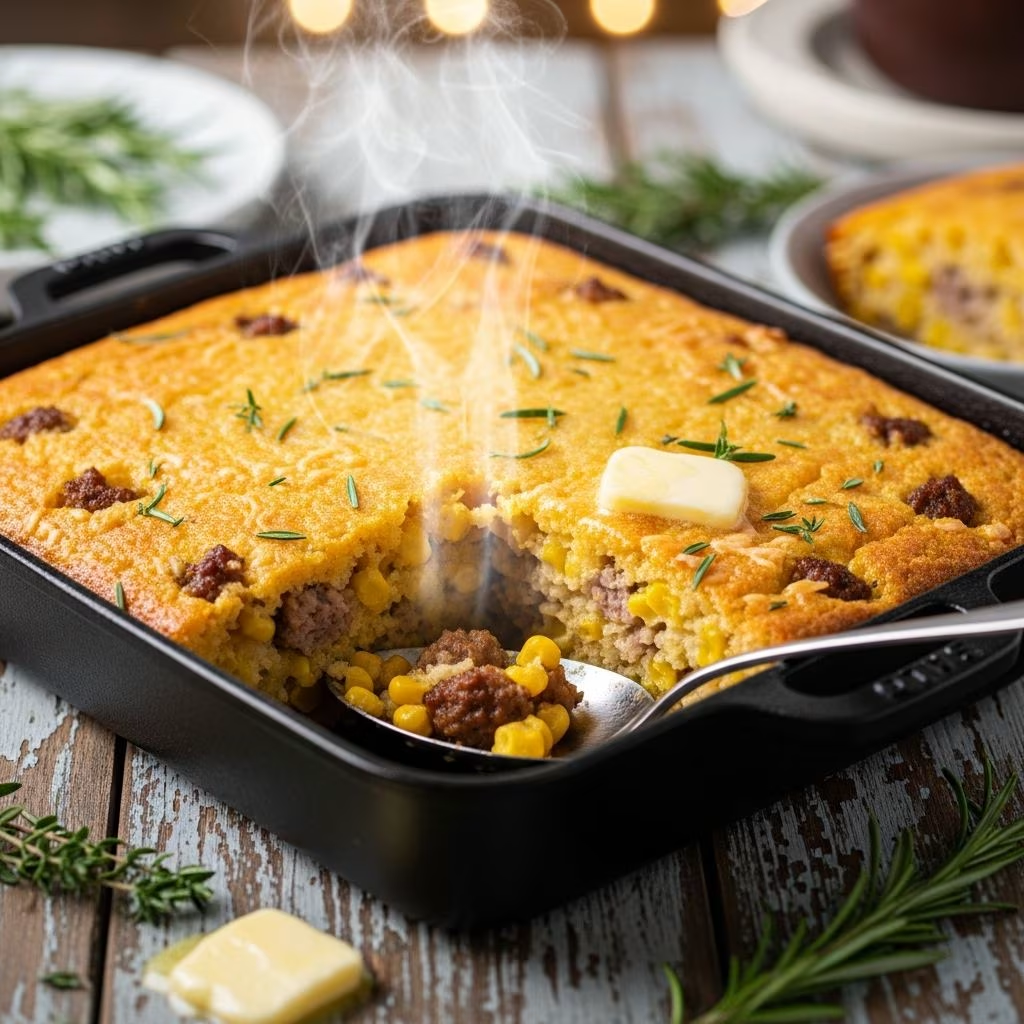
Preparing the baking vessel is equally important. Using nonstick cooking spray or butter to coat the baking dish prevents sticking and promotes even browning. A 9×9-inch square dish or 13×9-inch rectangular dish typically accommodates standard recipes, though iron skillets offer an attractive serving option for larger gatherings.
Combining Ingredients
The mixing process requires attention to technique. Combining eggs, sour cream, butter, and any sweetening ingredients first creates a smooth base. Whisking these components thoroughly ensures even distribution of moisture and fat throughout the mixture. This base receives the cornbread mix, along with corn varieties and any additional ingredients.
Mixing should continue only until ingredients combine fully. Overmixing develops excessive gluten in the flour, potentially resulting in a dense, tough casserole rather than the desired light, creamy texture. Once the mixture reaches uniform consistency, it’s ready for the baking dish.
Baking and Monitoring
Transfer the mixture to the prepared baking dish and spread it into an even layer. Baking times typically range from 30 to 45 minutes depending on the oven and specific recipe variations. The casserole is ready when the top achieves a light golden-brown color and a toothpick inserted in the center emerges clean or with just a few moist crumbs.
Many recipes recommend adding additional toppings during the final minutes of baking. Cheese, bacon, or fresh herbs sprinkled on top during the last 10-12 minutes of baking time melt slightly while remaining visually appealing. This timing prevents toppings from burning while allowing flavors to integrate with the casserole base.
Ingredient Variations and Customization
Protein-Enhanced Versions
Adding ground beef to cornbread casserole transforms it into a heartier main dish suitable for standalone meals. Brown the beef with onions and peppers before combining with the cornbread mixture. This variation appeals to families seeking more substantial dinners without requiring additional side dishes.
Flavor Profile Modifications
| Flavor Direction | Key Ingredients to Add | Best Serving Context |
|---|---|---|
| Smoky and Savory | Bacon, sharp cheddar, green onions | Alongside grilled meats or soups |
| Spicy and Southwestern | Diced jalapeños, diced green chilies, pepper jack cheese | Mexican-inspired meals |
| Classic and Creamy | Extra sour cream, mild cheese | Traditional holiday gatherings |
| Breakfast-Oriented | Sausage, eggs, hash browns | Morning and brunch occasions |
Make-Ahead Strategies and Storage
Preparation in Advance
Cornbread casserole preparation can be partially completed ahead of time, making it ideal for busy schedules. Combine all ingredients the night before and refrigerate in the baking dish. When ready to bake, allow the cold mixture to sit at room temperature for 15-20 minutes before placing it in the preheated oven. This brings ingredients closer to room temperature, promoting more even cooking.
Storage and Reheating
Leftover cornbread casserole keeps well when properly stored. Allow the dish to cool completely before covering and refrigerating for up to four days. Reheat in a 325°F oven for 15-20 minutes, covered loosely with foil to prevent excessive browning. Alternatively, individual portions can be microwaved for quick reheating.
Common Challenges and Solutions
Addressing Moisture Issues
A casserole that seems too wet during mixing often cooks properly as moisture reduces during baking. However, if the final dish appears overly wet, reduce the amount of creamed corn in future batches or increase baking time by 5-10 minutes. Conversely, a dry casserole indicates insufficient moisture; add additional sour cream or reduce baking temperature slightly to prevent over-drying.
Managing Texture Concerns
Dense or heavy casseroles typically result from overmixing the batter or using room-temperature ingredients that weren’t properly combined. Ensure eggs and sour cream reach room temperature before mixing, and mix only until ingredients incorporate. If the top browns too quickly while the interior remains underdone, reduce oven temperature by 25°F and extend baking time accordingly.
Serving Suggestions and Pairings
Cornbread casserole’s versatility extends to serving applications. This dish complements virtually any protein, from grilled chicken and roasted pork to baked fish. Soups and stews benefit enormously from cornbread casserole’s comforting texture and subtle sweetness. Holiday meals featuring turkey, ham, or roasted vegetables gain an additional dimension when cornbread casserole appears on the table.
The dish also stands alone as a light main course when paired with fresh salads or steamed vegetables. Breakfast and brunch menus incorporate casserole variations featuring sausage, bacon, or cheese for morning gatherings.
Frequently Asked Questions
Can cornbread casserole be frozen?
Yes, both unbaked and baked casserole freezes successfully for up to three months. Cool completely before wrapping tightly in plastic wrap and aluminum foil. Thaw overnight in the refrigerator before reheating or baking as directed.
What size baking dish is best?
Nine-by-nine-inch square dishes and thirteen-by-nine-inch rectangular dishes both work well. Thinner layers in larger dishes cook more quickly, while thicker layers in smaller dishes require additional baking time. Adjust baking time as needed based on your chosen dish size.
Is cornbread mix substitution possible?
Homemade cornbread mixes can replace store-bought versions when recipes are properly adjusted. Create a homemade mix by combining cornmeal, flour, baking powder, baking soda, salt, and sugar in appropriate proportions. However, purchased mixes ensure consistent results and reduce preparation time.
How much casserole does one batch produce?
Standard recipes yield 8-12 servings depending on portion size and whether the dish serves as a side or main course. Plan for smaller portions when serving alongside substantial main dishes, and larger portions when casserole represents the primary component.
Conclusion
Cornbread casserole represents an accessible, satisfying dish that welcomes experimentation while maintaining reliability. Understanding basic techniques and ingredient functions empowers home cooks to create variations matching personal preferences and dietary needs. Whether preparing a simple five-ingredient version or incorporating specialty components, cornbread casserole delivers comfort and flavor that resonates across diverse tables and occasions. Success comes through attention to fundamental preparation steps, quality ingredients, and willingness to adapt recipes based on individual circumstances and preferences.
References
- Easy Creamy Cornbread Casserole — Belly Full. Accessed April 10, 2026. https://bellyfull.net/easy-creamy-cornbread-casserole/
- Best Cornbread Casserole Recipe — The Pioneer Woman. Accessed April 10, 2026. https://www.thepioneerwoman.com/food-cooking/recipes/a62941584/cornbread-casserole-recipe/
- Cornbread Casserole (Simple and Delicious!) — The Kitchen Magpie. Accessed April 10, 2026. https://www.thekitchenmagpie.com/cornbread-casserole/
- Loaded Cornbread Casserole — Just Stir, Pour, and Bake! — YouTube. Accessed April 10, 2026. https://www.youtube.com/watch?v=a-qf1ZSx0aI
- Beefy Cornbread Casserole — Diary of A Recipe Collector. Accessed April 10, 2026. https://www.diaryofarecipecollector.com/beefy-cornbread-casserole/