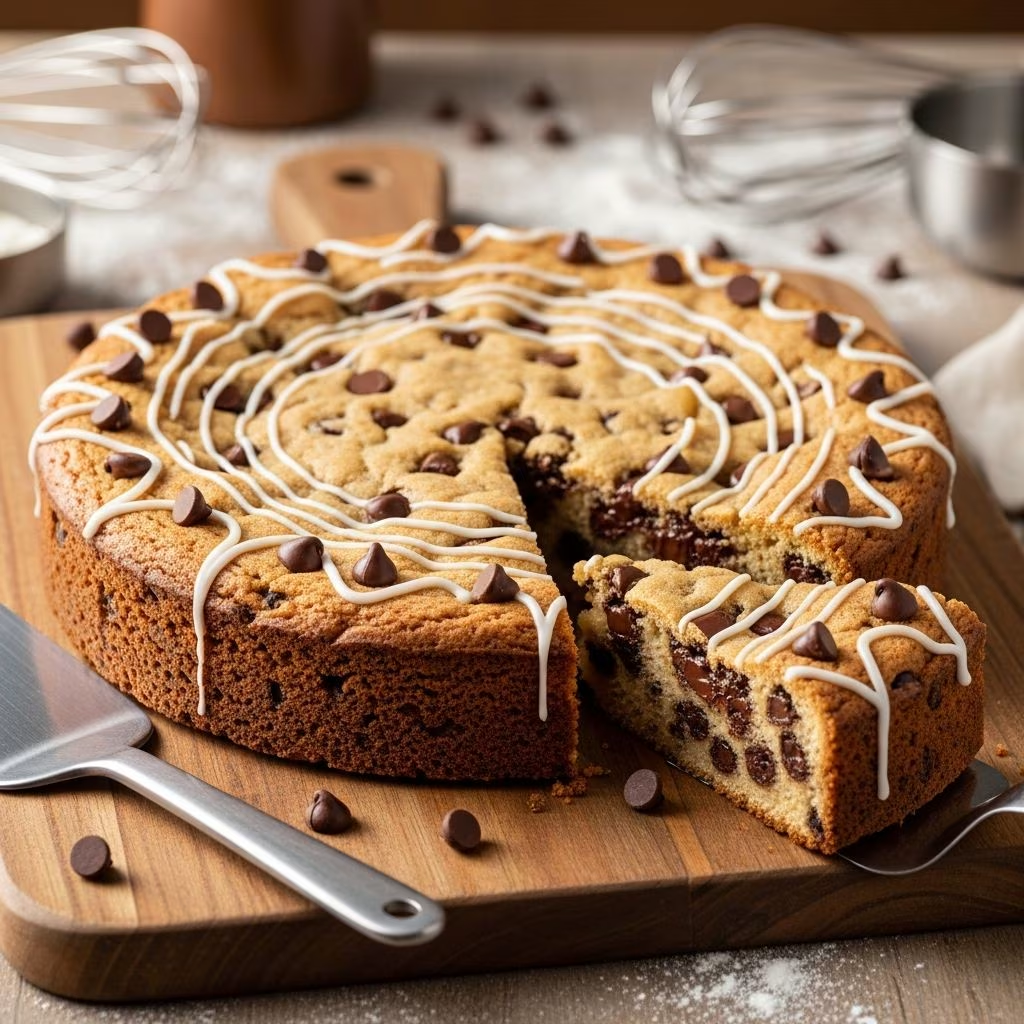
A giant cookie cake represents the perfect fusion of a traditional chocolate chip cookie and a celebration dessert. This oversized treat delivers the familiar comfort of a warm cookie while offering the visual impact of a cake, making it an ideal choice for birthdays, gatherings, and special occasions. Whether you prefer a simple presentation or an elaborately decorated creation, mastering the fundamentals of cookie cake preparation opens up endless possibilities for customization and creativity.
Understanding the Foundation: Cookie Cake Basics
Cookie cakes differ from standard baked cookies in their structure and preparation method. Rather than creating individual portions, you’re constructing one large, thick cookie that bakes in a specialized pan or springform container. The resulting dessert maintains the chewy interior and soft texture characteristic of cookies while achieving the size and presentation style of a traditional cake.
The appeal of cookie cakes lies in their versatility. They can be enjoyed warm and gooey straight from the oven, or cooled completely and decorated with buttercream frosting, sprinkles, and other embellishments. This adaptability makes them suitable for casual family dinners or formal birthday celebrations.
Essential Ingredients for Success
Creating a superior cookie cake begins with understanding the role each ingredient plays in the final product. The quality and proportions of these components directly influence texture, flavor, and structure.
Butter and Sweeteners
Butter serves as the foundation of flavor and texture in cookie cakes. Using unsalted butter allows you to control the salt content precisely. The combination of granulated and brown sugar creates complexity in the final taste profile. Brown sugar contributes moisture and a slight caramel undertone, while granulated sugar provides structure and promotes spreading during baking.
Eggs and Binding Agents
Eggs act as binders and contribute to moisture retention. Many recipes incorporate both whole eggs and egg yolks, as yolks add richness and create a more tender crumb. The egg also helps emulsify the fat and sugar, creating a unified dough structure that bakes evenly.
Flour and Leavening Components
All-purpose flour provides structure, while cornstarch is sometimes added to reduce gluten development and create a softer, more tender interior. Baking soda and baking powder work together to create lift and promote browning. Baking soda reacts with acidic components, while baking powder acts as a secondary leavening agent that activates during baking.
Chocolate and Mix-Ins
Chocolate chips are the signature component of classic cookie cakes. Semi-sweet varieties offer a balanced flavor, though dark chocolate provides deeper richness and milk chocolate delivers sweeter notes. Some recipes suggest chopping approximately half the chocolate chips into smaller pieces, creating a varied texture experience with both chocolate flakes and substantial chunks throughout the cake.
Gathering Your Equipment
Proper equipment ensures even baking and successful results. A specialized cookie cake pan, typically measuring 11.5 inches in diameter, is specifically designed for this purpose. Alternatively, a 9-inch springform pan lined with parchment paper works effectively. Metal pans conduct heat more efficiently than ceramic or glass, promoting even browning and proper texture development.
Additional supplies include mixing bowls, spatulas for hand-mixing (electric mixers are generally avoided for cookie cake doughs), measuring cups and spoons, and piping bags with tips if you plan to decorate with frosting. A cutting board and knife are essential for chopping chocolate pieces.
The Mixing Process: Building Flavor and Texture
The method used to combine ingredients significantly impacts the final product. Unlike traditional cakes that may require creaming butter and sugar with electric mixers, cookie cake doughs typically benefit from gentle hand-mixing with a spatula.
Initial Preparation Steps
Begin by melting your butter briefly in a microwave-safe bowl, heating for approximately 20-30 seconds until just melted. Overheating butter can compromise its emulsifying properties and affect the final texture. Transfer the melted butter to a larger mixing bowl and add both sugar varieties. Using a spatula, stir by hand until the mixture combines thoroughly, creating a sandy texture.
Incorporating Wet Ingredients
Add your egg or eggs with any additional egg yolks, stirring gently until fully incorporated. The mixture should appear smooth and unified. Next, introduce your vanilla extract, which provides flavor depth and helps round out the sugar taste.
Combining Dry Components
In a separate bowl, whisk together your flour, cornstarch (if using), baking soda, baking powder, and salt. This pre-mixing ensures even distribution of leavening agents throughout the dough. Gently fold this dry mixture into the wet ingredients using a spatula, stirring until just combined. Overmixing can develop excessive gluten, resulting in a tough, cake-like texture rather than the desired soft, chewy consistency.
Adding Chocolate and Finalizing the Dough
Fold in your prepared chocolate pieces—both chopped and whole chips—ensuring they’re evenly distributed throughout the dough. Work quickly at this stage, as the melted butter will begin setting, and extended mixing can toughen the dough. The dough should be ready for the pan immediately after the chocolate is incorporated.
Preparation and Baking Technique
Proper pan preparation ensures your finished cookie cake releases cleanly and bakes evenly. Grease your cookie cake pan thoroughly or line a springform pan with parchment paper and apply a light cooking spray. Some bakers prefer layering parchment on the bottom and sides to facilitate complete removal.
Dough Distribution Strategy
Transfer your prepared dough into the pan, using a spatula or your hands to press it into an even, uniform layer. Pay particular attention to the corners and edges, as these areas tend to bake faster and can become dry if not properly covered with dough. The dough should reach the edges consistently, creating an even thickness throughout.
Temperature and Timing
Preheat your oven to 350°F (175°C) before beginning the mixing process, allowing adequate time for temperature stabilization. Bake your cookie cake for 35-40 minutes, observing for visual cues rather than relying solely on timing. The edges should develop light browning while the center remains slightly underdone—it will continue cooking slightly as it cools and will firm up further as it sets.
Cooling Protocol
Allow your baked cookie cake to cool completely in the pan before attempting removal or decoration. This prevents the soft interior from collapsing and allows the structure to set properly. Complete cooling typically requires 2-3 hours at room temperature.
Frosting and Decoration Options
Once cooled, your cookie cake becomes a canvas for creative decoration. Homemade frosting offers superior flavor and texture compared to store-bought alternatives, though convenience options are available.
Homemade Vanilla Buttercream
A classic choice that complements chocolate chip cookie cake beautifully, vanilla buttercream combines softened butter, powdered sugar, vanilla extract, and a pinch of salt. Some recipes incorporate a small amount of milk or cream to achieve the desired consistency. Whip these ingredients until light and fluffy, creating a frosting with an airy texture reminiscent of soft serve ice cream.
Chocolate Frosting Alternative
For chocolate lovers, a chocolate buttercream made with cocoa powder, butter, powdered sugar, and cream creates a rich, complementary layer. Dutch-processed cocoa provides deeper color and more complex flavor than standard cocoa powder.
Application and Embellishment
Using a piping bag fitted with a large star tip, pipe frosting around the perimeter of your cookie cake, creating decorative borders or patterns. Add sprinkles immediately while the frosting remains soft enough for them to adhere. Consider personalizing your creation with piped birthday messages, number decorations, or custom designs based on the occasion.
Storage and Serving Recommendations
Cookie cakes maintain quality when stored properly. Keep covered cookie cakes at room temperature for up to two days. Refrigeration extends shelf life to approximately five days but can slightly firm the texture. For longer storage, wrap cooled, undecorated cookie cakes in plastic wrap and aluminum foil, then freeze for up to three months. Thaw at room temperature before decorating.
Serve cookie cake at room temperature for optimal flavor and texture. Slicing is easiest with a sharp knife dipped in hot water and wiped between cuts, preventing frosting from sticking to the blade.
Troubleshooting Common Issues
| Problem | Likely Cause | Solution |
|---|---|---|
| Dense, cake-like texture | Overmixing of dough or excessive leavening | Mix gently by hand; verify baking soda/powder measurements |
| Uneven baking or brown edges | Inconsistent dough thickness; hot oven spots | Ensure uniform dough distribution; rotate pan halfway through baking |
| Chocolate chips clumping | Chips adhering together before baking | Separate clumped chips before adding to dough |
| Dry interior | Overbaking; insufficient fat in recipe | Reduce baking time by 2-3 minutes; check oven calibration |
| Spreading too thin | Excessively melted butter; room too warm | Chill dough briefly; use cooler butter |
Variations and Creative Adaptations
Once you master the basic technique, numerous variations become possible. Substitute a portion of the chocolate chips with white chocolate, peanut butter chips, or caramel pieces. Add crushed candy pieces, cookie crumbles, or nuts for textural variety. Create a layered cookie cake by dividing the dough and baking multiple thinner layers that you stack with frosting between each.
Frequently Asked Questions
Can I use a different pan size?
Yes, though adjustments are necessary. Smaller pans create a thicker cake requiring longer baking time, while larger pans create thinner cookies baking more quickly. Monitor your specific pan carefully the first time you try it.
Is it possible to make cookie cake dough ahead?
Cookie cake dough can be prepared and refrigerated for up to 24 hours. Cold dough spreads less during baking, creating a thicker final product. Allow chilled dough to sit at room temperature for 10-15 minutes before pressing into the pan.
What if I don’t have an egg yolk?
Use an additional whole egg instead. This will increase the liquid content slightly, potentially creating a slightly softer texture, but the cake will still bake successfully.
How do I know when my cookie cake is finished baking?
The edges should be golden brown and set, while the center may appear slightly underdone. A toothpick inserted in the center should have a few moist crumbs but not appear wet with batter.
Can I decorate my cookie cake with non-frosting toppings?
Absolutely. Drizzled chocolate, caramel sauce, whipped cream, powdered sugar dusting, or fresh fruit all create attractive presentations without requiring frosting preparation.
References
- Design Eat Repeat Cookie Cake Recipe — Design Eat Repeat. Accessed April 2026. https://www.designeatrepeat.com/cookie-cake-recipe/
- The BEST EVER COOKIE CAKE Recipe: Soft & Gooey with Crisp Edges — YouTube. Accessed April 2026. https://www.youtube.com/watch?v=FTKZPDEe7zM
- Easy Chocolate Chip Cookie Cake Recipe — Tastes Better From Scratch. Accessed April 2026. https://tastesbetterfromscratch.com/cookie-cake/
- Sugar and Sparrow Sheet Pan Chocolate Chip Cookie Cake — Sugar & Sparrow. Accessed April 2026. https://sugarandsparrow.com/sheet-pan-chocolate-chip-cookie-cake/
- Cakes by MK: The Best Cookie Cake — Cakes by MK. Accessed April 2026. https://cakesbymk.com/recipe/cookie-cake/