Coffee jelly represents one of Japan’s most treasured desserts, combining the rich depth of coffee with a delicate, wobbling texture that melts on the tongue. This elegant treat has gained international recognition as food enthusiasts discover its simplicity and sophistication. Unlike typical American desserts, coffee jelly offers a refined, less-sweet alternative that showcases the natural flavors of quality coffee. Whether served in individual cups or as a sophisticated finale to a meal, this dessert demonstrates how straightforward ingredients transform into something genuinely memorable.
Understanding the Foundation: Core Ingredients Explained
The beauty of coffee jelly lies in its minimal ingredient list, yet each component plays a crucial role in achieving the desired texture and flavor profile. Understanding these ingredients and their functions helps home cooks make informed substitutions and adjustments based on dietary preferences or available pantry items.
Gelatin: The Structural Foundation
Gelatin powder serves as the primary thickening agent that transforms liquid coffee into a jiggly, moldable substance. The typical amount ranges from one to two envelopes (approximately 8-10 grams) per two cups of liquid, though precise measurements vary depending on desired firmness. For coffee jelly specifically, 10 grams provides the ideal consistency—solid enough to hold its shape yet tender enough to create that signature wobble that makes the dessert visually appealing and pleasurable to consume.
The blooming process, where gelatin absorbs cold liquid before heating, proves essential for achieving a smooth, lump-free final product. Skipping this step often results in grainy texture or undissolved particles that detract from the overall eating experience.
Coffee: The Flavor Profile
Both instant coffee powder and freshly brewed coffee work effectively, though each produces slightly different flavor intensities. Instant coffee offers convenience and consistent results, requiring simple dissolution in hot water. Freshly brewed coffee delivers more nuanced flavor complexity but demands careful temperature management to ensure proper gelatin setting.
The coffee strength should be medium to strong to create a distinctive taste that isn’t overwhelmed by cream or sweeteners. Weaker coffee results in a subtle flavor that may disappear entirely once combined with dairy components.
Sugar: Balancing Sweetness
Granulated sugar typically comprises 3-5 tablespoons per batch, adjustable based on personal preference and coffee intensity. Brown sugar offers an alternative that contributes deeper, molasses-forward notes that complement coffee’s natural bitterness beautifully.
Liquid Components: Water Selection
Plain tap water works perfectly adequately for dissolving gelatin and creating the coffee mixture. The water must reach boiling temperature to properly activate gelatin and ensure complete sugar dissolution, establishing a smooth base for the final dessert.
Equipment and Preparation Strategy
Successful coffee jelly preparation begins with organized mise en place—gathering all tools and ingredients before starting the cooking process. A stainless steel or ceramic mixing bowl accommodates the gelatin blooming stage and subsequent mixing. Small serving cups, martini glasses, or a rectangular baking pan (depending on desired serving style) should be clean and ready. A whisk ensures smooth incorporation of all components, while a knife facilitates cutting the jelly into attractive cubes if preparing the creamy variation.
Temperature management tools—a thermometer or simply observing water at a rolling boil—help determine when liquid reaches appropriate temperatures for gelatin activation. Refrigeration time requires 3-4 hours minimum for complete setting, making advance preparation practical for entertaining.
The Step-by-Step Preparation Process
Stage One: Gelatin Bloom Activation
Begin by measuring gelatin powder into a mixing bowl and combining with 2 tablespoons of cold water. This blooming stage allows gelatin granules to absorb moisture and begin hydrating, creating a spongy texture. Let this mixture stand for approximately one minute, allowing complete absorption without premature heating.
Stage Two: Coffee and Sugar Combination
While gelatin blooms, prepare the coffee base by measuring instant coffee powder and granulated sugar into a separate bowl. Pour 2 cups of boiling water over these dry ingredients and stir vigorously until both coffee and sugar completely dissolve. Alternatively, heat freshly brewed coffee until steaming, then stir in sugar until fully incorporated.
Stage Three: Gelatin Integration
Slowly add the hot coffee mixture to the bloomed gelatin, stirring constantly with a whisk. This gradual combination prevents gelatin clumping while ensuring even distribution throughout the liquid. Continue whisking until all gelatin granules completely disappear and the mixture achieves a uniform consistency.
Stage Four: Settling and Cooling
Allow the coffee gelatin mixture to cool slightly, which helps dissipate surface bubbles that would otherwise mar the final appearance. This brief resting period, typically 5-10 minutes at room temperature, creates a more visually appealing dessert.
Stage Five: Refrigeration and Setting
Distribute the cooled mixture into serving vessels—small cups, martini glasses, or rectangular pans—and refrigerate for a minimum of 3-4 hours until completely set. A fully set jelly should wobble slightly when the container moves but maintain its shape distinctly. Overnight refrigeration provides an excellent alternative if time permits.
Serving Variations and Presentation Methods
Simple Cup Service
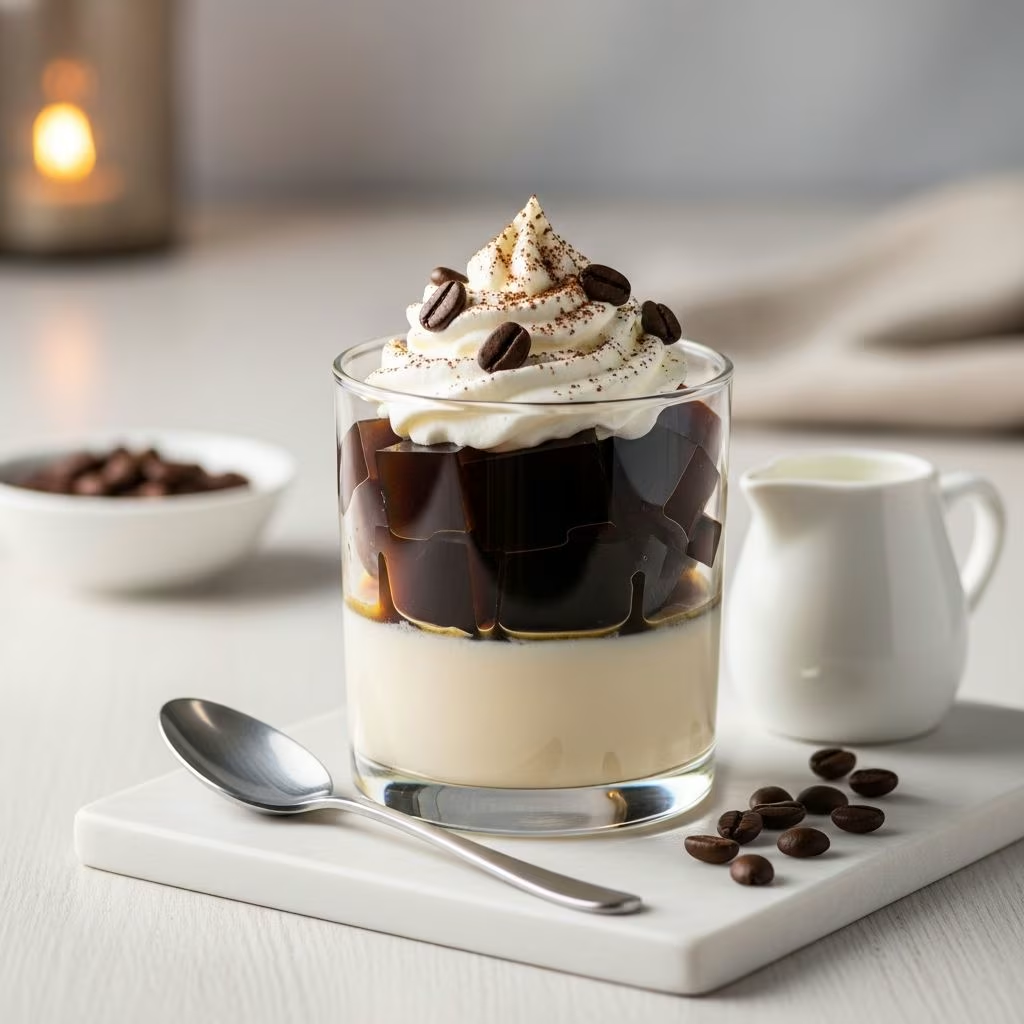
The most straightforward presentation involves serving coffee jelly directly in the vessel where it set, topped with cold milk, heavy cream, or whipped cream. This method highlights the jelly’s elegant wobble while showcasing the beautiful contrast between dark coffee and pale cream. Some prefer adding sweetened condensed milk, which creates a more indulgent, creamy experience.
Cube and Cream Combination
For a more luxurious variation, cut the set jelly into small cubes using a sharp knife, creating uniform or irregular pieces depending on aesthetic preference. Combine the cubes in a large bowl with a mixture of heavy cream, condensed milk, and cold water or milk, then gently stir to distribute evenly. This creamy preparation transforms the dessert into something closer to a beverage or parfait, offering a spoonable consistency rather than a solid block.
Glass Preparation Method
Some recipes suggest making coffee jelly directly in serving glasses by combining all ingredients and allowing them to set in individual vessels. This method eliminates cutting steps while creating an impressive presentation where guests observe the complete, uninterrupted jelly. Topping with ice cubes, milk, and optional espresso shots creates an elaborate beverage-dessert hybrid.
Ingredient Substitutions and Dietary Considerations
Non-Dairy Alternatives
Plant-based milk options including almond, oat, coconut, or soy milk work effectively as cream toppings or mixing components. Non-dairy creamers provide similar richness to heavy cream while accommodating lactose intolerance or vegan dietary requirements. Coconut cream offers particularly luxurious mouthfeel and complementary flavor profile.
Gelatin Substitutes
Agar agar powder, derived from seaweed, provides a vegan-friendly gelatin alternative requiring slightly adjusted ratios. Approximately 1 teaspoon of agar agar powder replaces 1 envelope of conventional gelatin, though careful attention to manufacturer’s instructions ensures optimal results. Clear jelly powders or gulaman products, commonly available in Asian grocery stores, offer additional options for creating the signature texture.
Sweetener Modifications
Those watching sugar intake can reduce the granulated sugar amount to 2-3 tablespoons, relying more heavily on coffee’s natural notes and cream’s inherent sweetness. Honey or maple syrup provide alternative sweeteners, though liquid sweeteners require slight adjustment to overall liquid ratios. Stevia or other non-caloric sweeteners accommodate various dietary preferences, though some individuals detect slight aftertaste.
Storage and Make-Ahead Planning
Prepared coffee jelly maintains quality refrigerated for 3-5 days, covered with plastic wrap or stored in airtight containers. The jelly gradually becomes firmer over extended storage as moisture evaporates, so earlier consumption typically offers superior texture. Freezing is not recommended as gelatin becomes grainy upon thawing, destroying the prized silky consistency.
The make-ahead convenience factor makes coffee jelly ideal for entertaining. Prepare the jelly 1-2 days in advance, then assemble individual servings with cream components just before serving. This timing ensures the jelly maintains optimal wobbliness while components remain fresh and visually distinct.
Frequently Asked Questions
Why is my coffee jelly grainy or lumpy?
Graininess typically results from improper gelatin blooming, where gelatin doesn’t receive sufficient cold water before heat exposure. Always bloom gelatin in cold liquid for at least one minute before adding hot coffee. Ensure all coffee and sugar completely dissolve before adding gelatin, as undissolved particles create similar undesirable texture.
What causes coffee jelly to remain too soft or fail to set?
Insufficient gelatin represents the primary culprit—verify measurements precisely and avoid reducing amounts significantly. Ensure refrigeration occurs at proper temperature (below 40°F) for the full 3-4 hour period. Some refrigerators operate insufficiently cold; if jelly remains overly soft after appropriate time, increase gelatin quantity by 1-2 grams in future batches.
Can I speed up the setting process?
While ice bath submersion hastens setting (reducing time to 1-2 hours), this method produces less uniform texture than standard refrigeration. For urgent timelines, ice baths offer a workable solution, though allowing full time whenever possible produces superior results.
How do I achieve different firmness levels?
Adjust gelatin quantities—use 8 grams for a more delicate, spoonable consistency or 12 grams for firmer, more structured jelly. Experiment with small batches to identify your preferred balance between wobbliness and structural integrity.
What coffee strength produces the best results?
Medium-to-strong coffee ensures distinctive flavor presence that remains detectable once mixed with dairy components. If using instant coffee, dissolve 2-3 teaspoons in the boiling water for appropriate intensity. Taste the coffee mixture before refrigeration to verify strength satisfies your preferences.
Flavor Enhancement Techniques
Vanilla extract (1/4 teaspoon) introduces subtle complexity without overpowering coffee notes. A pinch of sea salt paradoxically intensifies coffee flavor perception while rounding out sweetness. Espresso powder offers more concentrated coffee essence than instant coffee, requiring reduced quantities (approximately 1 teaspoon per batch). Cinnamon or cardamom introduces warm spice notes that complement coffee beautifully when used judiciously.
Conclusion
Coffee jelly represents an accessible entry point into sophisticated dessert preparation, requiring minimal technical skill while delivering impressive results. The straightforward ingredient list and hands-off refrigeration period make this dessert ideal for cooks of varying experience levels. By understanding fundamental techniques—gelatin blooming, proper temperature management, and appropriate refrigeration—anyone can create this elegant Japanese treat at home. Whether served simply with cream or transformed into a creamy medley, coffee jelly transforms everyday coffee into an extraordinary dessert experience that surprises and delights.
References
- Japanese Coffee Jelly Recipe — Pickled Plum. Accessed April 2026. https://pickledplum.com/coffee-jelly/
- Easy Coffee Jelly Recipe — Catherine Desserts. Accessed April 2026. https://zhangcatherine.com/coffee-jelly/
- Easy Coffee Jelly Recipe — Foxy Folksy. Accessed April 2026. https://www.foxyfolksy.com/coffee-jelly/
- Coffee Jelly Recipe — Woman Scribbles. Accessed April 2026. https://www.womanscribbles.net/coffee-jelly/
- Coffee Jelly: The Perfect After-Dinner Dessert — Flavorful Journeys. Accessed April 2026. https://www.flavorfuljourneys.com/coffee-jelly-the-perfect-after-dinner-dessert/