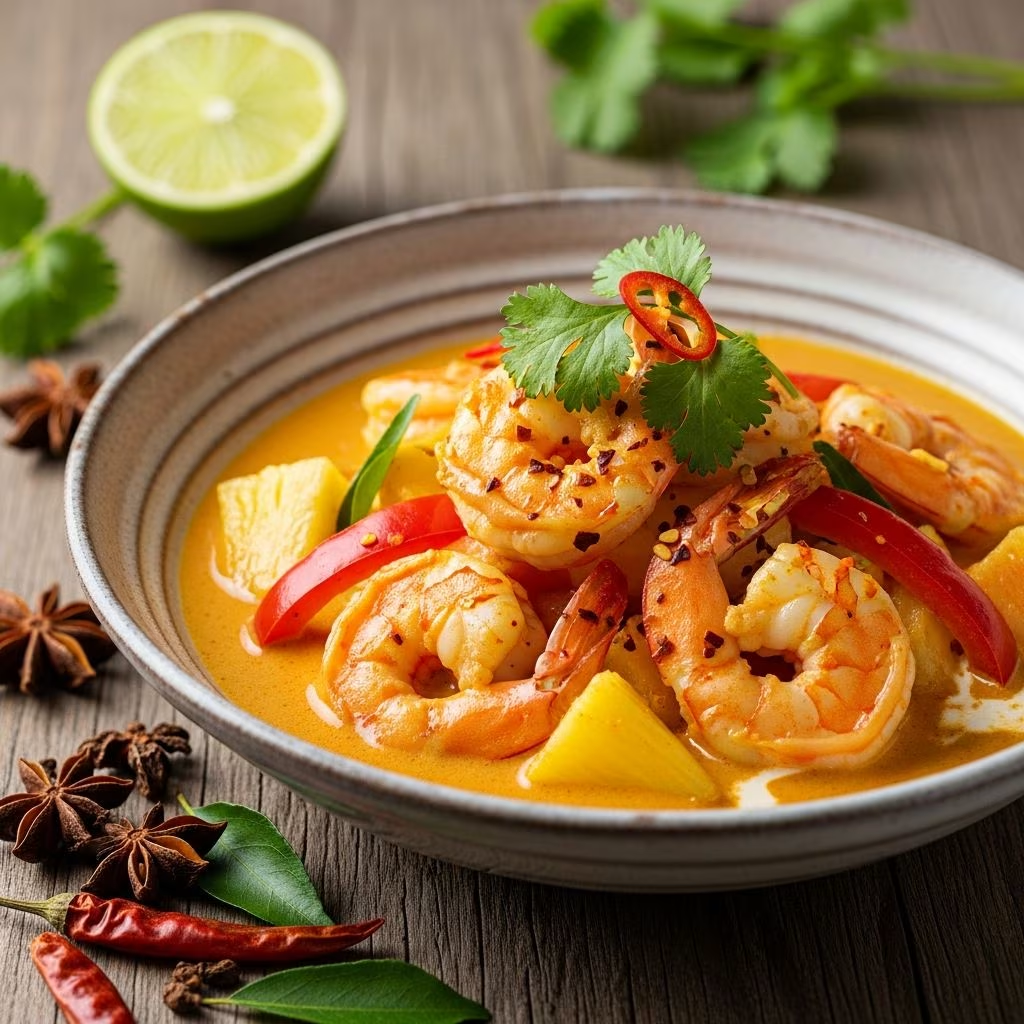
Creating restaurant-quality seafood dishes at home doesn’t require hours in the kitchen or an exhaustive ingredient list. This tropical shrimp curry demonstrates how simple techniques combined with aromatic ingredients can produce an impressive meal that satisfies both weeknight cravings and special dinner occasions. The foundation of this dish rests on a velvety coconut-based sauce infused with warm spices, creating layers of flavor that complement tender shrimp perfectly.
Understanding the Flavor Profile
The essence of this curry lies in balancing multiple flavor dimensions. Coconut milk provides richness and sweetness, while curry paste introduces depth and heat. Fresh aromatics like ginger, garlic, and lime juice brighten the sauce, preventing it from becoming one-dimensional. When these elements combine with properly cooked shrimp, the result transcends typical weeknight fare and becomes memorable enough to serve guests.
Thai and Southeast Asian cuisines have perfected this balance over generations. The technique of building flavor through toasting spices, sautéing aromatics, and then introducing liquid creates a sauce with remarkable complexity despite its simplicity.
Essential Components for Success
Selecting Your Proteins
Shrimp’s delicate texture requires careful handling to achieve optimal results. Large shrimp (21/25 count per pound) work best because they cook evenly and remain tender when properly timed. Frozen shrimp that have been thawed work excellently; many professional cooks prefer them because they’re often fresher than fresh shrimp displayed on ice. Whether peeled and deveined before purchase or prepared at home, the key is ensuring uniform sizing for consistent cooking.
The Coconut Foundation
Full-fat coconut milk creates the luxurious mouthfeel essential to this dish. The fat content serves a functional purpose beyond taste—it carries flavor compounds and prevents the sauce from appearing watery. Canned coconut milk works beautifully, though stirring it thoroughly before measuring ensures you capture both the cream and liquid components.
Aromatic Building Blocks
Onions, garlic, and ginger form the aromatic base. These ingredients should be diced finely to distribute their flavors evenly throughout the sauce. Mincing rather than roughly chopping ensures they integrate seamlessly and cook through properly during the brief cooking time.
Ingredient Composition Guide
| Component | Purpose | Typical Amount (Serves 4) |
|---|---|---|
| Shrimp | Protein and main element | 1.5 pounds large shrimp |
| Coconut milk | Sauce base and richness | 1-1.5 cans (13-14 oz each) |
| Curry paste (red) | Primary flavor and heat | 2-3 tablespoons |
| Onion | Aromatic sweetness | 1 medium onion |
| Garlic | Pungent depth | 3-4 cloves |
| Ginger | Warmth and zing | 1 tablespoon minced |
| Bell peppers | Textural contrast and sweetness | 2 medium peppers |
| Fish sauce | Umami depth | 1-2 tablespoons |
| Lime juice | Brightness and acidity | 2-3 tablespoons |
| Fresh herbs | Finishing brightness | ½ cup combined basil and cilantro |
Preparation Techniques That Elevate the Dish
Pre-Cooking the Shrimp
Seasoning shrimp before cooking creates a flavorful exterior. Combining shrimp with oil, minced garlic, salt, and red chili flakes allows the seasonings to adhere properly. A brief marination period—even just five minutes—permits flavors to penetrate the delicate flesh. This step distinguishes home cooking from rushed preparations.
The Sear and Set-Aside Method
Cooking shrimp separately before adding it to the finished sauce prevents overcooking. Shrimp cooks rapidly—typically two minutes per side for large specimens—transforming from translucent to opaque almost immediately. Removing it from the pan preserves texture and allows you to focus on building the sauce without worrying about protein timing.
Building Sauce Complexity
The order of ingredient addition matters significantly. Sautéing onions and peppers first softens their cellulose structure and releases sugars that sweeten the overall dish. These vegetables should be removed before cooking the shrimp, preventing them from overcooking during the sauce-building phase. The curry paste benefits from brief contact with hot oil before liquid addition, allowing its spices to bloom and intensify.
Step-by-Step Execution
Initial Preparation Phase
- Peel and devein shrimp if not already prepared, patting them dry with paper towels
- Combine shrimp with oil, minced garlic, salt, and chili flakes in a bowl
- Dice onions and bell peppers into uniform pieces approximately ½-inch thick
- Mince garlic and ginger finely, or use pre-minced versions for convenience
- Prepare a separate container combining coconut milk, fish sauce, lime juice, brown sugar, and curry powder
Cooking the Vegetables and Proteins
- Heat oil in a large skillet over medium-high heat until shimmer appears
- Add diced onions and peppers, cooking for approximately five minutes until edges begin softening
- Transfer cooked vegetables to a clean bowl, setting aside
- In the same skillet, cook shrimp in batches to avoid crowding (typically two minutes per side)
- Transfer cooked shrimp to a separate plate
Sauce Development and Integration
- Add the prepared coconut milk mixture to the skillet, stirring thoroughly
- Bring the sauce to a gentle boil, then reduce heat to maintain a steady simmer
- Cook for five minutes, allowing the sauce to reduce slightly and flavors to concentrate
- Return the cooked vegetables to the skillet
- Add the cooked shrimp along with fresh basil and cilantro
- Toss gently to coat everything evenly, cooking for an additional two minutes
Serving Suggestions and Accompaniments
This curry shines when served over fluffy white rice, aromatic jasmine rice, or noodles that absorb the creamy sauce. Jasmine rice pairs particularly well due to its subtle floral notes that complement the curry spices without overwhelming them.
Garnishing elevates both appearance and flavor. Fresh cilantro leaves add brightness, while sliced red jalapeños introduce textural interest and additional heat for those preferring spicier preparations. Chopped green onions contribute a mild onion note that hasn’t been cooked down. A lime wedge squeezed over the finished dish adds final acidity that brings all flavors into focus.
Customization Strategies
Adjusting Heat Levels
The curry paste quantity directly controls spiciness. Those preferring milder versions can reduce paste to one tablespoon, while heat-seekers might increase to four tablespoons. Red chili flakes added during the initial shrimp seasoning provide additional control. Coconut milk naturally tempers heat through its richness, so dishes appear less spicy than the actual capsaicin levels suggest.
Vegetable Variations
Bell peppers serve as the primary vegetable, but broccoli florets, snap peas, or mushrooms integrate beautifully. Leafy greens like spinach or bok choy wilt directly into the finished sauce moments before serving. Bamboo shoots or water chestnuts add textural contrast if available.
Protein Alternatives
While shrimp represents the traditional protein, this sauce accommodates chicken, white fish, or firm tofu equally well. Cooking times adjust accordingly—chicken requires slightly longer cooking, while tofu needs only gentle warming through to absorb sauce flavors.
Common Challenges and Solutions
Preventing Coconut Milk Separation
High heat can cause coconut milk to split, creating a grainy appearance. Maintaining a gentle simmer rather than aggressive boiling prevents this issue. Stirring occasionally also helps distribute fats evenly throughout the sauce.
Avoiding Overcooked Shrimp
Shrimp toughens remarkably quickly when overexposed to heat. The two-minutes-per-side guideline works for large specimens; smaller shrimp need only ninety seconds per side. Removing shrimp the moment it turns opaque rather than waiting for color development ensures maximum tenderness.
Balancing Flavors Effectively
Fish sauce possesses a pungent aroma that some find challenging initially. Starting with one tablespoon and adding more to taste prevents overwhelming other flavors. Lime juice should be added gradually as well, since its acidity dramatically affects overall balance.
Frequently Asked Questions
Can this dish be prepared in advance?
The sauce can be prepared up to two days ahead and refrigerated, though reheating requires gentle warming to prevent coconut milk separation. Add the shrimp just before serving to maintain optimal texture and temperature.
Does frozen shrimp work as well as fresh?
Many professional chefs prefer frozen shrimp because it’s often fresher than “fresh” shrimp displayed on ice. Thaw completely before cooking and pat dry to achieve proper browning.
What if red curry paste isn’t available?
Yellow or green curry paste works excellently as substitutes, though they produce different flavor profiles. Yellow paste tends toward milder, earthier notes, while green paste emphasizes heat and herbaceousness.
How does this recipe scale for larger groups?
All ingredients scale proportionally. For eight servings, simply double all quantities and use a larger skillet or cook in batches to avoid overcrowding, which prevents proper searing.
Is there a dairy-free alternative to coconut milk?
Coconut milk is naturally dairy-free. For those with coconut sensitivities, cashew cream blended with water or vegetable stock provides similar richness, though flavor profiles differ.
References
- Thai Cuisine and Flavor Principles — FoodieCrush.com. Accessed April 2026. https://www.foodiecrush.com/shrimp-in-thai-coconut-sauce/
- Coconut Curry Cooking Techniques — The Cozy Apron. Accessed April 2026. https://thecozyapron.com/coconut-curry-shrimp/
- Quick Weeknight Seafood Recipes — The Woks of Life. Accessed April 2026. https://thewoksoflife.com/coconut-curry-shrimp/
- Sri Lankan Curry Preparation Methods — Cravings Journal. Accessed April 2026. https://cravingsjournal.com/shrimp-curry/
- Easy 20-Minute Coconut Curry Shrimp — Life As A Strawberry. Accessed April 2026. https://www.lifeasastrawberry.com/easy-20-minute-coconut-curry-shrimp/