When you’re looking for a breakfast solution that impresses without demanding hours in the kitchen, few dishes compete with the versatility and appeal of a cinnamon roll casserole. This innovative take on traditional cinnamon rolls combines convenience with elegance, allowing home cooks to deliver restaurant-quality results using ingredients already stocked in most pantries. By layering store-purchased cinnamon rolls with a silky custard base, you create a dish that feels indulgent yet requires minimal hands-on preparation time.
Understanding the Fundamentals of This Breakfast Approach
The foundation of this dish rests on a simple principle: transforming individual components into a cohesive, baked casserole. Rather than serving cinnamon rolls as standalone pastries, cutting them into smaller pieces and suspending them in a custard mixture creates a unified texture and flavor profile. The custard seeps into every crevice of the dough, resulting in a tender, almost bread pudding-like consistency while maintaining the signature cinnamon-sugar appeal.
This preparation method works particularly well because frozen cinnamon rolls are engineered to withstand high heat and moisture absorption. Their density means they won’t disintegrate when soaked, yet they remain soft enough to achieve that desirable custardy interior that distinguishes this dish from simple baked goods.
Essential Components and Ingredient Selection
The beauty of this casserole lies in how forgiving it is regarding ingredient choices. While certain components provide the structural foundation, others offer flexibility for personal preference and dietary considerations.
Foundation Ingredients
- Refrigerated cinnamon rolls: Most recipes call for two standard cans containing approximately 16 individual rolls, though you can adjust quantities based on your baking vessel size and desired density
- Eggs: Typically four large eggs serve as the binding agent, creating structure within the custard
- Dairy component: Options range from milk to heavy cream to half-and-half, with heavier options producing richer results
- Vanilla extract: This aromatic addition complements the cinnamon without overpowering other flavors
- Ground cinnamon: Amplifies the spice profile beyond what the rolls themselves provide
- Butter: Used for greasing the pan and sometimes incorporated into an additional sauce layer
Optional Enhancement Elements
- Maple syrup for drizzling
- Chopped nuts such as pecans or walnuts
- Additional spices like nutmeg for complexity
- Brown sugar mixed with cinnamon for a secondary sauce
Preparation Techniques That Ensure Success
Oven Temperature and Equipment Setup
Most variations of this recipe converge around 350-375°F as the optimal baking temperature. This moderate heat allows the custard to set through completely while the exposed cinnamon roll portions develop a light golden exterior without burning. A 9×13-inch baking dish accommodates standard recipes perfectly, though an 8×8-inch square pan works for smaller portions. Proper greasing with butter or cooking spray prevents sticking and eliminates cleanup frustration.
Cutting and Arrangement Strategy
The method of cutting cinnamon rolls significantly impacts the final texture. Some approaches recommend cutting each roll into six pieces using kitchen shears or pizza cutters, creating uniform, bite-sized portions that distribute evenly throughout the dish. Others suggest larger chunks of 1 to 1.5 inches, which maintains more structural integrity during baking. The choice depends on whether you prefer a more unified casserole texture or distinct cinnamon roll segments within a custard matrix.
Arranging cut pieces in a single layer across the bottom of your prepared pan ensures even cooking and allows the custard to saturate each piece uniformly. Avoid stacking or crowding, as this can create inconsistent texture gradations.
Custard Mixture Creation
Whisking eggs, dairy, and seasonings together demands attention to detail. A smooth, well-combined mixture prevents lumpy patches in the finished casserole. Using a fork or whisk to blend these components thoroughly ensures even distribution throughout the dish. Some recipes suggest adding the cut cinnamon roll pieces directly to this mixture and tossing gently before transferring to the baking dish, allowing them to absorb moisture before baking begins.
The Soaking Process and Make-Ahead Flexibility
One significant advantage of this casserole is its amenability to advance preparation. After pouring the custard mixture over the cinnamon rolls, you can allow the dish to sit at room temperature for 25-30 minutes, permitting the dough to absorb liquid and flavors. Alternatively, covering the dish and refrigerating overnight transforms this into a genuine make-ahead breakfast option. This flexibility proves invaluable for entertaining, holiday hosting, or simplifying weekday morning routines.
The overnight option requires minimal adjustment: simply remove the dish from refrigeration 15-20 minutes before baking to allow some of the chill to dissipate, then bake as directed, adding a few minutes if needed to achieve the desired doneness.
Baking and Visual Cues for Doneness
Baking typically requires 30-35 minutes, though the specific duration depends on your oven’s characteristics and whether the dish started at room temperature or chilled. The casserole reaches completion when the top develops a golden-brown hue and the center appears slightly puffed, indicating that eggs have set properly throughout. Inserting a thin knife into the center should reveal no liquid egg mixture, confirming that cooking has progressed sufficiently.
Allowing the casserole to rest for 5-10 minutes after removal from the oven permits the custard to set further and makes serving cleaner and more elegant.
Finishing Touches and Flavor Enhancements
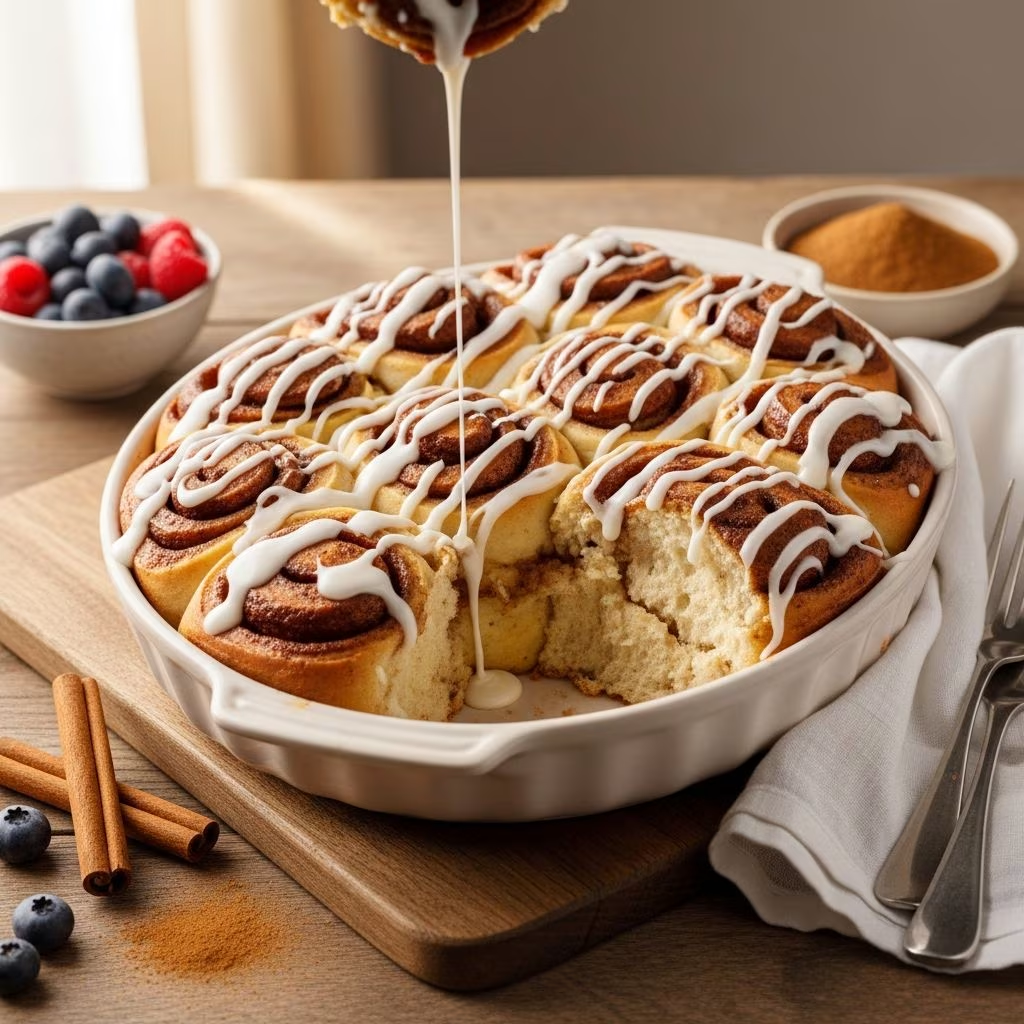
The frosting packets accompanying commercial cinnamon rolls provide convenient finishing. Warming these for 5-10 seconds in the microwave before drizzling creates a smooth, spreadable consistency that melts slightly into the warm casserole surface. This step adds visual appeal and concentrated sweetness that complements the custard’s subtle vanilla notes.
A generous pour of maple syrup offers additional moisture and sophisticated flavor, while some prefer sprinkling cinnamon-sugar or chopped toasted nuts across the top for textural contrast.
Customization Options for Varied Preferences
| Variation | Key Modifications | Best For |
|---|---|---|
| Nutty Casserole | Add 1/2 to 3/4 cup chopped pecans or walnuts to the cinnamon roll pieces before pouring custard | Those seeking textural contrast and enhanced depth |
| Spiced Version | Include 1/4 to 1/2 teaspoon nutmeg and consider cardamom in the custard mixture | Adventurous palates wanting aromatic complexity |
| Crockpot Adaptation | Transfer assembled ingredients to a slow cooker and cook on low for 2-3 hours | Entertaining situations requiring flexible timing |
| Brown Sugar Sauce | Create a separate mixture of melted butter, brown sugar, and cinnamon; pour over casserole before baking | Those desiring extra sweetness and caramelization |
| Lighter Dairy Version | Substitute half-and-half or whole milk for heavy cream | Those watching fat content without sacrificing richness |
Serving Strategies and Complementary Pairings
This casserole shines as a centerpiece for brunch gatherings, holiday breakfasts, or leisurely weekend mornings. Its make-ahead nature and impressive appearance make it ideal for entertaining without last-minute stress. Serving sizes typically accommodate 5-8 people depending on portion preferences and whether additional dishes accompany the meal.
Pairing options include fresh fruit salads, yogurt parfaits, or simple green salads to balance the richness. Beverages such as coffee, chai tea, or fresh-squeezed juice complement the sweet, spiced flavors beautifully.
Storage and Reheating Recommendations
Leftovers keep well in the refrigerator for 3-4 days when stored in an airtight container. Reheat individual portions in the microwave for 30-45 seconds or restore the entire casserole in a 300°F oven for 10-15 minutes, covered with foil to prevent excess browning. The texture remains tender and the flavors actually deepen as the ingredients marry over time.
Troubleshooting Common Challenges
Custard not setting: Ensure your oven temperature is accurate and bake for the full recommended time. If the top browns too quickly before the center sets, tent with foil to reduce direct heat exposure.
Dry or tough texture: Reduce baking time slightly and ensure you’re using heavy enough dairy to maintain moisture throughout the dish.
Uneven browning: Rotate the baking dish halfway through baking if your oven has hot spots, and consider positioning it on a middle rack rather than the lowest position.
Separation of components: This indicates insufficient custard saturation. Increase dairy slightly or allow longer soaking time before baking.
Frequently Asked Questions
Can I use homemade cinnamon rolls instead of store-bought?
Absolutely. Homemade rolls work wonderfully, though you may need to adjust baking time slightly since they haven’t been pre-processed. Allow them to cool to room temperature before assembling the casserole.
What if I don’t have heavy cream?
Whole milk, half-and-half, or even evaporated milk serve as suitable substitutes, though the result will be slightly less rich. The casserole will still be delicious and satisfying.
How far in advance can I prepare this dish?
Assemble the casserole up to 24 hours ahead by covering and refrigerating. Bake directly from the refrigerator, adding 5-10 minutes to the standard baking time.
Can this casserole be frozen?
Yes, you can freeze the assembled casserole before baking for up to 3 months. Thaw overnight in the refrigerator before baking as directed.
Is this dish appropriate for dietary restrictions?
With modifications it can be adapted: dairy-free milk alternatives can replace cream, eggs can be substituted with commercial egg replacers, and gluten-free store-bought cinnamon rolls are available. Results vary depending on substitutions used.
Why This Approach Delivers Results
The cinnamon roll casserole represents the intersection of convenience and culinary satisfaction. By leveraging quality commercial products and applying straightforward techniques, home cooks can produce impressive results that rival cafe brunch offerings. The combination of strategic ingredient selection, proper preparation methods, and thoughtful finishing touches transforms simple components into a memorable dish that justifies its presence on any gathering’s menu.
Whether you’re seeking a stress-free holiday breakfast solution, an impressive brunch centerpiece for entertaining, or simply a more interesting take on weekday mornings, this casserole delivers on multiple fronts without demanding extensive culinary expertise or excessive time investment.
References
- Basic Egg Cookery and Food Safety — U.S. Food and Drug Administration. https://www.fda.gov/food/foodborneillnesscontaminants/peoples-at-risk-food-poisoning/en
- Baking Science: How Eggs Function in Baked Goods — University of Nebraska–Lincoln Institute of Agriculture and Natural Resources. https://extensionpublications.unl.edu/
- Proper Storage and Reheating of Cooked Foods — U.S. Department of Agriculture Food Safety and Inspection Service. https://www.fsis.usda.gov/