When weeknight cooking demands both speed and satisfaction, few dishes deliver quite like stroganoff. This elegant yet surprisingly simple preparation transforms humble ingredients into a restaurant-quality meal that appears far more complicated than it actually is. By utilizing modern cooking techniques and ingredient substitutions, home cooks can produce a stroganoff that rivals traditional beef versions while requiring significantly less time at the stove.
Understanding the Modern Stroganoff Approach
Traditional stroganoff emerged from Russian cuisine as a showcase for beef, but contemporary home cooking has embraced variations that prioritize accessibility and speed without sacrificing depth of flavor. The modern iteration relies on thinner cuts of poultry that cook rapidly while maintaining tenderness, combined with a sauce built on simple pantry staples rather than hours of simmering.
The fundamental appeal of stroganoff lies in its balance of contrasting elements: the slight earthiness of mushrooms, the subtle tang of sour cream or crème fraîche, and the umami depth provided by broth and seasonings. When these components are assembled correctly, the result transcends the sum of its parts, creating something that feels indulgent despite its straightforward preparation.
Selecting and Preparing Your Protein
The choice of chicken preparation dramatically influences both cooking time and final texture. Boneless, skinless chicken breasts remain the preferred choice for rapid stroganoff preparation, offering consistent texture and predictable cooking times. When selecting breasts, look for pieces that are uniform in thickness—ideally between three-quarters and one inch.
For optimal results, consider these preparation strategies:
- Purchase thin-sliced breasts from specialty butchers or premium grocery sections, which eliminate the need for additional pounding
- If working with standard breasts, place them between plastic wrap and gently pound to achieve uniform thickness
- Cut larger breasts into manageable pieces before seasoning to ensure even cooking
- Pat chicken dry with paper towels before cooking to encourage browning rather than steaming
Seasoning the chicken properly before cooking establishes flavor that permeates the final dish. A light dusting of kosher salt and freshly ground pepper applied directly to the raw protein allows these seasonings to integrate during the browning process, creating depth rather than surface-level flavor.
The Critical Browning Step
Achieving a golden-brown exterior on chicken requires attention to heat management and pan preparation. The browning process serves multiple purposes: it develops complex flavors through the Maillard reaction, creates visual appeal, and helps seal in juices during the initial cooking stage.
Proper browning technique involves:
- Heating oil in a large skillet over medium-high heat until it shimmers but does not smoke
- Arranging chicken in a single layer without crowding the pan—working in batches if necessary to maintain proper spacing
- Allowing the chicken to cook undisturbed for approximately five minutes to develop color, then flipping to complete browning
- Using sufficient oil to coat the pan bottom; a thin film of oil is insufficient and results in sticking
- Removing browned chicken to a clean plate before proceeding with mushroom preparation
The temptation to move chicken around the pan should be resisted. Movement prevents browning and causes protein to release moisture prematurely, resulting in pale, underseasoned chicken that steams rather than sears.
Building Depth Through Mushroom Preparation
Mushrooms provide the stroganoff’s distinctive earthiness and contribute significant textural interest. Button, cremini, and baby bella varieties all work excellently, though cremini and bella mushrooms offer deeper flavor due to their more developed fungal compounds.
Mushroom preparation impacts the final sauce quality:
- Slice mushrooms into quarter-inch thick pieces for optimal texture and cooking speed
- Heat butter in the same skillet used for chicken, allowing residual browning bits to flavor the mushroom cooking liquid
- Cook mushrooms over medium-high heat until they release their moisture, then continue cooking until this liquid evaporates
- This process typically requires six to eight minutes and concentrates mushroom flavor significantly
- Add finely chopped onions during this stage to soften and partially caramelize them
The combination of butter-cooked mushrooms and onions creates an aromatic base that elevates the sauce from simple to sophisticated. The browning bits remaining in the pan—called fond—dissolve into the liquid components later, adding rich, meaty undertones despite the poultry base.
Crafting the Silky Sauce
The sauce represents stroganoff’s defining characteristic. This component must be smooth, luxurious, and balanced between acidity, creaminess, and depth. Creating this sauce involves a precise sequence of steps that cannot be rushed without compromising results.
The sauce-building process unfolds as follows:
- Sprinkle flour over the mushroom mixture and cook, stirring constantly, for thirty to sixty seconds until a thin paste forms
- This roux step gelatinizes flour starch and prevents lumping when liquid ingredients are introduced
- Gradually pour chicken broth into the pan while stirring continuously to incorporate liquid smoothly
- Increase heat to medium-high and bring the mixture to a simmer, stirring occasionally, until the sauce thickens enough to lightly coat the back of a spoon—approximately three minutes
- The sauce thickens further as it cools, so avoid over-thickening at this stage
Once the base sauce reaches the proper consistency, remove the pan from heat and incorporate the dairy component. Using crème fraîche or sour cream that has been brought closer to room temperature prevents curdling and temperature shock.
- Stir in sour cream or crème fraîche off the heat to minimize the risk of separation
- Add Dijon mustard and Worcestershire sauce for complexity and subtle tang
- Taste and adjust salt levels as needed, keeping in mind that broth contains sodium
Final Assembly and Serving
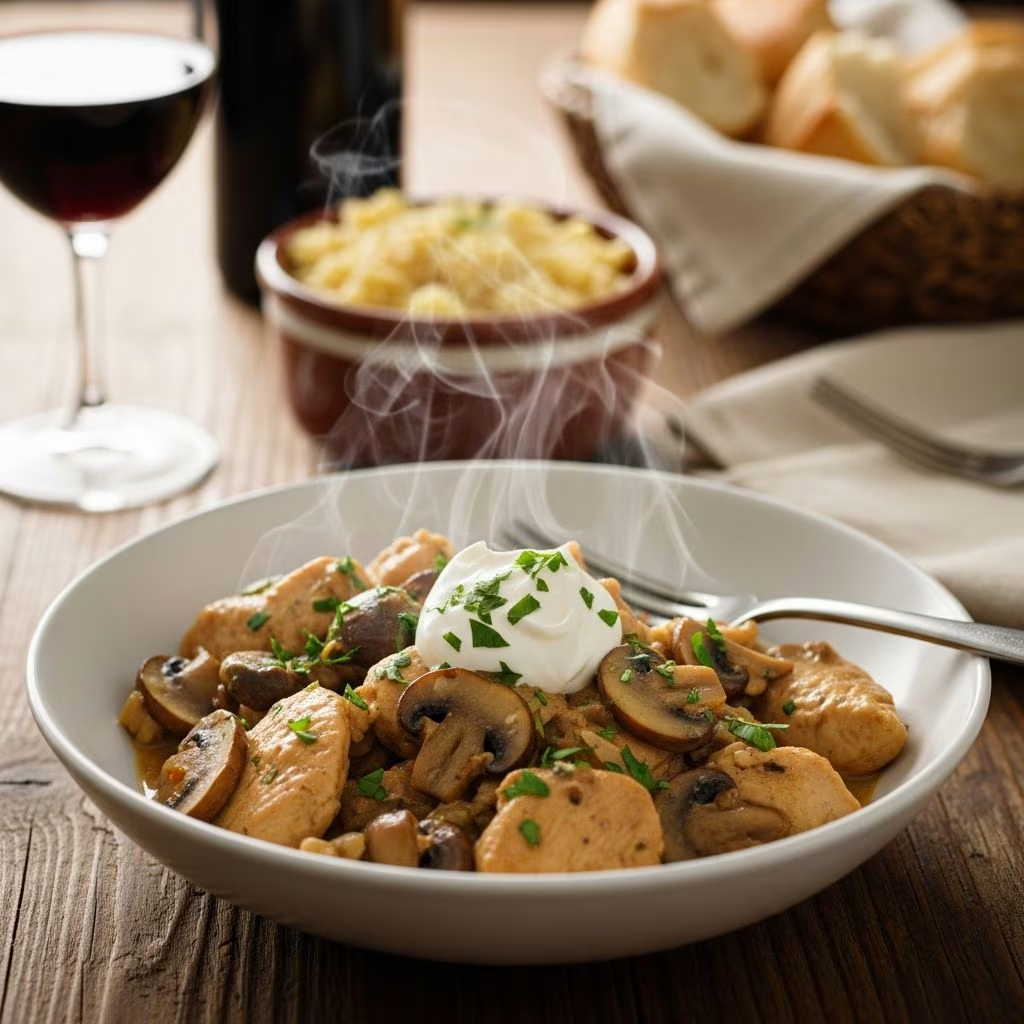
Bringing all components together requires gentle handling to maintain the sauce’s silky texture. Return the browned chicken to the pan along with any accumulated juices, stirring gently to coat everything with sauce. Cook just long enough for the chicken to warm through—typically one to two minutes at most.
The choice of accompaniment significantly influences the overall dining experience. Traditional egg noodles remain the most authentic pairing, their tender texture and subtle egg flavor complementing the sauce beautifully. However, mashed potatoes provide a hearty alternative that absorbs sauce generously, while steamed rice offers a lighter option for those seeking reduced carbohydrate intake.
A fresh garnish of chopped parsley adds visual brightness and a subtle herbal note that cuts through the sauce’s richness, balancing the overall composition. This final touch transforms the dish from simple to polished.
Flavor Profile Customization
While the classic stroganoff formula requires no modification to succeed, several adjustments accommodate different preferences and dietary approaches:
| Ingredient Consideration | Standard Approach | Alternative Option |
|---|---|---|
| Acid Component | Dijon mustard and Worcestershire | Add a splash of dry sherry or white wine for greater depth |
| Cream Base | Sour cream or crème fraîche | Greek yogurt provides protein and tang with reduced fat content |
| Mushroom Selection | Cremini or button varieties | Incorporate dried porcini for concentrated umami flavor |
| Broth Option | Low-sodium chicken broth | Homemade stock delivers superior body and chicken flavor |
| Thickening Agent | All-purpose flour | Cornstarch creates a more delicate texture and glossy appearance |
Common Preparation Mistakes and Solutions
Understanding frequent pitfalls helps ensure consistent success. Curdled sauce often results from incorporating cold dairy into hot liquid or adding dairy while the mixture remains at a rolling boil. Solution: bring cream components to room temperature and add them off heat, stirring gently until incorporated.
Tough, dry chicken typically indicates overcooking caused by insufficient heat management or too-long simmering in the sauce. Solution: use a meat thermometer to monitor doneness, removing chicken from heat once it reaches 165°F internal temperature. Brief reheating in sauce at the end suffices for final assembly.
Grainy, separated sauce suggests excessive heat after dairy incorporation or incompatible cream products. Solution: use full-fat sour cream or crème fraîche rather than reduced-fat versions, and maintain gentle heat whenever dairy is present.
Strategic Make-Ahead Planning
Stroganoff components can be prepared separately in advance to streamline weeknight preparation. Mushrooms and onions can be cooked and refrigerated for up to three days, requiring only reheating before sauce construction. The sauce itself can be prepared through the broth thickening stage and refrigerated, with dairy components added just before serving.
However, the complete assembled dish does not benefit from advance preparation, as the sauce continues absorbing noodle starch and can become overly thick upon sitting. Preparing components separately, then assembling just before serving, maximizes both flavor and texture.
Nutritional Considerations
Stroganoff prepared with boneless, skinless chicken breasts and modest amounts of oil and cream offers reasonable nutritional balance for a comfort food. A typical serving contains approximately 240-280 calories, with protein levels between 24-28 grams depending on portion size and specific ingredients. The sour cream and butter contribute approximately 12 grams of fat per serving, with carbohydrates coming primarily from the starch accompaniment rather than the stroganoff itself.
Those seeking reduced-fat versions can substitute Greek yogurt for half the sour cream, reducing fat content without substantially compromising creaminess or flavor. Using primarily oil rather than butter also shifts the fat profile toward unsaturated options.
Wine and Beverage Pairings
The stroganoff’s rich, creamy sauce benefits from beverage partners that provide contrast. Light-bodied white wines with moderate acidity complement the dish without overwhelming it, with Pinot Grigio and Sauvignon Blanc offering particularly pleasant pairings. Medium-bodied reds like Pinot Noir work surprisingly well, their subtle tannins and earthy undertones echoing the mushroom component.
For non-alcoholic options, unsweetened iced tea provides refreshing contrast, while sparkling water with fresh lemon maintains palate cleanliness between bites. Avoiding cream-based beverages prevents sauce-on-sauce saturation.
Frequently Asked Questions
How far in advance can this dish be prepared? Individual components hold well for three days when refrigerated separately. Complete assembly should occur within two hours of serving to maintain optimal texture and sauce consistency.
Can this recipe be doubled for entertaining? Yes, proportions scale reliably. However, use a larger skillet or work in batches to maintain proper browning on chicken. Avoid overcrowding the pan, as this prevents heat circulation and encourages steaming.
What can substitute for sour cream? Crème fraîche provides the most authentic substitute, offering similar tang and richness. Greek yogurt works for reduced-fat preparation, though it requires gentle handling to prevent separation.
How long does the complete dish keep? Refrigerated stroganoff remains safe for two to three days. The sauce continues thickening as it cools, sometimes requiring milk addition during reheating to restore proper consistency. Freezing is not recommended, as the creamy sauce separates during thawing.
Can ground chicken work instead of breasts? Yes, though the texture differs substantially. Ground chicken produces a more uniform, almost hash-like consistency rather than the distinct chicken pieces traditional stroganoff offers. Cooking time may extend to 35-45 minutes, and the dish becomes more casserole-like in character.
What are effective noodle alternatives? Wide egg noodles remain ideal, but pappardelle, fettuccine, or even fresh pasta work well. For lighter presentations, zucchini noodles or shirataki noodles absorb sauce differently but offer lower-carbohydrate options.
References
- Speedy Chicken Stroganoff — Bon Appétit/Hana Asbrink. 2026. https://lynnandruss.com/2026/02/15/speedy-chicken-stroganoff/
- Chicken Stroganoff (Family Favorite) — Skinnytaste. 2026. https://www.skinnytaste.com/chicken-stroganoff/
- Creamy Chicken Stroganoff Recipe | Easy 30-Minute Dinner — The Sauce and Gravy Channel. 2026. https://www.youtube.com/watch?v=4ImN7Xuyybc
- Easy Chicken Stroganoff — 12 Tomatoes. 2026. https://12tomatoes.com/easy-chicken-stroganoff/