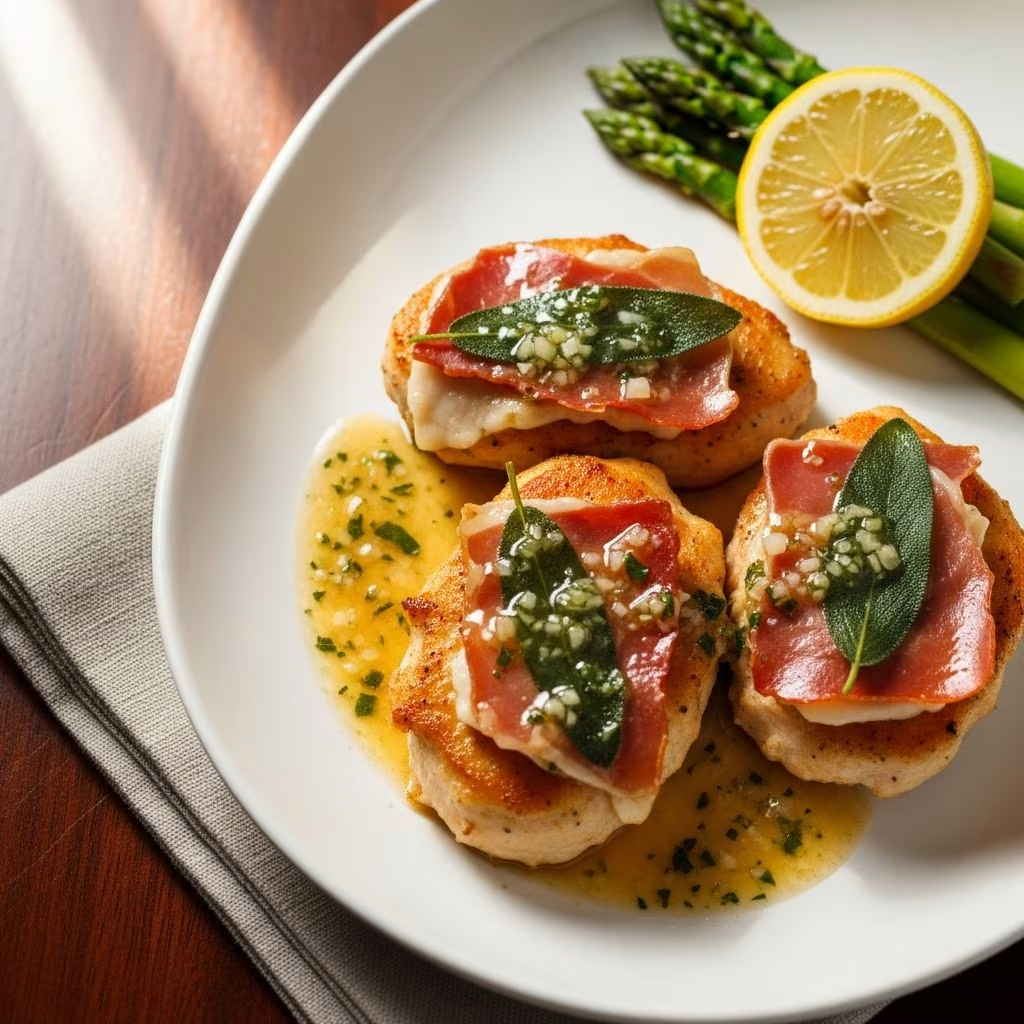
Chicken Saltimbocca reimagines a timeless Italian favorite, swapping veal for tender poultry while preserving the dish’s signature bold flavors. Thinly pounded chicken cutlets embrace salty prosciutto and aromatic sage, then sizzle in a pan until crisp. A velvety sauce of white wine and butter ties it all together, creating a meal that’s both sophisticated and approachable. Ideal for date nights or family gatherings, this recipe delivers restaurant-quality results in under an hour.
Origins and Appeal of Chicken Saltimbocca
The name ‘saltimbocca’ translates to ‘jump in the mouth,’ hinting at its irresistible taste that demands an immediate bite. Traditionally featuring veal from Rome, this dish layers prosciutto and sage atop thin slices, secured and seared swiftly. Opting for chicken makes it more accessible, lighter, and quicker to prepare without sacrificing authenticity. Its appeal lies in the contrast: crispy prosciutto against juicy chicken, earthy sage cutting through richness, and a sauce that clings to every forkful.
Prosciutto provides umami depth, while fresh sage adds a peppery, herbaceous note essential to the profile. The dredging in flour before searing creates a golden crust that locks in moisture. This version prioritizes simplicity, using pantry staples alongside a few key fresh ingredients for maximum impact.
Essential Ingredients for Success
Gathering the right components ensures your Chicken Saltimbocca shines. Focus on quality: thinly sliced prosciutto, vibrant sage leaves, and boneless chicken cutlets or breasts ready for pounding.
- Chicken: 1-2 pounds of cutlets or breasts, pounded to ¼-inch thickness for even cooking.
- Prosciutto: 12-16 thin slices, about ¼ pound total, for wrapping.
- Sage: 16-20 large fresh leaves; dried won’t deliver the same punch.
- Flour: 1 cup all-purpose for dredging, creating texture.
- Liquids: 1 cup dry white wine (like Pinot Grigio) and 1¼ cups low-sodium chicken stock for the sauce base.
- Fats: ¼ cup olive oil and 6 tablespoons butter, divided for searing and emulsifying.
- Seasonings: Salt, black pepper, and minced parsley for finishing.
These quantities serve 4 generously. Scale as needed, but maintain ratios for balance.
Step-by-Step Preparation Guide
Mastery comes from precision in each stage. Prep time: 15 minutes. Cook time: 30 minutes. Total: 45 minutes.
Prepare the Chicken: If using breasts, slice horizontally into cutlets. Place between plastic wrap or in a zip-top bag and pound gently with a meat mallet’s flat side to ¼-inch even thickness. Aim for 5-inch pieces to fit prosciutto neatly. Season both sides lightly with salt and pepper.
Assemble Layers: Lay a prosciutto slice over each cutlet, trimming excess. Top with 1-2 sage leaves. Secure with toothpicks pierced vertically for stability, or place sage under prosciutto if skipping skewers.
Dredge: Spread flour on a plate. Coat each assembly lightly, shaking off excess to avoid gumminess. Set aside on parchment.
Sear in Batches: Heat a large stainless or cast-iron skillet over medium. Add 1 tablespoon olive oil and 1 tablespoon butter per batch. Once foaming, place chicken prosciutto-side down. Sear 2-3 minutes until golden and crisp. Flip, cook 1-2 minutes more until internal temperature hits 165°F. Transfer to a wire rack. Repeat, adding fat as needed.
Build the Sauce: Deglaze pan with white wine over high heat, scraping browned bits (fond) with a wooden spoon. Reduce by half in 1 minute. Add stock, simmer until thickened (3-5 minutes). Lower to medium-low, whisk in remaining butter cubes for emulsion. Taste and adjust salt/pepper.
Combine and Serve: Return chicken to sauce, spooning to coat. Warm 2 minutes. Garnish with parsley. Remove toothpicks before plating.
Serve immediately with sides like roasted potatoes, sautéed greens, or polenta to soak up the sauce.
Pro Tips for Perfect Results Every Time
- Even Thickness: Uniform pounding prevents overcooking edges while centers lag.
- Hot Pan: Preheat 2-3 minutes; test with a droplet of water—it should dance.
- Prosciutto Down First: Crisps the fat layer beautifully.
- Don’t Overcrowd: Batches ensure even heat and crispness.
- Sauce Texture: Cold butter whisked in prevents separation; low heat is key.
- Resting Rack: Keeps bottom crisp, not soggy.
Customizations and Dietary Twists
Adapt this dish to preferences or restrictions while keeping its essence.
| Variation | Description | Key Swap |
|---|---|---|
| Turkey Version | Lighter poultry alternative | Chicken → Turkey cutlets |
| Gluten-Free | For celiac-friendly meals | Flour → Rice or almond flour |
| Dairy-Free | Richness without butter | Butter → Olive oil or vegan butter |
| Veal Classic | Return to roots | Chicken → Veal scallops |
| Spicy Kick | Heat lovers’ delight | Add red pepper flakes to sauce |
Vegetarian? Try eggplant slices instead of chicken for a similar sear and stack.
Ideal Pairings and Presentation
Elevate with thoughtful sides and wine. Pair with crisp whites like Sauvignon Blanc to cut richness. Visual appeal: Fan slices on plates, drizzle sauce artfully, scatter extra sage.
- Starches: Lemon risotto, garlic mashed potatoes.
- Veggies: Sautéed spinach, asparagus with parmigiano.
- Salad: Arugula with balsamic for freshness.
Storage, Reheating, and Freezing
Leftovers keep 3 days in an airtight container in the fridge. Reheat gently in a skillet with a splash of stock to revive sauce. Freeze assembled (un cooked) up to 2 months; thaw overnight before cooking. Cooked freezes 1 month; avoid microwaving to preserve texture.
Common Mistakes to Avoid
Steer clear of these pitfalls:
- Skipping pounding: Leads to tough, uneven chicken.
- Thin prosciutto overload: Use one layer max.
- High sauce heat: Breaks the emulsion.
- Forgetting fond: It’s flavor gold—scrape it up.
Nutrition Snapshot
Per serving (1/4 recipe): ~450 calories, 35g protein, 25g fat, 10g carbs. High in protein, B vitamins from chicken; sage offers antioxidants. Adjust with leaner cuts or less butter for lighter profiles.
Frequently Asked Questions
What if I can’t find prosciutto?
Substitute thinly sliced smoked ham or bacon (par-cooked). Prosciutto’s silkiness is ideal, but alternatives work.
Can I bake instead of pan-sear?
Yes, 400°F for 10-12 minutes, prosciutto down. Sauce stovetop separately for best results.
Is dry white wine essential?
Yes for acidity and depth; substitute chicken stock + lemon juice if avoiding alcohol.
How thin should chicken be?
¼-inch max for quick cooking and sauce absorption.
Toothpicks necessary?
Not strictly; sage under prosciutto holds if flipped carefully.
Why This Recipe Stands Out
Chicken Saltimbocca balances effort and reward, transforming basics into gourmet. Its versatility suits beginners and pros alike. Experiment confidently—the core technique endures variations.
References
- Chicken Saltimbocca – Prosciutto and Sage — Sip and Feast. 2023-05-15. https://www.sipandfeast.com/chicken-saltimbocca/
- Sandy’s Chicken Saltimbocca (All Recipes) — Groups.io. 2022-10-01. https://groups.io/g/OurKitchenTable/topic/sandy_s_chicken_saltimbocca/97478725
- USDA Food Safety Guidelines for Poultry — United States Department of Agriculture. 2024-01-10. https://www.fsis.usda.gov/food-safety/safe-food-handling-and-preparation/poultry/chicken-farm-table
- Italian Culinary Institute Recipe Standards — Italian Culinary Institute. 2023-08-20. https://www.italianculinaryinstitute.com/recipes/saltimbocca