Running out of buttermilk mid-recipe doesn’t mean your baking plans have to derail. Whether you’re preparing a batch of pancakes, a rich chocolate cake, or fluffy biscuits, understanding how to create effective buttermilk alternatives from ingredients already in your kitchen can save the day. These substitutes work by combining milk with acidic ingredients that replicate the tart flavor and chemical properties of traditional buttermilk, enabling your recipes to turn out just as delicious and well-textured as intended.
Understanding Buttermilk’s Role in Cooking
Before exploring substitutes, it helps to understand why buttermilk matters in recipes. Buttermilk adds tanginess and acidity that reacts with baking soda to create lift and rise in baked goods. Additionally, the lactic acid in buttermilk tenderizes batters and doughs, resulting in more delicate crumbs and improved texture. The fermented quality also contributes depth of flavor to finished products. Recognizing these functions helps determine which substitute works best for your specific cooking situation.
The Acid-and-Milk Method: Your Primary Solution
The most straightforward approach to creating a buttermilk substitute involves combining regular milk with an acidic ingredient. This method transforms ordinary milk into a substance that mimics buttermilk’s characteristics within minutes. The acid causes proteins in the milk to denature slightly, thickening the consistency and creating the subtle curdling effect that makes homemade buttermilk so recognizable.
Core Ingredients for This Method
- Milk: Whole milk produces the closest match to store-bought buttermilk’s texture and richness. However, 2% milk or even skim milk will function adequately if whole milk isn’t available. Non-dairy alternatives like coconut milk or soy milk also work effectively for those avoiding dairy.
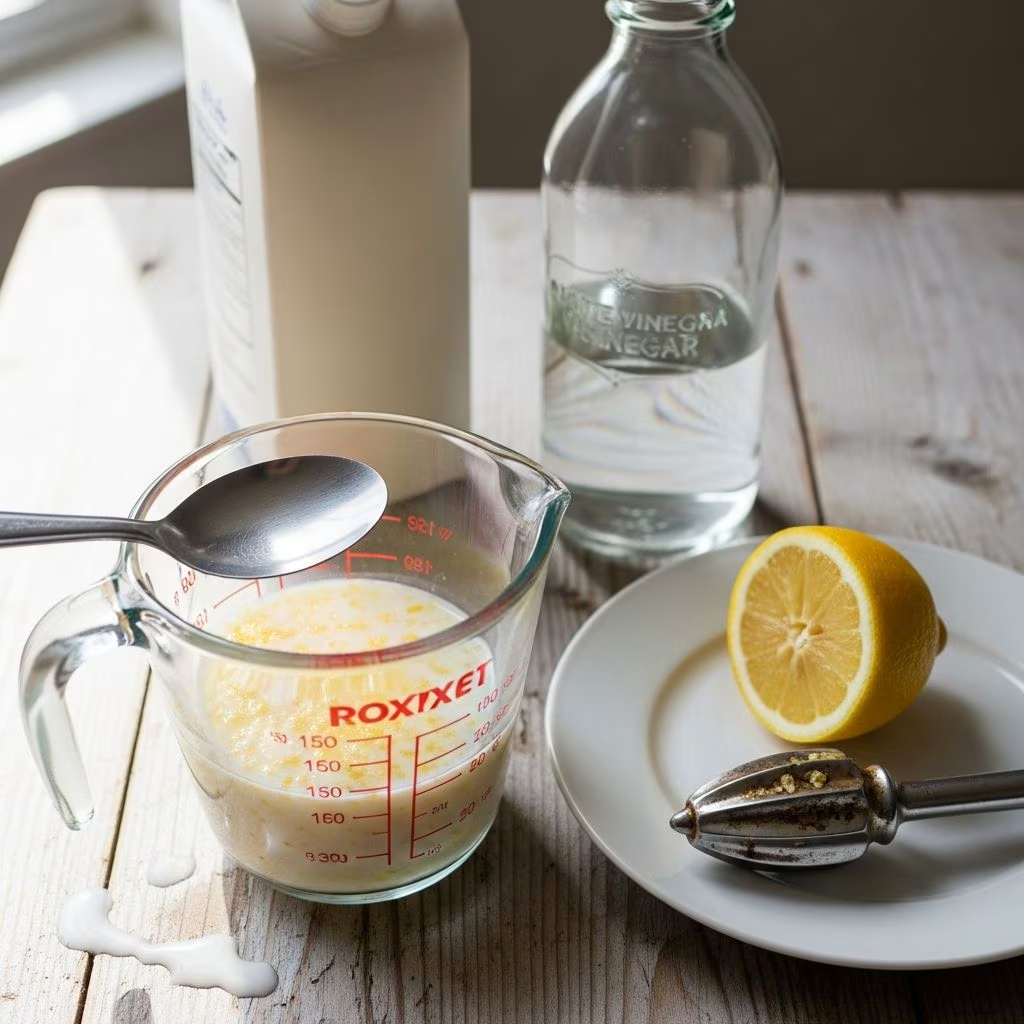
- Acid Component: White distilled vinegar or fresh lemon juice serve as your acidifying agents. Both options deliver comparable results, and your choice largely depends on which ingredient is already stocked in your kitchen. The acid quantity remains consistent regardless of your selection.
Basic Preparation Steps
- Measure your chosen acidic ingredient into a liquid measuring cup, starting with the amount specified in your recipe ratio.
- Gradually pour milk into the same measuring cup until it reaches your desired buttermilk volume.
- Stir the mixture thoroughly to combine the components.
- Allow the mixture to rest for 5-10 minutes before incorporating it into your recipe. During this time, the milk will thicken slightly and may develop a curdled appearance—this indicates the process is working correctly.
Recipe Ratios for Common Quantities
Scaling your substitute to match recipe requirements is essential for consistent results. The following ratios maintain proper proportions across various measurements:
| Buttermilk Amount Needed | Acid Ingredient | Milk Amount |
|---|---|---|
| 1 cup | 1 tablespoon vinegar or lemon juice | Milk to reach 1-cup line |
| ¾ cup | 2¼ teaspoons vinegar or lemon juice | Milk to reach ¾-cup line |
| ⅔ cup | 2 teaspoons vinegar or lemon juice | Milk to reach ⅔-cup line |
| ½ cup | 1½ teaspoons vinegar or lemon juice | Milk to reach ½-cup line |
| ¼ cup | ¾ teaspoon vinegar or lemon juice | Milk to reach ¼-cup line |
These proportions ensure your substitute delivers the necessary acidity and tang for chemical reactions within your batter or dough.
Alternative Substitution Methods
Greek Yogurt and Milk Combination
For recipes where buttermilk’s distinctive flavor profile matters most, combining Greek yogurt with milk offers superior taste complexity. The fermented quality of yogurt closely parallels buttermilk’s sourness, while blending it with milk achieves the proper consistency for seamless integration into recipes. Sour cream mixed with milk in equal proportions—such as ½ cup sour cream combined with ½ cup milk for a 1-cup substitute—also produces excellent results, particularly in cake recipes.
Cream of Tartar Alternative
If vinegar or lemon juice aren’t available, cream of tartar provides another acidifying option. Combine 1¾ teaspoons of cream of tartar with 1 cup of milk, shaking vigorously until the cream of tartar fully dissolves. This method works particularly well when you need the buttermilk substitute for more nuanced baking applications.
Kefir as a Direct Replacement
Kefir, a fermented dairy beverage with probiotic properties, functions as a one-to-one buttermilk replacement. Its tangy flavor and appropriate consistency make it an excellent choice if available in your refrigerator. Many professional pastry chefs favor this substitution when they have access to kefir.
Dairy-Free and Vegan Alternatives
Plant-based cooks can successfully create buttermilk substitutes using non-dairy milk options. The technique remains identical to the traditional method: add one tablespoon of vinegar or lemon juice to a measuring cup, then fill the remainder with coconut milk or soy milk to reach your target volume. Allow this mixture to rest for approximately five minutes before using it in your recipe. The result delivers the necessary acidity and consistency for baking applications while maintaining completely plant-based ingredients.
When to Use Substitutes Versus When to Shop
Buttermilk substitutes perform excellently in recipes calling for smaller quantities. If your recipe requires only ¼ cup of buttermilk, even using plain milk may yield satisfactory results without any substitute preparation. However, for recipes heavily dependent on buttermilk’s flavor contribution—such as traditional biscuits, buttermilk pancakes, or dishes where the tang is a starring ingredient—a properly prepared substitute ensures you achieve the intended taste and texture profile.
Additionally, the amount of time you’re willing to invest matters. Acid-and-milk substitutes require 5-10 minutes of resting time before use, so plan your preparation accordingly. If you’re in a time crunch, having actual buttermilk on hand eliminates this waiting period.
Troubleshooting Common Substitution Challenges
The Mixture Looks Curdled—Is This Normal?
Yes, slight curdling and visible separation in your substitute is completely expected and indicates the acid has properly reacted with the milk proteins. This texture change mirrors what occurs in actual buttermilk and won’t negatively affect your final baked product.
Consistency Concerns
If your substitute seems too thin compared to store-bought buttermilk, remember that using whole milk rather than lower-fat varieties produces a thicker final product. For future batches, switch to whole milk if available for improved consistency and creamier texture.
Flavor Variations
Some cooks wonder whether they’ll taste the vinegar or lemon juice in their finished baked goods. Rest assured, these acidic ingredients won’t create noticeable flavors in the final product. The subtle tanginess enhances overall flavor complexity without making your baked item taste like vinegar or lemon.
Tips for Success
- Use eye-level measurement: When filling your measuring cup with milk, position it at eye level to ensure accurate volume and proper substitute consistency.
- Stir thoroughly: Mix your acid and milk well to ensure even distribution and consistent results throughout your recipe.
- Don’t skip the resting period: While some recipes might seem to work without the 5-10 minute wait, allowing time for the mixture to properly thicken and curdle optimizes your results.
- Choose your acid based on availability: Unless a specific recipe requests one option, select whichever acidic ingredient you currently have in your pantry.
- Keep whole milk on hand: For the most convincing buttermilk substitute texture, maintaining whole milk in your refrigerator provides better results than skim or reduced-fat varieties.
Frequently Asked Questions
Can I Make Buttermilk Substitutes in Advance?
While you can technically prepare the mixture ahead of time, it’s best used within a few hours for optimal results. The acid-milk interaction is most effective when freshly prepared, and extended storage may allow the mixture to separate or lose some potency.
Does the Type of Vinegar Matter?
White distilled vinegar is the recommended choice for buttermilk substitutes. Other vinegar types like apple cider or red wine vinegar may impart unwanted flavors that could affect your final dish, so stick with distilled white vinegar unless your recipe specifically calls for alternatives.
Which Substitute Tastes Most Like Actual Buttermilk?
For recipes where buttermilk’s distinctive tangy flavor is crucial, Greek yogurt combined with milk provides the closest taste match. Kefir offers another excellent option that professionals prefer when available.
Can I Use This Substitute in All Recipes?
The acid-and-milk substitute works reliably in most recipes, though it performs particularly well in applications with smaller buttermilk quantities. Recipes with ½ cup or less buttermilk especially benefit from substitution methods, as the buttermilk’s role is less dominant in the overall flavor and texture profile.
Is Non-Dairy Milk Equally Effective?
Yes, non-dairy milk options like coconut or soy milk work just as effectively as dairy milk when combined with vinegar or lemon juice. This makes buttermilk substitutes accessible to those following vegan or dairy-free diets without compromising recipe outcomes.
Conclusion: Empowering Your Kitchen Creativity
Understanding how to create buttermilk substitutes transforms your approach to baking and cooking. Rather than abandoning recipes due to missing ingredients, you can confidently substitute with items already in your kitchen. Whether you choose the quick acid-and-milk method, opt for yogurt-based alternatives, or explore dairy-free options, these techniques ensure your recipes turn out beautifully. The next time you discover mid-recipe that you lack buttermilk, you’ll know exactly which substitute to reach for and how to prepare it effectively.
References
- Kitchen Tips: Buttermilk Substitute — Sugar Spun Run. Accessed 2026-04-09. https://sugarspunrun.com/easy-buttermilk-substitute/
- How to substitute for buttermilk — King Arthur Baking Company. 2019-01-28. https://www.kingarthurbaking.com/blog/2019/01/28/buttermilk-substitute
- How to make Buttermilk — Tastes Better From Scratch. Accessed 2026-04-09. https://tastesbetterfromscratch.com/how-to-make-buttermilk/
- Buttermilk Substitute (& When to Use It) — Sally’s Baking Addiction. Accessed 2026-04-09. https://sallysbakingaddiction.com/buttermilk-substitute/
- How to Make a Buttermilk Substitute — Southern Bite. Accessed 2026-04-09. https://southernbite.com/cooking-lesson-how-to-make-a-buttermilk-substitute/
- How to Make Buttermilk — Preppy Kitchen. Accessed 2026-04-09. https://preppykitchen.com/how-to-make-buttermilk/