Creating homemade donuts doesn’t require hours of preparation, specialized equipment, or advanced baking skills. By utilizing refrigerated biscuit dough as your base ingredient, you can have freshly fried donuts on your table in approximately twenty minutes. This approach bypasses the traditional yeast fermentation process while delivering the fluffy texture and indulgent taste that make donuts so beloved.
Why Biscuit Dough Makes an Excellent Donut Foundation
Refrigerated biscuit dough serves as an ideal shortcut for donut preparation because it already contains the necessary fat content and leavening agents that create the characteristic fluffiness. When deep-fried, these biscuits develop a golden exterior while maintaining a tender, pillowy interior. The existing layers within quality biscuit doughs provide a complexity of texture that rivals traditional yeast-based donuts, with the added benefit of requiring no waiting time for dough to rise.
The versatility of this approach extends beyond simple preparation—biscuit donuts can be customized with various coatings, glazes, and fillings to suit different taste preferences. Whether you prefer classic cinnamon sugar, elegant glazes, or creative chocolate toppings, the neutral flavor profile of biscuit dough serves as a perfect canvas for your favorite flavor combinations.
Essential Equipment and Ingredients
What You’ll Need in Your Kitchen
Before beginning, gather the following equipment to ensure a smooth preparation process:
- Deep cooking vessel such as a Dutch oven or large sauce pot
- Cooking thermometer for monitoring oil temperature
- Small biscuit cutter or similar tool for creating center holes
- Slotted spoon or spider strainer for retrieving donuts from hot oil
- Paper towels and cooling rack for draining excess oil
- Shallow bowls for coating mixtures
Core Ingredients
The fundamental shopping list requires surprisingly few components:
- Refrigerated biscuit dough: One standard can provides eight full-sized donuts plus eight donut holes
- Cooking oil: Canola, vegetable, or peanut oil works effectively for frying
- Granulated sugar: The foundational coating ingredient
- Optional flavorings: Cinnamon, vanilla extract, powdered sugar, and water for glazes
Step-by-Step Preparation Method
Preparing Your Frying Station
Begin by pouring approximately one quart of your chosen cooking oil into your deep vessel. The amount should be sufficient to completely submerge the donuts while allowing at least two inches of space from the rim to prevent overflow during cooking. Insert your thermometer and heat the oil to precisely 375 degrees Fahrenheit. This temperature is critical—oil that is too cool will produce greasy, dense donuts, while excessively hot oil will brown the exterior before the interior cooks through.
While the oil heats, prepare your workspace with paper towels lining a plate or cooling rack. This setup will be essential for removing excess oil immediately after frying.
Preparing the Biscuit Dough
Remove your refrigerated biscuit dough from its packaging and carefully separate each individual biscuit according to the package instructions. Working with one biscuit at a time, gently flatten it slightly between your palms to create a uniform disk approximately one-quarter inch thick.
Using your biscuit cutter or a similar circular tool, punch a hole through the center of each biscuit. This creates both the signature donut shape and individual donut holes. Gently roll the removed dough pieces into small balls—these will fry into delightful bite-sized treats that disappear almost immediately.
The Frying Process
Carefully place two prepared donuts into the preheated oil, being cautious to avoid splashing. They should sink initially then float within thirty seconds as they begin cooking. Fry for approximately one to two minutes until the underside achieves a medium golden brown color. Using your slotted spoon, gently flip each donut and repeat the process on the other side.
Total frying time per batch is typically one to three minutes depending on your specific oil temperature and the thickness of your biscuits. The donuts should emerge a uniform golden brown without any pale or overly dark areas. Transfer immediately to your prepared cooling station.
Continue this process with remaining donuts and holes in small batches, maintaining your oil temperature throughout. Fry the donut holes for slightly less time—approximately forty-five seconds to one minute per side—as their smaller size allows faster cooking.
Coating and Topping Variations
Classic Cinnamon Sugar Coating
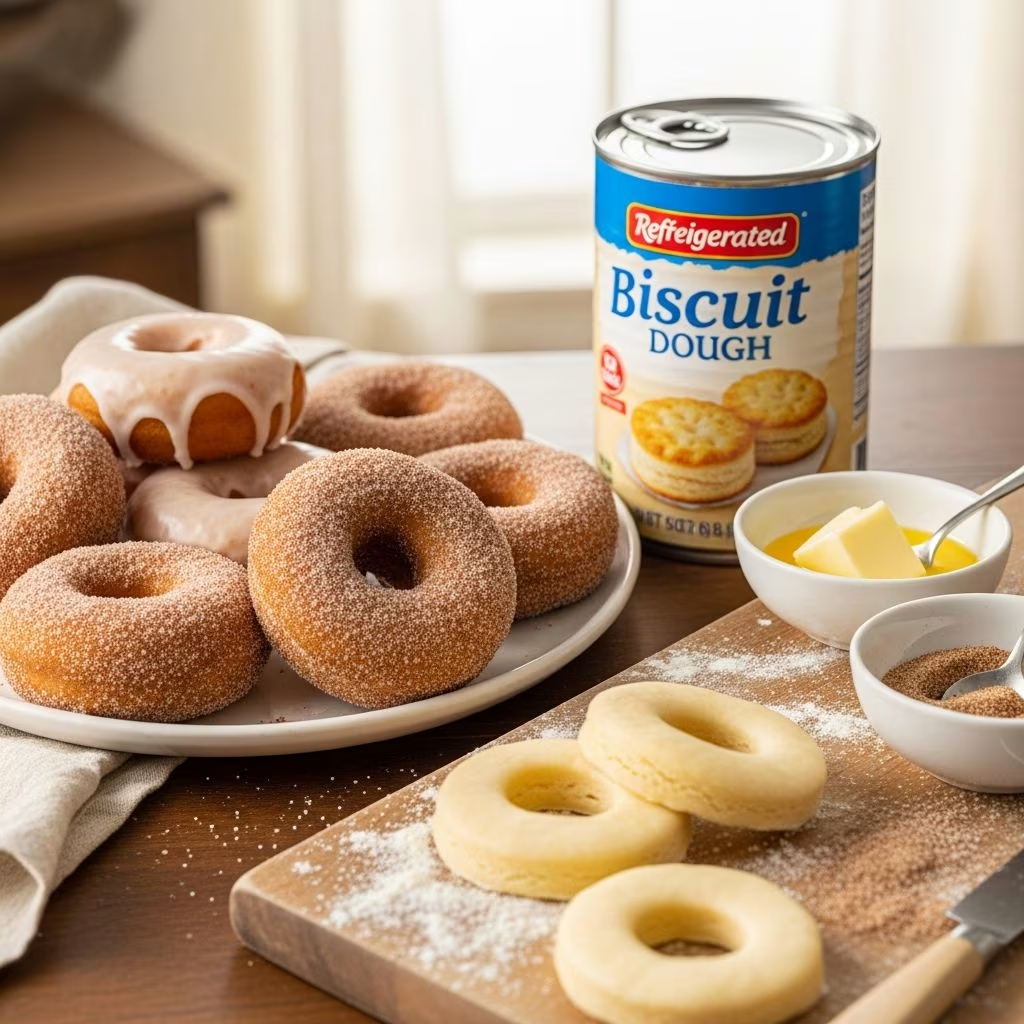
The most straightforward topping combines simplicity with universal appeal. Mix together one-half cup of granulated sugar with one and one-half teaspoons of ground cinnamon in a shallow bowl. While your freshly fried donuts are still warm, brush each with melted butter and immediately roll in the cinnamon sugar mixture until fully coated. The warmth of the donuts helps the coating adhere while the butter provides richness that complements the spice.
Homemade Glaze Application
For a more sophisticated presentation, create a glaze by combining two cups of powdered sugar with one and one-half teaspoons of vanilla extract and three to four tablespoons of hot water. Mix these ingredients together until you achieve a smooth consistency thick enough to coat the back of a spoon yet fluid enough to drip slightly. The ratio of water to powdered sugar determines your final consistency—add liquid gradually until reaching your desired thickness.
Immediately dip each warm donut into the glaze, allowing excess to drip off briefly before placing on your cooling rack. If desired, add sprinkles, chopped nuts, or additional toppings while the glaze remains tacky. The glaze will set as it cools, creating an attractive crackling texture.
Alternative Coating Options
Creative cooks can experiment with numerous variations:
- Chocolate glaze: Combine powdered sugar, cocoa powder, and milk to desired consistency
- Maple coating: Mix maple syrup with powdered sugar for a subtle autumn flavor
- Coconut topping: Roll warm, buttered donuts in shredded coconut
- Honey drizzle: Warm honey and brush over cooled donuts for a glossy finish
- Powdered sugar dusting: The simplest option provides classic donut shop appearance
Cooking Method Alternatives
Air Fryer Preparation
For those preferring a lower-fat option, an air fryer provides excellent results. Prepare your biscuits using the same cutting method, then arrange them in a single layer in your air fryer basket without overlapping. Set the temperature to 375 degrees Fahrenheit and cook for approximately eight to ten minutes, shaking the basket halfway through cooking. The resulting donuts will be slightly less crispy than their deep-fried counterparts but remain tender and delicious with significantly reduced oil absorption.
Oven Baking Method
A more health-conscious approach involves baking rather than frying. Preheat your oven to 375 degrees Fahrenheit and prepare a baking sheet with parchment paper or non-stick spray. Arrange your prepared biscuit donuts in a single layer and bake for approximately twelve minutes until they achieve light golden coloring. Brush with melted butter and apply your preferred coating while warm. Baked donuts will have a different texture—more cake-like than traditional fried versions—but provide a lighter alternative.
Troubleshooting Common Issues
Oil Temperature Problems
If your donuts emerge greasy and dense, your oil temperature was likely too low. Allow the oil to reach the full 375-degree target before proceeding. Conversely, if the exterior browns too quickly while the interior remains pale, your oil has become too hot—reduce heat and allow temperature to decrease slightly before continuing.
Uneven Browning
Should your donuts brown inconsistently, consider whether you’re flipping them at exactly the right moment. The first side should fry for one to two minutes until golden before flipping. If one side appears darker than the other, your oil temperature may be uneven across your vessel—try rotating your position in the pot when frying subsequent batches.
Coating Adhesion Issues
Coatings adhere best to warm donuts, so apply your toppings immediately after removing from oil. If your donuts have cooled significantly, lightly brush with butter before rolling in dry ingredients or dipping in glaze to improve adherence.
Storage and Make-Ahead Strategies
Freshly prepared biscuit donuts taste best consumed within a few hours of preparation, though they remain acceptable for up to one day when stored in an airtight container at room temperature. For longer storage, refrigerate for up to three days or freeze for up to one month. Reheat frozen donuts in a 300-degree oven for five to ten minutes until warmed through.
If preparing donuts for an event, you can prepare the uncooked biscuits in advance—separate and cut them several hours before frying, keeping them refrigerated until you’re ready to cook. This advance preparation allows you to minimize last-minute work while ensuring maximum freshness.
Frequently Asked Questions
What type of biscuit dough works best?
While various brands of refrigerated biscuit dough can be used, buttermilk and flaky varieties tend to produce superior results with better texture development during frying. Grands-style biscuits yield especially fluffy donuts.
Can I use homemade biscuit dough?
Yes, though the convenience advantage disappears. Homemade biscuit dough can be substituted using a standard recipe, but you lose the primary benefit of this quick-preparation method.
How do I know when the oil is ready?
An instant-read cooking thermometer provides the most accurate measurement at 375 degrees Fahrenheit. Alternatively, test by placing a small piece of biscuit dough in the oil—it should sizzle immediately and float within thirty seconds.
Why are my donuts dense?
Density typically results from insufficient oil temperature or frying too many donuts simultaneously, which drops the oil temperature significantly. Maintain temperature and fry in small batches.
Can I make these without frying?
Yes—baking at 375 degrees for twelve minutes or using an air fryer at the same temperature produces acceptable alternatives, though texture differs from traditional fried donuts.
Tips for Perfect Results Every Time
- Keep your thermometer visible throughout cooking and monitor temperature after each batch
- Don’t overcrowd your frying vessel—cook in small batches to maintain oil temperature
- Pat donuts dry with paper towels immediately after frying to remove excess oil
- Apply coatings while donuts are still warm for best flavor and texture absorption
- Use quality cooking oil—it significantly impacts final flavor
- Prepare all ingredients and equipment before beginning to minimize stress
- Engage family members in the coating and decoration process for added fun
Why This Method Deserves a Place in Your Kitchen Routine
Creating donuts from refrigerated biscuit dough represents the intersection of convenience and indulgence. You gain homemade donuts with minimal skill development while investing only twenty minutes from start to finish. The recipe scales effortlessly for small family treats or larger gatherings—simply purchase additional cans of biscuits as needed.
This approach proves especially valuable when entertaining guests or satisfying sudden cravings for freshly fried treats without the elaborate planning traditional donut-making requires. Children enthusiastically participate in the preparation, and the surprising ease delights first-time makers.
Whether you’re seeking a quick dessert solution, a fun family cooking activity, or an impressive homemade gift, biscuit donuts deliver satisfaction without demanding advanced baking knowledge or rare ingredients.
References
- Biscuit Donut Recipe — Table for Two Blog by Julie Chiou. Accessed April 2026. https://www.tablefortwoblog.com/sugared-donut/
- Homemade Glazed Biscuit Donuts Recipe — Sprinkle Some Sugar. Accessed April 2026. https://www.sprinklesomesugar.com/best-easiest-glazed-donuts/
- Homemade Biscuit Donuts (SO Quick + Easy!) — Lil’ Luna. Accessed April 2026. https://lilluna.com/homemade-biscuit-donuts/
- Cinnamon Sugar Biscuit Donut Holes — The Creative Bite. Accessed April 2026. https://www.thecreativebite.com/cinnamon-sugar-biscuit-donut-holes/
- How to Make Canned Biscuit Donuts — The Southern Lady Cooks. Accessed April 2026. https://thesouthernladycooks.com/how-to-make-canned-biscuit-donuts/
- Easy Canned Biscuit Donuts — Kitchen Fun With My 3 Sons. Accessed April 2026. https://kitchenfunwithmy3sons.com/easy-canned-biscuit-donuts/