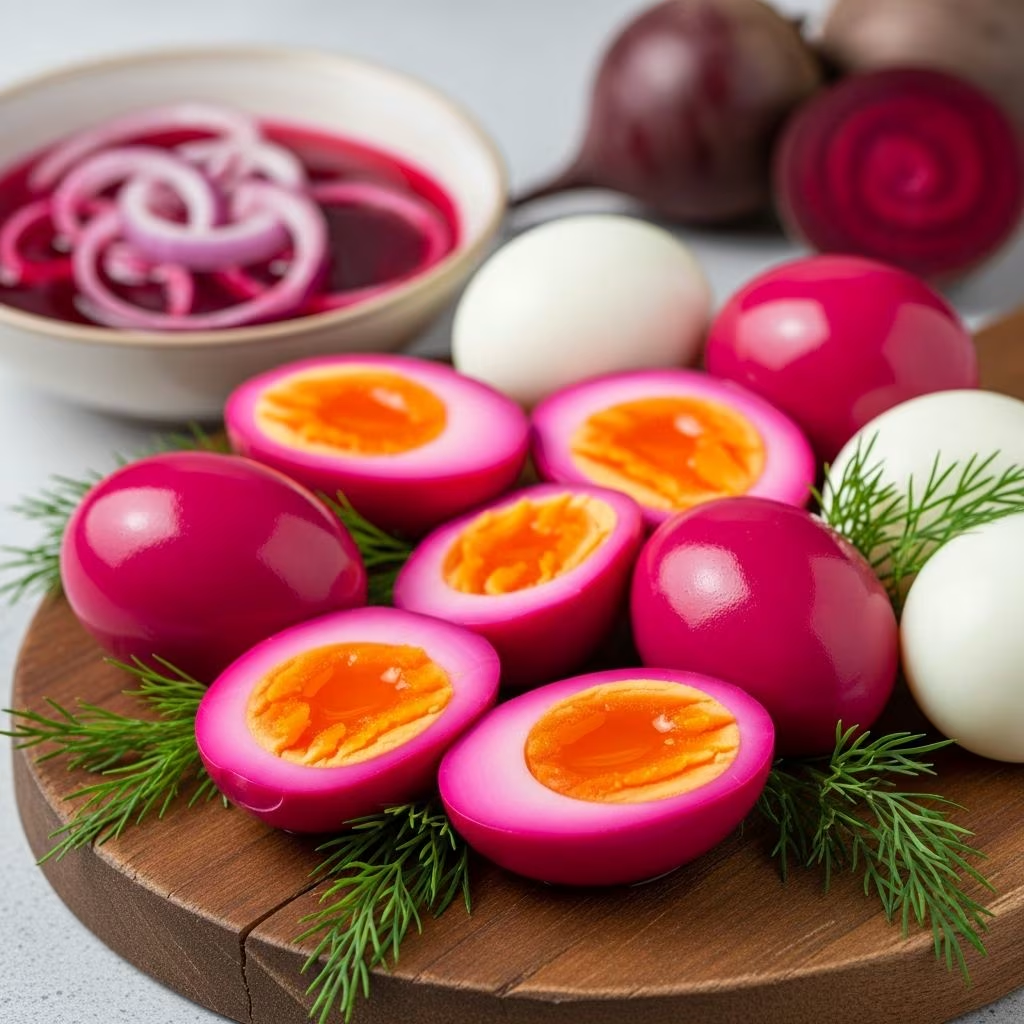
Beet pickled eggs offer a striking pink hue and a balance of sweet, tangy flavors that make them irresistible as a snack or side dish. This no-canning-required method uses everyday ingredients for quick preparation and refrigeration storage.
The Allure of Pickled Eggs with Beets
These treats trace back to traditional preservation techniques, popular in Amish and Pennsylvania Dutch communities, where hard-boiled eggs absorb the earthy sweetness of beets and the sharpness of vinegar. The result is a versatile food that enhances salads, sandwiches, or charcuterie boards with its vivid color and bold taste.
Beyond aesthetics, the pickling process infuses eggs with probiotics from vinegar, supporting gut health when consumed moderately. Their low-calorie profile—around 70-80 calories per egg—makes them a keto-friendly option for those watching carbs.
Essential Ingredients for Success
Gather these basics to yield about 12 pickled eggs, scalable as needed:
- 12 large eggs, hard-boiled and peeled
- 1 can (15-16 oz) sliced or whole beets with juice (or 2 fresh medium beets, cooked and sliced)
- 1 cup apple cider vinegar or white vinegar
- 1/2 to 3/4 cup granulated sugar (adjust for sweetness)
- 1/2 cup water (if using fresh beets)
- 1/2 teaspoon salt
- Optional: 1/2 white onion, thinly sliced; 2-4 garlic cloves, crushed; whole cloves or cinnamon stick for spice
Canned beets simplify the process by providing ready juice for the brine, while fresh ones add a deeper beet flavor. Choose organic vinegar for a cleaner taste.
Step-by-Step Preparation Guide
- Boil and Peel Eggs: Place eggs in a saucepan, cover with cold water, bring to a boil, then simmer 9-12 minutes. Transfer to ice water for easy peeling.
- Prepare Brine: In a saucepan, combine beet juice (from can), vinegar, sugar, salt, and water if needed. Heat over medium until sugar dissolves fully, about 5 minutes. Avoid boiling to preserve flavors.
- Assemble Jar: In a 1-quart wide-mouth mason jar, layer peeled eggs, drained beets, onion slices, and garlic if using. Pour warm brine over to submerge everything.
- Pickle and Store: Seal jar, cool to room temperature, then refrigerate. Wait 24-72 hours for optimal color and flavor penetration—the longer, the better.
These keep up to 3-4 weeks in the fridge, with eggs firming slightly over time.
Flavor Variations to Elevate Your Batch
Customize for different palates:
| Variation | Add-Ins | Flavor Profile |
|---|---|---|
| Spicy Kick | 1-2 sliced jalapeños or 1 tsp red pepper flakes | Heat balances sweetness |
| Herb-Infused | Fresh dill sprigs or celery seeds | Fresh, aromatic notes |
| Mustard Twist | 1-2 tsp Dijon mustard in brine | Tangy depth |
| Garlic Lover | 4-6 crushed cloves | Savory punch |
Experiment with beet varieties like golden beets for yellow eggs or chioggia for striped effects.
Perfect Pairings and Serving Ideas
Serve chilled straight from the jar with toothpicks for easy snacking, or slice for:
- Topping green salads with feta and nuts
- Accompaniment to grilled meats at barbecues
- Stuffing in deviled eggs for parties
- Layering in sandwiches with cream cheese and greens
Pair with sharp cheddar, rye bread, or creamy dips to contrast the tang.
Pro Tips for Flawless Results
- Even Coloring: Use room-temperature eggs and warm brine for uniform pink shade.
- Jar Choice: Glass quart jars prevent staining; avoid metal.
- Freshness Check: Eggs pickle best within days of boiling; discard if brine clouds or smells off.
- Scaling Up: Double ingredients for half-gallon jars, ideal for gatherings.
- Beet Juice Hack: Reserve extra for dyeing Easter eggs naturally.
For fresh beets: Roast wrapped in foil at 400°F for 45-60 minutes until tender, then peel and slice.
Nutrition at a Glance
Per serving (1 egg with beet slice):
| Nutrient | Amount | % Daily Value* |
|---|---|---|
| Calories | 90 | 5% |
| Protein | 6g | 12% |
| Carbs | 8g | 3% |
| Fat | 4g | 5% |
| Sodium | 150mg | 7% |