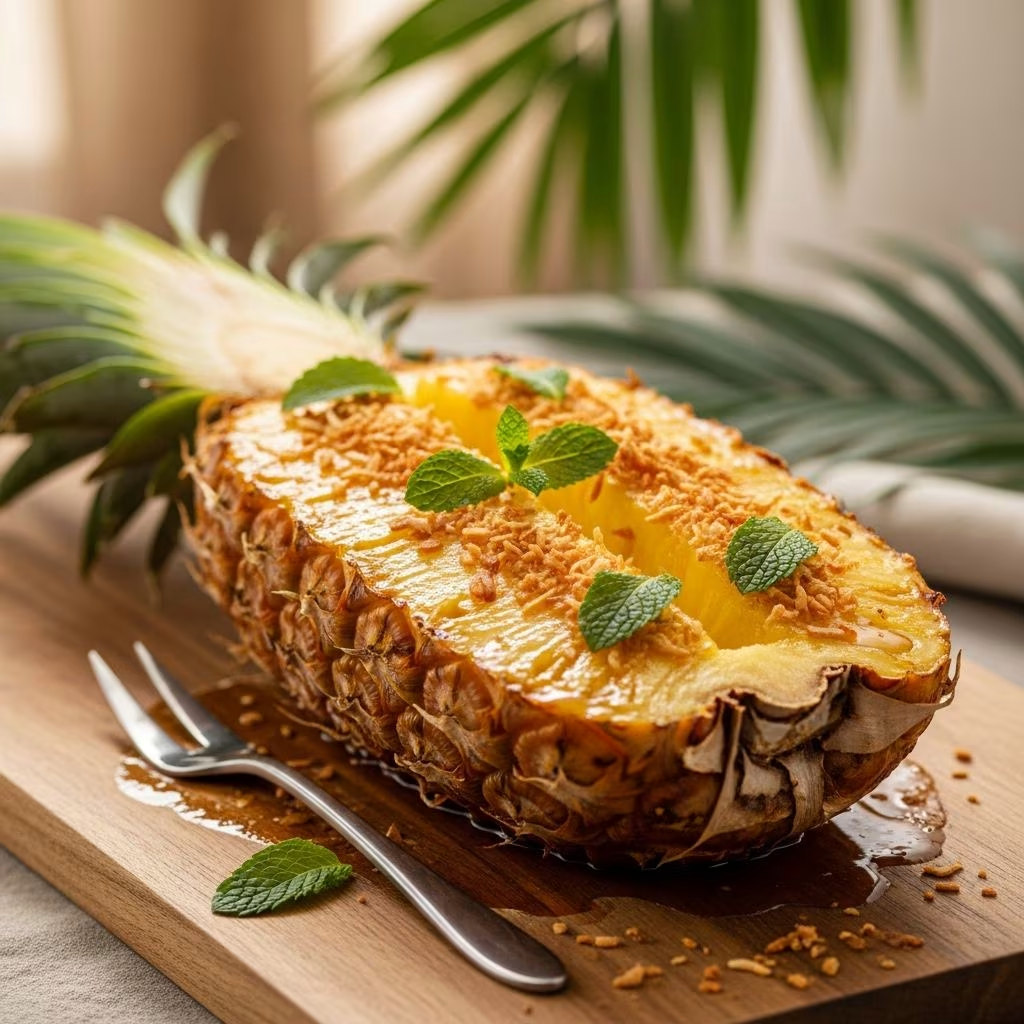
Baked pineapple represents one of the most versatile and approachable desserts in contemporary home cooking, offering a delightful balance of natural sweetness, textural complexity, and visual appeal. This tropical-inspired dish has transcended its origins to become a beloved staple across American households, particularly during festive gatherings and family celebrations. The beauty of this dessert lies in its simplicity—requiring only basic pantry ingredients and straightforward preparation techniques to achieve impressive results.
What makes baked pineapple particularly appealing is its adaptability. Whether served warm with vanilla ice cream, presented as a side dish at holiday dinners, or offered as an individual dessert course, this dish consistently delivers satisfaction. The caramelization process that occurs during baking transforms the pineapple’s natural sugars into a rich, complex flavor profile that belies the ease of preparation.
Understanding the Foundation: Essential Ingredients Explained
The core components of baked pineapple work together in harmony to create a dish that is greater than the sum of its parts. Understanding the role each ingredient plays will help you master variations and potentially adapt recipes to your preferences.
- Crushed Pineapple with Juice: This serves as the primary ingredient, providing moisture, natural sweetness, and the characteristic tropical flavor. The juice is crucial—it prevents the mixture from becoming dry and contributes to the baking process by creating steam within the dish.
- Sugar: Beyond sweetness, sugar plays a structural role in the dessert. During baking, it caramelizes at the edges and surface, creating a pleasant textural contrast and deeper flavor notes.
- Eggs: These proteins function as a binding agent, creating a custard-like consistency that distinguishes this dish from a simple fruit compote. Two large eggs provide sufficient binding without creating an overly dense result.
- Cornstarch: This thickening agent prevents the mixture from becoming too watery during baking. By absorbing excess liquid and creating a smooth, cohesive filling, cornstarch ensures proper texture development.
- Vanilla Extract: A small amount enhances flavor complexity, adding subtle aromatic notes that complement the tropical character of pineapple.
- Butter: Distributed across the top before baking, butter adds richness and develops golden-brown spots as it melts and mixes with the pineapple mixture.
- Cinnamon: This warm spice provides a subtle counterpoint to the sweetness, adding depth and aromatic warmth that elevates the overall flavor profile.
The Science Behind the Bake: What Happens in the Oven
Understanding the chemistry of baking helps explain why specific temperatures and times produce optimal results. When pineapple mixture reaches 350 degrees Fahrenheit, several transformations occur simultaneously.
The eggs begin to set, their proteins coagulating and creating structure for the dish. Simultaneously, the cornstarch granules absorb liquid and swell, thickening the mixture without creating a starchy taste. The sugars undergo caramelization, particularly at the edges where direct heat contact creates complex browning reactions that develop deeper, more sophisticated flavor notes than simple sweetness.
The butter melts and distributes throughout the top layer, creating richness and contributing to the browning process. Vanilla compounds become more volatile and aromatic as they heat, their flavors intensifying. The pineapple juice evaporates slightly, concentrating flavors while the fruit softens further. By the 45-minute mark, the mixture achieves a perfect balance between custard-like interior and caramelized edges.
Step-by-Step Preparation Process
Initial Setup and Pan Preparation
Begin by preheating your oven to 350 degrees Fahrenheit. This stage is non-negotiable—ensuring your oven reaches proper temperature before baking guarantees consistent results. While the oven heats, prepare your 9×9 inch baking pan by applying a light but thorough coating of grease or cooking spray. This seemingly minor step prevents sticking and ensures easy removal and serving of your finished dessert.
Ingredient Combination
In a large mixing bowl, combine your crushed pineapple (including all its juice), granulated sugar, eggs, cornstarch, and vanilla extract. The sequence of mixing matters less than thoroughness—stir vigorously until the mixture achieves complete homogeneity with no visible lumps of cornstarch remaining. This step ensures even distribution of thickening agent and prevents pockets of uncooked mixture in your finished dish.
Transfer and Topping
Pour your pineapple mixture into the prepared baking pan, distributing it evenly. The top layer receives special attention: distribute butter pats across the surface with enough spacing to allow them to melt and distribute naturally during baking. Finally, sprinkle ground cinnamon evenly across the entire top, aiming for consistent coverage that will provide flavor throughout rather than concentrated spots.
Baking and Completion
Place your prepared pan into the preheated oven and bake for 45 minutes. The dessert reaches doneness when the edges display a golden-brown hue, indicating proper caramelization and heat penetration throughout. Remove from the oven and allow to cool for 10-15 minutes before serving, which permits the mixture to set further and makes serving more manageable.
Ingredient Variations and Customizations
While the classic recipe provides excellent results, baked pineapple welcomes creative adaptations that maintain the integrity of the dish while adding personal touches.
| Variation | Ingredient Change | Effect on Flavor/Texture |
|---|---|---|
| Ritz Cracker Topping | Replace butter with crushed Ritz crackers mixed with melted butter | Adds savory contrast and crispy textural element |
| Brown Sugar Deepening | Use brown sugar instead of white sugar, or use a 50/50 blend | Creates more complex molasses notes and deeper color |
| Spice Complexity | Add nutmeg, allspice, or ginger alongside cinnamon | Develops warming, complex spice profile |
| Fresh Pineapple Alternative | Substitute fresh diced pineapple for canned (use 2 cups plus 1/4 cup juice) | Provides fresher taste, firmer texture, brighter flavor |
| Cheese Integration | Add 1 cup shredded sharp cheddar or Swiss cheese to mixture | Creates sweet-savory complexity, richer mouthfeel |
Selecting the Perfect Pineapple Product
The quality of your pineapple ingredient significantly influences the final result. Canned crushed pineapple offers consistency, year-round availability, and the crucial juice component that keeps the dish moist during baking. When selecting canned pineapple, choose products packed in their own juice rather than heavy or light syrup, as these alternatives contain added sugars that may throw off the flavor balance.
Fresh pineapple provides a brighter, more vibrant taste and firmer texture, though it requires more preparation and may result in a slightly drier dish if juice is not specifically reserved. If using fresh pineapple, measure the juice component carefully—typically requiring about 1/4 cup of additional pineapple juice or a combination of pineapple juice and water to compensate for the moisture that canned varieties provide.
Serving Suggestions and Presentation Ideas
Baked pineapple demonstrates remarkable versatility in serving contexts. As a dessert, it shines when served warm with a generous scoop of vanilla ice cream, which creates a temperature and textural contrast that highlights both components. The coolness of ice cream against the warm, caramelized pineapple provides an experience greater than either element alone.
As a side dish, particularly during holiday meals, baked pineapple complements both traditional meat dishes and modern vegetarian options. Its natural sweetness bridges savory and sweet courses, providing a palate cleanser quality that sophisticated dinner planning appreciates.
Individual serving presentations elevate this humble dessert for special occasions—portion the baked pineapple into serving dishes while warm, top with ice cream, and garnish with a cinnamon stick or fresh mint for visual appeal.
Storage and Make-Ahead Strategies
Baked pineapple keeps remarkably well when properly stored. Refrigerate covered portions for up to four days, reheating gently in a 300-degree oven for 10-15 minutes before serving. This gentle reheating restores moisture and warmth without degrading texture or flavor.
For make-ahead convenience, prepare the pineapple mixture the day before, storing it covered in the refrigerator. When ready to bake, add the butter topping and cinnamon immediately before placing in the preheated oven. Baking time may increase by 5-10 minutes if the mixture begins cold rather than room temperature.
Troubleshooting Common Issues
Excessive Liquid in Finished Dish: This typically indicates insufficient cornstarch or oven temperature too low. Ensure you’re using the specified two tablespoons of cornstarch and verify oven temperature with a reliable thermometer. The baking process should reduce excess moisture—if liquid remains after 45 minutes, increase baking time by 5-10 minutes.
Overly Firm or Rubbery Texture: This suggests overcooking or too much cornstarch. Check oven temperature and baking time carefully. If this persists, reduce cornstarch to 1.5 tablespoons and monitor closely during final baking minutes.
Insufficient Browning at Edges: Increase oven temperature to 375 degrees Fahrenheit or extend baking time by 10 minutes. Ensure butter is distributed properly across the top to facilitate browning.
Lacks Depth of Flavor: Consider incorporating brown sugar, additional spices, or using fresh pineapple with its juice rather than canned varieties. A pinch of sea salt enhances overall flavor complexity without creating perceptible saltiness.
Nutritional Considerations and Dietary Adaptations
Baked pineapple provides natural fruit sugars and contains pineapple’s beneficial enzymes and vitamins. For those monitoring sugar intake, reducing the sugar by one-quarter cup and incorporating natural sweeteners like erythritol or monk fruit creates a lower-sugar version while maintaining satisfactory results.
This dish naturally contains eggs and dairy (butter), but accommodating dairy-free preferences is straightforward—substitute plant-based butter without significantly compromising final results. Egg-free versions require experimentation with alternatives like applesauce or commercial egg replacers, as eggs provide crucial structural components.
Seasonal Integration and Holiday Traditions
Baked pineapple has become synonymous with major holiday gatherings, particularly during Easter, Thanksgiving, and Christmas celebrations. Its tropical character provides welcome brightness during winter holidays, while its versatility allows pairing with diverse menu plans. Preparing this dish ahead demonstrates gracious hosting while freeing oven space for other items during busy cooking days.
Frequently Asked Questions
Can I use pineapple rings instead of crushed pineapple?
Yes, but drain the rings thoroughly and use approximately 2 cups of pieces. You’ll need to add 1/4 cup pineapple juice separately, as rings contain less liquid. The texture will be chunkier and less custard-like than the traditional version.
What is the best gluten-free option?
Cornstarch is naturally gluten-free and serves as your thickening agent in the traditional recipe. Ensure all other ingredients, particularly vanilla extract and any optional additions, are certified gluten-free if this is a dietary requirement.
How far in advance can I prepare this dish?
Prepare the mixture up to 24 hours ahead, storing it covered in the refrigerator. Add butter and cinnamon topping immediately before baking for best results, as butter can become saturated if sitting with the mixture too long.
What makes the edges caramelize?
The combination of direct oven heat, butter content, and sugar creates ideal conditions for Maillard reactions—the chemical process that produces browning and complex flavor development at higher temperatures.
Can this be made in different pan sizes?
Yes, though it affects baking time. An 8×8 pan will increase depth and require additional baking time (50-55 minutes). A 9×13 pan will decrease depth and reduce baking time (35-40 minutes). Adjust based on visual cues—golden edges indicate doneness regardless of pan size.
Conclusion: Mastering This Classic Dessert
Baked pineapple exemplifies how simple ingredients, combined with basic techniques and gentle heat, create memorable dishes. Its success depends less on advanced culinary skills and more on understanding ingredient interactions and respecting proper temperatures and timing. Whether you’re preparing this dessert for the first time or refining your technique through repeated preparation, this dish rewards attention to detail with consistently satisfying results that please diverse palates and occasions.
References
- Pineapple Bake Recipe — That Oven Feelin. Retrieved April 2026. https://thatovenfeeling.com/pineapple-bake/
- Pineapple Casserole | Recipe by Leigh Anne Wilkes — Your Home Based Mom. Retrieved April 2026. https://www.yourhomebasedmom.com/pineapple-casserole/
- Easy Baked Caramelized Pineapple Dessert Recipe — MidgetMomma. Retrieved April 2026. https://www.midgetmomma.com/bakedpineapple/
- Paula Deen Baked Pineapple Casserole Recipe — Feels Like Home. Retrieved April 2026. https://feelslikehomeblog.com/paula-deen-baked-pineapple-casserole/