Almond macaroons are timeless treats that combine a crisp exterior with a moist, chewy center, making them a favorite for tea times, holidays, and special occasions. Unlike their French counterparts filled with ganache, these Italian-inspired cookies rely on the pure essence of almonds for their flavor. With just a handful of pantry staples, you can create bakery-quality results in your own kitchen. This comprehensive guide walks you through every aspect of crafting these delightful confections, from selecting the best ingredients to achieving that signature texture.
Why Almond Macaroons Stand Out in Baking
These cookies have a rich history rooted in European traditions, particularly Italian amaretti, which date back centuries. Their naturally gluten-free nature makes them accessible to a wide audience, including those with dietary restrictions. The magic lies in the balance of ground almonds, sugar, and egg whites, which create a batter that bakes into lightly golden domes. Bakers love them for their simplicity—no fancy equipment required—yet they impress with sophisticated flavor.
Nutritionally, almond macaroons offer a boost from almonds’ healthy fats, protein, and vitamins like vitamin E. A typical cookie provides around 80-100 calories, making them a satisfying yet indulgent snack. Their versatility allows for endless customizations, from dipping in chocolate to infusing with citrus zest.
Essential Ingredients for Success
Gathering high-quality components is the foundation of great macaroons. Here’s what you’ll need for about 30 cookies:
- Ground almonds (almond flour or meal): 2 cups (200g) – Finely ground for smoothness; blanched preferred to avoid brown flecks.
- Granulated sugar: 1 ½ cups (300g) – Provides structure and sweetness.
- Egg whites: 3 large (about 100g) – Room temperature for better volume.
- Almond extract: 1 tsp – Amplifies nutty notes; vanilla can substitute.
- Powdered sugar: ¼ cup (for dusting) – Optional for finishing touch.
- Salt: Pinch – Enhances flavors.
Pro Tip: Use superfine or caster sugar if available for faster dissolving. Fresh egg whites are crucial; avoid carton versions for optimal whip.
Step-by-Step Baking Instructions
Preparation time: 15 minutes | Baking time: 20 minutes | Total: 35 minutes
- Preheat oven: Set to 325°F (160°C). Line two baking sheets with parchment paper or silicone mats to prevent sticking.
- Whip egg whites: In a clean, grease-free bowl, beat egg whites and salt with an electric mixer on medium until foamy. Gradually add granulated sugar, 1 tbsp at a time, beating until stiff, glossy peaks form (about 8-10 minutes). Rub a bit between fingers; it should feel smooth, not gritty.
- Fold in dry ingredients: Gently mix ground almonds and almond extract into the meringue using a spatula. Fold until no dry streaks remain but don’t overmix—batter should flow like thick lava.
- Pipe or spoon batter: Transfer to a piping bag with a plain tip (or use two spoons). Pipe 1.5-inch mounds, 1 inch apart. Tap trays firmly on counter 3-4 times to release air bubbles; smooth peaks with a wet finger.
- Bake: Rotate trays halfway through for even baking. Cookies are done when tops crack lightly and edges are golden (18-22 minutes). Cool completely on trays—they firm up as they cool.
- Store: Once cool, dust with powdered sugar. Keep in an airtight container for up to a week.
Mastering the Ideal Texture
The hallmark of perfect almond macaroons is a crunchy shell giving way to a chewy interior. Achieving this requires precision in whipping and folding. Underwhipped whites lead to flat cookies; overfolding deflates the batter, causing spread. Test readiness by lifting a cookie—if it releases cleanly from parchment, it’s spot on.
| Texture Issue | Cause | Solution |
|---|---|---|
| Cracked tops | Oven too hot or batter too wet | Lower temp to 300°F; ensure proper folding |
| Sticky bottoms | Undercooked or humid environment | Bake 2-3 mins longer; use cornstarch dusting |
| Grainy surface | Sugar not dissolved | Beat meringue longer; use superfine sugar |
| Flat cookies | Deflated batter | Fold minimally; use room-temp whites |
Flavor Variations to Elevate Your Macaroons
While classic almond shines, experiment safely:
- Chocolate-Dipped: Melt dark chocolate and dip cooled cookies halfway. Chill to set.
- Citrus Twist: Add 1 tsp lemon or orange zest to batter for brightness.
- Spiced: Incorporate ½ tsp cinnamon or cardamom with almonds.
- Coconut Fusion: Mix in ½ cup shredded coconut for chewiness.
- Boozy: Brush with amaretto liqueur post-bake for adult indulgence.
These tweaks maintain the gluten-free integrity while adding excitement.
Gluten-Free and Dietary Adaptations
Almond macaroons are inherently gluten-free, but cross-contamination is a risk. Opt for certified almond flour. For nut allergies, substitute with pumpkin seed flour (adjust liquid). Vegan version: Use aquafaba (chickpea liquid) instead of egg whites—whip to stiff peaks similarly. Reduce sugar slightly for lower-carb options using erythritol.
Storage, Freezing, and Make-Ahead Strategies
Freshly baked macaroons are best within 2 days. Store in airtight tins at room temp; they soften over time, enhancing chew. Refrigerate up to 2 weeks in single layer, wrapped tightly. Freeze baked cookies (un-dusted) for 3 months: layer between parchment in freezer bags. Thaw at room temp. Batter can be piped and frozen on trays before baking—straight from freezer to oven.
Pairing Ideas for Serving Occasions
These cookies pair beautifully with espresso, sherry, or dessert wines. Serve at Passover seders, Christmas cookie swaps, or bridal showers. Crumble over gelato for crunch or sandwich with jam for whoopie-like treats. For gifting, nestle in cellophane bags with ribbon.
Frequently Asked Questions (FAQs)
Can I use whole almonds instead of almond flour?
Yes, pulse blanched almonds in a food processor until fine, but sift to remove chunks for smooth texture.
Why do my macaroons spread?
Likely overmixed batter or warm oven. Chill piped batter 10 minutes before baking.
Are these the same as French macarons?
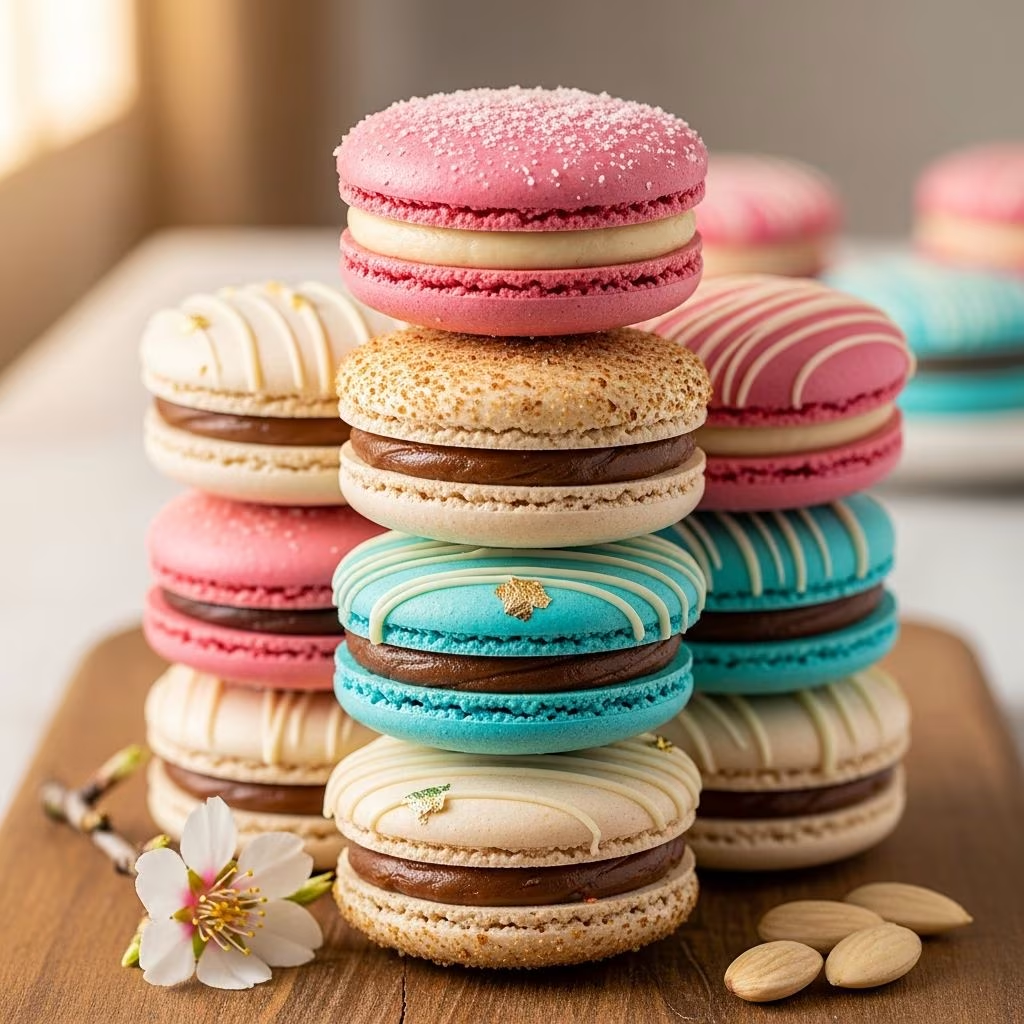
No—macaroons are simpler, single-layer cookies; macarons are sandwiched with filling.
How do I fix hollow centers?
Tap trays more vigorously pre-bake to pop larger bubbles; avoid overbeating whites.
Can I make smaller macaroons?
Absolutely—pipe teaspoon-sized for bite-sized versions; reduce bake time to 12-15 minutes.
Advanced Techniques for Pro Results
Invest in a kitchen scale for precision—grams beat cups for consistency. Age egg whites overnight in fridge for stability. For glossy tops, use a kitchen torch lightly post-bake. Experiment with double-baking: 10 minutes at 325°F, cool, then 5 more at 300°F for extra crispness.
Incorporate a small amount of cornstarch (1 tbsp) into dry ingredients for humidity resistance. Track your batches in a baking journal to refine over time.
References
- Amaretti Cookies (Italian Macaroons) — King Arthur Baking Company. 2024-05-15. https://www.kingarthurbaking.com/recipes/amaretti-cookies-italian-macaroons-recipe
- Almond Flour Nutrition Facts — USDA FoodData Central. 2023-10-01. https://fdc.nal.usda.gov/fdc-app.html#/food-details/170567/nutrients
- Gluten-Free Baking Basics — FDA Consumer Updates. 2025-01-20. https://www.fda.gov/food/buy-store-serve-safe-food/gluten-and-food-labeling
- Meringue Science for Perfect Cookies — Institute of Food Technologists. 2024-08-12. https://www.ift.org/news-and-publications/food-technology-magazine/issues/2024/august/columns/science-today-meringue-stability
- Historical Origins of Amaretti — BBC Good Food. 2023-11-05. https://www.bbcgoodfood.com/howto/guide/history-amaretti