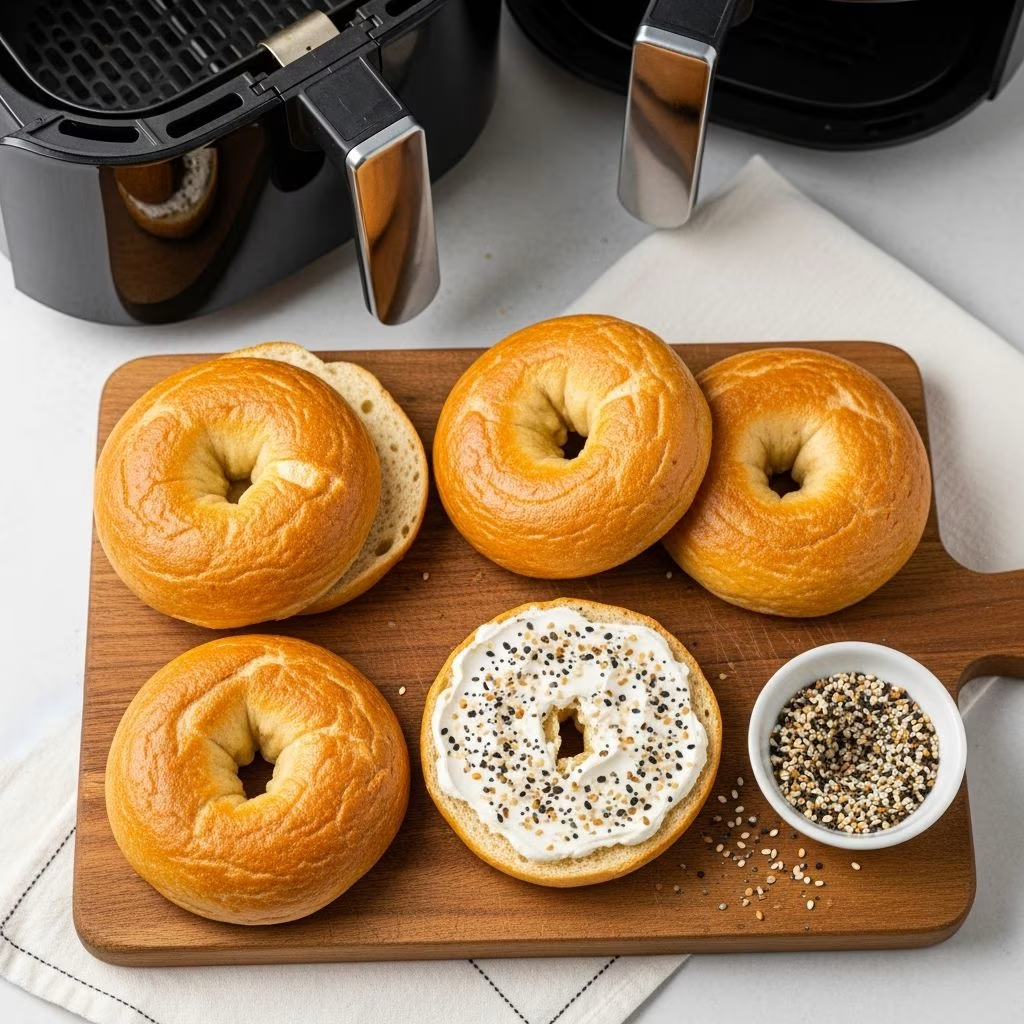
Making fresh bagels at home no longer requires special equipment, multiple ingredients, or hours of rising time. With just two pantry staples and an air fryer, you can create tender, satisfying bagels that rival those from specialty bakeries. This straightforward approach combines self-rising flour with Greek yogurt to produce a dough that requires minimal handling and delivers impressive results.
Why This Recipe Works So Well
The genius of this recipe lies in its simplicity and ingredient synergy. Self-rising flour already contains leavening agents—baking powder and salt—which means your dough rises during cooking without requiring yeast fermentation. Greek yogurt serves a dual purpose: it provides moisture to bind the flour into a cohesive dough while also adding protein and creating a tender crumb structure.
Unlike traditional bagel recipes that demand boiling water baths and extended resting periods, this method streamlines the entire process. The air fryer’s circulating heat cooks the bagels quickly and evenly, creating a lightly golden exterior while maintaining a chewy interior. For those seeking a nutritious breakfast or snack option, these bagels deliver approximately 5-6 grams of protein per serving, courtesy of the Greek yogurt component.
Essential Ingredients You’ll Need
Self-Rising Flour
This ingredient forms the foundation of your bagel dough. Self-rising flour is all-purpose flour that has been pre-mixed with baking powder and salt, eliminating the need to measure these components separately. When combined with moisture from the yogurt, it activates the leavening agents, allowing the dough to rise during cooking. If you cannot locate self-rising flour at your local grocery store, you can easily create a substitute by mixing one cup of all-purpose flour with 1.5 teaspoons of baking powder and 0.5 teaspoon of salt.
Greek Yogurt
The yogurt component is equally critical to recipe success. Use plain Greek yogurt—either full-fat or fat-free varieties work effectively, though thicker formulations produce superior dough consistency. The thick texture of Greek yogurt, as opposed to regular yogurt, ensures your dough achieves the proper moisture-to-flour ratio without becoming excessively wet. Popular brands like Fage are often recommended, but any high-quality plain Greek yogurt will deliver satisfactory results.
Optional Enhancements
While the two core ingredients are sufficient for functional bagels, several optional additions elevate flavor and appearance:
- Egg wash mixture (one egg white whisked with one tablespoon water) creates a glossy, golden-brown surface
- Melted butter brushed onto bagels before cooking contributes richness and color
- Bagel seasonings such as everything seasoning blends, sesame seeds, poppy seeds, or cinnamon sugar
- Specialty toppings including grated cheese, za’atar, or herb mixtures
Step-by-Step Preparation Method
Combining Your Base Ingredients
Begin by measuring one cup of self-rising flour and one cup of plain Greek yogurt into a large mixing bowl. Using a fork initially, blend these ingredients together, breaking down any flour clumps. The mixture will appear shaggy at first, but continue mixing until the dry ingredients are fully incorporated and a cohesive mass forms. Do not be alarmed if the dough appears slightly sticky at this stage—this is the desired consistency.
Developing the Dough Texture
Transfer your combined mixture onto a lightly floured work surface. Using your hands, knead the dough by pushing it away from you with the heel of your palm, folding it back over itself, and rotating it slightly. Repeat this kneading motion for approximately two to three minutes until the dough transforms from a rough, sticky mass into a smooth, elastic texture. If excessive stickiness persists, dust the dough with small amounts of additional flour. Conversely, if the dough becomes too dry and difficult to work with, incorporate additional yogurt one teaspoon at a time.
Portioning and Shaping
Once your dough achieves the desired consistency, divide it into equal portions. Most recipes yield four to eight individual bagels depending on your size preference. For standard-sized bagels, four portions work well, while eight portions create smaller versions. Weigh the dough if possible to ensure even distribution—this practice guarantees uniform cooking times and consistent results.
Take each portion and roll it between your palms into a rope shape approximately 4 to 6 inches in length. Connect the two ends of the rope by pressing them firmly together, creating the characteristic bagel ring shape. Ensure the hole in the center is proportional to the bagel size—too large and your bagel will separate during cooking, while too small limits expansion and creates an overly dense crumb.
Air Fryer Preparation
Preheat your air fryer to 350 degrees Fahrenheit (175 degrees Celsius) while you complete the shaping process. Line the air fryer basket with parchment paper or silicone baking mat to prevent sticking and simplify cleanup. If using parchment paper, ensure it lies flat on the basket bottom without extending above the sides, which could interfere with air circulation.
Coating and Topping
If desired, prepare your egg wash by whisking one egg white with one tablespoon of water in a small bowl. Using a pastry brush, apply this mixture to the top and sides of each bagel. The egg wash promotes browning and provides an adhesive surface for toppings. Alternatively, brush each bagel with melted butter for a simpler finishing option.
Sprinkle your chosen toppings generously over each bagel while the wet coating remains fresh. This timing ensures maximum adhesion. Popular choices include everything bagel seasoning for a savory option or cinnamon sugar for a sweeter version.
Cooking Process
Carefully place the prepared bagels into the preheated air fryer basket, positioning them so they do not touch one another. Depending on your air fryer’s size, you can likely fit two to four bagels per batch. Air fry at 350 degrees Fahrenheit for 8 to 15 minutes—cooking time varies based on your specific air fryer model and bagel size.
Monitor the bagels during the final few minutes of cooking to prevent over-browning. They are finished when the exterior displays a light golden-brown color, particularly around the sides and bottom edges. The bagels will feel slightly firm to the touch but should yield slightly when pressed.
Customization and Flavor Variations
Savory Bagel Options
Transform your basic bagels into savory creations by experimenting with different topping combinations. An everything bagel seasoning blend delivers a complex flavor profile combining garlic, onion, sesame, and poppy seeds. For Mediterranean-inspired bagels, try a combination of za’atar and nigella seeds. Cheese enthusiasts can sprinkle grated Parmesan, cheddar, or mozzarella before cooking, which will melt slightly during the air frying process.
Sweet Bagel Variations
The same basic dough accommodates sweet applications beautifully. Before adding toppings, brush your bagels with melted butter and generously coat with a cinnamon-sugar mixture. For more adventurous palates, try cardamom-infused sugar or a combination of cinnamon and nutmeg. A light drizzle of honey after cooking adds an elegant finishing touch.
Ingredient Substitutions
While the core recipe relies on self-rising flour and Greek yogurt, several substitutions can accommodate dietary restrictions or ingredient availability. Skyr yogurt—an Icelandic strained yogurt—produces results nearly identical to Greek yogurt with a slightly different nutritional profile. Non-dairy yogurt varieties such as coconut or soy yogurt work equally well, making this recipe accessible to those with dairy restrictions. For gluten-free preparation, substitute gluten-free self-rising flour with an appropriate 1:1 blend, though you may need to adjust liquid ratios slightly.
Storage and Make-Ahead Strategies
Refrigerator Storage
Cooked bagels maintain their quality when stored in an airtight container in your refrigerator for up to five days. To reheat, simply place a bagel in your air fryer at 350 degrees for 2-3 minutes, which restores the chewy texture without drying out the interior.
Freezer Storage
These bagels freeze exceptionally well for extended storage. Once completely cooled, place bagels in a freezer-safe bag or container, ensuring they are not stacked in ways that cause deformation. Frozen bagels maintain quality for up to three months. Reheat directly from frozen in your air fryer at 350 degrees for 4-5 minutes, or thaw at room temperature for approximately two hours before reheating.
Dough Make-Ahead
If you prefer to prepare the dough in advance, combine your ingredients and store the mixed dough in an airtight container in your refrigerator for up to two days. Before shaping, allow the dough to reach room temperature for approximately 20 minutes, which makes handling easier.
Troubleshooting Common Issues
Dough Too Sticky
If your dough remains excessively sticky after initial mixing and cannot be handled comfortably, add additional self-rising flour one tablespoon at a time while kneading. Avoid adding too much flour at once, as this can result in dense bagels. The dough should be tacky but not gummy.
Dough Too Dry
Conversely, if your dough appears crumbly and refuses to come together into a cohesive mass, incorporate additional yogurt one teaspoon at a time. Different flour brands absorb moisture differently, so minor adjustments are often necessary.
Uneven Browning
If bagels brown unevenly with some sides darker than others, rotate them halfway through cooking or ensure they are positioned with adequate space between them for proper air circulation. Some air fryer models have hotter zones than others, requiring minor positioning adjustments.
Dense or Gummy Interior
Dense bagels typically result from excessive kneading or dough that is too wet. Ensure you knead only until the dough achieves a smooth texture—over-working develops gluten unnecessarily. Additionally, verify that your yogurt measurement is precise and that you are using a thick-style Greek yogurt rather than regular yogurt.
Nutritional Benefits and Health Considerations
These bagels offer noteworthy nutritional advantages compared to many conventional bagel options. The Greek yogurt component contributes approximately 5-6 grams of protein per bagel, making these a more satiating breakfast choice. They are also notably lower in fat than traditional bagels, particularly when using fat-free Greek yogurt varieties. The absence of yeast eliminates fermentation time, potentially making these bagels easier to digest for some individuals.
The recipe is inherently simple, containing no artificial additives or preservatives—just basic, recognizable ingredients. For those managing dietary restrictions, the straightforward ingredient list facilitates easy modifications for gluten-free, dairy-free, or other specialized diets.
Frequently Asked Questions
Can I Make These Bagels Without an Air Fryer?
Yes, traditional ovens work effectively. Preheat to 375 degrees Fahrenheit and bake on a parchment-lined baking sheet for 15-18 minutes until golden brown. The exterior may not achieve quite the same texture as air-fried versions, but results are satisfactory.
How Many Bagels Does This Recipe Yield?
The recipe produces 4-8 bagels depending on desired size. Four portions create larger, traditional-sized bagels, while eight portions produce smaller versions suitable for quick breakfasts.
What Brand of Yogurt Produces the Best Results?
Any high-quality plain Greek yogurt works effectively. Fage, Chobani, and store-brand varieties have all been successfully used. The key is ensuring the yogurt is plain (not flavored) and thick in consistency.
How Do I Know When Bagels Are Fully Cooked?
Finished bagels display a light golden-brown exterior and feel firm when pressed, with only slight give. The interior should no longer feel wet or doughy.
Can I Use All-Purpose Flour Instead of Self-Rising?
Yes, substitute one cup self-rising flour with one cup all-purpose flour mixed with 1.5 teaspoons baking powder and 0.5 teaspoon salt.
References
- Greek Yogurt Nutritional Profile and Uses in Cooking — U.S. Department of Agriculture Food Data Central. Accessed 2026. https://fdc.nal.usda.gov/
- Self-Rising Flour Composition and Baking Science — King Arthur Baking Company. https://www.kingarthurbaking.com/
- Air Fryer Cooking Methods and Food Safety — U.S. Food and Drug Administration. https://www.fda.gov/
- Protein Content in Yogurt Products — National Dairy Council. https://www.nationaldairycouncil.org/
- Gluten-Free Baking Flour Substitution Guide — Celiac Disease Foundation. https://celiac.org/