When time is limited but your appetite for comfort food remains strong, a well-executed quick chili delivers both satisfaction and convenience. This particular approach to chili preparation demonstrates that achieving deep, complex flavors doesn’t require hours of simmering. By understanding the interplay between ingredient selection, cooking sequence, and flavor layering, home cooks can create a dish that rivals slow-cooked versions in taste while fitting neatly into a busy schedule.
The Foundation: Understanding Your Ingredients
Success in rapid chili preparation begins with thoughtful ingredient selection. The quality of each component directly influences the final result, particularly when cooking time is compressed. Rather than allowing flavors to meld over extended periods, strategic ingredient choices compensate for the abbreviated cooking process.
Selecting Ground Meat
Ground beef forms the protein backbone of traditional chili. For optimal results, choose meat with a fat content between 80/20 and 85/15 ratios. This balance provides sufficient fat for flavor development and browning while preventing excessive greasiness. The higher fat content also helps the meat break into finer crumbles, which distributes flavor more evenly throughout the pot. Alternative proteins work equally well—ground turkey, chicken, or pork can substitute for beef, offering different nutritional profiles while maintaining the dish’s essential character.
Aromatics and Flavor Builders
Onions and garlic serve as the aromatic foundation that transforms simple ingredients into something memorable. Fresh garlic cloves, either minced or pressed, provide sharper, more vibrant flavor than powdered alternatives. White or yellow onions both work effectively, though some cooks prefer white onions for their slightly milder profile. The typical ratio involves one large onion (approximately 250 grams when diced) combined with five to six garlic cloves per pound of ground meat.
Tomato Components
Tomatoes form the liquid and flavor base of chili. Using multiple tomato products—canned diced tomatoes, tomato sauce, and tomato paste—creates dimensional flavor and appropriate consistency. Fire-roasted varieties of canned tomatoes add subtle smokiness without requiring additional ingredients. Tomato paste concentrates tomato flavor significantly, so a little goes a considerable distance. This layering approach means the chili develops richness quickly despite minimal cooking time.
Spice Selection
The spice profile distinguishes chili from other ground beef dishes. Chili powder forms the primary seasoning, typically requiring two to two and a half teaspoons per pound of meat. Cumin provides earthy undertones that complement chili powder’s warmth. Ground cumin measures at approximately one teaspoon to two teaspoons per pound of meat, adjusted to personal preference. Additional spices like paprika, dried oregano, and optional chili flakes expand the flavor spectrum beyond the basic framework.
The Cooking Sequence: Technique Matters
The order in which ingredients enter the pot significantly impacts flavor development. This isn’t arbitrary—each step serves a specific purpose in building complexity within the compressed timeframe.
Beginning With Aromatics
The process starts by heating oil in a large pot over medium-high heat. Once the oil becomes fragrant and shimmers slightly, add the diced onions with a pinch of salt. This initial step, lasting three to five minutes, softens the onion while its natural sugars caramelize slightly. The salt helps break down cell walls, accelerating the softening process. After onions reach this stage, add minced garlic and cook for an additional minute. This brief window allows garlic’s flavor compounds to activate without burning—burnt garlic becomes acrid and unpleasant.
Browning the Meat
Transfer the ground meat into the pot with the softened aromatics. Break the meat into small chunks using a wooden spoon or spatula as it cooks, rather than leaving it in large clumps. This action increases surface area, promoting faster, more even browning. Browning typically requires five to seven minutes over medium-high heat. The goal isn’t just changing color—browning creates complex flavors through the Maillard reaction, where proteins and sugars interact at high temperatures to form new flavor compounds. Properly browned meat will show rich brown color throughout, not just on the exterior.
Spice Toasting
After the meat browns, reduce heat to medium and add the dry spices directly to the pot. Here’s a crucial step many home cooks skip: toast the spices for twenty to thirty seconds, stirring constantly. This brief heating releases volatile flavor compounds in the spices, intensifying their contribution to the final dish. Without this toasting step, spices taste more muted and generic.
Building the Liquid Base
Add the tomato products and any other liquids to the pot. Stir thoroughly, making sure to scrape the bottom of the pot where flavorful browned bits have accumulated. These browned bits, called fond, contain concentrated savory compounds that would otherwise be wasted. Bringing the mixture to a gentle simmer and maintaining it at that level—rather than a rolling boil—prevents excessive evaporation and allows flavors to meld more effectively. At a simmer, the liquid should show occasional bubbles breaking the surface, not vigorous rolling action.
Flavor Enhancement Strategies
Beyond basic ingredients, several techniques amplify the perception of slow-cooked depth within the abbreviated timeline.
Incorporating Umami Elements
Umami—the savory fifth taste—makes chili feel more substantial and satisfying. Hot sauce contributes umami while adding complexity; Frank’s RedHot or similar brands work well without overwhelming heat. Worcestershire sauce provides additional savory notes. Beef bouillon paste or stock adds meaty depth that simple broth cannot match. Even a small amount of these ingredients significantly enhances perceived cooking time and flavor development.
Acid and Sweet Balance
A splash of vinegar or lime juice brightens flavors and prevents chili from tasting heavy or monotonous. Cider vinegar pairs particularly well with chili’s warm spices. Conversely, a small amount of brown sugar balances acidity and enhances the natural sweetness of tomatoes and onions. This balance—not tasting obviously sweet or sour—creates complexity that tricks the palate into perceiving longer cooking times.
Bean Selection and Preparation
Canned beans offer convenience while eliminating cooking time required for dried varieties. Kidney beans, black beans, pinto beans, or cannellini beans all work, each contributing slightly different flavor profiles. Draining and rinsing canned beans removes excess sodium and the starchy liquid that can make chili taste gummy. Adding beans during the final stages of cooking preserves their texture—beans added too early become mushy.
Ingredient Comparison Table
| Ingredient Category | Primary Option | Amount (per lb meat) | Alternative Options |
|---|---|---|---|
| Ground Meat | Beef (80/20 ratio) | 1 pound | Ground turkey, chicken, pork, or lamb |
| Onion | Yellow or white onion | 1 medium onion | Red onion (sweeter profile) |
| Garlic | Fresh garlic cloves | 4-6 cloves | Garlic paste (though less flavorful) |
| Primary Spice | Chili powder | 2-2.5 teaspoons | Ancho or chipotle powder (smokier) |
| Supporting Spice | Ground cumin | 1-2 teaspoons | Whole cumin seeds (toasted and ground) |
| Tomato Base | Canned diced tomatoes | 15-30 ounces | Fire-roasted tomatoes, crushed tomatoes |
| Beans | Kidney beans | 15 ounces | Black beans, pinto beans, cannellini beans |
Customization Options for Different Preferences
While the base recipe provides a solid foundation, individual preferences warrant adjustments. Some home cooks eliminate beans entirely for a beefier, denser chili, reducing cooking time slightly since beans don’t require simmering to absorb flavors. Others add diced bell peppers along with onions for additional vegetable content and subtle sweetness. Heat tolerance varies widely; those preferring milder chili reduce chili powder quantities, while spice enthusiasts incorporate additional chili flakes, fresh jalapeños, or hot sauce.
Dietary modifications work seamlessly with this formula. Substituting ground turkey or chicken reduces fat content while maintaining protein. Ground lamb creates a distinctly different but equally valid chili. Even plant-based ground meat alternatives can substitute for traditional meat, though they may require adjusted seasoning since they lack the fatty flavor compounds of animal protein.
Common Mistakes and How to Avoid Them
Skipping the Browning Process
While tempting when time is limited, browning meat thoroughly cannot be rushed. Attempting to brown meat at lower temperatures extends actual cooking time while sacrificing flavor development. Medium-high heat ensures proper browning within the allocated timeframe.
Over-Simmering
Vigorous boiling rather than gentle simmering causes excessive evaporation, potentially leaving insufficient liquid by the thirty-minute mark. A gentle simmer maintains adequate liquid while allowing gentle flavor melding.
Adding Beans Too Early
Beans require absorption time but not extended cooking. Adding them too early results in mushy, disintegrating beans rather than intact, flavorful beans.
Neglecting Taste Adjustments
Final seasoning adjustments make the difference between good chili and exceptional chili. Tasting in the final minutes and adjusting salt, spice level, or acid ensures the dish matches personal preferences rather than merely following a recipe.
Serving Suggestions and Storage
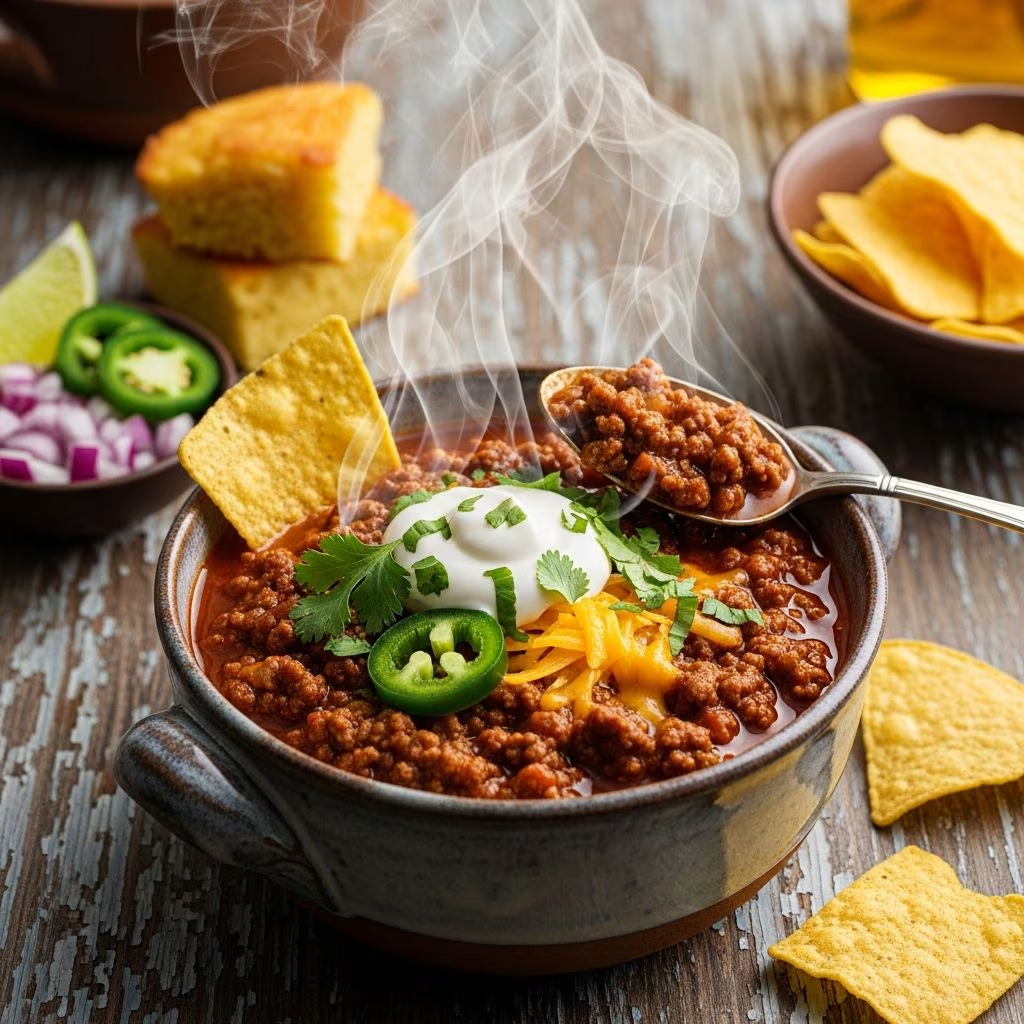
Quality chili deserves thoughtful accompaniments. Traditional toppings include shredded cheese, diced onions, sour cream, and fresh cilantro. Cornbread or warm flour tortillas provide vehicles for chili’s rich flavors. Some prefer chili over rice for a completely different textural experience.
Prepared chili refrigerates well for three to four days, and freezes successfully for several months. The cold storage period actually allows flavors to deepen as ingredients continue melding, making day-old chili arguably superior to freshly prepared versions. This makes quick chili an excellent meal-prep option; prepare a batch when time allows and portion into containers for future convenient lunches or dinners.
Frequently Asked Questions
Can I prepare chili without beans?
Yes. Bean-free chili remains entirely valid and often tastes thicker and meatier than versions with beans. Simply omit beans and proceed with the recipe as written; cooking time remains approximately thirty minutes.
What if I only have dried beans?
Dried beans require significantly longer cooking than thirty minutes. For rapid preparation, canned beans are essential. If only dried beans are available, cook them separately in advance and add to the chili when ready to serve.
Does using ground chicken instead of beef change the recipe?
Ground chicken works well but requires identical cooking techniques. Chicken may brown more quickly than beef due to lower fat content. The final flavor profile differs slightly—less rich, more poultry-forward—but equally satisfying.
How can I make chili spicier?
Increase chili powder quantities, add chili flakes, incorporate fresh jalapeños, or use spicy hot sauce. Add heat gradually while tasting, as excessive heat can overshadow other flavors.
Can I make this recipe in a slow cooker?
Absolutely, though the appeal of this particular recipe is its thirty-minute timeline. If using a slow cooker, complete the browning and aromatics steps on the stovetop (which takes approximately ten minutes), then transfer to the slow cooker and cook on low for two to four hours.
References
- Easy Chili Recipe in 30 Min — White On Rice Couple. Accessed April 10, 2026. https://whiteonricecouple.com/easy-chili-recipe/
- 30 Minute Chili — Brian Lagerstrom. Accessed April 10, 2026. https://www.brianlagerstrom.com/recipes/30-minute-chili
- 30 Minute Ground Beef Chili — Life is but a Dish. Accessed April 10, 2026. https://www.lifeisbutadish.com/30-minute-ground-beef-chili/
- No Bean 30 Minute Chili — The Whole Cook. Accessed April 10, 2026. https://thewholecook.com/chili/
- United States Department of Agriculture Food Safety Guidelines — USDA. Last updated 2024. https://www.fsis.usda.gov/