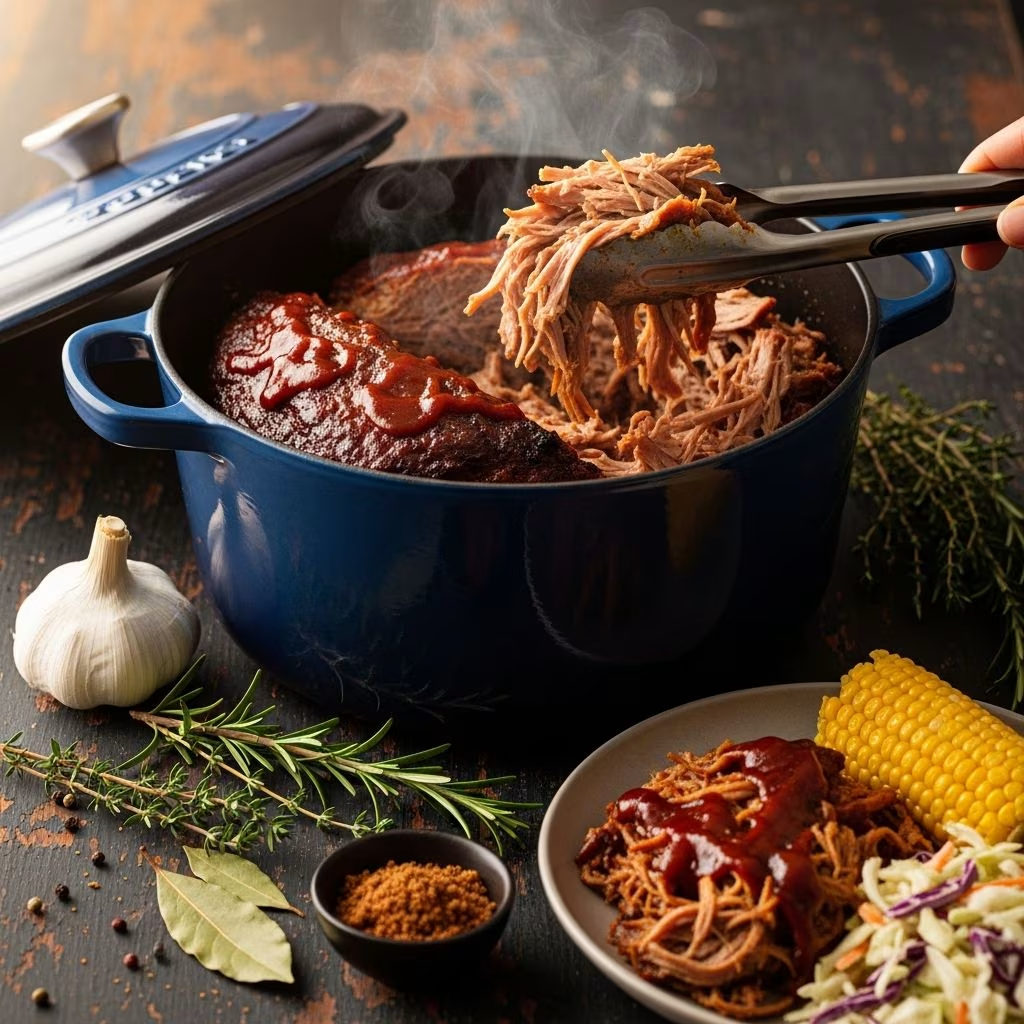
Creating succulent pulled pork in a Dutch oven transforms a simple cut of meat into a barbecue legend. This method leverages low, slow heat to break down tough pork shoulder, resulting in strands that pull apart effortlessly while absorbing rich flavors from spices and braising liquids. Ideal for gatherings or meal prep, it requires minimal hands-on time after initial setup.
Why Choose Dutch Oven for Pulled Pork
The Dutch oven’s thick cast iron construction excels at retaining and distributing heat evenly, mimicking professional smokers without specialized equipment. It seals in moisture during braising, preventing dry meat, and allows searing on the stovetop for added depth through the Maillard reaction—where proteins and sugars brown to create caramelized crusts.
Unlike slow cookers, the Dutch oven supports high-heat searing before oven time, enhancing texture. Results consistently yield pork that’s fork-tender after 3-4 hours at 300°F, with juices that can become a sauce base.
Selecting and Preparing Pork Shoulder
Opt for bone-in or boneless pork shoulder (also called pork butt), weighing 4-5 pounds for even cooking. This cut’s marbling provides self-basting moisture. Trim excess fat cap to ¼-inch thickness to avoid greasiness while retaining flavor.
Cut into 4-6 large chunks (about 4 inches each) for uniform cooking and better spice penetration. Pat dry with paper towels to promote browning. Avoid leaner cuts like loin, as they dry out easily.
Building the Ultimate Spice Rub
A robust dry rub is foundational, infusing layers of smoky, savory, and spicy notes. Combine these pantry staples for 4-5 pounds of pork:
- 2 tablespoons smoked paprika for earthiness
- 1 tablespoon garlic powder
- 1 tablespoon onion powder
- 1½ teaspoons salt
- 1 teaspoon black pepper
- 1 teaspoon ground cumin
- 1 teaspoon dried oregano
- ½ teaspoon chili powder or chipotle for heat
- ½ teaspoon ground mustard
Mix thoroughly and massage into all pork surfaces, including crevices. Let rest 30 minutes at room temperature or refrigerate overnight for deeper flavor melding. This dry brine tenderizes via salt osmosis.
Step-by-Step Cooking Process
Follow these precise steps for perfection:
- Preheat Oven: Set to 300°F with rack in lower third for heat circulation.
- Sear the Meat: Heat 2 tablespoons neutral oil (avocado or olive) in a 6-7 quart Dutch oven over medium-high. Sear pork chunks in batches, 2-3 minutes per side, until golden crust forms. Avoid overcrowding to prevent steaming. Remove to a plate.
- Aromatics Base: Lower heat to medium. Add diced onion (1 medium) and smashed garlic (3 cloves). Sauté 2-3 minutes, scraping browned bits (fond) for flavor. Deglaze with ½ cup broth or water if needed.
- Braise Liquid: Stir in 1 cup chicken broth, ½ cup apple cider vinegar (for tang), and optional beer (12 oz gluten-free lager) for subtle malt notes. Bring to simmer.
- Combine and Cover: Nestle pork back in, ensuring partial submersion. Cover tightly with lid.
- Oven Time: Braise 3-3½ hours until internal temperature hits 195-205°F and meat shreds easily. Last 30-60 minutes, uncover to crisp edges and reduce liquids.
- Rest and Shred: Transfer pork to a bowl; rest 10 minutes. Shred with forks, discarding bone/fat. Mix shreds back into pot juices.
Flavor Enhancements and Variations
Elevate beyond basics:
| Variation | Additions | Best For |
|---|---|---|
| Classic BBQ | 1 cup keto BBQ sauce post-shredding, simmer 10 minutes | Sandwiches, sliders |
| Mexican-Inspired | Chipotle, cumin boost; top with cilantro, lime | Tacos, nachos |
| Asian Fusion | Ginger, soy sauce in braise; hoisin finish | Bao buns, rice bowls |
| Carolina Vinegar | Extra vinegar, red pepper flakes in rub | Pulled pork plates |
For keto/paleo, skip sugary sauces; use homemade versions with tomato paste, vinegar, and stevia.
Perfect Sides to Pair
- Cole slaw for creamy crunch contrasting richness.
- Cornbread or baked beans for Southern authenticity.
- Pickles and onions for acidity.
- Grilled veggies or potato salad for balance.
Serve on buns with sauce for sliders feeding 8-10, or deconstruct for salads/bowls.
Storage, Reheating, and Freezing
Store leftovers in airtight containers up to 4 days refrigerated; juices keep it moist. Reheat gently in skillet with splash of broth. Freeze shreds in portions up to 3 months; thaw overnight before use. Avoid microwaving to preserve texture.
Pro Tips for Dutch Oven Success
- Use enameled cast iron for easy cleanup.
- Don’t skip searing—it’s 50% of flavor.
- Check doneness by twist test: bone should wiggle free.
- Resting prevents juice loss.
- Scale rub 1.5x for larger cuts.
Common Mistakes to Avoid
Overcrowding during sear steams meat; batches are key. Skipping dry rub yields bland results. High oven temps toughen fibers—stick to 300°F. Not uncovering at end leaves soggy pork; crisp it up.
Nutrition Snapshot (Per 4oz Serving)
| Nutrient | Amount |
|---|---|
| Calories | 320 |
| Protein | 25g |
| Fat | 22g |
| Carbs | 2g (rub only) |
Values approximate; varies with additions. High protein makes it meal-prep gold.
FAQs
Can I use pork loin instead?
No—it’s too lean and dries out. Stick to shoulder for fat content.
How do I know it’s done?
Probe hits no resistance at 195°F+; shreds with gentle fork pull.
Vegetarian alternative?
Sub jackfruit or mushrooms, but adjust braise time to 1-2 hours.
Make ahead?
Yes—braise day prior, shred, re-crisp day-of.
Instant Pot version?
Possible, but loses oven’s caramelization; high pressure 90 minutes.
This method delivers restaurant-quality results reliably. Experiment with rubs and liquids to personalize while mastering the core technique.
References
- USDA Food Safety Guidelines for Pork — United States Department of Agriculture. 2023-05-15. https://www.fsis.usda.gov/food-safety/safe-food-handling-and-preparation/meat-pork
- Science of Slow Cooking Meats — Harvard T.H. Chan School of Public Health (via peer-reviewed summary). 2022-11-10. https://www.hsph.harvard.edu/nutritionsource/protein/
- Maillard Reaction in Cooking — Journal of Agricultural and Food Chemistry (DOI). 2021-08-20. https://pubs.acs.org/doi/10.1021/acs.jafc.1c02000
- Cast Iron Cooking Basics — Lodge Cast Iron Official Guide. 2024-02-01. https://www.lodgecastiron.com/pages/care
- Nutritional Data for Pork Shoulder — USDA FoodData Central. 2023-12-05. https://fdc.nal.usda.gov/fdc-app.html#/food-details/168250/nutrients