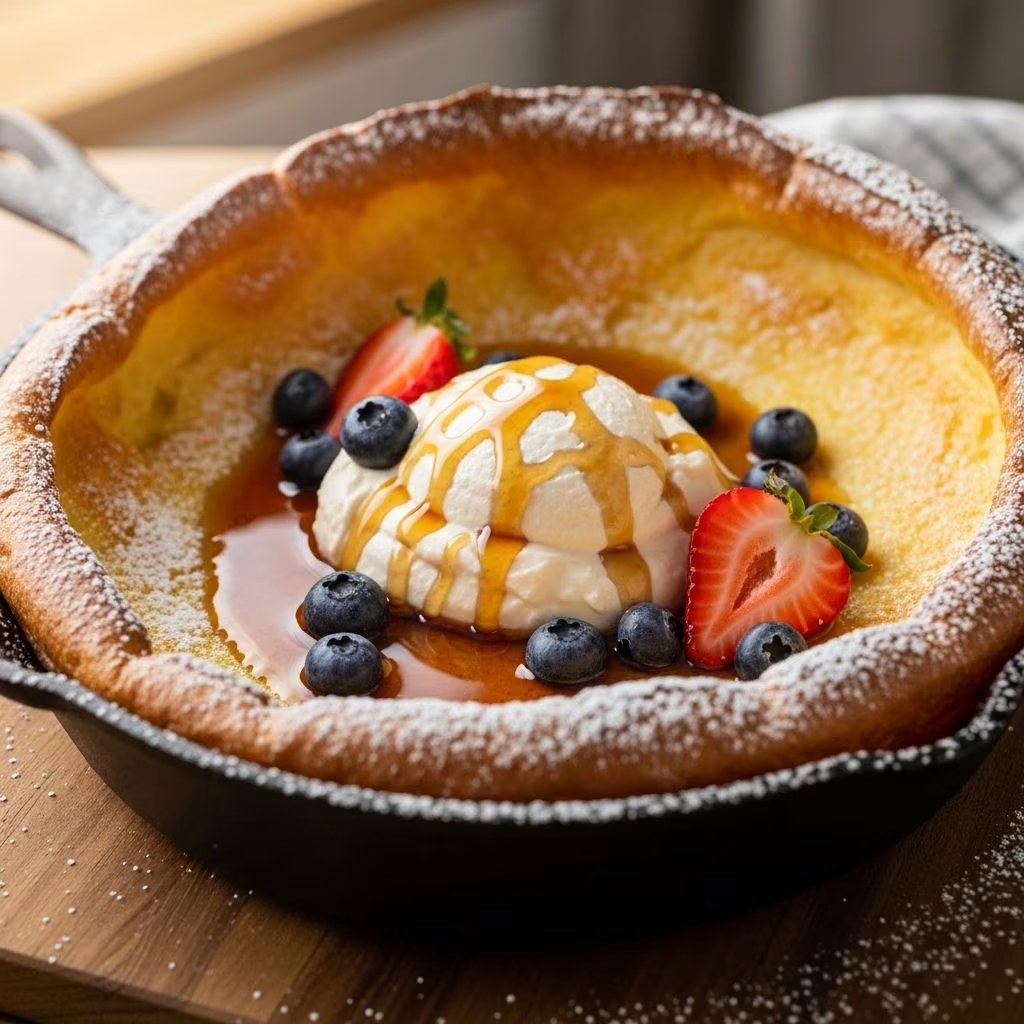
Dutch baby pancakes represent one of the most impressive breakfast creations you can prepare in your own kitchen. These magnificent puffed pancakes rise dramatically in the oven, creating a golden, crispy exterior that contrasts beautifully with a tender interior. When crowned with silky maple whipped cream, they transform into an elegant brunch centerpiece that rivals any restaurant offering. This comprehensive guide will walk you through every step of creating this stunning dish, from understanding the science behind the puff to mastering flavor combinations.
What Makes a Dutch Baby Pancake Special
The Dutch baby pancake, also known as a German pancake, stands apart from traditional breakfast fare due to its unique preparation method and dramatic presentation. Unlike conventional pancakes that cook on a griddle, Dutch babies bake in a preheated cast-iron skillet within a hot oven, allowing them to rise spectacularly and develop a crispy, caramelized exterior. This technique creates a textural masterpiece—the edges become paper-thin and crunchy, while the center remains tender and custardy.
The magic lies in the combination of three key factors: a properly preheated cast-iron skillet, a hot oven environment, and precise timing. When the cold batter meets the intensely hot skillet, steam forms rapidly, creating lift. The oven’s continued heat causes the batter to set while maintaining that airy structure, resulting in the characteristic puff that deflates slightly after removal from heat, but retains its beautiful shape and texture.
Essential Ingredients for Dutch Baby Success
Creating the perfect Dutch baby requires understanding how each ingredient contributes to the final result. The basic formula is deceptively simple, yet each component plays a crucial role in achieving the desired texture and flavor.
- Eggs: Room temperature eggs blend more smoothly into the batter, creating a lighter, more uniform mixture. Use large eggs for consistent results.
- Milk: Whole milk provides richness and helps create the tender interior. Room temperature milk incorporates more evenly into the batter.
- Flour: All-purpose flour works perfectly for Dutch babies, providing enough structure without making the pancake tough.
- Sugar: Granulated sugar adds sweetness and helps with browning, though some recipes incorporate maple sugar for deeper flavor.
- Butter: Unsalted butter is essential for greasing the skillet and contributing to the crispy, caramelized exterior. It should be completely melted and bubbling when you add the batter.
- Salt: A small amount of kosher salt enhances all the flavors and prevents the pancake from tasting flat.
- Vanilla extract: Optional but recommended, pure vanilla extract adds depth and complexity to the batter.
The Critical Role of Temperature Control
Temperature precision distinguishes between a stunning Dutch baby and a disappointing flat pancake. The oven should reach 400-450°F before you even begin mixing your batter. This preheat time is non-negotiable—a properly heated oven is essential for the dramatic rise that characterizes these pancakes.
Similarly, your cast-iron skillet must be screaming hot. Professional cooks emphasize placing the skillet in the oven while preheating, allowing it to reach the same temperature as the oven itself. When you add the cold butter to this superheated surface, it melts and bubbles immediately, creating the perfect cooking medium for the batter.
The batter temperature also matters. Room temperature eggs and milk blend more effectively than cold ingredients, creating a smoother, thinner batter that rises more uniformly.
Step-by-Step Preparation Method
Preparing Your Workspace and Equipment
Begin by positioning your oven rack to the center and setting your temperature to 425°F. Place your cast-iron skillet inside and allow everything to preheat for at least 10-15 minutes. A properly preheated oven produces better results than rushing this step.
Blending the Batter
Add your eggs to a blender and purée until pale and frothy, approximately one minute. This preliminary blending incorporates air, contributing to the final puff. Add your flour mixture and milk, then purée again for about 30 seconds until the batter reaches a thin, smooth consistency. The batter should resemble heavy cream rather than thick pancake batter. A blender creates a smoother, more uniform batter than whisking by hand, which translates to a more even rise in the oven.
The Butter and Transfer
Carefully remove the hot skillet from the oven and immediately add the measured butter. It will melt and bubble vigorously. Using a pastry brush, distribute the melted butter evenly across the bottom and up the sides of the skillet. This step prevents sticking and creates the desirable crispy edges.
Pour your batter into the center of the buttered skillet quickly, then immediately return the skillet to the oven. The speed of this transfer is important—you want the batter to cook in the intense oven heat before any of that valuable steam escapes.
The Baking Process
Bake for 15-22 minutes, depending on your oven and the recipe variation. The pancake is done when it has risen dramatically, turned golden brown in places, and has crispy edges. You may see some darker spots or even slight charring on the peaks—this is desirable and creates the appealing presentation. Avoid opening the oven door during baking, as this causes steam loss and can deflate your pancake prematurely.
Creating Maple Whipped Cream
The whipped cream topping should balance the rich pancake with light, airy sweetness. Start with heavy whipping cream that is very cold. Chill your mixing bowl and beaters as well—cold equipment whips cream faster and more stably.
Begin beating the cream at medium speed until it thickens slightly. Add confectioners’ sugar—powdered sugar dissolves more smoothly than granulated sugar. Continue beating until soft peaks form, then stiff peaks develop. The cream should form peaks that stand up on the beaters.
For maple flavor, drizzle in pure maple syrup gradually while beating, or combine maple syrup with a small amount of heavy cream to create a maple-infused topping. Some recipes recommend a maple pecan drizzle made by combining butter, maple syrup, and heavy cream in a saucepan, bringing to a boil, then whisking in confectioners’ sugar and pecans. This sauce thickens slightly as it cools and creates a more substantial topping than whipped cream alone.
Flavor Variations and Creative Toppings
While maple whipped cream provides a classic pairing, numerous topping variations elevate your Dutch baby to new heights:
- Caramelized apples offer a warm, spiced complement
- Fresh berries—strawberries, blueberries, raspberries—provide bright acidity and vibrant color
- Balsamic-marinated berries with maple syrup create sophisticated flavor complexity
- Nutella or chocolate sauce appeals to those with a sweet tooth
- Lemon curd or other citrus curds add tartness and elegance
- Fresh peaches or other stone fruits bring summery freshness
- Whipped cream infused with cinnamon, vanilla, or other spices adds nuance
- Simple powdered sugar dusting keeps the focus on the pancake itself
Nutritional Considerations
A typical serving of Dutch baby pancake yields approximately 429-533 calories, depending on size and toppings. The fat content is substantial—around 38 grams per serving—primarily from butter, eggs, and cream. For those monitoring their diet, portion control and topping choices significantly impact the overall nutritional profile. Whipped cream adds richness, while fresh fruit toppings contribute fiber and nutrients with fewer added calories.
Storage and Make-Ahead Options
Dutch baby pancakes are best enjoyed immediately after baking, while they retain maximum crispiness and the whipped cream is perfectly chilled. However, leftovers can be stored in an airtight container in the refrigerator for 1-2 days. Reheating in the oven restores some of the crispness, though the pancake will not achieve its original texture and fluffiness.
The maple whipped cream should be prepared just before serving to maintain its light, airy texture. The maple pecan sauce can be made several hours ahead and gently reheated before serving.
Common Mistakes to Avoid
Understanding what goes wrong helps you achieve consistent success. Insufficient oven preheat ranks as the primary culprit—the oven must be properly heated, and the skillet must be hot enough that the butter immediately bubbles. Opening the oven door during baking allows steam to escape prematurely, deflating your pancake. Using cold eggs or milk produces a thicker batter that doesn’t rise as dramatically. Inadequate butter distribution in the skillet can cause the pancake to stick or brown unevenly.
Frequently Asked Questions
Can I make Dutch baby pancake batter in advance?
Yes, the batter can be prepared up to 2 hours ahead and refrigerated. However, room temperature batter blends more smoothly and rises more consistently, so allow it to come to room temperature before baking. If your batter sits for an extended period, the air you incorporated through blending may dissipate, affecting the rise.
Why didn’t my pancake rise?
The most common cause is insufficient oven temperature. Ensure your oven is fully preheated and that your cast-iron skillet has been heating alongside it. Additionally, cold ingredients produce thicker batter that doesn’t rise as effectively, so use room temperature eggs and milk.
How can I prevent sticking?
Thorough butter distribution is essential. Use a pastry brush to coat the entire bottom and sides of the hot skillet before pouring the batter. Starting with enough butter provides an additional insurance policy against sticking.
What size skillet should I use?
A 10-inch cast-iron skillet is standard for recipes that serve 4 people. The size matters because it affects how much the pancake rises and how quickly it bakes. A smaller skillet produces a thicker pancake, while a larger one creates a thinner result.
Can I make this recipe without a cast-iron skillet?
Cast iron works best because it heats evenly and retains heat effectively. If you lack cast iron, a heavy-bottomed oven-safe skillet may work, though results may vary. Avoid non-stick skillets, as they cannot withstand the high temperatures required and won’t produce the same crispy, caramelized exterior.
Conclusion: Mastering This Elegant Brunch Centerpiece
Creating Dutch baby pancakes with maple whipped cream represents a rewarding culinary achievement. The dramatic presentation belies the relative simplicity of the technique—proper temperature control and timing matter far more than complicated ingredients or complex procedures. By understanding the science behind the puff, respecting the importance of temperature precision, and mastering the basic technique, you can consistently produce impressive results that delight family and guests alike. Whether you opt for classic maple cream, creative fruit toppings, or sophisticated sauce variations, this versatile dish adapts beautifully to your preferences and the seasons available in your ingredients.
References
- Apple Dutch Baby Pancake with Maple Pecan Glaze and Cinnamon Whipped Cream — Eggs.ca. 2024. https://eggs.ca/recipes/apple-dutch-baby-pancake-with-maple-pecan-glaze-and-cinnamon-whipped-cream/
- Maple Dutch Baby Pancake — Fuller’s Sugarhouse. 2024. https://www.fullerssugarhouse.com/recipes/maple-dutch-baby-pancake/
- German Pancake (Dutch Baby Pancake) — The Speckled Palate. 2024. https://www.thespeckledpalate.com/german-pancake-dutch-baby-pancake/
- Dutch Baby with Balsamic Maple Berries & Whipped Chevre Cream — The Kitchen McCabe. 2017. https://thekitchenmccabe.com/2017/03/02/dutch-baby-balsamic-maple-berries-whipped-chevre-cream-gf/