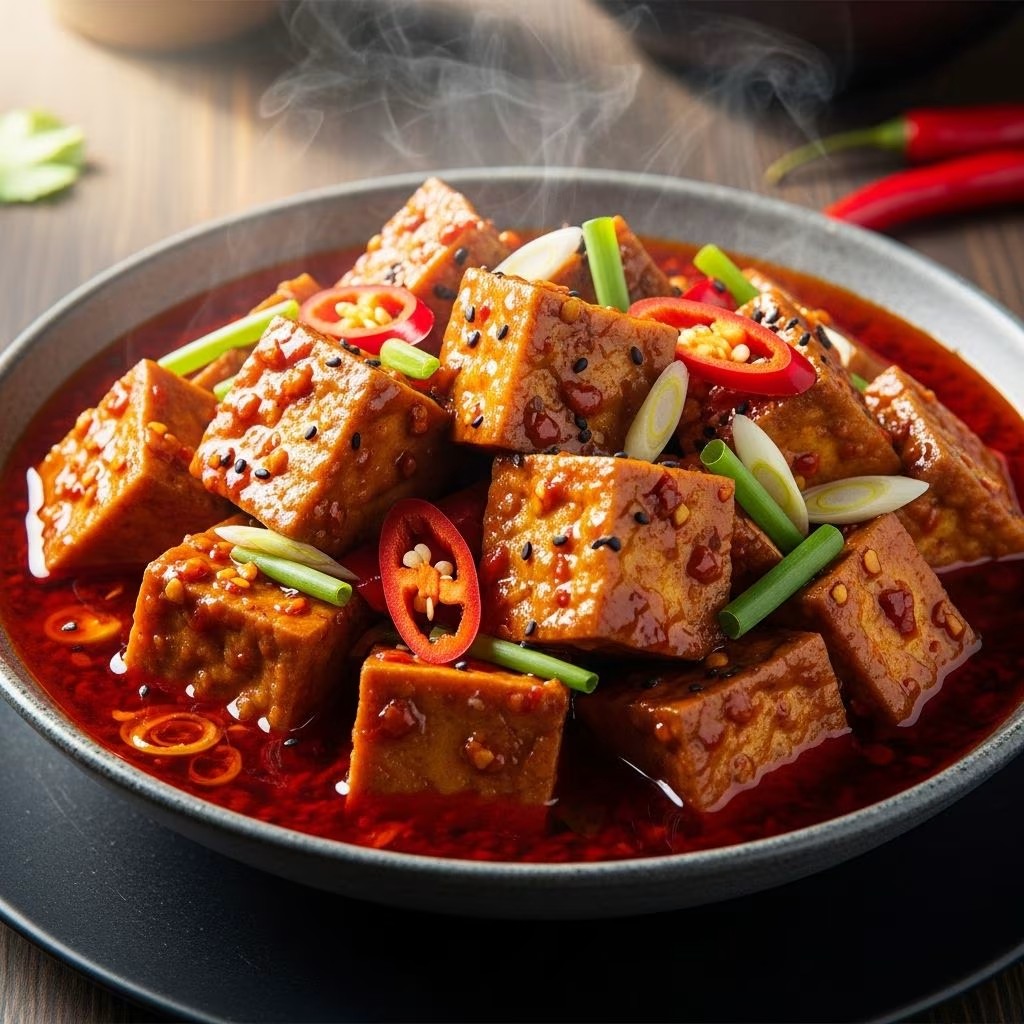
Spicy braised tofu, known as dubu jorim in Korean cuisine, transforms simple ingredients into a dish bursting with savory heat and tender texture. This vegetarian staple features soft tofu steeped in a robust sauce made from chili flakes, soy, and aromatics, creating a perfect side for rice or a standalone meal.
Why Dubu Jorim Captivates Home Cooks
Dubu jorim stands out for its simplicity and depth of flavor. The tofu absorbs the spicy braising liquid, becoming infused with umami while retaining its silky softness. Originating from Korean home cooking, it’s a quick dish that balances heat, sweetness, and saltiness, making it versatile for weeknight dinners.
Its appeal lies in accessibility: most ingredients are pantry staples, and preparation takes under 30 minutes. Whether you’re vegan, reducing meat intake, or exploring global flavors, this recipe delivers satisfaction without complexity.
Essential Ingredients for Authentic Flavor
Gathering the right components ensures your dubu jorim shines. Focus on fresh tofu and quality Korean staples for the best results.
- Firm or soft tofu: 14-16 ounces, drained and sliced into ½-inch pieces for optimal sauce absorption.
- Korean chili flakes (gochugaru): 2 tablespoons for vibrant red color and adjustable heat.
- Soy sauce: 2 tablespoons, preferably low-sodium for balance.
- Gochujang paste: 1 teaspoon to add fermented depth.
- Aromatics: 1 tablespoon minced garlic, sliced scallions, ¼ onion, and optional mushrooms or chilies.
- Sweetener: 1 tablespoon corn syrup, honey, or sugar to mellow the spice.
- Broth: 1 cup water, anchovy stock, or vegetable broth for richness.
- Oils and seeds: Sesame or perilla oil (2 tablespoons) and ground sesame seeds for finishing.
These elements create a harmonious sauce where spice from gochugaru meets the tang of gochujang and soy’s saltiness.
Step-by-Step Cooking Guide
Follow these precise steps to achieve crispy edges and infused tenderness.
- Prepare the tofu: Press gently to remove excess water, then slice into even rectangles. This prevents crumbling during braising.
- Make the sauce: Whisk gochugaru, gochujang, soy sauce, sweetener, garlic, and broth in a bowl until smooth.
- Layer the pot: Scatter sliced onions at the base of a shallow pan or pot. Arrange tofu atop, then pour sauce over everything.
- Simmer: Bring to a boil over medium-high heat, then reduce to medium. Cook uncovered for 5-7 minutes until sauce thickens slightly.
- Add veggies and finish: Toss in scallions, mushrooms, and chilies. Drizzle oil and sprinkle seeds. Simmer 3-5 more minutes until tofu is glazed and flavorful.
- Rest and serve: Let sit off heat for 2 minutes to meld flavors.
Pro tip: Use a wide pan to promote even cooking and sauce reduction.
Customizing Heat and Texture
Adapt dubu jorim to your palate with these tweaks.
| Variation | Ingredients | Effect |
|---|---|---|
| Mild Version | Reduce gochugaru to 1 tbsp, omit gochujang | Gentle warmth, kid-friendly |
| Extra Crispy | Pan-fry tofu slices first in oil | Golden exterior, contrasts soft interior |
| Seafood Boost | Add shrimp liquid or anchovy broth | Deeper umami (non-vegan) |
| Vegetable-Packed | Include shiitake, zucchini, carrots | Heartier, nutrient-dense stew |
Experimenting keeps the dish fresh; start conservative with spice and adjust upward.
Nutrition Profile and Health Benefits
Dubu jorim is nutrient powerhouse. A 200g serving offers about 250 calories, 20g protein from tofu, and healthy fats from sesame oil. It’s rich in iron, calcium, and isoflavones, supporting bone health and heart function.
- Protein: Tofu provides complete plant-based protein, ideal for muscle repair.
- Antioxidants: Gochugaru delivers capsaicin, aiding metabolism and inflammation reduction.
- Low-carb: Fits keto or low-glycemic diets when skipping excess sweetener.
Per USDA data on tofu and Korean staples, this dish promotes satiety with minimal processed ingredients.
Pairing Suggestions for Complete Meals
Elevate dubu jorim with thoughtful sides.
- Rice duo: Serve over steamed short-grain rice or multigrain bibimbap base.
- Noodles: Mix into spicy buckwheat soba for a jjajangmyeon twist.
- Greens: Pair with blanched spinach or kimchi for crunch and fermentation contrast.
- Soups: Accompany doenjang jjigae (miso soup) for a banchan spread.
For drinks, try chilled barley tea or soju to cut the heat.
Storage, Reheating, and Make-Ahead Tips
Dubu jorim stores well, flavors intensifying overnight.
- Fridge: Up to 4 days in an airtight container; sauce may thicken.
- Freezer: 1 month; thaw overnight before reheating.
- Reheat: Gentle simmer with a splash of water to revive sauce consistency.
Prep sauce ahead for faster weeknight assembly.
Common Mistakes and Fixes
Avoid pitfalls for pro-level results.
- Watery tofu: Always drain and pat dry; skip extra firm varieties for better absorption.
- Overly spicy: Taste sauce before adding tofu; gochugaru varies by brand.
- Sauce separation: Stir frequently and use cornstarch slurry if needed for gloss.
- Blandness: Fresh garlic and quality soy elevate; don’t shortcut aromatics.
Advanced Techniques for Chefs
Refine your skills with these pro moves.
Crispy Pan-Fry Method: Sear tofu in neutral oil until golden (3 minutes per side), then braise. This Maangchi-inspired technique adds textural contrast, making the dish “meaty” despite being plant-based.
Broth Upgrade: Simmer kelp (dashima) and anchovies for 10 minutes for authentic stock, as in traditional recipes.
Seed Grind: Toast and grind perilla seeds fresh for nutty aroma surpassing store-bought.
Frequently Asked Questions
What tofu is best for dubu jorim?
Soft or medium-firm fresh tofu absorbs sauce best, mimicking Korean sundubu. Avoid silken for slicing.
Is this recipe vegan?
Yes, with vegetable broth and no shrimp liquid; it’s naturally vegetarian and adaptable.
Can I make it less spicy?
Halve gochugaru and skip chilies; sweeten more for balance.
How many servings does this yield?
2-4 as a side; scales easily by doubling ingredients.
Gluten-free options?
Use tamari instead of soy sauce and ensure gochujang is GF-certified.
Exploring Korean Tofu Traditions
Dubu jorim reflects Korea’s love for banchan—small, flavorful sides. Evolving from simple soybean curds, tofu entered Korean cuisine via China centuries ago, now starring in stews like soon dubu. Its popularity surges in modern vegan trends, bridging tradition and health-conscious eating.
Similar dishes include pan-fried dubu with yangnyeom (seasoned sauce) or jjigae integrations. Mastering this opens doors to sundubu jjigae or tofu bibimbap.
In global fusion, try it in tacos with kimchi slaw or grain bowls. Its versatility cements status as a kitchen essential.
References
- Spicy Braised Tofu (Dubu Jorim) — Korean Bapsang. 2014-10-20. https://www.koreanbapsang.com/spicy-braised-tofu-dubu-jorim/
- Spicy braised tofu (Dubu-jorim: 두부조림) — Maangchi (YouTube). Accessed 2026. https://www.youtube.com/watch?v=ob2CYmTx9PM
- Dubu-jorim 두부조림 – Spicy braised tofu — Maangchi. Accessed 2026. https://www.maangchi.com/recipe/dubu-jorim