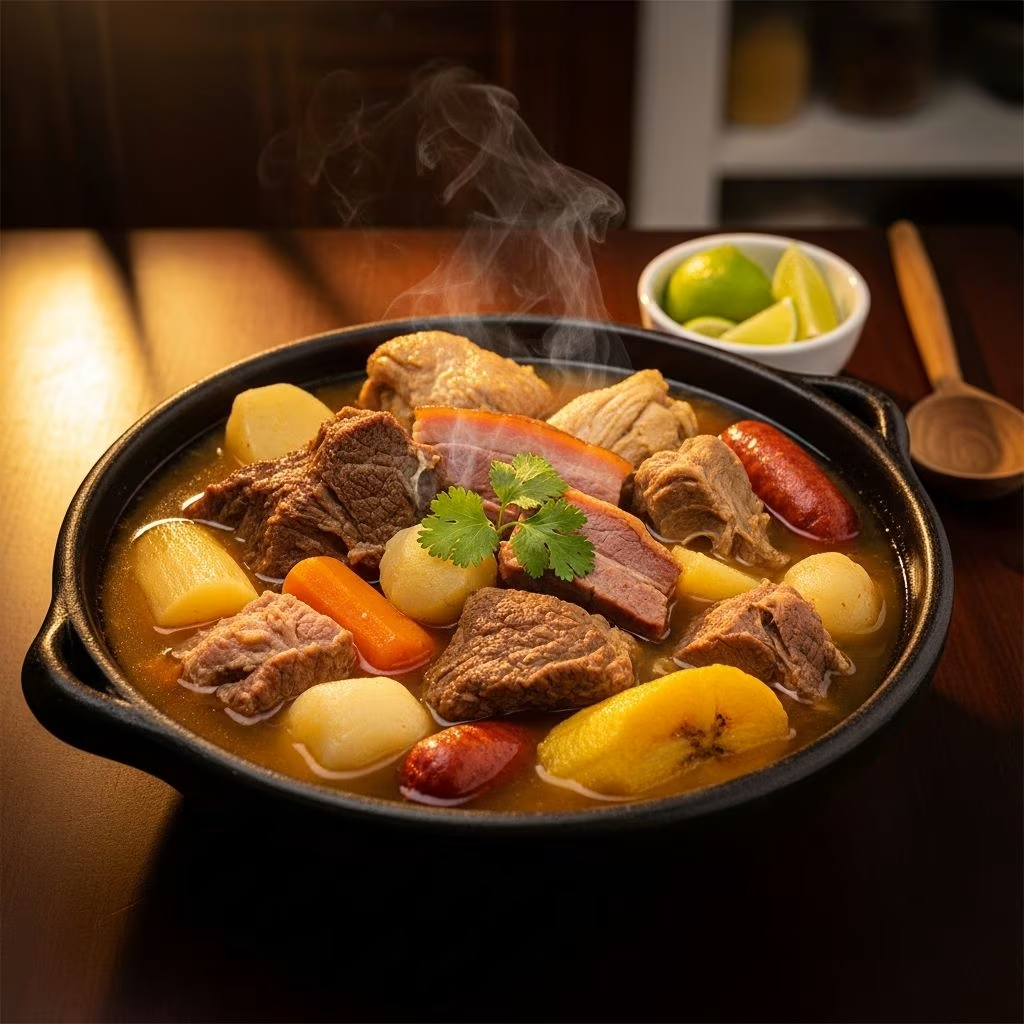
Dominican sancocho stands as a cornerstone of Caribbean culinary heritage, embodying communal warmth through its layers of meats and starchy vegetables simmered into a nourishing broth. This robust dish, often prepared for holidays or large gatherings, combines seven distinct proteins with tubers like yuca and ñame, creating a symphony of savory depths and subtle sweetness.
The Cultural Heart of Sancocho
In the Dominican Republic, sancocho transcends a mere meal; it symbolizes hospitality and resilience. Families gather around steaming pots during Christmas, New Year’s, or rainy days, sharing stories as the stew bubbles. Rooted in Taíno, African, and Spanish influences, it reflects the island’s history where indigenous roots met colonial meats and seasonings. Variations exist across Latin America, but the Dominican version shines with its ‘siete carnes’—seven meats—distinguishing it as a feast of abundance.
Historically, sancocho evolved from survival stews using available livestock and crops. Today, it remains a staple at parrandas (music-filled parties) and everyday comfort, fostering bonds over bowls served with rice and avocado.
Essential Ingredients for Authentic Flavor
Building sancocho requires a diverse array of proteins and produce. The seven meats typically include beef for stews (with bones for richness), goat, pork sausage (longaniza), pork chunks or ribs, chicken parts, smoked ham bones, and sometimes additional sausage. These provide varied textures from tender chicken to chewy goat.
Vegetables form the stew’s body: yuca (cassava) for starchiness, ñame or yam, malanga, potatoes, unripe plantains (two chopped, one grated for thickening), celery, corn on the cob, and squash in some recipes. Aromatics like garlic, oregano, cilantro, lime juice, and bitter orange elevate the broth.
| Category | Key Ingredients | Quantity (Serves 6-8) |
|---|---|---|
| Meats | Beef (stew cuts with bones), Goat, Pork sausage, Pork, Chicken, Pork ribs, Ham bones | 2 lbs beef, 1 lb each others |
| Roots & Veggies | Yuca, Ñame, Malanga, Potato, Plantains, Corn, Celery | 1/2 lb each roots, 2-3 plantains, 2 corn cobs |
| Seasonings | Lime juice, Garlic, Oregano, Cilantro, Vinegar, Adobo, Bouillon | 4 limes, 1-2 tbsp each herb/spice |
Step-by-Step Preparation Guide
Mastering sancocho demands patience, as meats cook sequentially to layer flavors without muddling textures.
- Marinate the Meats: In a large bowl or bag, combine beef, goat, pork, and sausage with lime juice (from 2-4 limes), crushed garlic, oregano, cilantro, salt, and vinegar. Let rest 30-60 minutes. This tenderizes and infuses bold notes.
- Brown the Base Meats: Heat oil in a massive pot (caldero ideal) over medium-high. Add marinated beef and pork first; sear 10-15 minutes, stirring and adding splashes of water to prevent sticking. Introduce chicken and ribs next, simmering another 10 minutes.
- Build the Broth: Pour in 4-6 quarts water or stock to cover. Add beef bouillon, hot sauce, and bitter orange juice. Bring to boil, then simmer.
- Incorporate Starchy Vegetables: Layer tougher roots first: yuca, ñame, malanga, potatoes, and two chopped plantains. Simmer 15-20 minutes until partially tender. Add corn and softer items like squash or batata later to avoid mushiness.
- Thicken and Finish: Grate the third unripe plantain into the pot for natural thickening. Simmer until everything yields to a fork, about 1-1.5 hours total. Taste and adjust salt, lime, or adobo.
Pro tip: Skim foam during boiling for clarity. If using squash, blend it with broth for creaminess before returning.
Vegetarian and Simplified Variations
Not every sancocho needs seven meats. For lighter versions, use beef and chicken only, doubling quantities proportionally. Vegetarians can swap proteins for mushrooms, jackfruit, or extra roots, seasoning with vegetable bouillon and sofrito (onion, pepper, garlic blend).
- Quick Weeknight Sancocho: 2 meats (chicken, sausage), fewer roots; ready in 45 minutes.
- Plant-Based Twist: Yuca, plantains, pumpkin; add coconut milk for creaminess.
- Regional Spin: Puerto Rican includes pumpkin puree; Colombian favors cilantro-heavy broth.
Pairing and Serving Suggestions
Serve sancocho piping hot in deep bowls alongside white rice (absorbs broth perfectly), sliced avocados for creaminess, and tostones (fried plantains). A squeeze of fresh lime brightens each bite. For drinks, pair with morir soñando (orange-milk blend) or cold Presidente beer.
Leftovers store 3-4 days refrigerated; freeze up to 3 months. Reheat gently with extra water to loosen.
Nutrition and Health Considerations
A single serving (about 2 cups) packs protein from multiple sources (40-50g), complex carbs from roots (60g+), and vitamins from corn/limes. It’s hearty but balanced; goat adds iron, yuca provides fiber. Watch sodium from bouillon/adobo; opt for low-sodium versions. Caloric density around 600-800 per bowl makes it filling for cold days.
Common Mistakes and Pro Tips
Avoid these pitfalls for sancocho success:
- Overcrowding the pot—cook in batches if needed.
- Rushing vegetable addition—tough roots first prevent uneven cooking.
- Skipping marinade—flavor foundation matters.
- Ignoring plantain grate—key to perfect thickness without flour.
Scale up for crowds: double everything, use two pots. Fresh herbs beat dried for vibrancy.
FAQs
What makes Dominican sancocho different from other Latin stews?
It features exactly seven meats and specific roots like ñame, creating a uniquely thick, meaty profile.
Can I make sancocho in a slow cooker?
Yes—brown meats first on stovetop, then slow-cook 6-8 hours on low with veggies added halfway.
Where to find goat meat?
Latino markets or butchers; substitute lamb if unavailable.
Is sancocho spicy?
Mild by default; add hot sauce or peppers to taste.
How long does it last?
3-4 days in fridge; flavors deepen overnight.
Exploring Sancocho’s Regional Cousins
While Dominican sancocho reigns with meats, neighbors vary: Colombian ajiaco leans chicken-potato; Puerto Rican asopao is rice-thickened. Each shares the stew’s soul—slow-simmered comfort from the Americas.
Word count: 1678 (excluding metadata and references).
References
- Dominican Sancocho (7 Meat Hearty Stew) Recipe — Food.com. 2007-01-01 (approx.). https://www.food.com/recipe/dominican-sancocho-7-meat-hearty-stew-288397
- Sancocho (Meat and Vegetable Stew) — Sense & Edibility. 2023-10-15 (approx. recent update). https://senseandedibility.com/sancocho-latin-american-meat-and-vegetable-stew/
- Dominican Sancocho Recipe {Meat And Vegetable Stew} — Cooking with Books. 2013-03-01. https://www.cookingwithbooks.net/2013/03/dominican-series-sancocho.html
- Sancocho [Video+Recipe] 7 Carnes, or Beef & Chicken Stew — Dominican Cooking. 2022-05-20 (approx.). https://www.dominicancooking.com/sancocho