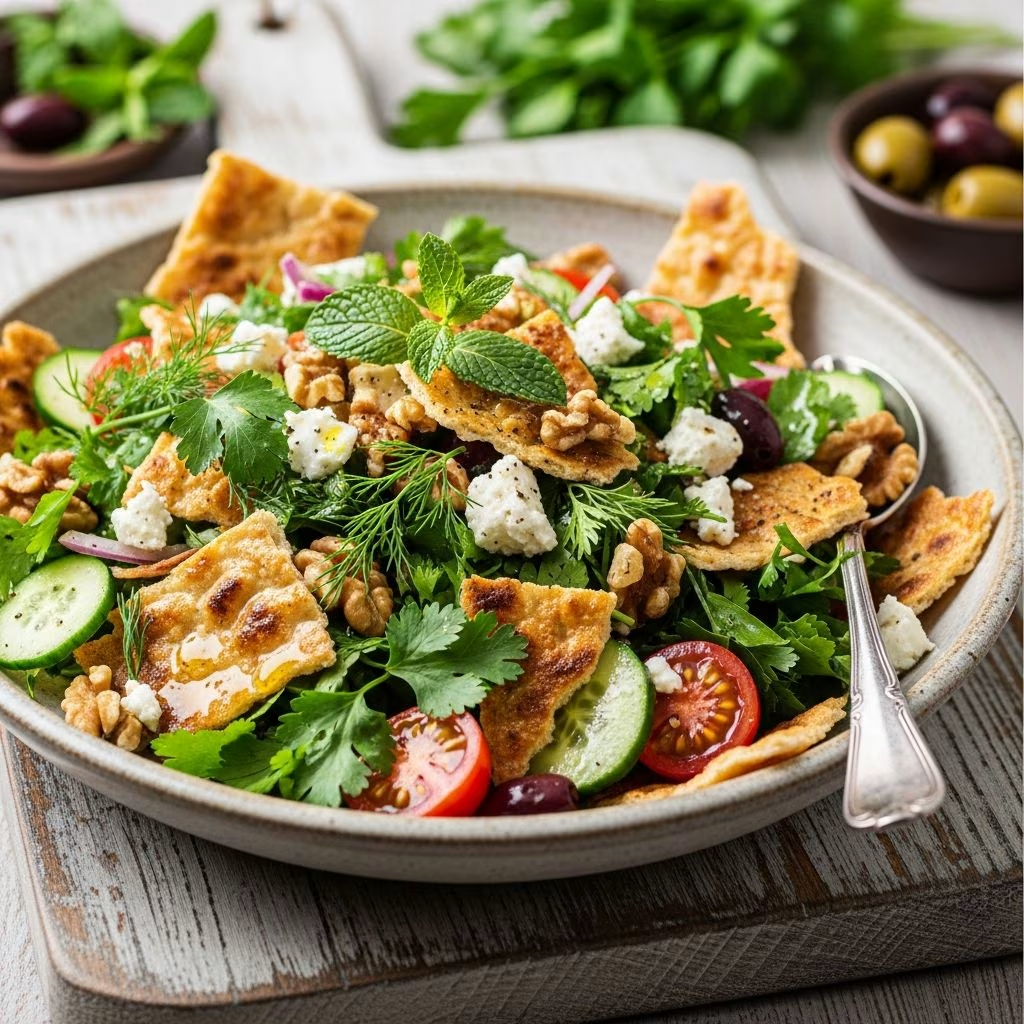
Persian cuisine offers a remarkable collection of dishes that emphasize the use of fresh ingredients and aromatic flavors. Among these culinary treasures is domaaj, a traditional salad that represents the essence of Persian food culture. This vegetarian dish stands out for its textural contrast and the way it brings together multiple components into a harmonious whole. The combination of crispy flatbread pieces, aromatic herbs, and creamy cheese creates a dining experience that appeals to both the palate and the eye.
Domaaj translates to a celebration of simplicity and flavor in Persian cooking. Unlike some modern salads that rely on raw vegetables as their foundation, this traditional preparation uses toasted flatbread as the base, transforming ordinary bread into a key ingredient that absorbs the dressing while maintaining its satisfying crunch. The dish reflects the resourcefulness of Persian cooking, where even bread that might otherwise be discarded becomes the star of an elegant meal.
The Essential Components of an Authentic Domaaj
Creating an authentic domaaj requires understanding how each ingredient contributes to the final dish. The success of this salad depends not just on having the right components, but on understanding the role each element plays in the flavor profile and texture.
The Foundation: Flatbread
The most distinctive feature of domaaj is its use of flatbread as the primary ingredient. Persian flatbread, known as lavash or sangak, provides an authentic base, though alternatives can work effectively. The bread should be cut into irregular pieces using scissors rather than a knife, creating jagged edges that catch the dressing more effectively. These rough pieces become crispy during toasting and provide textural interest throughout the salad.
If authentic Persian flatbread proves difficult to source, quality alternatives include toasted tortillas or pita bread. The key consideration is ensuring the bread is toasted before being added to the salad, which removes excess moisture and prevents the finished dish from becoming soggy. This toasting step is crucial and should not be overlooked.
The Herb Triumvirate
Three fresh herbs form the aromatic backbone of domaaj: mint, basil, and tarragon. This combination creates a complex flavor profile that distinguishes domaaj from other salads. Mint contributes a cool, refreshing quality; basil adds peppery notes; and tarragon introduces a subtle anise-like flavor that rounds out the blend.
Fresh herbs are essential to this dish—dried herbs cannot replicate the vibrant quality of this preparation. Each herb should be roughly chopped rather than finely minced, as larger pieces maintain their individuality and prevent the salad from becoming too finely textured. The herbs should be added just before serving to preserve their aromatic properties and prevent oxidation.
Supporting Players: Nuts, Cheese, and Seeds
Toasted walnuts add nutritional value and textural contrast to the salad. These should be toasted briefly in a dry pan over medium heat to enhance their nutty flavor and create crispness that persists even after the dressing is applied. The toasting process awakens the oils in the nuts, intensifying their contribution to the overall dish.
Crumbled feta cheese provides a salty, tangy element that balances the freshness of the herbs. The cheese should be added to the salad components before the dressing is applied, allowing it to distribute evenly. The saltiness of feta means that additional seasoning must be adjusted carefully to avoid over-salting the finished dish.
Pomegranate seeds serve as both garnish and flavor component, providing bursts of tartness and sweetness along with visual appeal. These seeds should be added just before serving to maintain their texture and prevent them from absorbing too much of the dressing.
Crafting the Perfect Dressing
The dressing brings all components of domaaj together, serving as more than just a moistening agent. A proper vinaigrette creates the foundation upon which all other flavors build.
Building the Vinaigrette
The dressing combines balsamic vinegar and extra-virgin olive oil in a simple but effective ratio. Balsamic vinegar provides sweetness and depth without overwhelming the delicate herb flavors. Extra-virgin olive oil contributes richness and helps distribute the vinegar’s flavors throughout the salad.
The optional addition of golpar, also known as Persian hogweed, elevates the dressing with citrusy notes that complement the herbs. While optional for those without access to this specialty spice, its inclusion creates a more authentic Persian flavor experience. Golpar can be found in Persian or Middle Eastern grocery stores.
Seasoning Strategy
Sea salt and black pepper form the basic seasoning foundation, but their quantities must be carefully considered given the presence of salty feta cheese. A conservative approach to initial seasoning, with adjustment after tasting, prevents oversalting. The dressing should be whisked together thoroughly before being drizzled over the salad components to ensure even distribution of seasonings.
Preparation Methods and Techniques
Understanding how to properly assemble domaaj ensures the best possible outcome and helps develop the flavors optimally.
Assembly Process
Begin by cutting flatbread into small, jagged pieces using scissors and placing them in a large serving bowl. Toast the walnuts in a separate small pan over medium heat for approximately two minutes, monitoring carefully to prevent burning. Add the toasted walnuts to the bowl along with crumbled feta and the chopped fresh herbs.
Prepare the dressing by whisking together balsamic vinegar, olive oil, and optional golpar with sea salt and black pepper. Pour the dressing over the salad components and mix thoroughly by hand, ensuring even distribution. The hands-on approach to mixing helps coat all ingredients while also allowing the cook to feel the salad’s texture developing.
The Critical Resting Period
After mixing, allow the salad to rest for approximately ten minutes before serving. This resting time permits the bread to absorb the dressing while maintaining sufficient structural integrity to avoid becoming mushy. The flavors also meld and develop during this period, creating a more cohesive dish. Taste the salad after resting and adjust seasonings as needed before serving.
Serving and Presentation Considerations
Domaaj works effectively as both a side dish and a light main course for vegetarian meals. The vibrant colors of the herbs, pomegranate seeds, and green nuts create visual appeal that makes this dish suitable for entertaining.
Serving Suggestions
- Serve domaaj as a centerpiece for a vegetarian meal, potentially accompanied by rice or other grain dishes
- Present as a side dish alongside grilled proteins for those wanting additional substance
- Offer as part of a mezze-style spread featuring multiple small dishes
- Pack as a component of a picnic or portable meal, keeping the pomegranate seeds separate until serving
- Serve at room temperature for optimal flavor development and texture
Plating and Garnish
Add the pomegranate seeds generously just before presenting the dish. This timing preserves their texture and prevents them from becoming oversaturated with dressing. The bright red or pink seeds against the green herbs create an appealing color contrast that enhances the dining experience.
Ingredient Variations and Substitutions
While traditional domaaj follows a specific formula, variations can accommodate different preferences and ingredient availability.
Herb Modifications
The three-herb combination of mint, basil, and tarragon can be adjusted based on preference and availability. Parsley can supplement or partially replace any of the three herbs, though doing so changes the flavor profile. Cilantro offers an alternative for those who enjoy its distinctive taste, though it will create a different flavor experience than traditional domaaj.
Cheese and Nut Options
While feta provides the traditional salty element, other crumbly cheeses like cotija or even fresh ricotta can substitute in a pinch. Walnuts are traditional, but pecans or almonds offer similar textural contributions with slightly different flavors. Some preparations include pistachios, which add a distinctive Persian touch.
Dressing Adjustments
For those preferring different flavor profiles, lemon juice can replace or supplement balsamic vinegar, creating a brighter, more acidic dressing. Some modern interpretations include garlic or maple syrup to add additional complexity, though these represent departures from traditional preparation.
Storage and Make-Ahead Considerations
Domaaj is best served fresh, but components can be prepared in advance to streamline the assembly process.
- Prepare and toast flatbread pieces up to one day in advance, storing in an airtight container
- Toast walnuts ahead of time and keep separately to maintain crispness
- Chop herbs several hours in advance, storing covered in the refrigerator
- Make dressing up to two days ahead and refrigerate in a sealed container
- Assemble the complete salad no more than fifteen minutes before serving to prevent bread from becoming too soft
- Keep pomegranate seeds separate and add only at the moment of serving
Frequently Asked Questions
Can domaaj be made vegan?
Yes, simply replace the feta cheese with a dairy-free alternative or additional toasted nuts. The rest of the recipe remains unchanged, as the other components are already plant-based.
How long does domaaj keep?
The assembled salad should be consumed within fifteen to twenty minutes of preparation. Individual components can be stored separately for up to two days, allowing for fresh assembly when serving.
What if I cannot find Persian flatbread?
Quality pita bread, lavash, or even sturdy tortillas work as acceptable substitutes. The important factor is ensuring the bread is toasted before being added to the salad.
Is golpar necessary for authentic domaaj?
Golpar adds an authentic Persian dimension to the dressing, but the salad remains delicious without it. If unavailable, the basic vinaigrette of balsamic vinegar and olive oil performs adequately.
Can domaaj be prepared for a crowd?
Yes, by scaling all ingredients proportionally. Assemble shortly before serving to maintain the texture of the flatbread. For larger groups, keep components separate and allow guests to assemble their portions for maximum customization.
The Cultural Significance of Domaaj
Beyond its culinary merit, domaaj represents the resourcefulness and flavor philosophy of Persian cuisine. The dish transforms humble bread into an elegant preparation, exemplifying how Persian cooking elevates ordinary ingredients through technique and thoughtful flavor combinations. Understanding and preparing domaaj offers insight into broader Persian culinary traditions that emphasize fresh herbs, balanced flavors, and the importance of texture in creating satisfying meals.
References
- Fragrant Mixed Herb and Flatbread Salad (Domaaj) — Patient.info. Accessed April 8, 2026. https://patient.info/recipes/vegetarian-recipes/fragrant-mixed-herb-and-flatbread-salad-domaaj
- The Saffron Tales: Recipes from the Persian Kitchen — Yasmin Khan. Referenced via Eat Your Books. https://www.eatyourbooks.com/library/recipes/1745437/fragrant-mixed-herb-and-flatbread
- Salad Flatbread with Herby Dressing & Feta — Tastemade. Accessed April 8, 2026. https://www.tastemade.com/recipes/salad-flatbread-with-herby-dressing-feta