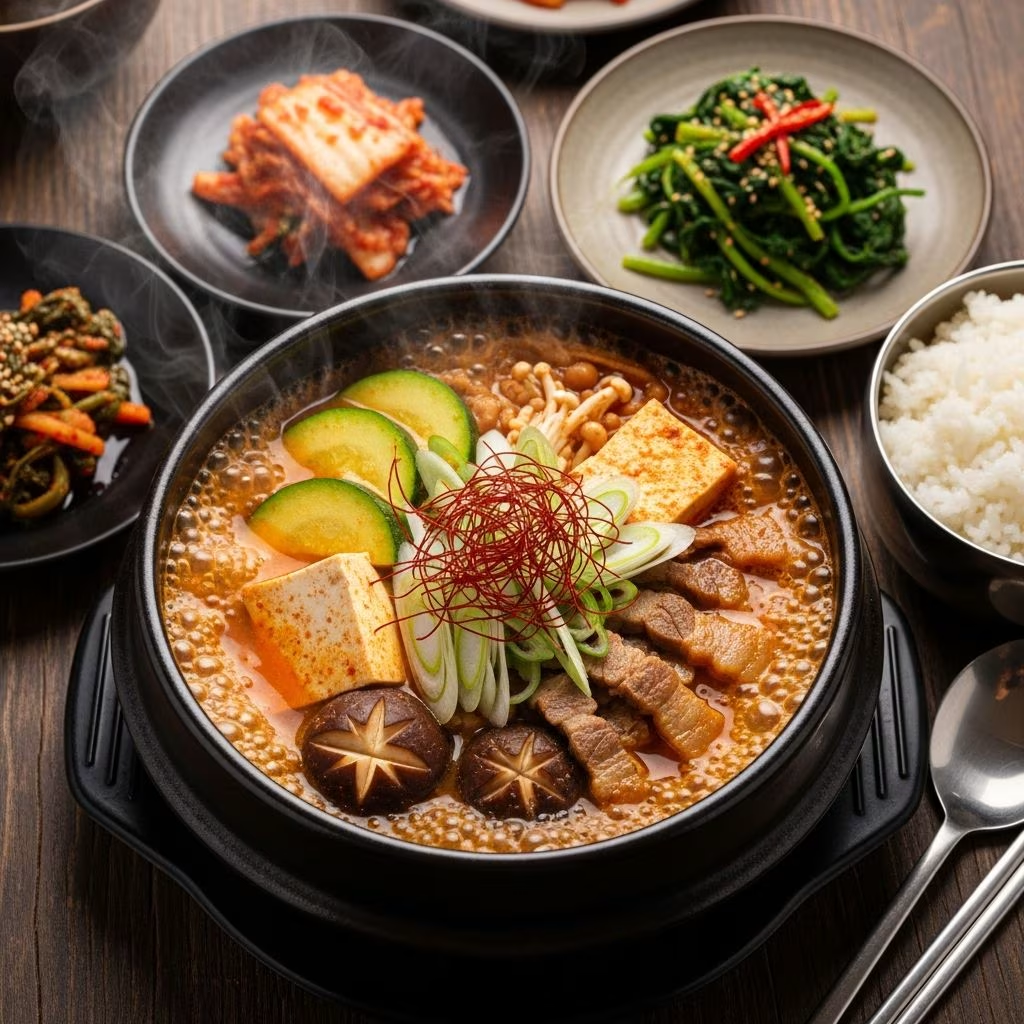
Doenjang jjigae stands as one of the most cherished dishes in Korean home cooking, offering a deep, savory warmth that comforts on any day. This fermented soybean paste stew combines simple ingredients like tofu, potatoes, zucchini, and often pork or seafood into a bubbling pot of umami delight. Rooted in Korea’s tradition of fermentation, it transforms humble soybeans into a flavorful base that defines everyday meals across generations.
The Essence of Doenjang: Heart of the Stew
At its core, doenjang is the fermented soybean paste that gives the stew its distinctive earthy, nutty profile. Made by boiling, salting, and aging soybeans for months or even years, doenjang develops complex flavors through natural fermentation. This process not only enhances taste but also boosts nutritional value with probiotics, proteins, and antioxidants.
In Korean kitchens, doenjang is a pantry staple, akin to miso in Japanese cuisine but bolder and less refined. Home-aged varieties pack more intensity, while store-bought options offer convenience. When selecting doenjang, look for a deep brown color and a robust aroma—signs of quality fermentation. Dilute it in broth to avoid clumps and unlock its full potential in the stew.
Historical Roots and Cultural Significance
Doenjang jjigae traces back centuries in Korean culinary history, mentioned in ancient texts as a nourishing dish for farmers and families. Fermentation preserved soybeans through harsh winters, making doenjang a survival food turned delicacy. Today, it embodies han, the Korean concept of resilient comfort, often served alongside rice and kimchi for balanced meals.
Families pass down recipes, adapting with seasonal vegetables or available proteins. In modern Korea, it’s a quick weeknight dinner, reflecting the blend of tradition and practicality. Its popularity spans urban apartments to rural homes, proving its timeless appeal.
Essential Ingredients for Authentic Flavor
Building a great doenjang jjigae starts with fresh, balanced components. Core elements include:
- Doenjang: 2-4 tablespoons, adjusted for saltiness.
- Tofu: Medium-firm, cubed for texture contrast.
- Vegetables: Potatoes, zucchini, onions, radish, or mushrooms for bulk and freshness.
- Protein: Pork belly, beef, shrimp, or anchovies for depth.
- Aromatics: Garlic, green onions, chili flakes (gochugaru) for heat and fragrance.
- Broth: Water, anchovy stock, or rice water to mellow flavors.
Variations abound—some add kelp for seafood notes, others sesame oil for richness. Proportions matter: aim for a harmonious mix where vegetables soften without mushiness.
Step-by-Step Guide to Cooking Doenjang Jjigae
Preparing this stew takes under 30 minutes, making it ideal for busy cooks. Follow this reliable method serving 4.
- Prep the base: In a pot over medium heat, sauté 150g diced pork belly in 1 tsp sesame oil until browned (2-3 minutes). Add 3 minced garlic cloves and 1 tsp gochugaru, stirring for 30 seconds.
- Dissolve doenjang: Pour in 4 cups anchovy stock or water. Stir in 3 Tbsp doenjang through a sieve until fully dissolved. Bring to a boil.
- Add hearty veggies: Toss in 1 potato (cubed), 1/4 onion (sliced), and radish slices. Simmer 5-7 minutes until tender.
- Incorporate soft elements: Add 1 zucchini (chunked), 200g tofu cubes, and mushrooms. Cook 3-5 minutes more.
- Finish and season: Stir in chopped green onions, chili pepper, and a dash of salt or MSG if needed. Simmer 1 minute off heat for infused flavors. Serve piping hot.
Pro Tip: Use an earthenware pot (ttukbaegi) for even heat distribution and authentic smokiness, though any heavy pot works.
Recipe Variations to Suit Every Palate
Doenjang jjigae’s flexibility allows endless tweaks. Here’s a comparison table of popular styles:
| Variation | Key Additions | Cook Time | Best For |
|---|---|---|---|
| Meat-Lover’s | Pork belly, beef brisket | 20 min | Hearty dinners |
| Seafood | Shrimp, anchovies, clams | 15 min | Light, briny twist |
| Vegan | Mushrooms, kelp stock | 18 min | Plant-based meals |
| Potato-Heavy | Extra potatoes, no meat | 25 min | Budget-friendly |
Each version maintains the doenjang backbone while adapting to dietary needs or ingredients on hand. For spice lovers, double gochugaru; for mild, skip chilies.
Health Benefits and Nutritional Profile
Beyond taste, doenjang jjigae nourishes with fermented goodness. Doenjang provides plant-based protein (about 15g per 100g), isoflavones for heart health, and gut-friendly bacteria. Vegetables add fiber, vitamins, and minerals—potatoes offer potassium, zucchini vitamin C. A bowl delivers around 300-400 calories, balanced with low carbs.
Studies link fermented soy to reduced inflammation and better digestion, making it a smart choice for wellness-focused eaters. Pair with brown rice for complete protein.
Pairing Suggestions and Serving Ideas
Serve doenjang jjigae in individual pots for a traditional touch, alongside steamed rice, kimchi, and seasoned spinach (sigeumchi namul). It complements grilled meats or fish, creating a full Korean banchan spread. For drinks, try soju or barley tea to cut richness.
Leftovers reheat beautifully, flavors deepening overnight. Freeze portions for up to a month.
Common Mistakes and Troubleshooting
- Too salty? Dilute with more broth; taste before adding salt.
- Clumpy paste? Always sieve doenjang into hot liquid.
- Veggies overcooked? Add soft ones last, like zucchini and tofu.
- Lacking depth? Sauté aromatics first or use aged doenjang.
Practice yields perfection—start simple and experiment.
Frequently Asked Questions (FAQs)
What is the difference between doenjang and miso?
Doenjang is coarser, more pungent from longer fermentation without rice, unlike sweeter miso.
Can I make it vegetarian?
Yes, swap meat for mushrooms and use vegetable broth for a robust vegan version.
How long does it last in the fridge?
Up to 5 days; flavors improve on day two.
Is doenjang jjigae spicy?
Mild by default; adjust gochugaru for heat levels.
Where to buy doenjang?
Asian markets or online; choose brands like Sempio for authenticity.
Mastering Doenjang Jjigae at Home
With its straightforward method and rewarding taste, doenjang jjigae invites beginners and pros alike. Experiment with seasonal produce or family twists to make it yours. This stew not only feeds the body but evokes the soul-soothing essence of Korean hospitality. Gather ingredients, fire up the stove, and savor a pot of pure comfort.
References
- Doenjang Jjigae (Korean Soybean Paste Stew) – My Korean Kitchen — My Korean Kitchen. 2023-05-15. https://mykoreankitchen.com/doenjang-jjigae/
- Doenjang-jjigae (Fermented soybean paste stew) – Maangchi — Maangchi. 2022-11-10. https://www.maangchi.com/recipe/doenjang-jjigae
- Doenjang Jjigae (Korean Soybean Paste Stew) | Two Plaid Aprons — Two Plaid Aprons. 2024-02-20. https://twoplaidaprons.com/doenjang-jjigae/
- Doenjang Jjigae (Soybean Paste Stew with Pork and Vegetables) — Korean Bapsang. 2023-08-05. https://www.koreanbapsang.com/doenjang-jjigae-korean-soy-bean-paste/
- Easy Doenjang Jjigae (Soybean Paste Stew) – Cookerru — Cookerru. 2024-01-12. https://www.cookerru.com/doenjang-jjigae/