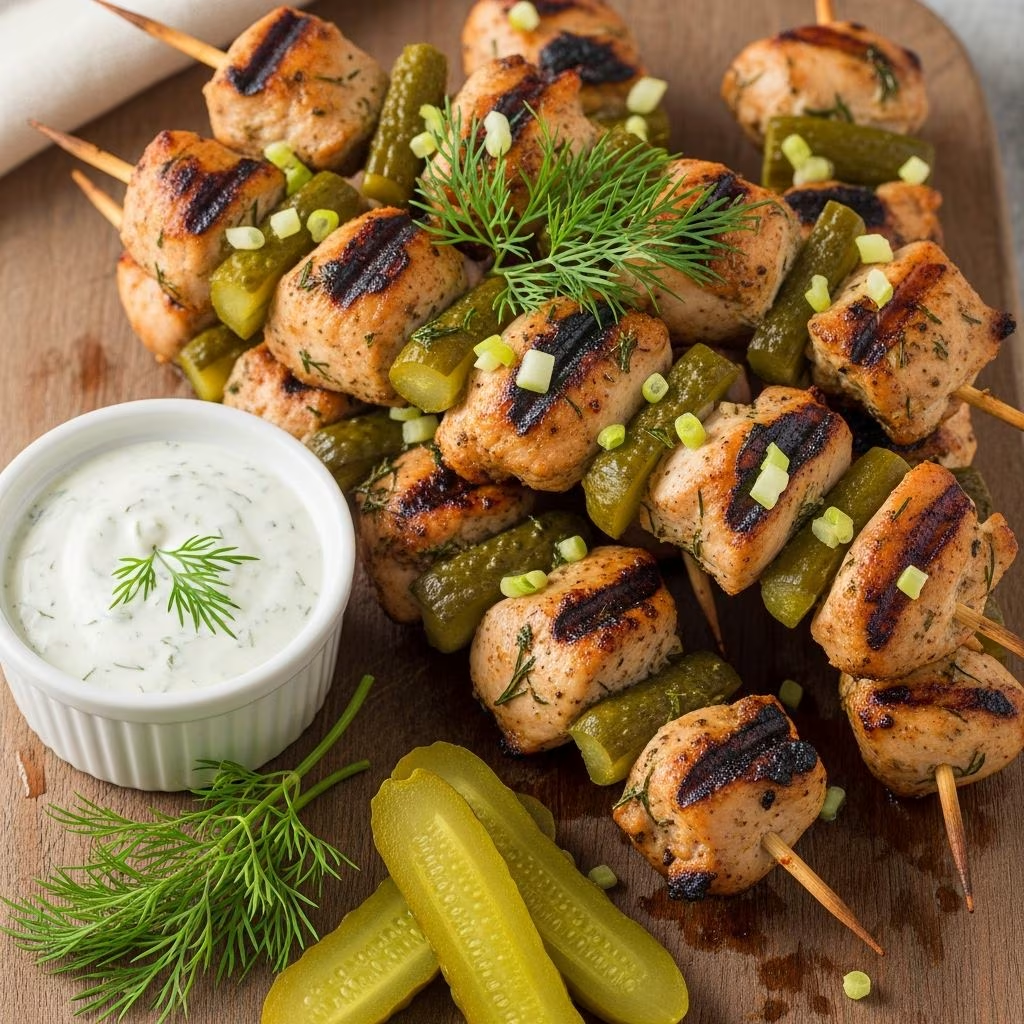
There’s something undeniably appealing about combining the crisp, tangy essence of dill pickles with succulent, tender chicken. When you thread these components onto skewers and finish them with a creamy ranch sauce, you create a dish that becomes the star of any backyard gathering. This comprehensive guide will walk you through every step of creating restaurant-quality dill pickle chicken skewers that deliver bold, memorable flavors.
Why Pickle Brines Transform Chicken
The magic behind exceptionally juicy chicken lies in understanding how brining works. When chicken is submerged in pickle juice, the acidic and salty environment penetrates the meat’s muscle fibers, allowing them to retain moisture during the cooking process. The acidity helps break down proteins slightly, creating a more tender texture throughout the meat.
Beyond moisture retention, pickle juice imparts a distinctive flavor profile that penetrates deep into the chicken. Rather than creating a surface-level taste, the marinade becomes integrated into the meat itself. This transformation occurs gradually, which is why allowing adequate marinating time—typically between 30 minutes to 8 hours—dramatically improves the final product.
The combination of salt, vinegar, and dill compounds naturally present in pickle juice creates an ideal marinade base. These elements work synergistically to enhance the chicken’s natural flavors while introducing new taste dimensions that keep diners coming back for more.
Essential Ingredients for Peak Flavor
Creating exceptional dill pickle chicken skewers requires thoughtful ingredient selection. Here are the key components you’ll need:
- Chicken: Choose boneless, skinless chicken breasts or thighs cut into uniform 1-inch cubes. Thighs provide additional fat content and moisture, while breasts offer a leaner option.
- Pickle juice: The foundation of your marinade, providing acidity, salt, and distinctive dill flavoring.
- Fresh dill pickles: These will be threaded directly onto your skewers alongside the chicken, creating pockets of tangy flavor throughout.
- Hot honey: Introduces subtle sweetness and heat that balances the pickle juice’s saltiness.
- Olive oil: Prevents sticking and aids in even cooking when combined with seasonings.
- Spice blend: Garlic powder, onion powder, paprika, salt, and pepper create layered complexity.
- Ranch seasoning: Available pre-mixed or homemade, this adds creamy herb notes to your sauce.
- Butter and fresh dill: These components form the base of your finishing sauce.
Preparation Methods: From Start to Skewering
Begin by preparing your wooden skewers at least 30 minutes before assembly. Soaking them in water prevents charring during cooking and ensures they don’t become brittle.
While skewers soak, prepare your chicken by cutting boneless breasts or thighs into consistent bite-sized pieces. Uniformity matters because it ensures even cooking throughout your batch. Set the cubed chicken aside in a bowl.
Pour your dill pickle juice into a large jar or container, then add hot honey and stir to combine. The honey dissolves into the brine, creating a nuanced marinade. Place your cubed chicken into this mixture, ensuring every piece is fully submerged and coated. Cover the container and refrigerate for a minimum of 30 minutes, though overnight marinating produces superior results.
Once marinating is complete, remove the chicken from the brine using a slotted spoon or fork, allowing excess liquid to drip back into the jar. While some recipes call for additional seasoning at this stage, the chicken will already be well-flavored from the marinade.
Now comes the assembly phase. Remove your pre-soaked skewers and begin threading the marinated chicken and fresh pickle slices in an alternating pattern. A suggested approach is one piece of chicken, followed by two pickle slices, then another chicken piece, and so forth. This pattern ensures balanced flavor distribution and visual appeal. Arrange your completed skewers on a prepared grill, air fryer basket, or baking sheet.
Cooking Techniques for Different Equipment
| Cooking Method | Temperature/Setting | Cooking Time | Key Tips |
|---|---|---|---|
| Grilling | Medium-high heat | 6-8 minutes per side | Oil grates beforehand; flip halfway through; watch for light charring |
| Air Frying | Standard setting | 11-12 minutes total | Arrange in single layer; flip halfway; may require batches |
| Oven Baking | 400°F | 15-20 minutes | Line sheet with parchment; no flipping required; brush halfway |
Regardless of your chosen cooking method, the internal temperature must reach 165°F (74°C) to ensure food safety. Use a meat thermometer to verify doneness by inserting it into the thickest chicken piece without touching the skewer.
Crafting Your Signature Finishing Sauce
While your skewers cook, prepare a finishing sauce that elevates them from simple to spectacular. In a small saucepan over medium heat, melt unsalted butter. Once melted, add your ranch seasoning blend along with freshly chopped dill, minced garlic, and chicken broth. The broth provides liquid base while the other components create a cohesive sauce.
Whisk these ingredients together vigorously for approximately one minute, ensuring the seasonings fully incorporate and no lumps remain. Allow the sauce to simmer gently for about five minutes, which allows the flavors to meld and the consistency to slightly thicken. Remove from heat just before the skewers finish cooking.
This sauce can be applied in multiple ways: brush it directly onto cooked skewers, serve it alongside for dipping, or drizzle it over the finished plate. Some cooks prefer reserving half the sauce for cooking and half for final presentation, which intensifies the dill pickle ranch flavor.
Flavor Enhancement Strategies
To maximize the dill pickle flavor profile, consider these enhancement techniques:
- Extended marinating times develop deeper flavors; overnight marination is ideal for bold taste
- Using both pickle juice and actual pickle slices creates flavor redundancy that reinforces the signature taste
- Adding extra fresh dill to your finishing sauce amplifies the herbaceous notes
- Lightly charring the skewers on high heat creates caramelized exterior notes that contrast beautifully with tangy interior flavors
- Garnishing with fresh dill sprigs and additional pickle slices adds visual and aromatic elements
Frequently Asked Questions
Can I prepare these skewers ahead of time?
Yes! Assemble and marinate your skewers up to 24 hours in advance. Store them covered in the refrigerator. Cook them directly from cold, adding just a few minutes to your cooking time.
What if I don’t have wooden skewers?
Metal skewers work excellently and don’t require soaking. They heat during cooking, so handle carefully with oven mitts. Alternatively, you can thread the chicken onto sturdy herbs like rosemary branches for added flavor.
How do I prevent the chicken from drying out?
The pickle juice marinade is your primary defense against dry chicken. Don’t skip this step. Additionally, avoid cooking beyond 165°F internal temperature, as further cooking dries meat rapidly.
Can I use this recipe for a large gathering?
Absolutely! This recipe scales easily. Prepare marinade in larger batches and marinate all chicken together. If using an air fryer, you’ll need to cook in multiple batches. Grilling allows for simultaneous cooking of many skewers.
What sides pair well with these skewers?
Consider serving alongside coleslaw, grilled vegetables, corn on the cob, potato salad, or fresh garden salads. The creamy ranch sauce complements most vegetable-based sides.
Storage and Leftover Management
Cooked dill pickle chicken skewers store well in airtight containers for up to four days. Reheat gently in a 350°F oven for about 10 minutes or in the air fryer at reduced temperature to avoid drying. The finishing sauce can be stored separately for up to three days.
If you have uncooked marinated skewers, they’ll keep for up to two days refrigerated. The marinating time continues during storage, actually improving flavor development.
Customization Possibilities
While the classic recipe is excellent, various modifications allow personalization. Substitute Greek yogurt for sour cream in your sauce for added protein. Add jalapeños alongside pickles for heat lovers. Include bell peppers or onions on your skewers for additional vegetables and textural variety. Some cooks add a touch of Worcestershire sauce or hot sauce to their marinade for deeper complexity.
For a Mediterranean twist, incorporate sun-dried tomatoes or Kalamata olives. Those preferring milder flavors can reduce marinating time and dilute pickle juice slightly with water. The versatility of this recipe framework accommodates numerous flavor preferences and dietary requirements.
Conclusion
Dill pickle chicken skewers represent an excellent intersection of bold flavors, straightforward preparation, and impressive presentation. By understanding how marination transforms chicken and mastering basic cooking techniques, you’ll create a dish that impresses family and guests alike. Whether you’re grilling for a casual weeknight dinner or hosting a summer celebration, these skewers deliver consistent excellence and unforgettable taste.
References
- Chicken Safety Guidelines — U.S. Department of Agriculture Food Safety and Inspection Service. 2024. https://www.fsis.usda.gov/food-safety/safe-food-handling-and-preparation/food-safety-basics/safe-temperature-guide
- Understanding Meat Brining and Marinades — North Carolina State University Cooperative Extension. 2023. https://www.ces.ncsu.edu/
- Acidic Marinades and Protein Denaturation — University of California Davis Department of Food Science. 2023. https://foodscience.ucdavis.edu/