Deviled eggs represent one of the most versatile and enduring appetizers in contemporary cuisine. These elegant bites combine simplicity with sophistication, making them equally at home on casual buffets and formal dinner tables. The foundation of this dish rests on a straightforward concept: hard-boiled eggs are halved, their yolks extracted and combined with complementary seasonings and binding ingredients, then spooned back into the egg white vessels and garnished for visual appeal. What makes deviled eggs truly compelling is their chameleon-like nature—the basic template accommodates countless interpretations, from traditional renditions to avant-garde creations.
Understanding the Foundation of Deviled Eggs
At its core, a deviled egg consists of hard-boiled egg halves filled with a seasoned yolk mixture. The term “deviled” historically referred to food prepared with spices and condiments that provided a slight bite or heat. Today, the designation encompasses any egg preparation where the yolks are removed, mixed with flavorings, and reintroduced to the whites.
The beauty of this preparation lies in its accessibility. Unlike dishes requiring specialized equipment or extensive culinary training, deviled eggs demand only basic kitchen skills and readily available ingredients. A home cook can produce restaurant-quality results with minimal effort, making this appetizer particularly appealing for entertaining scenarios where precision matters but time remains limited.
The Science of Perfectly Cooked Hard-Boiled Eggs
Achieving the ideal hard-boiled egg requires understanding how heat affects egg proteins. The process involves bringing eggs to a boil, allowing the heat to coagulate both the albumen (white) and yolk to the desired consistency.
Optimal Cooking Method
The most reliable approach involves placing eggs in a pot with sufficient water to cover them by approximately one inch. Bring the water to a rolling boil over medium-high heat, then maintain the boil for three minutes. After this initial boiling period, remove the pot from the heat source, cover it with a lid, and allow the eggs to sit undisturbed for fifteen minutes. This residual heat completes the cooking process without the risk of overcooking, which can produce the undesirable gray-green ring around the yolk caused by iron and sulfur compounds reacting.
Cooling and Peeling Technique
Once the cooking time concludes, transfer the eggs immediately to an ice water bath where they should remain for at least five minutes. This rapid cooling halts the cooking process and facilitates easier shell removal. The temperature differential causes the egg to contract slightly within its shell, creating separation that simplifies peeling. Some cooks add salt to the ice water, believing this further assists in shell removal, though the evidence supporting this technique remains anecdotal.
When peeling, work gently to avoid damaging the underlying white. Begin at the wider end where the air pocket provides natural separation. Roll the egg gently across a hard surface to create cracks in the shell, then remove pieces methodically while working under cool running water if available.
Crafting the Filling: Core Ingredients and Their Functions
The filling determines the character of your deviled eggs. While countless variations exist, understanding the fundamental components and their roles proves essential.
Mayonnaise: The Binding Agent
Mayonnaise serves as the primary binder, providing creaminess and body to the filling. The standard ratio involves one-quarter cup of mayonnaise per twelve eggs, though personal preference regarding richness may warrant adjustment. While traditional full-fat mayonnaise delivers maximum flavor, reduced-fat alternatives work acceptably for those monitoring caloric intake. Some contemporary preparations substitute Greek yogurt for mayonnaise, yielding a lighter result with increased protein content and subtle tanginess.
Mustard: The Flavor Bridge
Mustard contributes complexity and prevents the filling from tasting one-dimensional. Yellow mustard provides gentle, familiar flavor, while Dijon mustard introduces sophistication and subtle heat. Whole-grain mustard adds textural interest alongside flavor. Spicy mustard varieties cater to those preferring pronounced boldness. The typical ratio involves one tablespoon per dozen eggs, though experimentation encourages personal calibration.
Vinegar: The Acidic Component
A small quantity of vinegar, typically two teaspoons for a dozen eggs, brightens the overall flavor profile and adds the subtle tang that distinguishes exceptional deviled eggs from mediocre renditions. Distilled vinegar provides neutral acidity, while alternatives like white vinegar or champagne vinegar introduce their own characteristics.
Seasonings and Aromatics
Salt and black pepper form the seasoning foundation, requiring careful addition to enhance without overwhelming. Smoked paprika functions both as garnish and flavor component, contributing subtle smokiness when incorporated into the filling itself. Fresh or dried herbs, spices, and other aromatics build upon this base depending on desired direction.
Assembly and Presentation Methods
Once the yolks are removed and the filling prepared, two primary presentation methods exist. The traditional spoon approach involves using a small spoon to distribute the mixture into each egg white cavity. Alternatively, transfer the filling to a piping bag fitted with a decorative tip, allowing precise, attractive placement that elevates presentation without requiring advanced technique. For casual gatherings, spooning suffices; for formal entertaining, the piping method justifies the minimal additional effort.
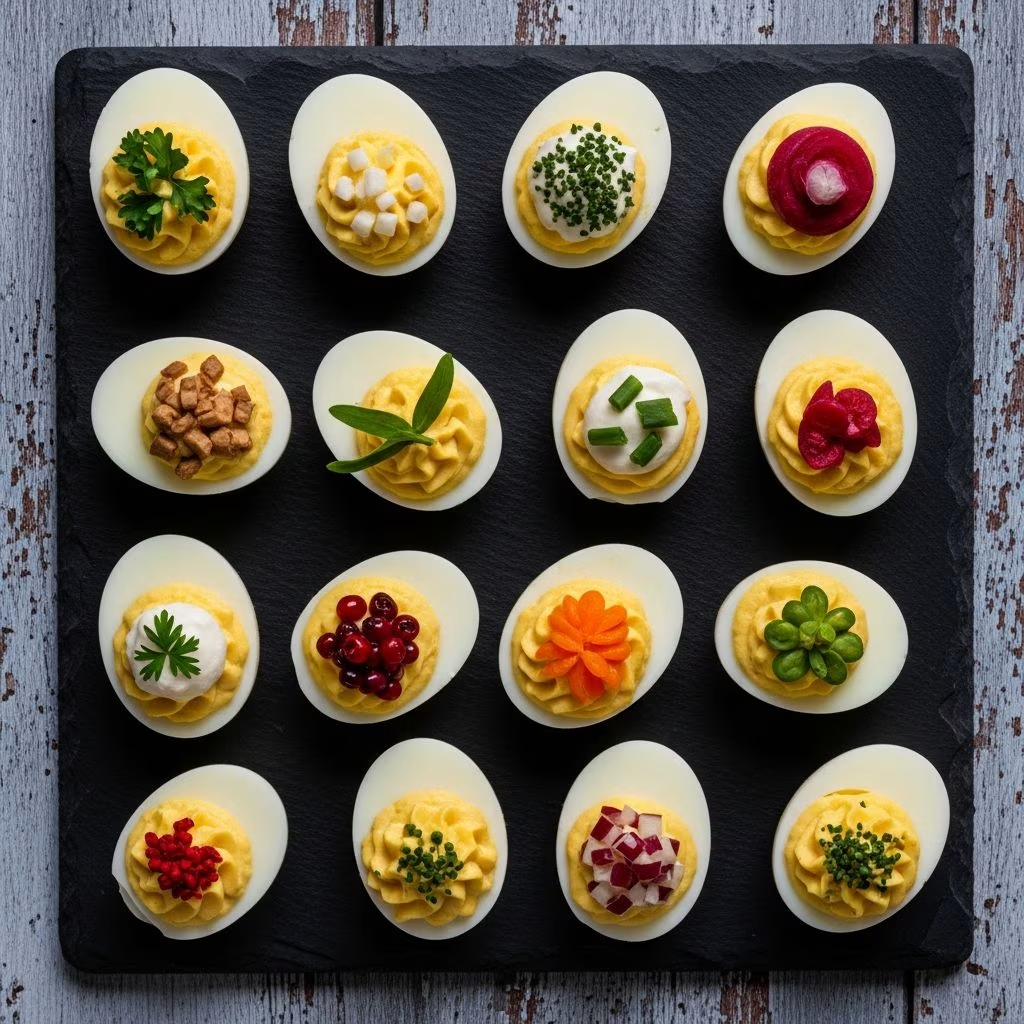
Garnishing transforms deviled eggs from simple to striking. Paprika remains the classic choice, offering both color and subtle flavor. Additional garnishing options include fresh chives, crispy bacon crumbles, and small herb leaves positioned for visual interest.
Exploring Flavor Variations
The basic deviled egg template welcomes infinite creative interpretations. Consider these approaches:
Spicy and Tangy Directions
Incorporating minced pickled jalapeños creates vibrant spicy-tangy deviled eggs. This variation maintains classical ingredients while introducing pronounced heat balanced by pickling vinegar. A single sliced jalapeño positioned atop each filled egg white provides visual indication of the spice level. For those preferring milder heat, “tamed” jalapeño varieties offer reduced pungency while maintaining the characteristic flavor profile.
Smoky and Savory Profiles
Smoked paprika can be supplemented with bacon elements—either crispy crumbled bacon stirred into the filling or garnished on top—to create deeply savory variations. This direction appeals to those favoring traditional American flavor combinations and pairs wonderfully with beer or light white wines.
Herbal and Garden-Fresh Approaches
Fresh herbs including dill, tarragon, basil, or cilantro introduce brightness and sophisticated garden-to-table appeal. These variations work particularly well in spring and summer entertaining scenarios.
International and Adventurous Directions
Horseradish introduces sharpness that appeals to those enjoying bold flavors, while capers, olives, and sun-dried tomatoes offer Mediterranean influences. Curry powder, wasabi, or sriracha permit exploration of Asian-inspired territories.
Ingredient Substitutions and Dietary Considerations
Contemporary entertaining frequently accommodates diverse dietary preferences and restrictions. The deviled egg format facilitates numerous adjustments without sacrificing appeal.
- Greek yogurt replaces mayonnaise entirely for lighter, higher-protein versions
- Vegan mayonnaise accommodates plant-based diets while maintaining creaminess
- Reduced-fat mayonnaise addresses caloric concerns
- Gluten-free mustard ensures compatibility with celiac requirements
- Omitting traditional seasonings while introducing herbs appeals to fresh-food preferences
Storage and Make-Ahead Strategies
Deviled eggs offer significant convenience for advance preparation. Hard-boiled eggs maintain quality refrigerated for up to one week. The filling can be prepared separately and refrigerated in a covered container for three to four days. Final assembly should occur within a few hours of serving to prevent the egg whites from absorbing excessive moisture and becoming soggy. This flexibility makes deviled eggs particularly valuable for entertaining situations requiring strategic time management.
Serving and Pairing Considerations
Deviled eggs function effectively in numerous entertaining contexts. They work as elegant appetizers preceding formal dinners, casual party fare, picnic accompaniments, or brunch components. Portion considerations suggest allowing three to four egg halves per person as an appetizer portion. Presentation on tiered stands, serving platters, or individual spoons elevated on small glasses creates visual interest during buffet service.
Beverage pairing enhances the entertaining experience. Sparkling wines, light crisp whites, and traditional cocktails all complement deviled eggs’ rich and complex flavors. For non-alcoholic occasions, sparkling water with herb garnishes or traditional lemonade provides refreshment.
Common Challenges and Solutions
Difficult Peeling
Eggs that prove challenging to peel typically resulted from insufficient cooling time or older eggs where the membrane has loosened from the shell. Using older eggs (one to two weeks old) and ensuring adequate ice bath time minimizes this issue.
Dry Filling
Excessively dry filling indicates insufficient mayonnaise or excessive yolk mashing. Add mayonnaise in small increments while mixing to achieve the desired consistency.
Watery Filling
Too much liquid or mayonnaise of inferior quality can create runny filling. Use quality mayonnaise and ensure proper ratios. If necessary, incorporate a small amount of finely ground seasoned breadcrumbs to absorb excess moisture.
Undesirable Gray Ring Around Yolks
This discoloration results from overcooking and is purely cosmetic, not harmful. It results from iron and sulfur compounds reacting at high temperatures. Strict adherence to cooking times and immediate ice bath transfer prevents this occurrence.
Frequently Asked Questions
How far in advance can deviled eggs be prepared?
Hard-boiled eggs maintain quality refrigerated for up to one week. The filling can be prepared separately for three to four days. Final assembly should occur within several hours of serving for optimal texture and appearance.
Can deviled eggs be frozen?
Freezing is not recommended as the mayonnaise-based filling does not freeze well and becomes separated and watery upon thawing. However, cooked hard-boiled eggs can be frozen for up to one month, then thawed for use in fresh deviled egg preparation.
What accommodates vegetarian requirements?
All traditional deviled egg components are vegetarian-friendly. Only bacon-containing variations require substitution for vegetarian attendees, easily accomplished by omitting bacon or using plant-based bacon alternatives.
How can large quantities be managed efficiently?
For significant quantities, prepare hard-boiled eggs and filling separately, storing each in covered containers. Arrange egg whites on serving platters in advance, then fill close to serving time using a piping bag with a decorative tip for speed and consistency.
Are there any food safety concerns?
Deviled eggs containing mayonnaise should not remain unrefrigerated for extended periods. For buffet service, place on ice to maintain cool temperature. Discard any deviled eggs remaining at room temperature for more than two hours.
References
- Easy Classic Deviled Eggs Recipe — To Simply Inspire. Accessed 2026-04-07. https://www.tosimplyinspire.com/deviled-eggs.html
- 20 Unique Deviled Egg Recipes That Are Easy To Make — The Kingston Home. Accessed 2026-04-07. https://thekingstonhome.com/blog/20-unique-deviled-egg-recipes-that-are-easy-to-make/
- Loaded Deviled Eggs — Iowa Girl Eats. Accessed 2026-04-07. https://iowagirleats.com/loaded-deviled-eggs/