Deep-frying turkey breast represents a modern cooking technique that delivers exceptional results for those seeking an alternative to traditional roasting methods. This approach produces remarkably tender, juicy poultry with a golden exterior that appeals to cooks preparing meals for gatherings, holidays, or everyday dining. Unlike whole turkey frying, which requires specialized equipment and substantial oil quantities, breast-only preparation offers greater control, faster cooking times, and practical advantages for home cooks. Understanding the fundamental principles of this cooking method ensures consistent, delicious outcomes regardless of your experience level.
Essential Equipment and Material Requirements
Successful deep-frying begins with appropriate equipment selection. A large, sturdy pot serves as the primary cooking vessel, requiring sufficient capacity to safely contain both the oil and turkey while maintaining proper clearance from the rim. The pot should measure at least 12 inches in depth, allowing adequate space for oil displacement when the turkey enters the hot liquid. A reliable deep-frying thermometer becomes indispensable for monitoring oil temperature accurately—without this tool, you risk either insufficient cooking or dangerous temperature fluctuations.
Oil selection significantly influences both flavor and cooking performance. High smoke-point oils such as peanut oil, canola oil, vegetable oil, and safflower oil perform excellently for this application. These oils withstand the elevated temperatures required for frying while contributing minimal flavor interference. Most recipes require between 1.5 to 3 gallons of oil, depending on turkey breast size and pot dimensions. Additional essential items include heat-proof gloves for safety during the frying process, paper towels for initial drainage, a meat thermometer for verifying doneness, and a slotted spoon or basket for gentle handling of the cooked poultry.
Preparation Methods: Two Distinct Approaches
Two primary preparation techniques exist for deep-fried turkey breast, each offering unique advantages. The first involves cooking an intact bone-in breast half, which maintains structural integrity throughout the frying process and requires minimal prep work. This whole-breast approach typically uses 3 to 8-pound portions, cooking until the internal temperature reaches 165°F. The second method involves cutting the breast into individual strips or bite-sized portions, which are then marinated and breaded before frying. This approach accommodates various flavor profiles and reduces overall cooking time significantly.
For whole-breast preparation, begin by removing the turkey from refrigeration approximately one hour before cooking to achieve room temperature. This temperature equalization ensures more uniform cooking throughout the meat. Pat the breast thoroughly dry using paper towels, as residual moisture interferes with both seasoning adhesion and the browning process. For strip or nugget preparation, debone the turkey breast and cut it into uniform 1-inch wide pieces resembling chicken tenders. This consistency promotes even cooking and professional presentation.
Seasoning and Flavor Development Strategies
Seasoning approaches vary based on your chosen preparation method and desired flavor profile. Traditional approaches employ simple salt and pepper combinations, allowing the natural turkey flavor to predominate. A basic seasoning formula includes 2.25 teaspoons of kosher salt and freshly ground black pepper applied generously to the entire breast surface. For enhanced flavor complexity, Louisiana and Cajun-inspired seasonings incorporate onion powder, garlic powder, and crushed red pepper, creating a more robust spice profile.
When using breaded strip preparations, buttermilk soaking proves remarkably effective for flavor development and texture improvement. Submerge the turkey strips in buttermilk and refrigerate for 24 hours, allowing the milk’s lactic acid to gently denature the proteins and enhance tenderness. Following the buttermilk soak, coat the strips with seasoned flour containing salt, black pepper, and additional spices of choice. This double-seasoning approach—both in the marinade and the flour coating—creates significant flavor depth.
For whole breasts, applying seasonings and allowing them to set before cooking dramatically improves flavor distribution. Pat seasoning into the turkey surface and let it rest at room temperature for one hour, or alternatively refrigerate uncovered for 12 to 24 hours. This extended resting period permits the salt to penetrate deeper into the meat tissue, enhancing both moisture retention and seasoning distribution.
Oil Temperature Management and Safety Protocols
Maintaining proper oil temperature represents the single most critical factor influencing frying success. Most recipes recommend preheating oil to 350°F, with some variations ranging from 325°F to 400°F depending on the specific preparation. The preheating process requires patience and careful monitoring. Place your thermometer in the pot and maintain consistent heat until the desired temperature stabilizes. During preheating, keep the pot covered to accelerate temperature rise while preventing debris from contaminating the oil.
When the turkey enters the hot oil, temperature drops significantly—typically declining from 375-400°F down to 350-325°F. This temporary reduction is normal and expected. Adjust your heat source to maintain cooking temperature between 325°F and 375°F throughout the frying process. Checking temperature every 5 to 10 minutes ensures consistency and prevents dangerous temperature spikes or excessive drops that compromise cooking quality.
Safety demands serious attention when working with large quantities of hot oil. Wear heat-proof gloves extending well up the forearm to protect against splattering. Lower the turkey slowly and deliberately into the oil using a basket or slotted spoon, never dropping it hastily into the liquid. Create a clear work zone free from children, pets, and clutter. Keep a fire extinguisher rated for grease fires nearby—never use water on oil fires, as this causes violent spattering and fire spread. Maintain adequate ventilation in your cooking area to manage smoke and cooking odors.
Cooking Time Guidelines and Doneness Determination
Cooking duration depends on turkey size, oil temperature, and whether you’re preparing whole breasts or individual pieces. For whole boneless, skinless breasts of approximately 3 pounds, expect 15 to 20 minutes of frying time using the standard calculation of 3 to 4 minutes per pound plus an additional 5 minutes. For bone-in breasts weighing 8 pounds, cooking time extends to approximately 28 to 32 minutes using 3.5 minutes per pound as the guideline. Strip or nugget preparations typically require 5 to 10 minutes depending on piece size and oil temperature.
Never rely solely on cooking time estimates, as variables such as actual oil temperature, piece uniformity, and individual equipment variations affect results. Instead, use an instant-read meat thermometer to verify doneness by checking the internal temperature at the thickest portion of the meat. The target temperature is 165°F for boneless preparations, though some recipes recommend 150-155°F for bone-in breasts. Insert the thermometer probe into the thickest section, avoiding contact with bone or the fryer basket, and wait for the readout to stabilize before removing the turkey from oil.
Execution Steps: From Oil to Table
Begin by calculating the required oil volume using a simple displacement method. Place your seasoned turkey in the empty pot and cover it completely with water, adding approximately 3 additional inches of liquid. Mark the water level on the pot’s exterior, then remove the turkey and drain the water. This marked level indicates exactly how much oil to add. This measurement technique prevents overfilling while ensuring complete turkey submersion during cooking.
Pour the measured oil into your thoroughly dried pot and heat it steadily to your target temperature, typically 350°F for most recipes. Monitor temperature continuously during the preheating phase. Once the oil reaches the desired temperature and stabilizes, carefully lower the prepared turkey into the hot liquid using either a fryer basket or slotted spoon. Move deliberately and cautiously to minimize splashing and burning risk.
For whole-breast preparations, turn the turkey once during the cooking process to ensure even browning and heat distribution. Some recipes recommend covering the fryer during cooking to contain splatters, though this reduces visibility for temperature monitoring and browning assessment. Check the oil temperature every several minutes and adjust your heat source to maintain the target range. When the meat’s internal temperature reaches 165°F at the thickest point, remove the turkey from oil by slowly lifting the basket, allowing oil to drain back into the pot.
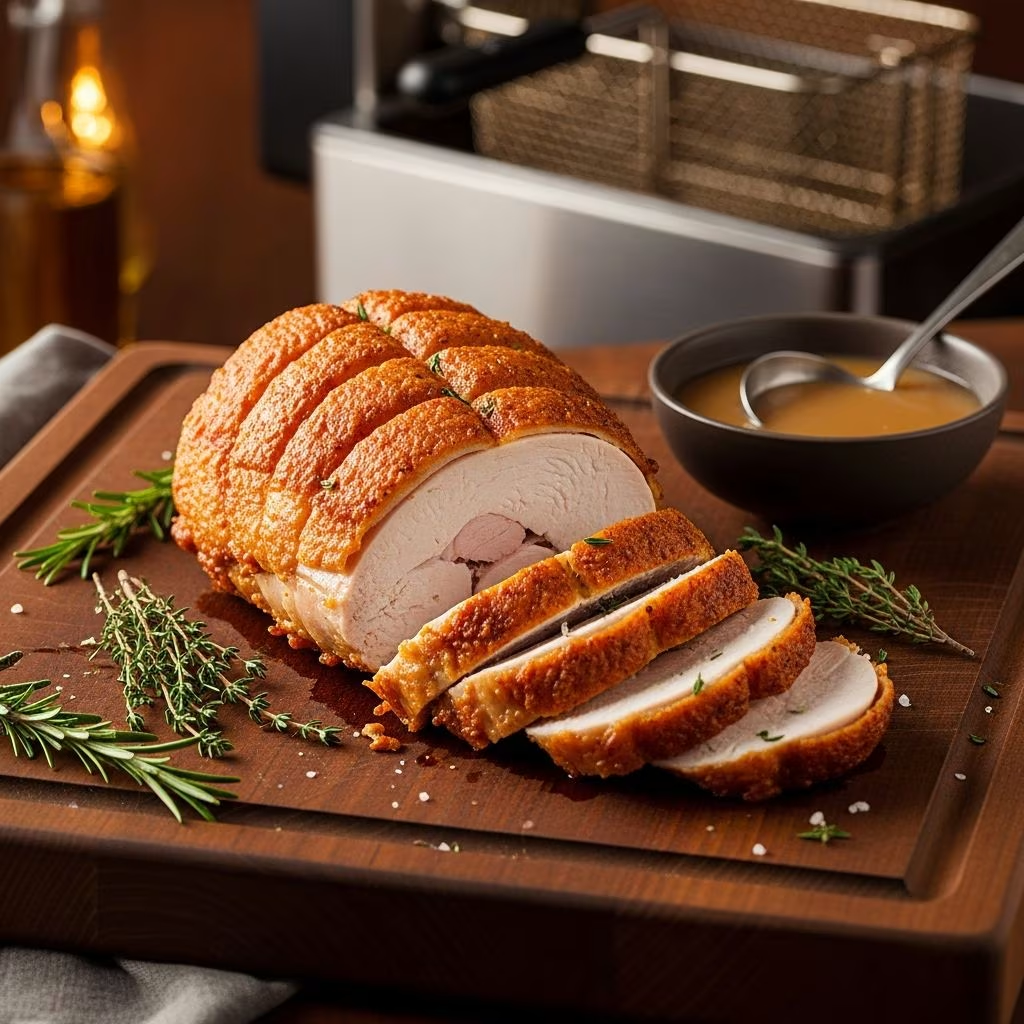
Place the cooked turkey on paper towels to drain excess oil. Allow it to rest for 10 to 15 minutes before slicing or serving. This resting period redistributes internal juices throughout the meat, promoting superior texture and moisture. For enhanced presentation and flavor, brush melted butter across the turkey’s surface once it cools enough to handle safely.
Comparative Cooking Method Analysis
| Method | Oil Temperature | Estimated Time (3 lb) | Target Internal Temperature | Best For |
|---|---|---|---|---|
| Whole Boneless Breast | 350°F | 15-20 minutes | 165°F | Simple preparation, fewer pieces |
| Bone-In Breast | 365-375°F | 28-32 minutes (8 lb) | 150-155°F | Added flavor, structural support |
| Breaded Strips | 300-325°F | 5-10 minutes | 165°F | Family meals, appetizers, variety |
| Buttermilk-Soaked Pieces | 300-325°F | 8-12 minutes | 165°F | Enhanced tenderness, bold flavors |
Flavor Enhancement Techniques and Finishing Options
Beyond basic seasoning, numerous options exist for elevating the final dish. A honey and pecan glaze offers sophisticated sweetness and textural contrast. Prepare this accompaniment by heating honey and butter together in a saucepan over medium-high heat, stirring in toasted and coarsely chopped pecans, and simmering for approximately 8 minutes to meld the flavors. Apply this glaze over the rested turkey immediately before serving for optimal presentation and taste.
Cajun and Creole spice blends complement fried turkey beautifully, offering bold heat and complex flavor layers. Smoked paprika, cayenne pepper, thyme, and oregano create authentic Louisiana-inspired results. Garlic powder and onion powder enhance savory notes without requiring fresh ingredient preparation. These seasonings work equally well applied directly to whole breasts or mixed into flour coatings for breaded preparations.
Compound butter—butter mixed with fresh herbs, garlic, and spices—provides luxurious finishing touches. Create this by softening butter and blending it with minced fresh parsley, thyme, rosemary, minced garlic, and salt. Apply spoonfuls of compound butter to the hot turkey immediately after removing it from oil, allowing the residual heat to melt the butter and distribute the herb flavors throughout the meat.
Common Challenges and Solutions
Temperature fluctuations: Unstable oil temperature leads to uneven cooking and potentially dangerous conditions. Maintain consistent heat by avoiding sudden adjustments and checking temperature frequently. Use a reliable thermometer and allow adequate time for temperature recovery after adding cold turkey to the oil.
Uneven browning: This typically results from inconsistent oil temperature or incomplete turkey submersion. Ensure the turkey is fully covered by oil and turn it once during cooking for boneless breasts. Verify that your oil temperature remains within the recommended range throughout the entire frying period.
Dry or tough meat: Overcooking represents the primary cause of texture problems. Use an accurate meat thermometer and remove the turkey immediately upon reaching the target internal temperature. Avoid cooking beyond 165°F, as additional cooking only increases moisture loss. Allow proper resting time before slicing to preserve juices.
Soggy exterior: This issue emerges when oil temperature proves insufficient for proper browning, or when the turkey isn’t adequately dried before frying. Pat the turkey completely dry with paper towels before cooking. Ensure your oil reaches the proper temperature before adding the turkey and maintain that temperature throughout cooking.
Storage and Leftover Management
Cooled deep-fried turkey breast stores effectively in an airtight container in the refrigerator for 3 to 4 days. Reheat gently using low oven temperatures (approximately 275°F) to avoid drying the meat further. Wrapped loosely in foil, the turkey retains moisture better than uncovered storage. For extended preservation, slice the cooled turkey, wrap portions individually in plastic wrap, and freeze for up to 3 months. Thaw in the refrigerator overnight before reheating.
Leftover fried turkey transforms beautifully into various dishes. Create sandwiches using thick slices with preferred condiments and bread. Dice the meat and incorporate it into salads, grain bowls, or wraps for convenient protein-packed meals. Shred the cooled turkey and add it to soup bases or casserole dishes for added depth and satisfaction.
Serving Suggestions and Pairing Ideas
Deep-fried turkey breast serves excellently as a centerpiece for holiday gatherings, family dinners, or casual entertaining. Its portion-friendly nature and familiar preparation appeal to diverse palates and dietary preferences. Serve whole breasts sliced onto platters with fresh herbs as garnish and complementary sauces for dipping. Individual strip portions work wonderfully as part of appetizer spreads or casual buffet settings.
Pair fried turkey with traditional sides including cornbread dressing, cranberry sauce, roasted vegetables, or creamed potatoes. The rich, savory fried exterior contrasts beautifully with bright, acidic accompaniments. Coleslaw, pickled vegetables, or fresh salads provide refreshing textural and flavor balance. For casual presentations, offer alongside classic barbecue sides such as baked beans, sweet potato casserole, or collard greens.
Conclusion and Final Recommendations
Deep-frying turkey breast represents an accessible, rewarding cooking technique that delivers exceptional results with proper attention to temperature, timing, and preparation fundamentals. This method produces remarkably flavorful, juicy poultry that appeals to both experienced cooks and culinary newcomers. By following the comprehensive guidelines outlined above—from careful oil measurement through proper temperature maintenance and accurate doneness verification—you’ll consistently achieve restaurant-quality results in your home kitchen. Whether preparing this dish for special occasions or everyday meals, mastering deep-fried turkey breast expands your culinary repertoire and impresses family and guests alike.
References
- Deep Fried Turkey Breast Recipe — The Cookie Rookie®. Accessed 2026. https://www.thecookierookie.com/deep-fried-turkey-breast/
- Deep Fried Turkey Breast Recipe — Mossy Oak. Accessed 2026. https://www.mossyoak.com/our-obsession/blogs/recipes/deep-fried-turkey-breast-recipe
- Easy Deep Fried Turkey Breast Recipe — Biscuits & Burlap. Accessed 2026. https://www.biscuitsandburlap.com/fried-turkey-breast/
- Honey-Glazed Roasted Pecan Deep-Fried Turkey Breast Recipe — Masterbuilt. Accessed 2026. https://www.masterbuilt.com/blogs/recipes/honey-glazed-roasted-pecan-deep-fried-turkey-breast
- Deep Fried Turkey Breast — The Wooden Skillet. Accessed 2026. https://thewoodenskillet.com/deep-fried-turkey-breast/
- Louisiana Fried Turkey Breast Recipe — Eat Turkey. Accessed 2026. https://www.eatturkey.org/recipe/louisiana-fried-turkey-breast/