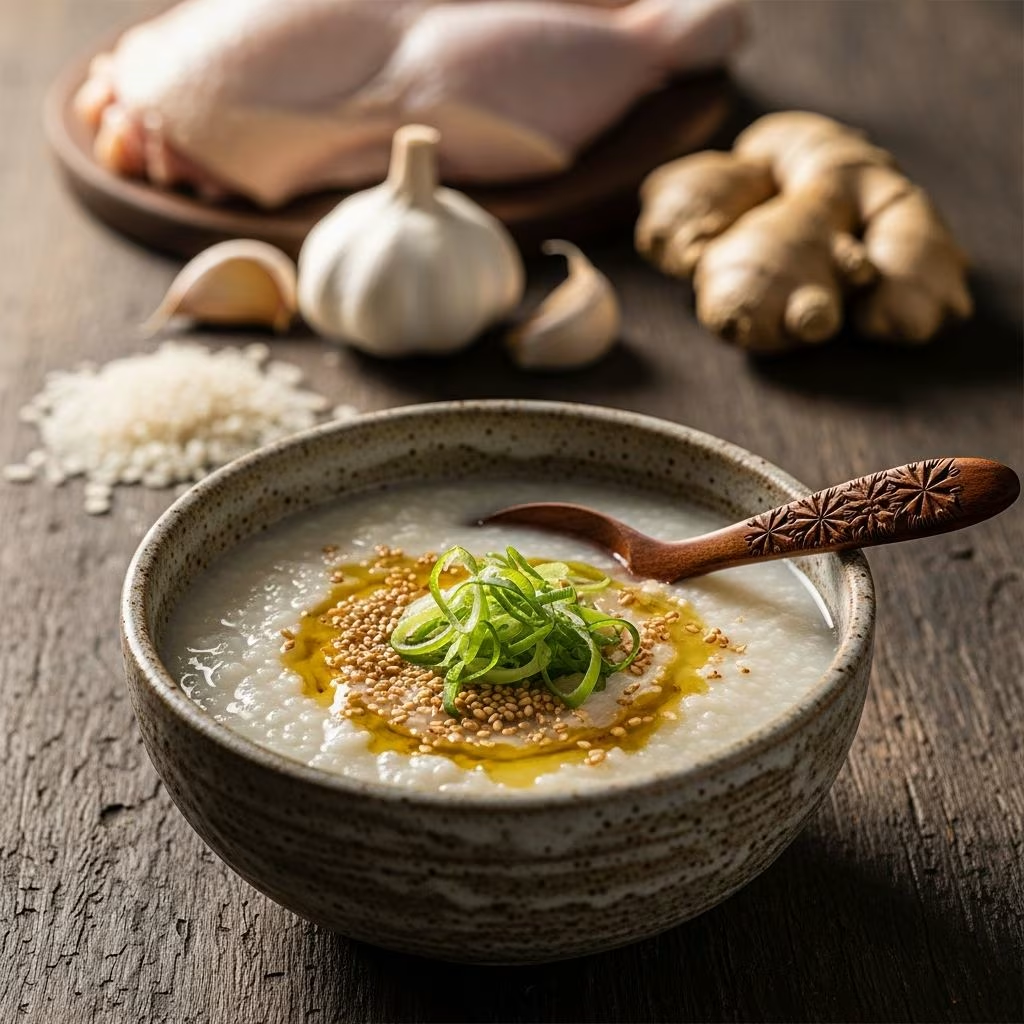
Korean chicken porridge, known as dakjuk, stands as a timeless staple in Korean cuisine, cherished for its gentle texture and nourishing qualities. This dish transforms simple rice and chicken into a velvety bowl of comfort, often enjoyed during cold weather, illness recovery, or as a light meal after indulgent feasts. Rooted in tradition, dakjuk highlights the art of simmering rice to a creamy consistency while infusing it with savory chicken broth and subtle vegetable flavors.
The Essence of Dakjuk in Korean Food Culture
Dakjuk embodies the heart of Korean home cooking, where porridge or juk serves multiple roles—from everyday sustenance to therapeutic fare. Historically, families prepare it using leftover chicken from dishes like baeksuk, a poached whole chicken meal, maximizing flavor and nutrition. The dish’s appeal lies in its adaptability; it can be plain for sensitive stomachs or enriched with garnishes for more robust tastes.
In Korea, juk varieties abound, but dakjuk’s chicken base provides a protein boost alongside easily digestible carbs from rice. Nutritionists note its benefits for hydration and easy assimilation, making it ideal for children, elders, or anyone needing mild nourishment.
Core Ingredients for Authentic Dakjuk
Building a flavorful dakjuk starts with high-quality basics. Key components include:
- Rice: Short-grain or glutinous (sweet) rice for creaminess. Glutinous rice yields a stickier, richer texture.
- Chicken and Broth: Homemade stock from boiling chicken with aromatics like garlic, ginger, and scallions ensures depth.
- Vegetables: Carrots, celery, mushrooms, or zucchini add color and subtle sweetness without overpowering.
- Seasonings: Sesame oil, salt, pepper, and optional soy sauce for balance.
- Garnishes: Scallions, sesame seeds, and nori elevate the finish.
Proportions typically call for 1 cup rice to 6 cups broth, adjustable for desired thickness.
Step-by-Step Traditional Cooking Method
Preparing classic dakjuk involves patience and technique to achieve the perfect porridge consistency.
- Prepare Rice: Rinse and soak 1 cup rice (mix short-grain and glutinous for best results) for 30-60 minutes. Drain well.
- Make Broth: Simmer a whole chicken or pieces with onion, garlic, ginger, and scallions for 40-60 minutes. Shred meat, reserving stock.
- Toast Rice: Heat sesame oil in a pot, add rice, and stir-fry until translucent, about 2-3 minutes. This step enhances nuttiness.
- Simmer Base: Pour in 6 cups stock, bring to boil, then reduce to low simmer for 20-30 minutes, stirring occasionally.
- Add Fillings: Stir in finely chopped veggies and shredded chicken. Cook 10-15 more minutes until veggies soften and porridge thickens.
- Season and Rest: Adjust with salt, pepper. Let sit covered for 5 minutes to thicken further.
Serve hot in bowls, topped with scallions, sesame seeds, and a drizzle of sesame oil.
Quick 30-Minute Dakjuk Variations
For busy days, shortcut versions use leftover rice or store-bought broth, cutting time to under 30 minutes.
- Leftover Rice Method: Sauté minced garlic, onion, carrot in sesame oil. Add 1 cup cooked rice, 2 cups broth, and diced chicken thighs. Simmer 15-20 minutes.
- One-Pot Speedy: Combine cooked rice, soy sauce, chicken powder, and broth. Shred poached chicken in directly.
These maintain flavor while saving effort, ideal for weeknights.
Customizing Your Dakjuk with Add-Ins
Dakjuk’s versatility shines in personalization. Experiment safely to suit preferences:
| Add-In | Quantity | Effect |
|---|---|---|
| Perilla leaves (julienned) | 3-4 leaves | Earthy, herbal note |
| Mushrooms (shiitake or button) | 3-4 caps | Umami depth |
| Zucchini or cabbage | 1/2 cup chopped | Fresh crunch |
| Coconut aminos | 1 tbsp | Gluten-free umami |
| Nori strips | To taste | Seaweed savoriness |
Aim for fine chops to blend seamlessly. For vegan twists, swap chicken for vegetable broth and tofu.
Health Benefits and Nutritional Profile
Dakjuk offers balanced nutrition: rice provides sustained energy, chicken delivers lean protein (about 20g per serving), and veggies contribute vitamins A and C. Low in fat, high in hydration—perfect for digestive ease. Studies on porridges like congee show they aid gut recovery post-illness, aligning with Korean traditions. A typical bowl clocks ~400 calories, customizable for diets.
Common Mistakes and Pro Tips
Avoid these pitfalls for success:
- Burning Rice: Stir frequently during toasting and simmering.
- Wrong Consistency: Add broth gradually; glutinous rice thickens more.
- Overcooking Veggies: Introduce late to retain vibrancy.
Pro Tip: Use a heavy-bottomed pot for even heat. Freeze extra broth in portions for future batches.
Pairing Suggestions and Serving Ideas
Serve dakjuk steaming with banchan like kimchi for contrast, or kim for mild palates. Pair with herbal tea or soju in social settings. For breakfast, top with a fried egg.
Frequently Asked Questions (FAQs)
What rice is best for dakjuk?
Short-grain or a short-grain/glutinous mix for creaminess. Glutinous rice gives superior texture.
Can I make dakjuk vegetarian?
Yes, use vegetable broth and omit chicken, adding mushrooms or tofu for heartiness.
How long does dakjuk keep?
Refrigerate up to 3 days; reheat with added broth to loosen.
Is dakjuk gluten-free?
Naturally, if using tamari instead of soy sauce.
What’s the difference between dakjuk and congee?
Dakjuk emphasizes chicken and sesame notes; congee is broader Chinese rice porridge.
References
- Dakjuk (Chicken Porridge) – Korean Bapsang — Korean Bapsang. 2023-05-15. https://www.koreanbapsang.com/dakjuk-korean-chicken-porridge/
- Korean Chicken and Rice Porridge (Dak Juk) – Chef Chris Cho — Chef Chris Cho. 2022-11-10. https://chefchrischo.com/chicken-porridge-dakjuk/
- DakJuk (Korean Chicken Rice Porridge) – Regular and Instant Pot — Kimchimari. 2021-08-20. https://kimchimari.com/dakjuk-chicken-rice-porridge/
- Korean Chicken and Rice Porridge, Dak Juk – Seasoned by Jin — Seasoned by Jin. 2023-02-14. https://seasonedbyjin.com/korean-chicken-and-rice-porridge-dak-juk/
- 30-Minute Dak Juk | Korean Rice Porridge with Chicken — What Great Grandma Ate. 2022-09-05. https://whatgreatgrandmaate.com/leftover-rice-dak-juk-korean-rice-porridge/