Creating a memorable salad goes beyond simply tossing ingredients together. When you introduce warm curry spices to succulent chicken paired with nature’s sweetest offerings, you elevate an ordinary lunch into something genuinely special. This particular approach to chicken salad combines the comfort of familiar ingredients with unexpected flavor dimensions that continue developing long after the initial preparation.
Understanding the Flavor Profile
The foundation of this dish rests on a delicate balance between savory and sweet elements. Curry powder provides the essential warmth, but not the heat that many people anticipate. Instead, this spice delivers subtle aromatic notes that complement rather than overpower the delicate chicken meat. The sweetness from dried fruits and fresh apples creates a counterpoint to the curry’s earthiness, while acidic components brighten the entire composition.
The beauty of this combination lies in its complexity. Each component—the tender poultry, crisp vegetables, juicy fruits, and creamy binding agent—serves a specific textural and flavor purpose. When allowed to rest, these elements merge into something greater than their individual parts, creating layers of taste that unfold with each bite.
Essential Components for Building Your Salad
Protein Foundation
Starting with quality cooked chicken ensures success from the beginning. Whether you roast chicken specifically for this recipe or repurpose leftover rotisserie poultry, the meat should be cooled completely before combining with other ingredients. Dicing the chicken into uniform, bite-sized pieces creates an appealing presentation and ensures even distribution throughout the salad. Most recipes call for approximately two cups of diced chicken breast, providing a protein-rich base that satisfies without overwhelming the other flavors.
Fruit Selections
Fruits serve multiple functions in this salad beyond mere decoration. Their natural sugars provide sweetness, while their acidity brightens the overall taste profile. Traditional recipes incorporate:
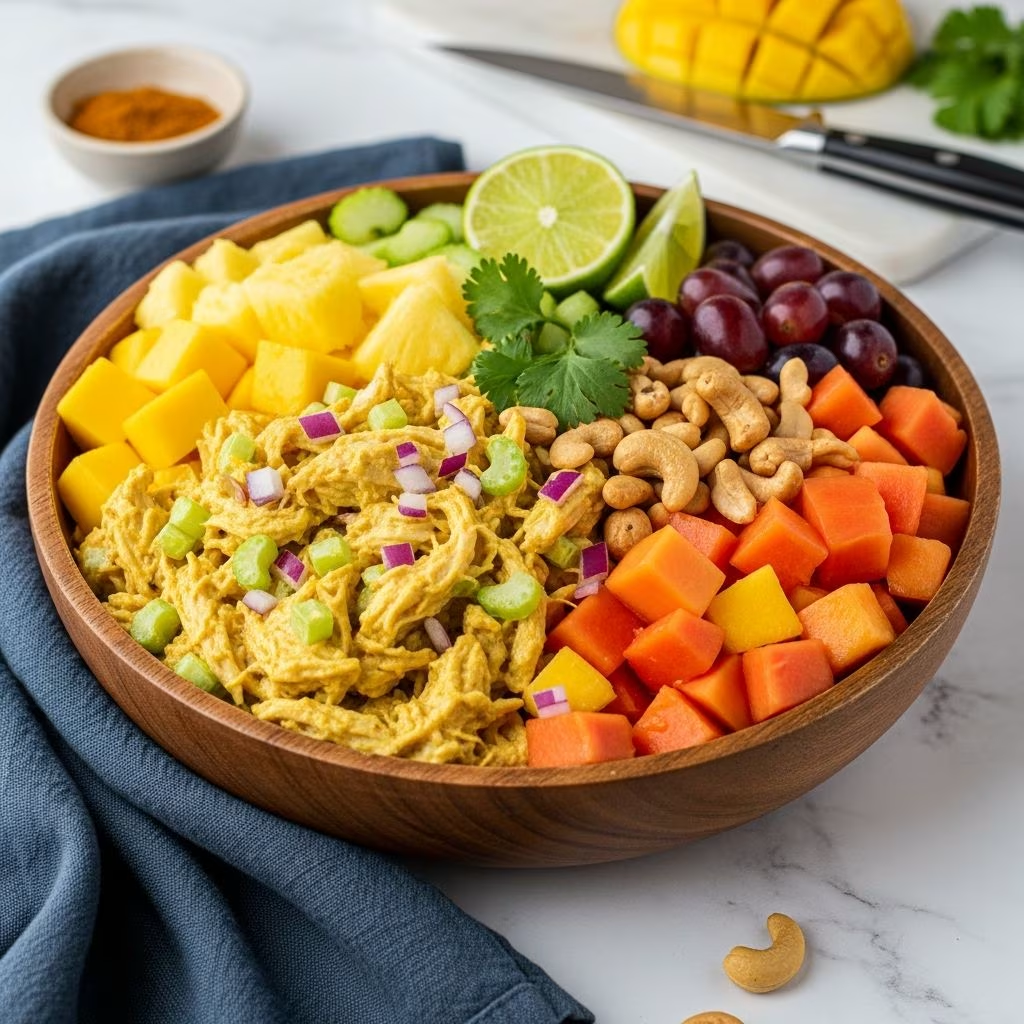
- Red grapes – halved for manageable portions, offering subtle grape flavor and attractive color
- Golden raisins – concentrated sweetness and chewy texture that absorbs surrounding flavors
- Fresh apples – typically varieties like Golden Delicious or Gala for their natural sweetness and firm texture
- Crushed pineapple – adds tropical notes and extra moisture to the dressing
- Optional additions – dried cranberries, pomegranate seeds, or strawberries provide variation
The fruit component typically represents about one-third of the salad’s volume, creating a noticeable sweetness without making the dish taste dessert-like.
Textural Contrast Elements
Nuts provide crucial textural contrast and nutritional benefits. Toasted pecans or slivered almonds add crunch that persists even after the salad has rested overnight. The toasting process intensifies nutty flavors, creating depth in every spoonful. A half-cup of nuts suffices for most batches, contributing roughly fifteen percent of the final mixture. The toasting step shouldn’t be skipped, as raw nuts lack the flavor intensity and textural definition that makes this dish memorable.
Vegetable Additions
Crisp vegetables add freshness and prevent the salad from becoming too sweet or heavy. Diced celery provides a clean, almost herbaceous note that balances richer components. Chopped green onions contribute mild onion flavor without the intensity of raw yellow onions. Some variations include diced red bell peppers for color and a slightly sweet vegetable presence. These vegetables typically occupy about one-quarter of the mixture, providing structural support and textural variety.
Crafting the Perfect Dressing
The dressing binds all components while allowing their individual characteristics to remain distinct. Traditional preparations use mayonnaise as the base, though variations incorporating Greek yogurt have gained popularity for those seeking lighter options. The dressing should coat every ingredient without creating a heavy, overly rich sensation.
Dressing Composition
A standard dressing for this salad combines:
- Three-quarters cup mayonnaise (or Greek yogurt substitute)
- One and one-half teaspoons curry powder
- One tablespoon soy sauce or tamari
- One-eighth teaspoon ground black pepper
- Optional lime juice and zest for added brightness
- Salt adjusted to personal preference
The curry powder deserves special attention, as its quantity can be adjusted based on personal preference. Those new to curry flavors might begin with one teaspoon, increasing gradually until reaching desired intensity. The soy sauce adds umami depth and subtle saltiness that complements the curry’s warmth. Lime juice and zest, when included, provide a brightness that prevents the salad from becoming one-dimensional or heavy.
Dressing Preparation Method
Whisking the dressing components together before introducing the salad ingredients ensures even distribution of curry powder and other seasonings. This preliminary mixing prevents pockets of undissolved curry powder that might create inconsistent flavor throughout. Once whisked, gently fold in the chicken, fruits, vegetables, and nuts, being careful to maintain distinct pieces if planning to serve the salad in lettuce wraps or as a standalone dish.
Assembly and Resting for Maximum Flavor Development
The preparation order matters significantly for achieving optimal results. Begin by preparing the dressing and combining it with chicken, which allows the poultry to absorb these flavors. Subsequently adding vegetables and fruits prevents excessive moisture release that might occur if chopped produce sits in the dressing for extended periods.
Resting the salad before serving proves crucial. While the salad is technically ready to eat after assembly, allowing it to chill for several hours or, ideally, overnight dramatically improves the flavor profile. During this resting period, the curry powder’s flavors fully develop and distribute throughout the mixture. The fruits soften slightly and their sweetness intensifies. The entire composition becomes more cohesive and delicious than immediately after combining.
A practical consideration: if planning to rest the salad overnight, reserve the nuts for adding just before serving. This prevents them from absorbing moisture and becoming soggy, preserving their crucial textural contribution.
Serving Suggestions and Presentation Options
This salad’s versatility allows numerous serving approaches suited to different occasions and preferences.
| Serving Method | Best For | Presentation Notes |
|---|---|---|
| Lettuce Wraps | Light lunches, low-carb options | Use firm lettuce varieties; can be assembled just before eating |
| Bread or Rolls | Classic sandwiches, picnics | Works with whole wheat, sourdough, or croissants |
| Bed of Greens | Complete meals, dinner service | Complement with mixed salad greens and additional vegetables |
| Croissant or Puff Pastry | Elegant entertaining, brunch | Can be prepared ahead; assemble shortly before serving |
| Stuffed Tomato Halves | Summer entertaining, plated presentations | Hollow tomato halves and fill just before serving |
Nutritional Considerations and Health Benefits
This salad provides substantial nutritional value beyond its appealing taste. The chicken delivers high-quality protein supporting muscle maintenance and satiety. Fruits contribute fiber, vitamins, and minerals while their natural sugars satisfy sweet cravings without refined sugar. Nuts provide healthy fats supporting nutrient absorption and cardiovascular health.
For those monitoring calorie intake or preferring lighter versions, substituting full-fat mayonnaise with light or reduced-fat alternatives maintains creaminess while reducing fat content. Greek yogurt substitution adds probiotic benefits and increases protein density. These modifications preserve the essential flavor profile while adjusting nutritional properties to individual needs.
Make-Ahead Benefits and Storage Guidelines
This salad’s make-ahead nature makes it ideal for meal planning and entertaining. Preparing it a day in advance allows flavor development while reducing day-of preparation stress. When stored properly in an airtight container, the salad maintains quality for three to four days, though flavors are optimal within the first two days.
Storage instructions prove simple: keep the salad refrigerated in a covered container. If nuts were mixed in initially, they may soften over time, so reserving them for addition just before serving or consumption preserves their textural contribution. The salad remains safe and delicious when properly refrigerated, making it perfect for meal prep enthusiasts.
Customization and Variation Opportunities
While the classic combination remains timeless, personal preferences and dietary needs may warrant modifications:
- Protein variations – substitute turkey or shrimp for chicken, adjusting cooking times as needed
- Fruit swaps – replace grapes with dried cherries or fresh peaches depending on season and availability
- Nut alternatives – use cashews, walnuts, or macadamia nuts based on preference or allergies
- Vegetable additions – incorporate water chestnuts for crunch or avocado for creaminess
- Spice adjustments – experiment with curry powder amounts or add ginger for extra warmth
- Herb incorporation – fresh cilantro or parsley adds herbaceous notes and visual interest
Frequently Asked Questions
Can I prepare this salad the morning of for an afternoon meal?
Yes, morning preparation works well. The salad will develop flavor throughout the day, though overnight resting produces superior results. If preparing in the morning, add nuts just before serving to maintain crispness.
Is this salad suitable for meal prep?
Absolutely. This salad stores exceptionally well for three to four days when properly refrigerated. It’s ideal for preparing Sunday batches for the week’s lunches. Store the salad in airtight containers with nuts stored separately for optimal texture.
What if I prefer my salad less creamy?
Reduce mayonnaise to one-half cup and incorporate additional vegetables or fruits. Alternatively, use Greek yogurt instead of mayonnaise for a lighter consistency with added protein benefits.
Can I make this salad dairy-free?
Dairy-free mayonnaise substitutes work effectively in this recipe, maintaining the necessary creaminess. Ensure any egg-free options you select provide similar binding properties.
How should I adjust curry powder if I’m sensitive to spice?
Begin with one-half teaspoon curry powder and gradually increase to taste. Curry powder provides flavor rather than heat, so most people find even one and one-half teaspoons mild and enjoyable.
References
- Fruity Curry Chicken Salad Recipe — Recipe Girl. https://www.recipegirl.com/fruity-curry-chicken-salad/
- Curried Chicken and Fruit Salad — A Pinch of Joy. https://www.apinchofjoy.com/blog/2011/09/05/fruit-and-curry-chicken-salad/
- Curry Chicken Salad with Grapes — Silk Road Recipes. https://silkroadrecipes.com/curry-chicken-salad-with-grapes/
- Easy Curry Chicken Salad Recipe — The Real Food Dietitians. https://therealfooddietitians.com/curry-chicken-salad/
- Curry Chicken Salad with Grapes — Love & Zest. https://www.loveandzest.com/curried-chicken-salad/