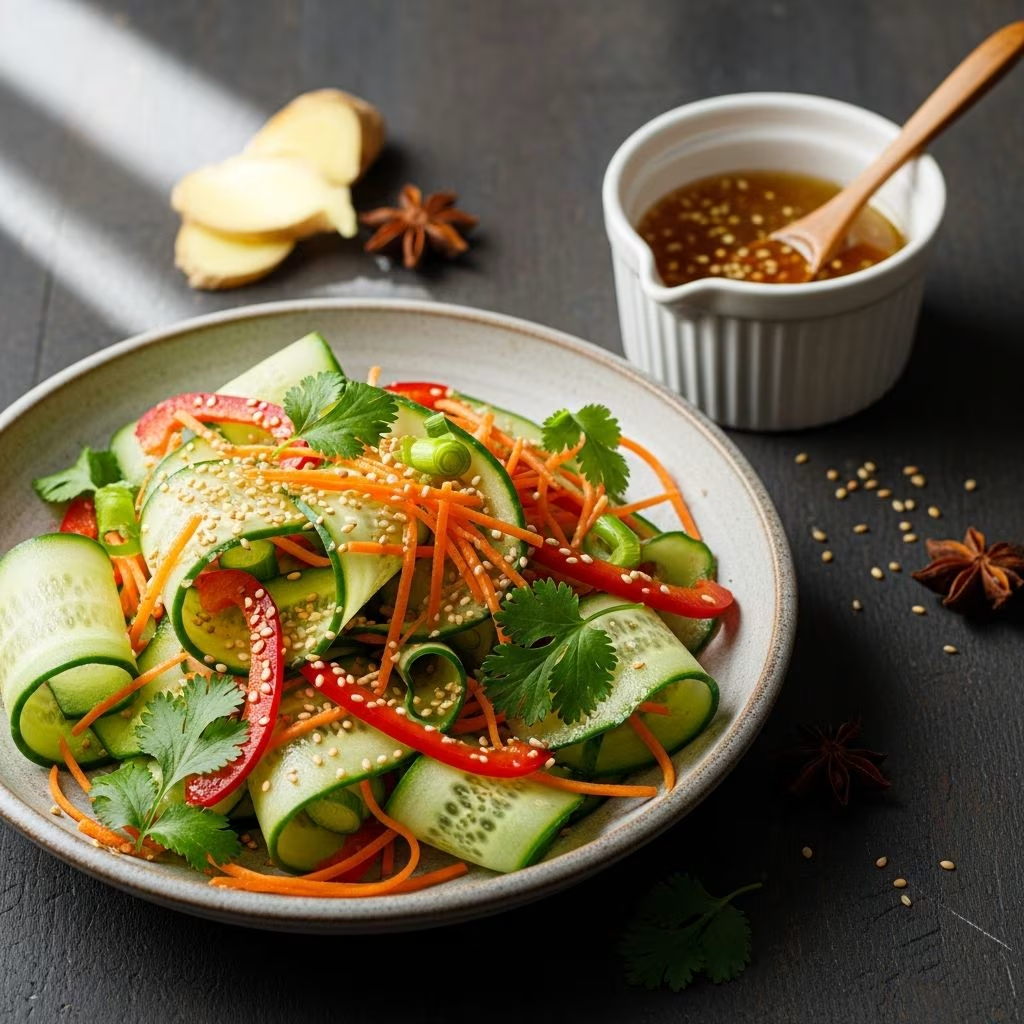
Asian cuisine has long celebrated the simple elegance of fresh vegetables paired with bold, aromatic condiments. One such classic preparation combines the cool crunch of cucumbers with a vibrant, tangy sauce infused with pickled ginger and scallions. This dish represents the perfect balance of flavors that define modern Asian cooking—bright, refreshing, and surprisingly simple to execute at home.
Understanding the Foundation: Why This Dish Works
The appeal of cucumber-based dishes lies in their versatility and the contrast between textures and flavors. Cucumbers provide a neutral canvas that absorbs surrounding flavors while maintaining their signature crisp texture. When paired with the sharp bite of pickled ginger and the mild onion notes of scallions, the result is a dish that feels both substantial and light. This preparation method draws inspiration from traditional Asian cuisines where vegetable-forward dishes are celebrated for their ability to complement heavier main courses or stand alone as refreshing appetizers.
The pickled ginger brings warmth and complexity to the dish, while the scallion-based sauce adds aromatic depth. Together, these components create a harmonious blend that appeals to modern palates seeking bold yet balanced flavors.
Selecting the Right Cucumber Varieties
The foundation of this dish begins with choosing the appropriate cucumber type. Several varieties work exceptionally well for this preparation, each offering distinct advantages.
- Mini seedless cucumbers — These small varieties offer thin skin that requires no peeling and contain minimal seeds. They absorb flavors efficiently and maintain excellent crispness throughout preparation and storage.
- Persian cucumbers — Slightly larger than mini varieties, Persian cucumbers provide a better structure while still maintaining tender skin. They slice beautifully and hold their texture when combined with acidic components.
- English cucumbers — These long, slender varieties feature thin skin and fewer seeds than traditional slicing cucumbers. They offer an elegant appearance when prepared and distribute marinade evenly throughout the vegetable.
- Japanese cucumbers — With their delicate skin and subtle flavor profile, Japanese cucumbers represent an authentic choice for Asian-inspired preparations.
Avoid large, watery slicing cucumbers, as these contain excessive seeds and moisture that can dilute the intended flavors. The ideal cucumber for this dish weighs approximately one to two ounces and measures four to six inches in length.
Preparing Cucumbers for Maximum Texture
Proper preparation technique directly influences the final dish’s success. The method of cutting and treating cucumbers before combining them with sauce determines whether they remain crisp or become soggy.
Rather than using conventional slicing techniques, gently smashing cucumbers with a rolling pin or the back of a knife creates irregular pieces that increase surface area for flavor absorption. This technique, known as “smashing” in Asian culinary traditions, breaks down the cucumber structure just enough to allow marinade penetration without destroying the vegetable’s structural integrity.
After smashing, tear the cucumbers into roughly one-inch pieces. This size proves optimal for several reasons: pieces are substantial enough to maintain their form during handling, large enough to provide satisfying texture when eaten, yet small enough to absorb sauce efficiently.
Once cut, the crucial step involves salting. Sprinkle the prepared cucumbers with approximately one teaspoon of Diamond Crystal kosher salt (or half a teaspoon of Morton kosher salt) per five cucumbers. The salt serves multiple purposes: it draws out excess moisture that would otherwise dilute the sauce, seasons the vegetable itself, and helps create the ideal texture through osmotic action.
Allow the salted cucumbers to rest for a minimum of five minutes and up to one hour. This waiting period permits the salt to work effectively. Before combining with sauce, squeeze the cucumbers thoroughly and drain all accumulated liquid. This step cannot be overemphasized, as excess moisture represents the primary cause of disappointing final results.
Crafting the Pickled Ginger-Scallion Sauce
The sauce transforms simple cucumbers into a memorable dish. This component balances acidity, umami, aromatics, and subtle heat into a cohesive condiment.
Core Ingredients and Their Roles
| Ingredient | Quantity | Function |
|---|---|---|
| Scallions | 6, thinly sliced | Provides aromatic, mild onion notes and fresh character |
| Pickled ginger | 1 jar, drained and chopped | Adds warmth, complexity, and distinctive tang |
| Vegetable oil | ¼ cup | Carries aromatics and creates smooth mouthfeel |
| Red wine vinegar | 3 tablespoons | Provides acidity and preserves brightness |
| Soy sauce | 3 tablespoons | Delivers umami depth and savory character |
Combine all sauce ingredients in a small bowl, stirring until thoroughly integrated. The mixture should appear somewhat chunky from the scallion and ginger pieces, creating textural interest when served. The oil helps distribute fat-soluble aromatics throughout the sauce while creating a silkier texture that coats the cucumber pieces evenly.
This sauce possesses excellent keeping qualities. Prepare it up to one day in advance, cover it, and refrigerate. Before combining with cucumbers, bring the sauce to room temperature. Room-temperature sauce distributes more effectively and allows the aromatics to bloom fully.
Assembling the Finished Dish
The final assembly requires minimal effort but benefits from thoughtful technique. After squeezing and draining the salted cucumbers, transfer them to the prepared sauce. Pour the entire sauce mixture over the cucumbers, then gently toss to coat every piece evenly. The goal is even distribution without aggressive stirring that might break down the delicate vegetables.
Transfer the combined mixture to a serving platter. Top with freshly chopped cilantro leaves and tender stems, using approximately half a bunch depending on size and personal preference. The cilantro adds a bright, herbaceous note that elevates the dish from simple to sophisticated.
The finished dish presents beautifully with its green cucumbers, flecks of pale pickled ginger, white scallion pieces, and vibrant cilantro. This visual appeal extends beyond aesthetics—the varied colors indicate the complexity of flavors present in each bite.
Serving Considerations and Timing
This dish achieves optimal flavor approximately 30 minutes after assembly, once the cucumbers have absorbed some sauce while still maintaining their crispness. However, it can be served immediately after preparation if necessary. The dish maintains excellent quality for up to 4 hours at room temperature or 24 hours when refrigerated, though the cucumbers gradually become softer over time.
For optimal presentation and texture, use a slotted spoon when serving. This allows the dressing to remain on the platter, concentrating flavors for anyone enjoying second portions. The sauce itself can be spooned over the top of individual servings for enhanced flavor.
Flavor Profile and Palate Compatibility
This preparation delivers a balanced combination of complementary tastes. The tangy vinegar provides brightness, the soy sauce contributes savory umami depth, and the pickled ginger imparts warmth with subtle sweetness inherited from its preparation process. The scallions add aromatic sharpness, while the cilantro brings fresh herbaceous notes that tie everything together.
The result satisfies multiple taste preferences simultaneously—those seeking brightness find it in the vinegar and ginger, those desiring depth discover it in the soy sauce, and those craving freshness appreciate the cilantro and scallion components. This multilayered approach to flavor explains why this dish pairs successfully with such diverse main courses.
Pairing This Dish With Main Courses
The refreshing nature of cucumber preparations makes them exceptionally versatile accompaniments. Their light character prevents them from competing with main dishes while their bold flavors prevent them from fading into insignificance.
This particular preparation complements fatty proteins exceptionally well, as the acidity and brightness cut through richness. Roasted duck, grilled fatty fish, or braised pork all benefit from this accompaniment. The dish equally suits lighter proteins such as grilled chicken or seared tofu, where its presence adds complexity without overwhelming the primary component.
Beyond Asian-inspired cuisine, this preparation works admirably alongside Mediterranean dishes, appearing alongside grilled lamb or alongside vegetable-forward preparations. The pickled ginger sauce’s umami content provides satisfying depth that elevates vegetarian spreads into more substantial presentations.
Storage and Make-Ahead Strategy
The sauce component benefits from advance preparation. Prepare the sauce mixture up to 24 hours before serving, storing it in an airtight container in the refrigerator. The extended storage time actually enhances the sauce, as flavors integrate more fully and the components achieve better cohesion.
For optimal results, prepare the cucumbers within a few hours of serving rather than significantly in advance. The salting and draining process can be completed early in the day, with the cucumbers stored in a sealed container. Combine cucumbers with sauce approximately 30 minutes before serving for the best balance of flavor absorption and textural crispness.
If the finished dish must be prepared further in advance, cover it and refrigerate. Remove it from refrigeration 15 minutes before serving to allow flavors to warm and emerge fully. The dish remains delicious for up to 24 hours, though cucumber texture gradually softens over time.
Ingredient Quality and Sourcing
The simplicity of this dish means that ingredient quality directly impacts the final result. Use fresh, recently harvested cucumbers—older cucumbers develop thicker seeds and contain more water, both undesirable characteristics. Select firm specimens with glossy skin, avoiding any with soft spots or wrinkled areas.
For pickled ginger, sourcing options include Asian markets, natural food stores, or specialty grocers. Quality pickled ginger offers a pleasing balance of sweet and sour notes without excessive sodium. The ginger should appear moist and flavorful rather than dried or overly brined.
Soy sauce quality significantly influences the final dish. Quality low-sodium or regular soy sauces made through traditional fermentation processes provide superior flavor compared to mass-produced versions. Similarly, rice vinegar or red wine vinegar sourced from reputable producers delivers better results than generic alternatives.
Customization and Variation
While the classic preparation stands on its own merits, several variations accommodate different preferences and ingredient availability.
- Heat adjustment — Add red pepper flakes or minced fresh Thai chilies to the sauce for those preferring more spice
- Additional aromatics — Incorporate minced garlic or sesame seeds into the sauce for deeper complexity
- Sesame oil enhancement — Substitute a portion of vegetable oil with toasted sesame oil for more pronounced Asian character
- Herb variations — Replace cilantro with fresh mint, basil, or a combination of herbs based on availability and preference
- Protein additions — Top with grilled shrimp, shredded cooked chicken, or crispy tofu for a more substantial dish
- Garnish options — Add sesame seeds, sliced almonds, or crispy fried shallots for textural interest
Frequently Asked Questions
Can I prepare this dish without salt in the initial step?
The initial salting serves a specific purpose—drawing moisture from the cucumbers to maintain crispness and allow sauce absorption. While technically possible to omit this step, the resulting dish will contain more water and diluted flavors. The salt is not primarily for seasoning but rather for texture optimization.
How can I prevent the cucumbers from becoming watery?
Thorough squeezing and draining after the initial salting prevents excess moisture. Additionally, avoid refrigerating the finished dish for extended periods, as cold temperatures encourage water separation. If refrigerated, allow the dish to return to room temperature before serving.
What if I cannot find pickled ginger?
Fresh ginger can substitute, though the flavor profile differs slightly. Use fresh ginger cut into thin matchsticks, slightly reducing the quantity as fresh ginger possesses stronger bite than pickled varieties. The resulting dish will emphasize ginger’s heat over the subtle sweetness that pickled versions provide.
Can this dish be served cold?
Absolutely. This preparation works equally well served cold, making it an excellent candidate for meal preparation or buffet service. Remove it from refrigeration approximately 15 minutes before serving to allow flavors to emerge fully.
References
- Cucumbers with Ginger Scallion Sauce and Lemongrass Shrimp — SGC Food Service. https://www.sgcfoodservice.com/cucumbers-with-ginger-scallion-sauce-and-lemongrass-shrimp/
- Cucumber Ginger Salad — Whole and Heavenly Oven. 2022-06-23. https://wholeandheavenlyoven.com/2022/06/23/cucumber-ginger-salad/
- No-Cook Crisp Asian Quick Pickled Cucumbers with Ginger and Garlic — Veggie Fun Kitchen. https://veggiefunkitchen.com/quick-asian-pickled-cucumbers/
- Cucumbers With Pickled Ginger–Scallion Sauce — Umami Recipes. https://www.umami.recipes/recipe/PDakNblzF8i4M1iz6BN2