Shrimp toast stands as one of the most beloved appetizers in Asian cuisine, combining delicate seafood flavors with a satisfying crispy texture. This versatile dish has become a staple at both casual dining establishments and home kitchens, offering an impressive yet manageable recipe for cooks of all skill levels. Whether you’re preparing appetizers for a dinner party or seeking a restaurant-quality snack, mastering the technique behind shrimp toast opens doors to endless entertaining possibilities.
Understanding the Dish and Its Appeal
Shrimp toast represents a harmonious fusion of texture and flavor that has captivated food enthusiasts for generations. The foundation of this dish rests upon a simple concept: combining finely processed shrimp with complementary ingredients to create a paste that adheres to bread, which is then fried until golden. The contrast between the crispy, toasted exterior and the tender, flavorful shrimp filling creates an eating experience that explains its enduring popularity across diverse culinary traditions.
The beauty of shrimp toast lies not only in its taste but also in its adaptability. Different cultures and home cooks have adapted the basic formula to suit regional preferences, available ingredients, and cooking methods. Some versions embrace traditional pan-frying techniques, while others explore baking alternatives. This flexibility makes shrimp toast an excellent canvas for culinary experimentation while maintaining the essential character that defines the dish.
Essential Components for Your Shrimp Paste
Creating the perfect shrimp paste requires understanding the role each ingredient plays in achieving the desired texture and flavor profile. The base of any shrimp toast begins with quality shrimp that has been properly prepared and finely processed into a consistent mixture.
Primary Shrimp Foundation
The shrimp serves as the starring ingredient and should comprise the majority of your paste mixture. Using approximately one-half to one pound of peeled, deveined shrimp provides an excellent foundation. The size of your shrimp matters less than their freshness and quality. Fresh shrimp delivers superior flavor compared to frozen alternatives, though properly thawed frozen shrimp works adequately in most circumstances. Finely mincing or processing the shrimp creates the ideal texture—you want a paste-like consistency rather than chunky pieces that might prevent proper adhesion to the bread.
Aromatic Flavor Builders
Aromatics form the flavor backbone of your shrimp mixture. Common additions include:
- Minced green onions or scallions that provide subtle onion notes without overpowering the shrimp
- Finely chopped fresh garlic that adds pungent depth and complexity
- Fresh ginger that contributes warmth and a slight spice dimension
- Diced yellow or white onion that offers sweetness and additional body to the mixture
- Fresh cilantro or parsley that introduce herbaceous brightness
Textural Components
Several ingredients enhance the overall textural experience of your shrimp paste. Water chestnuts provide a subtle crunch when finely chopped, while celery adds structural interest and a clean flavor note. These vegetables should be minced finely enough to distribute evenly throughout the mixture without creating obvious pieces. For those seeking richer flavor dimensions, incorporating cooked crabmeat alongside shrimp creates a more complex seafood profile that elevates the final result.
Binding and Seasoning Elements
A beaten egg serves as the binding agent that holds your mixture together and helps it adhere to the bread surface. Without adequate binding, the paste may separate during frying, resulting in disappointing results. Beyond structural integrity, seasonings provide the flavor notes that distinguish excellent shrimp toast from mediocre versions. Sesame oil contributes nutty undertones, while soy sauce adds umami depth and saltiness. A small quantity of sugar balances savory elements and enhances overall flavor perception. Fresh herbs like parsley contribute color and fresh-cut notes that brighten the finished dish.
Preparing Your Ingredients with Precision
Ingredient preparation significantly impacts both the texture of your paste and the ease of the cooking process. Begin by ensuring your shrimp are completely thawed if using frozen varieties. Pat them dry thoroughly with paper towels, as excess moisture can dilute your mixture and create a soupy consistency that resists proper adhesion to bread. Some cooks prefer briefly freezing their shrimp before mincing, as the firmer texture processes more uniformly into a paste rather than becoming mushy.
All vegetables should be minced as finely as your knife skills or food processor allows. Pieces larger than necessary create texture inconsistencies and may prevent the paste from spreading smoothly across bread. If using a food processor, pulse briefly in short bursts rather than running continuously, which can over-process vegetables into a watery pulp.
The Assembly Process
Once your shrimp paste reaches the proper consistency, assembly requires attention to detail and a measured approach. Begin by laying out your bread slices on a clean work surface. Thick-cut white bread or sturdy varieties like ciabatta or baguette work best, as delicate breads may become saturated and fall apart during frying. Thin sliced bread often disintegrates in hot oil before the shrimp mixture achieves proper cooking.
Using a spatula or knife, spread a generous, even layer of shrimp paste across the top surface of each bread piece. Press gently but firmly to ensure the mixture adheres properly and doesn’t separate during cooking. An even thickness of approximately one-quarter to one-third inch creates the ideal ratio between bread and topping. Some preparations include topping the paste with toasted sesame seeds before cooking, which adds visual appeal and textural contrast.
Cooking Techniques and Methods
Pan-Frying Approach
Pan-frying remains the traditional cooking method for shrimp toast and delivers exceptional results when executed properly. Heat oil to a depth of approximately one-half inch in a heavy-bottomed skillet over medium heat. The ideal oil temperature hovers around 325-350°F, though home cooks can estimate readiness by observing that oil shimmers and a small piece of bread sizzles immediately upon contact.
Working in manageable batches to prevent overcrowding, carefully place shrimp-paste-side-down into the hot oil. Resist the urge to move the toasts immediately; allow them to cook undisturbed for two to three minutes until the paste turns light pink and the bread develops a golden-brown color. Using a slotted spatula or fish spatula, carefully flip each piece and cook the bread side for approximately one minute until it achieves uniform golden-brown coloring. Transfer finished toasts to paper towels where they drain and cool slightly before serving.
Baking Alternative
For a lighter preparation that reduces oil consumption, baking offers a viable alternative approach. Preheat your oven to 400°F and arrange paste-covered bread slices on a lined baking sheet. Lightly brush or spray the shrimp mixture with oil to encourage browning and crisping. Bake for fifteen to eighteen minutes until the topping turns golden and the bread develops a crispy texture. While baked versions may lack the ultimate crispiness of pan-fried preparations, they provide satisfactory results with considerably less oil and reduced splatter concerns.
Creating Complementary Dipping Sauces
A carefully crafted dipping sauce elevates shrimp toast from simple appetizer to memorable dining experience. The traditional approach combines soy sauce as the base, enhanced with additional seasonings and aromatics that complement the shrimp filling.
| Sauce Component | Quantity | Purpose |
|---|---|---|
| Soy Sauce | 1/4 cup | Provides umami depth and saltiness |
| Fresh Parsley | 3 tablespoons chopped | Adds fresh herbaceous notes |
| Water | 1 tablespoon | Dilutes intensity and improves balance |
| Sesame Oil | 1 teaspoon | Contributes nutty warmth |
| Sugar | 1 teaspoon | Balances savory elements |
| Garlic Powder | 1/4 teaspoon | Enhances aromatic profile |
Whisk all sauce components together thoroughly and allow the mixture to rest for at least fifteen minutes, permitting flavors to meld and develop. Some cooks prefer adding fresh minced ginger, chili paste for heat, or rice vinegar for acidity. The versatility of dipping sauce formulations allows customization based on personal preference and available ingredients.
Service and Presentation Strategies
Timing proves crucial when serving shrimp toast, as the appetizer is best enjoyed within minutes of cooking while the bread maintains its crispy exterior. For entertaining purposes, prepare your shrimp paste several hours ahead, but delay frying until just before guests arrive or within thirty minutes of serving. If necessary to hold prepared toasts briefly, place them on a rack over a baking sheet in a warm oven set to 200°F, which maintains warmth while allowing excess oil to drain downward.
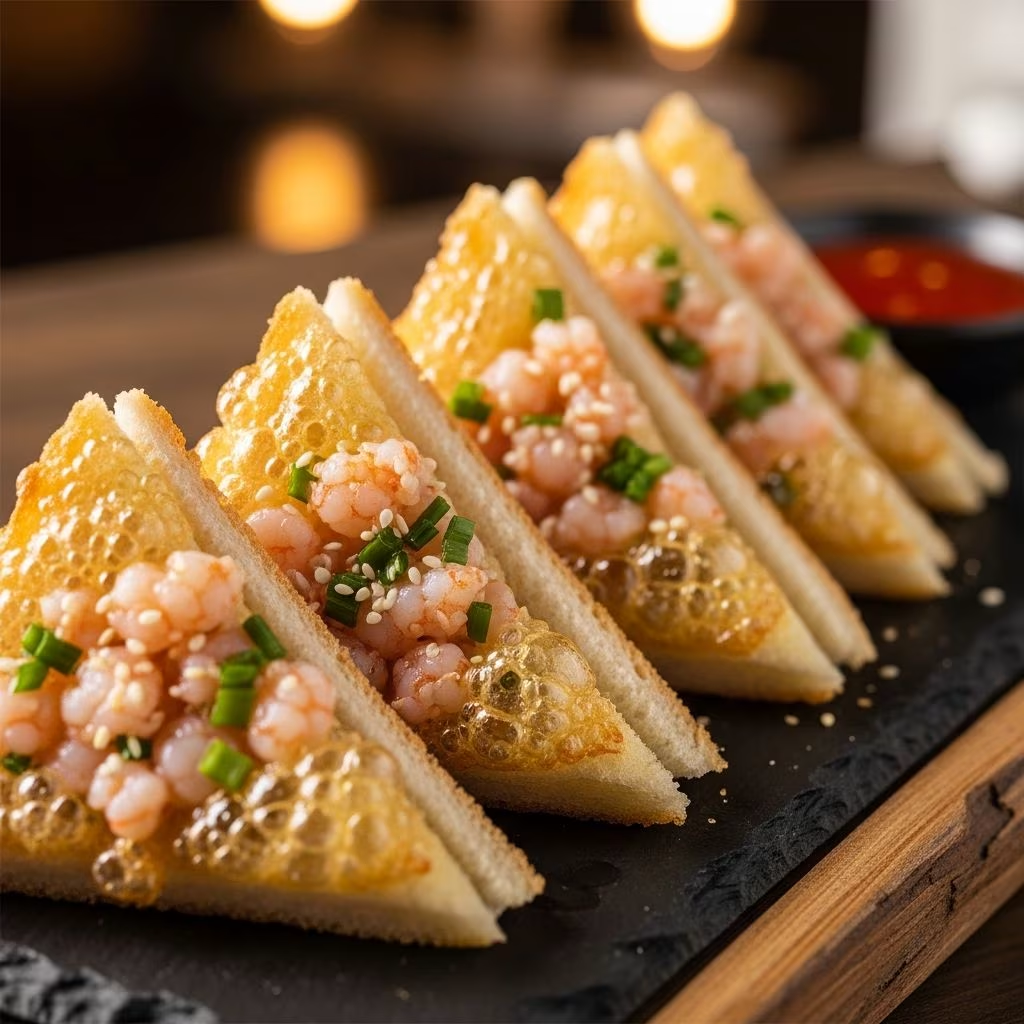
Presentation matters as much as taste when serving appetizers. Consider cutting toasts diagonally into triangles, which creates an elegant appearance and makes single-bite consumption more manageable. Arrange finished pieces on a serving platter with dipping sauce in a small bowl positioned conveniently nearby. Garnish the platter with fresh herbs like cilantro or thin green onion slices, adding visual interest and reinforcing the flavor profile of the dish.
Common Challenges and Solutions
| Problem | Likely Cause | Solution |
|---|---|---|
| Paste separates during cooking | Insufficient egg binder or too-wet mixture | Ensure egg is fully beaten into paste; drain excess moisture from vegetables |
| Bread burns before filling cooks | Oil temperature too high | Reduce heat and maintain oil around 325-350°F |
| Filling remains uncooked inside | Paste spread too thickly or oil temperature too low | Moderate paste thickness and increase oil temperature slightly |
| Toasts taste greasy | Insufficient draining or oil at wrong temperature | Ensure thorough draining on paper towels; maintain proper oil temperature |
| Bland flavor profile | Inadequate seasoning or low-quality shrimp | Taste mixture before cooking; adjust seasonings; use fresh shrimp when possible |
Flavor Variations and Creative Adaptations
While the classic preparation remains beloved, numerous variations allow customization based on available ingredients and personal taste preferences. Some cooks incorporate mayonnaise and butter into their mixture for added richness, creating a more decadent filling. Others experiment with Old Bay seasoning, cayenne pepper, or chili flakes for increased spice levels. Fresh basil offers an interesting herbaceous alternative to traditional parsley or cilantro, creating a fusion interpretation that bridges cuisines.
Bread selection opens additional creative possibilities. While white sandwich bread represents the traditional choice, ciabatta and baguettes provide sturdier alternatives with superior crispiness potential. Some adventurous cooks explore grain breads or sourdough, though these denser varieties may require adjusted cooking times and oil temperatures.
Storage and Make-Ahead Considerations
Prepared shrimp paste keeps refrigerated in an airtight container for up to twenty-four hours, allowing advance preparation for entertaining. Assemble toasts with paste up to two hours before cooking, covering them loosely with plastic wrap to prevent drying. Cooked shrimp toast does not store well, as the bread becomes soggy and loses its appealing crispy texture within hours. For this reason, cooking immediately before serving yields the superior eating experience.
Nutritional Considerations
Shrimp toast provides valuable protein from both the shrimp and egg components, with moderate caloric content when prepared with standard cooking methods. The dish contains dietary fat from both the shrimp and cooking oil, contributing to satiety and flavor delivery. Those monitoring sodium intake should note that soy sauce and other seasonings contribute meaningful quantities of salt. Vegetable inclusions like water chestnuts and celery provide minimal calories while adding nutritional value and textural interest.
Frequently Asked Questions
Can I prepare shrimp toast ahead of time? Yes, you can prepare the shrimp mixture several hours in advance and refrigerate it in a covered container. Assemble the toasts with paste up to two hours before cooking. However, it’s best to cook them shortly before serving for optimal texture.
What oil works best for frying? Neutral-flavored oils with high smoke points, such as vegetable oil, peanut oil, or canola oil, work best. Avoid olive oil and butter, which have lower smoke points and impart competing flavors.
Can I freeze prepared shrimp paste? Yes, shrimp paste freezes well for up to three months. Thaw overnight in the refrigerator before using. You may need to add a small amount of beaten egg to restore proper consistency after thawing.
Is it necessary to use fresh shrimp? While fresh shrimp delivers superior flavor, high-quality frozen shrimp that has been properly thawed produces acceptable results. Avoid shrimp that smells of ammonia, which indicates spoilage.
How can I make a lighter version? Baking instead of pan-frying significantly reduces oil consumption. You can also substitute mayonnaise with Greek yogurt in variations that call for mayo, though this changes the flavor profile somewhat.
References
- Shrimp Toast: A Classic Chinese Takeout Recipe — The Woks of Life. 2024. https://thewoksoflife.com/shrimp-toast/
- 30-Minute Crispy Pan Fried Shrimp Toasts — Well Seasoned Studio. 2024. https://www.wellseasonedstudio.com/shrimp-toast/
- Easy Baked Shrimp Toast — Delightful Plate. 2024. https://delightfulplate.com/easy-baked-shrimp-toast/