The intersection of global cuisines has given rise to some of the most memorable dishes in modern cooking. One such creation combines the crispy, cheese-laden traditions of Italian cuisine with the convenience and appeal of tacos. This innovative approach to meal preparation offers home cooks an opportunity to explore flavor combinations that feel both comforting and exciting. The beauty of this fusion lies in its simplicity—straightforward techniques paired with quality ingredients create something that feels restaurant-worthy yet achievable in a home kitchen.
Understanding the Fusion Concept
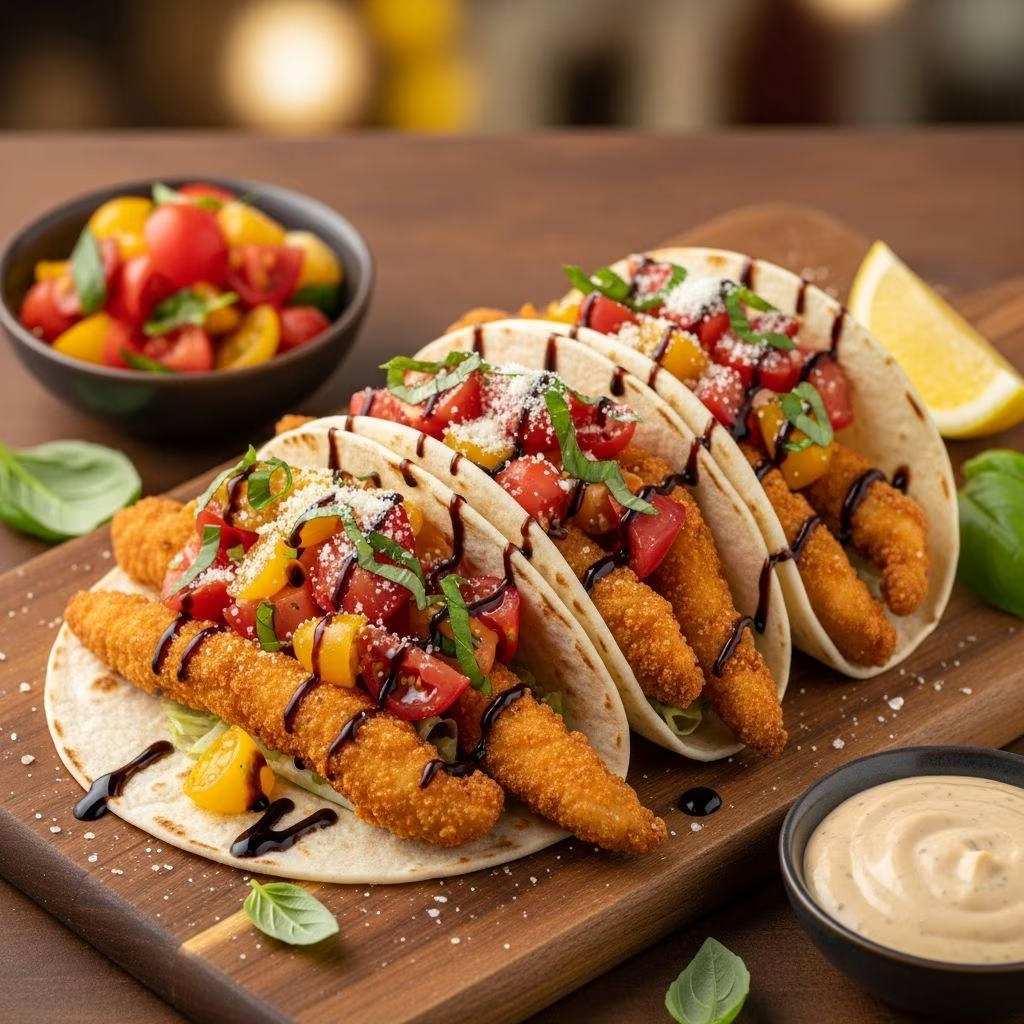
Fusion cooking represents the blending of culinary traditions from different cultures to create something entirely new. In this case, we’re taking inspiration from Italian breaded chicken preparations and reimagining them within the framework of a handheld taco. Rather than serving breaded chicken as a traditional cutlet, we’re transforming it into a taco filling that maintains all the textural and flavor elements that make the original dish appealing.
The charm of this approach lies in its ability to satisfy multiple cravings simultaneously. Those who love the crispy, golden exterior of a properly breaded chicken cutlet can enjoy that same satisfaction, while taco enthusiasts appreciate the interactive nature of building their own meal. The fresh topping, inspired by the Caprese salad tradition, brings brightness and acidity that cuts through the richness of the fried chicken and cheese elements.
Core Ingredients and Their Purpose
The Chicken Foundation
Success begins with selecting appropriate chicken cuts. Boneless, skinless chicken breasts serve as the primary component, though thighs can work if you prefer darker meat with slightly more fat content. The thickness of your chicken matters considerably—pound it to an even thickness to ensure uniform cooking and proper structural integrity when placed in a taco. This step prevents some portions from cooking faster than others and ensures each bite delivers consistent texture.
The Breading System
Traditional breading involves three distinct components working in concert. First, seasoned flour provides a base layer and helps absorb moisture from the chicken surface. Second, beaten eggs act as a binding agent, creating adhesion between the chicken and subsequent layers. Third, breadcrumbs or panko deliver that signature crunch and golden coloring when cooked. The ratio and preparation of each component significantly impact the final result.
For an enhanced flavor profile, consider incorporating dried Italian herbs, garlic powder, and parmesan cheese into your flour mixture. This approach seasons the coating throughout rather than relying solely on surface seasoning. Panko breadcrumbs, with their larger particle size, create a noticeably crispier exterior compared to traditional breadcrumbs.
The Fresh Topping Components
The inspiration draws from the classic Italian Caprese preparation, traditionally featuring tomatoes, mozzarella, and basil. When adapted for tacos, these components maintain their integrity while adding freshness and brightness. Quality matters tremendously here—ripe, seasonal tomatoes make an enormous difference compared to out-of-season alternatives. Fresh mozzarella, preferably buffalo mozzarella if available, provides creaminess without heaviness. Basil should be bright green and fragrant, added just before serving to prevent bruising and discoloration.
Step-by-Step Preparation Guide
Preparing the Chicken
- Begin by removing chicken breasts from their packaging and patting them dry with paper towels—this crucial step removes surface moisture that could interfere with coating adhesion
- Place each breast between plastic wrap or parchment paper and use a meat mallet to gently pound to an even thickness, typically about three-quarters of an inch
- Season both sides with salt and freshly ground black pepper, allowing flavors to penetrate the meat for several minutes
- Set up your breading station with three separate shallow bowls or dishes arranged in sequence
Assembling the Breading Station
- In the first bowl, combine all-purpose flour with Italian seasoning, garlic powder, salt, and pepper
- In the second bowl, crack eggs and beat thoroughly until the mixture reaches a consistent, uniform consistency
- In the third bowl, spread panko breadcrumbs, optionally mixed with grated parmesan cheese for enhanced flavor
- Maintain clear separation between stations and keep a clean hand designated for dry ingredients and another for wet ingredients to prevent clumping
Coating Process
- Working with one chicken breast at a time, dredge it thoroughly in the flour mixture, ensuring complete coverage and shaking off excess flour
- Transfer to the egg mixture, rolling to coat evenly and allowing excess egg to drip back into the bowl
- Place into the breadcrumb mixture and press gently, ensuring the coating adheres uniformly across all surfaces
- Allow coated chicken to rest on a clean plate for five to ten minutes—this resting period helps the coating set and adhere more effectively during cooking
Cooking the Chicken
Heat neutral cooking oil to approximately 350 degrees Fahrenheit in a large skillet or shallow pan. The oil temperature proves critical; insufficient heat results in greasy, soggy coating, while excessive heat burns the exterior before the interior cooks through. Carefully place breaded chicken into the hot oil, working in batches to avoid crowding the pan. Cook for four to five minutes per side, depending on thickness, until the coating achieves a deep golden-brown color and the internal temperature reaches 165 degrees Fahrenheit when measured with an instant-read thermometer.
Remove cooked chicken to a paper towel-lined plate to drain excess oil. This intermediate step significantly reduces the final greasiness while the coating remains crispy. Allow chicken to cool slightly before cutting into strips suitable for taco assembly.
Preparing the Fresh Topping
Tomato Component
Select ripe tomatoes that yield slightly to gentle pressure but maintain firmness. Dice them into quarter-inch cubes, capturing any released juices in your preparation bowl. If tomatoes appear particularly wet, drain some excess liquid before combining with other ingredients—this prevents the topping from becoming overly soupy and sogging out taco shells. The ideal consistency should maintain structural integrity while still being fresh and juicy.
Mozzarella Preparation
If using fresh mozzarella, cut it into small cubes or tear it into bite-sized pieces just before serving. Pre-cut mozzarella that sits in the topping mixture will gradually release moisture and become stringy, which, while delicious, can make assembly messy. The contrast between warm chicken, cool mozzarella, and crisp taco shell creates an appealing temperature and texture combination.
Basil and Finishing Elements
Tear or cut basil into ribbons or small pieces, adding it at the very last moment before serving. This prevents the herb from oxidizing and darkening, which diminishes both visual appeal and fresh flavor. A splash of quality balsamic vinegar or red wine vinegar adds acidity that brightens the entire composition. A drizzle of good olive oil contributes richness and helps carry flavors throughout the topping mixture.
Taco Assembly and Serving Suggestions
Shell Selection
Choose between corn or flour tortillas based on personal preference and dietary considerations. Warm tortillas before assembly—a brief pass over an open flame, in a dry skillet, or wrapped in foil in a low oven brings them to optimal pliability and enhances their flavor. Cold tortillas prove prone to tearing and offer a less pleasant eating experience.
Building Your Tacos
- Place a warm tortilla on a flat surface or in your hand
- Add a small amount of the fresh topping mixture to establish a moisture barrier between tortilla and hot chicken
- Layer chicken strips, arranging them to allow the topping to distribute evenly across each bite
- Add additional fresh topping, ensuring a good balance of tomato, mozzarella, and basil in each taco
- Consider additional garnishes such as fresh arugula, thinly sliced red onion, or a squeeze of fresh lemon juice
Serving Accompaniments
Lime wedges pair perfectly with this preparation, offering acidity and brightness. A small bowl of crushed red pepper flakes allows those who enjoy heat to customize their experience. Creamy avocado or guacamole provides richness and texture contrast. A side salad featuring complementary greens helps balance the richness of the fried chicken element.
Recipe Variations and Adaptations
Lighter Cooking Methods
For those seeking to reduce oil content, consider baking the breaded chicken at 400 degrees Fahrenheit for approximately fifteen to twenty minutes, flipping halfway through. While this method won’t achieve the same crispy exterior as shallow frying, it produces respectable results with significantly less fat. Alternatively, an air fryer set to 380 degrees Fahrenheit for twelve to fifteen minutes offers excellent crispiness with minimal oil.
Flavor Profile Modifications
The beauty of this preparation lies in its adaptability. Experiment with adding sun-dried tomatoes to the topping mixture for concentrated flavor and chewiness. Incorporate caramelized onions for depth and sweetness. Create a pesto drizzle by blending basil with garlic, pine nuts, parmesan, and olive oil. Consider adding crispy pancetta or prosciutto for a smoky, salty element that complements both Italian and Mexican flavor traditions.
Dietary Accommodations
Gluten-free crushed crackers, almond flour, or certified gluten-free breadcrumbs substitute effectively for traditional panko. Use tamari or coconut aminos instead of standard soy sauce if preparing these for those avoiding gluten. Dairy-free alternatives to mozzarella have improved substantially in recent years; nutritional yeast provides a savory, cheese-like flavor profile for those avoiding dairy entirely.
Common Challenges and Solutions
Coating Separation Issues
If your breading separates from the chicken during cooking, ensure you’ve adequately dried the chicken before breading, allowed sufficient resting time after coating, and maintained proper oil temperature. Pat chicken dry multiple times if necessary before beginning the breading process.
Uneven Cooking
Pounding chicken to uniform thickness prevents some portions from cooking faster than others. Use a meat mallet with gentle but consistent pressure across the entire surface. If cooking in batches, avoid stacking cooked pieces on top of each other, as residual heat can cook the breading further and potentially dry out the chicken.
Greasy Results
Insufficient oil temperature represents the most common culprit behind greasy results. Invest in an instant-read thermometer and verify oil temperature before beginning to cook. Additionally, ensure adequate resting on paper towels after cooking, and consider using a wire rack elevated over a baking sheet for better oil drainage.
Nutritional Considerations
Macronutrient Breakdown
This dish derives significant calories from both protein and fat. A typical serving containing one or two tacos provides approximately 20-25 grams of protein from the chicken, with additional protein from cheese and eggs. Fat content varies based on cooking method and portion size but typically ranges from 15-20 grams per serving. Carbohydrates come primarily from the tortilla and breading coating.
Balancing Your Meal
Include vegetable-forward sides to ensure nutritional completeness. A colorful salad featuring mixed greens, additional fresh vegetables, and vinaigrette-based dressing balances the richness of the fried chicken. Roasted vegetables such as zucchini, bell peppers, or asparagus contribute nutrients and fiber without adding excessive richness.
Make-Ahead and Storage Strategies
Advance Preparation
You can bread chicken several hours ahead of cooking, storing it in the refrigerator on a baking sheet lined with parchment paper. This intermediate resting actually improves the final result by allowing the coating to better adhere to the chicken. Prepare the fresh topping components separately, storing them in airtight containers. Combine them only immediately before serving to maintain optimal texture and flavor.
Leftover Management
Cooked chicken stores well for three to four days in an airtight container. Reheat gently in a low oven or toaster oven rather than a microwave to restore crispiness. The fresh topping should be prepared fresh rather than stored for extended periods, though individual components keep well separately. Leftover chicken works beautifully in salads, pasta dishes, or as standalone protein when reheated.
Frequently Asked Questions
Can I prepare this dish ahead for entertaining?
Yes, you can bread the chicken and prepare all topping components several hours in advance. Store breaded chicken on a baking sheet in the refrigerator and keep topping components in separate containers. Cook the chicken shortly before serving and assemble tacos to order for maximum freshness and crispiness.
What’s the best oil for frying?
Neutral oils with high smoke points work best. Canola oil, vegetable oil, or refined avocado oil all perform well. Avoid olive oil for the initial frying as its lower smoke point can result in burnt coating and unpleasant flavors.
Can I use chicken thighs instead of breasts?
Absolutely. Thighs offer more fat content and flavor but require slightly longer cooking time due to increased thickness. Pound them to uniform thickness as you would breasts, and verify internal temperature reaches 165 degrees Fahrenheit before consuming.
How do I prevent the mozzarella from melting into the taco?
Use fresh, cold mozzarella and add it just before serving. If the chicken remains extremely hot, allow it to cool for a minute or two before assembling tacos. The contrast between warm chicken and cool mozzarella is actually part of the dish’s appeal.
Are there suitable vegetarian adaptations?
Yes, substitute chicken with thick slices of eggplant or portobello mushroom caps, using the same breading and cooking procedure. Alternatively, extra-firm tofu pressed to remove excess moisture and cut into strips works well for those seeking a plant-based protein option.
References
- Food Safety and Inspection Service Chicken Safety Guidelines — U.S. Department of Agriculture. 2024. https://www.fsis.usda.gov/food-safety/safe-food-handling-and-preparation/chicken
- Culinary Best Practices for Breaded and Fried Foods — The Culinary Institute of America. 2023. https://www.ciachef.edu
- Nutrition Data for Chicken and Cheese — FoodData Central, U.S. Department of Agriculture. 2024. https://fdc.nal.usda.gov
- Oil Smoke Point Reference Guide — Culinary Institute of America. 2023. https://www.ciachef.edu
- Caprese Salad History and Traditional Preparation — Gambero Rosso, Italian Food Authority. 2024. https://www.gamberorosso.it