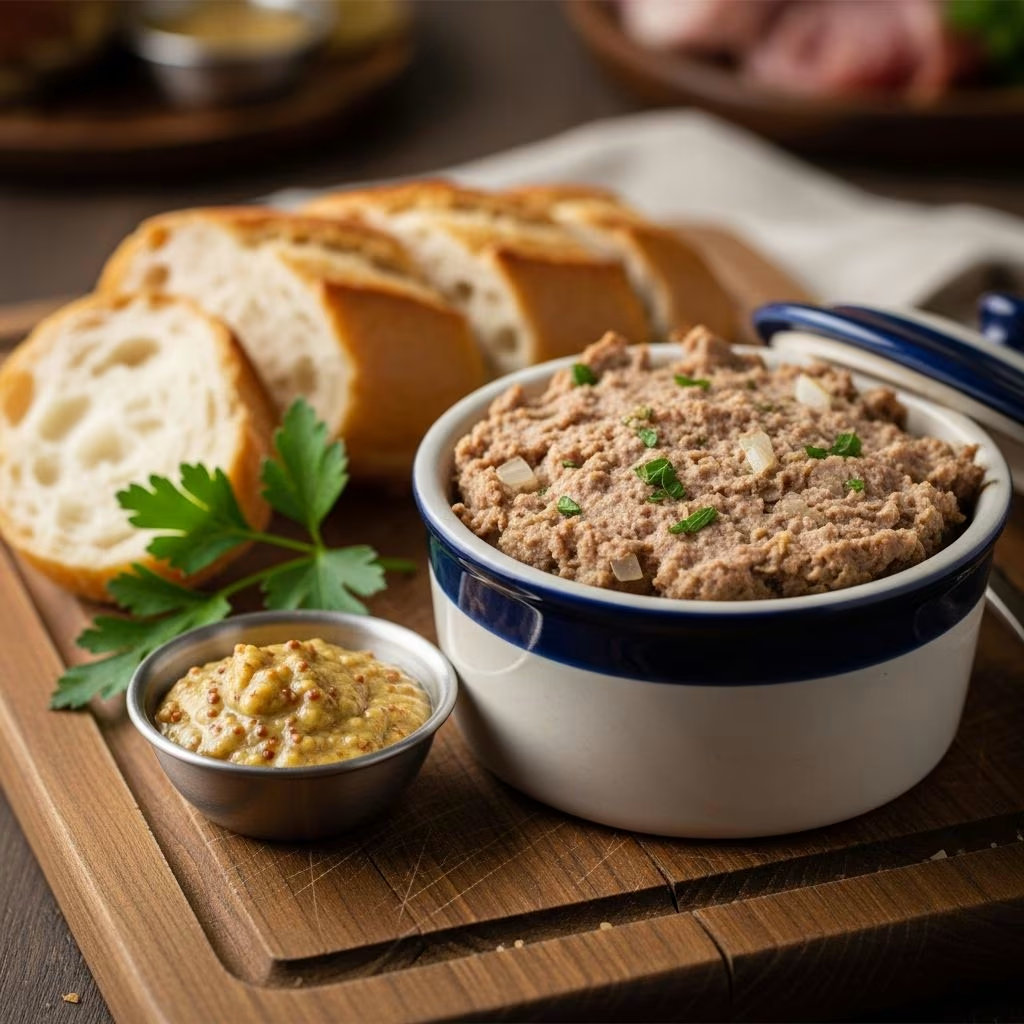
Cretons stands as a cornerstone of Quebecois culinary heritage, a rich and savory pork spread that captures the essence of French-Canadian comfort food. This slow-cooked pâté, typically enjoyed cold on toast or crackers, blends ground pork with aromatic spices, onions, and milk for a creamy texture that’s both nourishing and flavorful. Originating from rural Quebec traditions, cretons has evolved into a breakfast staple, evoking nostalgia for generations of families across Canada and French-Canadian diaspora communities.
The Historical Roots of Cretons in French-Canadian Cuisine
Cretons traces its lineage back to early French settlers in New France, now Quebec, where resourceful cooks transformed inexpensive pork cuts into a durable, flavorful preserve. Historical accounts link it to medieval European dishes involving rendered pork fat known as ‘cretons’ or ‘crutoun,’ adapted by colonists to suit local ingredients and preservation needs. In Quebec’s harsh winters, this spread provided essential protein and calories, often prepared in large batches to last weeks when refrigerated or frozen.
By the 19th and 20th centuries, cretons became synonymous with holiday feasts and everyday meals in mill towns of New England and Quebec. Academic explorations, such as those in culinary journals, highlight its role alongside dishes like tourtière in celebratory French-Canadian meals, underscoring regional variations that include breadcrumbs or potatoes. Today, it remains a symbol of cultural identity, bridging old-world techniques with modern kitchens.
Essential Ingredients for Authentic Cretons
The beauty of cretons lies in its simplicity, relying on just a handful of pantry staples to create depth of flavor. Core components include ground pork as the base, providing tenderness when simmered low and slow. Onions and garlic add savory backbone, while milk or a milk-water mix ensures the creamy consistency that sets upon cooling.
Spices are crucial for that signature warmth: ground cinnamon, cloves, and nutmeg impart a subtle sweetness and earthiness, evoking holiday scents. Salt and pepper season to taste, with optional oats or breadcrumbs for added texture and absorption. Variations from traditional recipes showcase flexibility—some use full-fat milk for richness, others incorporate butter for extra silkiness.
| Ingredient | Quantity (for 6 servings) | Purpose |
|---|---|---|
| Ground pork | 1.5 lbs (675g) | Main protein base |
| Onions, chopped | 2 medium | Aromatic foundation |
| Garlic, minced | 2 cloves | Depth of flavor |
| Milk (1-2%) | 1.5 cups (375 mL) | Creamy texture |
| Water | 0.5 cup (125 mL) | Adjusts consistency |
| Cinnamon, ground | 0.5 tsp | Warm spice note |
| Cloves, ground | 0.25 tsp | Earthy pungency |
| Nutmeg, ground | 0.25 tsp | Subtle sweetness |
| Salt & Pepper | To taste | Seasoning |
| Oats or Breadcrumbs (optional) | 2 tbsp | Thickener |
Step-by-Step Guide to Making Perfect Cretons
Preparing cretons demands patience, as low, slow simmering is key to breaking down the pork into a spreadable paste. Start by combining ground pork, chopped onions, minced garlic, milk, and water in a heavy-bottomed saucepan. Set over low heat—no higher than a gentle simmer with just 2-3 bubbles visible—to prevent scorching.
- Initial Cook (0-30 minutes): Stir frequently as the mixture comes to a simmer, breaking up pork clumps for even cooking.
- Season and Spice (30 minutes): Add salt, pepper, cinnamon, cloves, and nutmeg. If using, stir in oats or breadcrumbs now.
- Long Simmer (1-3 hours): Cook uncovered, stirring every 15-20 minutes. The liquid should reduce dramatically, leaving a thick, paste-like consistency. Total time varies: 1 hour for smaller batches, up to 3 hours for larger ones.
- Cool and Set: Remove from heat, cool while stirring to release steam. Transfer to bowls, cover, and refrigerate for at least 4 hours or overnight. It firms up beautifully.
Pro Tip: Use a wooden spoon for stirring to scrape the pot’s bottom effectively. Yield: About 3 lbs, perfect for 6-8 servings. Prep time: 15 minutes; cook time: 1-3 hours.
Nutritional Profile and Health Considerations
Cretons offers a nutrient-dense option for protein-rich meals. Per 100g serving (approximate): 350 kcal, 18g protein, 15g fat, 25g carbs, 3g fiber, 650mg sodium. It’s high in B vitamins from pork and iron, making it sustaining for breakfast. Moderation is advised due to sodium and saturated fats; opt for lean pork or low-fat milk to lighten it up.
| Nutrient | Per Serving (150g) | % Daily Value* |
|---|---|---|
| Calories | 350 kcal | 18% |
| Protein | 18g | 36% |
| Fat | 15g | 19% |
| Carbs | 25g | 9% |
| Sodium | 650mg | 28% |
Creative Ways to Serve and Pair Cretons
Traditionally slathered on toasted bread or ployes (buckwheat pancakes), cretons shines with sweet-savory contrasts. Drizzle with maple syrup, honey mustard, or Dijon-maple butter for Quebecois flair. Kids love it on crackers; adults pair it with pickles or cheese for charcuterie boards.
- Breakfast Classic: On rye toast with a fried egg.
- Snack Bite: Stuffed in mini pastries or on baguette slices.
- Meal Upgrade: As a tourtière filling base or in omelets.
- Modern Twist: Vegan version with lentils and mushrooms.
Recipe Variations and Customization Ideas
While classic cretons is pork-centric, adaptations abound. For a spicier kick, add allspice or cayenne. Dairy-free? Swap milk for broth or coconut milk. Smaller batches scale easily: halve ingredients for 3 servings. Historical recipes sometimes included cracklings for texture, nodding to its etymological roots.
- Quebec Classic: Milk-heavy, 5-spice minimalism.
- Ontario Style: Breadcrumbs for denser pâté.
- Quick Version: Pressure cooker for 45 minutes.
Storage, Freezing, and Make-Ahead Tips
Cretons stores refrigerated up to 2 weeks in airtight containers. Freeze in portions for 3 months—thaw overnight. Always check for spoilage before serving. Make-ahead batches save time for holidays.
Frequently Asked Questions (FAQs)
What is cretons made of?
Primarily ground pork, onions, milk, and spices like cinnamon and cloves, slow-cooked to a spreadable consistency.
How long does cretons last in the fridge?
Up to 2 weeks when stored properly in sealed containers.
Can cretons be frozen?
Yes, freeze for up to 3 months; portion into small bowls for easy thawing.
Is cretons gluten-free?
Yes, unless breadcrumbs or oats are added—use certified gluten-free alternatives.
What’s the difference between cretons and pâté?
Cretons is coarser and spice-forward, a Quebec specialty, while pâté is smoother and often liver-based.
Why Cretons Endures in Modern Kitchens
Its affordability, ease, and bold flavors keep cretons relevant. From family breakfasts to fusion dishes, it embodies Quebec’s culinary soul—simple yet profound. Experiment confidently; this timeless recipe rewards tradition with every bite.
References
- Classic Quebec Cretons in 5 Ingredients: Simplicity and Tradition — Francois Lambert. N/A. https://www.francoislambert.one/en/blogs/recettes/cretons-quebecois-classiques-en-5-ingredients-simplicite-et-tradition
- Cretons | Canadian Goodness — Dairy Farmers of Canada. N/A. https://dairyfarmersofcanada.ca/en/canadian-goodness/recipes/cretons
- Traditional Cretons – French Canadian Pork Spread — Little Nomads Recipes. N/A. https://littlenomadsrecipes.com/traditional-cretons-french-canadian-pork-spread/
- Ployes, creton, and chicken stew — Maine Travel Maven. N/A. https://www.mainetravelmaven.com/ployes-creton-and-chicken-stew/
- Language of cookery 5: What does Crutoun mean? — Modern Medieval Cuisine. 2020-06-29. https://modernmedievalcuisine.com/2020/06/29/language-of-cookery-5-what-does-crutoun-mean/
- Tourtière and Cretons: Celebratory French-Canadian Meat Dishes — Érudit. 2013. https://www.erudit.org/en/journals/cuizine/2013-v4-n2-cuizine0888/1019322ar/