Tomato soup represents one of the most beloved comfort foods across cultures, offering warmth and satisfaction in every spoonful. For those following a plant-based lifestyle or seeking to reduce dairy consumption, recreating this classic dish can feel challenging. However, the solution lies in understanding how to leverage plant-based ingredients like cashew cream to achieve the same luxurious texture and rich flavor profile that dairy provides. This comprehensive guide explores every aspect of preparing a sophisticated vegan tomato soup that rivals traditional versions while remaining entirely cruelty-free.
Understanding the Foundation: Why Cashew Cream Works
The secret to exceptional plant-based tomato soup centers on one ingredient: cashew cream. Raw cashews possess a naturally mild, slightly sweet flavor and contain oils that emulsify beautifully when blended, creating a texture remarkably similar to heavy cream. Unlike coconut milk, which imparts its own distinct flavor, cashew cream integrates seamlessly with tomato-based preparations, allowing the star ingredient to shine through without competing flavors.
Raw unsalted cashews remain the preferred choice for this application, as they provide the smoothest, most neutral base. These nuts contain approximately 50% fat, primarily composed of heart-healthy monounsaturated fats, which contribute to the sauce’s silky consistency when properly emulsified. The transformation from whole nuts to creamy liquid requires only a high-powered blender and water, making this ingredient accessible to home cooks regardless of their technical skill level.
Essential Ingredients and Their Roles
A successful plant-based tomato soup relies on balancing several key components, each contributing specific characteristics to the final dish:
- Tomatoes: Both fresh and canned varieties work effectively. Fresh tomatoes, particularly vine-ripened varieties, offer superior flavor complexity, while canned tomatoes provide year-round consistency and convenience. Many recipes benefit from using two types—whole tomatoes for texture and tomato paste for concentrated umami depth.
- Aromatics: Garlic and onions form the aromatic base, providing foundational flavor layers. Fresh garlic offers more vibrant notes than powdered alternatives, though both serve valid purposes depending on your preparation method.
- Herbs: Fresh basil and dried thyme create an herbaceous counterbalance to the soup’s richness. Basil should be added toward the end of cooking to preserve its delicate flavor, while thyme can withstand longer cooking times.
- Vegetable Broth: Quality broth enhances the soup without overshadowing the tomato flavor. Low-sodium varieties allow better seasoning control throughout preparation.
- Fat: Olive oil facilitates the sautéing process and adds subtle fruity notes to the finished soup.
- Seasonings: Salt, pepper, and optional red pepper flakes round out the flavor profile, with individual adjustments depending on personal preference.
Preparing the Cashew Cream Component
Creating smooth, luxurious cashew cream requires attention to several technical details. Begin by selecting raw, unsalted cashews, as roasted varieties have been treated with heat and salt that can compromise the cream’s purity. If only roasted cashews are available, extended soaking—typically overnight with multiple water changes—partially mitigates the salt content, though results remain inferior to raw nuts.
The soaking process softens the cashew structure, facilitating easier blending and improving the final texture. Soak cashews in hot water for approximately 30 minutes if using a high-powered blender like a Vitamix, or overnight if relying on standard blender models. Discard the soaking water and rinse the softened cashews thoroughly before proceeding.
Combine soaked and drained cashews with fresh water—typically one cup per cup of cashews—in your blender. Include complementary seasonings such as lemon juice, which brightens flavors and prevents oxidation, salt for flavor enhancement, and optional nutritional yeast for additional umami and a subtle cheesy undertone. Blend on high speed for 2-3 minutes until achieving a completely smooth consistency with no visible cashew particles. The resulting cream should pour easily while maintaining body and richness.
Two Cooking Method Approaches
Stovetop Method: For immediate gratification and direct control over cooking intensity, the stovetop approach offers advantages. Heat olive oil in a large pot over medium heat, then sauté minced garlic until fragrant—approximately 1-2 minutes. Add diced or sliced onions if using fresh varieties, cooking until translucent. Introduce tomatoes and vegetable broth, bringing the mixture to a simmer. Cook for 10-15 minutes to allow flavors to meld and concentrate. In the final stages, slowly incorporate the prepared cashew cream while stirring constantly to prevent lumps from forming. Add fresh basil, adjust seasonings, and serve immediately.
Pressure Cooker Method: Using an Instant Pot or similar electric pressure cooker reduces active cooking time significantly while producing deeply developed flavors. Layer ingredients directly into the pressure cooker pot: canned tomatoes with their juice, tomato sauce, vegetable broth, sliced carrots, and seasonings. Include three-quarters of your prepared cashew cream, reserving the remainder for garnishing the finished soup. Cook on high pressure for 5-8 minutes depending on your specific appliance. Allow natural pressure release for several minutes before serving. The pressure-cooking process breaks down tomato fibers more completely than stovetop methods, creating a naturally thicker consistency.
Enhancing Flavor Through Technique
Several techniques elevate the soup beyond basic preparations. Roasting fresh tomatoes and garlic in a 400°F oven for 20-25 minutes before blending intensifies natural sugars and develops complex flavors through the Maillard reaction. This approach particularly benefits fresh tomato versions.
Incorporating a small quantity of high-quality tomato paste concentrates tomato flavor without requiring extended cooking times. One to two tablespoons typically suffices for a four-serving pot. The paste’s umami compounds—largely composed of glutamates—create savory depth that enhances overall perception of flavor.
A subtle addition of granulated sugar or a natural sweetener balances the soup’s natural acidity, particularly when using acidic canned tomatoes. Start with one teaspoon and adjust based on tasting, as excessive sweetness masks other flavor components.
Customization Strategies and Variations
The basic formula permits numerous modifications suited to seasonal availability or personal preferences:
| Variation | Key Additions | Best Season |
|---|---|---|
| Spiced Version | Cumin, smoked paprika, cayenne pepper | Fall/Winter |
| Garden-Fresh Style | Bell peppers, zucchini, fresh parsley | Summer |
| Mediterranean Influence | Sun-dried tomatoes, kalamata olives, oregano | Year-round |
| Creamy Herb Version | Additional fresh basil, tarragon, dill | Spring/Summer |
| Roasted Vegetable Blend | Roasted carrots, celery root, fennel | Fall/Winter |
Garnishing for Visual Appeal and Taste
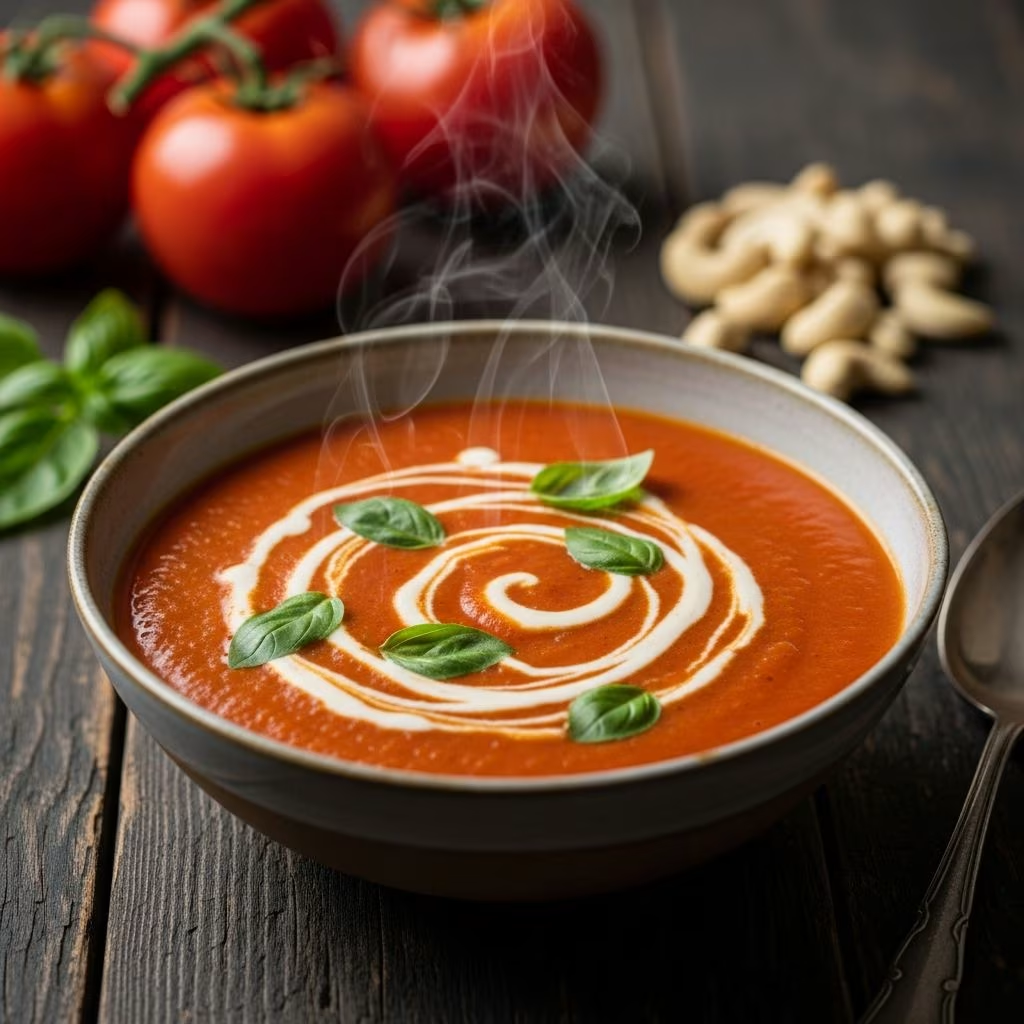
Professional presentation elevates the dining experience significantly. Reserve a portion of the cashew cream to drizzle decoratively across each serving’s surface. Fresh basil leaves provide color contrast and aromatic enhancement. Homemade croutons crafted from crusty bread cubes tossed with olive oil and herbs add textural interest and visual complexity. A light sprinkling of red pepper flakes appeals to heat-lovers, while toasted pumpkin seeds offer nutty flavor and protein enhancement.
Storage and Make-Ahead Considerations
This soup refrigerates successfully for 3-4 days when stored in airtight containers, making it ideal for meal preparation. The cashew cream may separate slightly upon cooling; simply stir thoroughly or briefly blend before reheating. Freezing is possible but may affect the cashew cream’s texture slightly; for best results, freeze the tomato base separately from the cream component, combining them only when reheating.
Prepare the cashew cream component up to two days in advance, storing it in sealed containers in the refrigerator. The main soup preparation requires minimal active time—typically 10-15 minutes for stovetop versions—making this an excellent option for weeknight meals.
Nutritional Considerations
Plant-based tomato soup with cashew cream provides substantial nutritional value. Cashews contribute plant-based protein and heart-healthy fats, while tomatoes deliver lycopene—a powerful antioxidant associated with cardiovascular health benefits. The finished dish typically contains 200-250 calories per serving with approximately 8-12 grams of protein, positioning it as both satisfying and reasonably balanced.
Frequently Asked Questions
Can I use a regular blender for cashew cream?
Yes, though results benefit from pre-soaking cashews overnight to soften them adequately. Blend for 5-7 minutes rather than the 2-3 minutes required for high-powered models, checking consistency periodically.
What’s the best substitute if I’m allergic to cashews?
Sunflower seed butter, macadamia nut cream, or commercially available oat cream provide suitable alternatives, though flavor profiles vary slightly. Adjust seasonings accordingly.
Should I peel tomatoes before using them?
For canned tomatoes, peeling is unnecessary as skins have been removed during processing. Fresh tomatoes don’t require peeling for this application, as blending breaks down skins completely.
How can I make this soup less caloric?
Reduce the cashew cream proportion while increasing vegetable broth, or substitute half the cashew cream with silken tofu. The soup remains creamy with slightly less richness.
Can this soup be made completely oil-free?
Yes—simply omit the olive oil sauté step and roast aromatics in the oven instead, or sauté in vegetable broth using a non-stick pot. The soup’s richness comes primarily from cashew cream rather than fat.
Conclusion: Elevating Plant-Based Comfort Food
Creating exceptional plant-based tomato soup requires understanding the technical principles behind cashew cream production and flavor development rather than simply replacing dairy with plant-based alternatives. By mastering basic techniques—proper cashew cream preparation, flavor balancing, and strategic use of umami-building ingredients—home cooks can produce soups that satisfy both vegans and dairy-consumers equally. This versatile preparation celebrates tomatoes’ natural qualities while demonstrating how thoughtful ingredient selection elevates simple preparations into restaurant-quality dishes.
References
- Umami Information Center — Umami Information Center. Accessed April 2026. https://www.umamiinfo.com/database/tomato/
- Nutritional Composition and Health Benefits of Cashews — Journal of Nutrition and Metabolism. Published 2023. https://www.hindawi.com/journals/jnm/2023/
- Emulsification Properties of Plant-Based Creams — International Journal of Food Science & Technology. Published 2024. https://onlinelibrary.wiley.com/journal/13652621/
- Lycopene and Cardiovascular Health — American Journal of Clinical Nutrition. Published 2023. https://academic.oup.com/ajcn/
- Maillard Reaction in Food Preparation — Food Chemistry. Published 2024. https://www.sciencedirect.com/journal/food-chemistry/